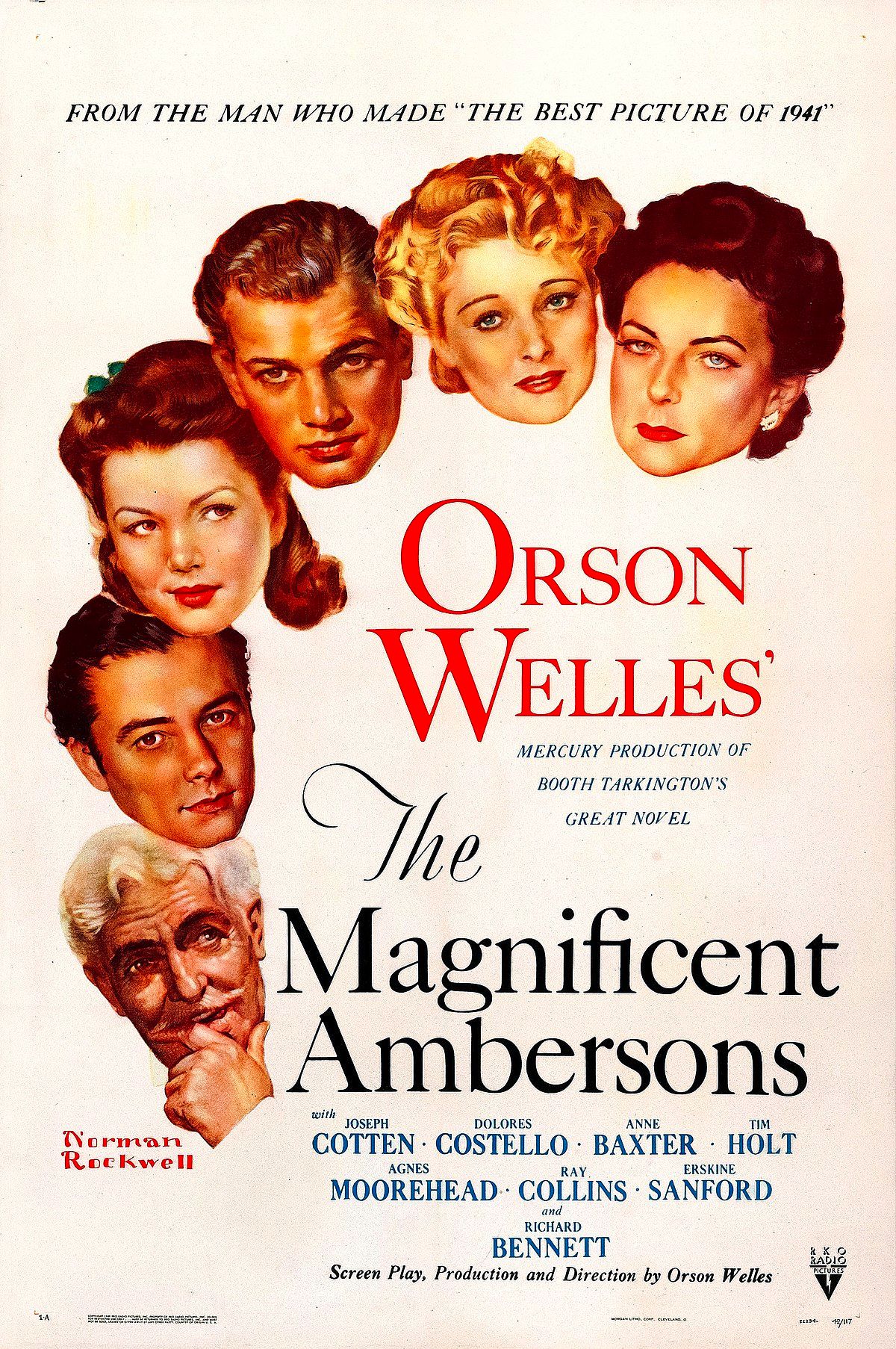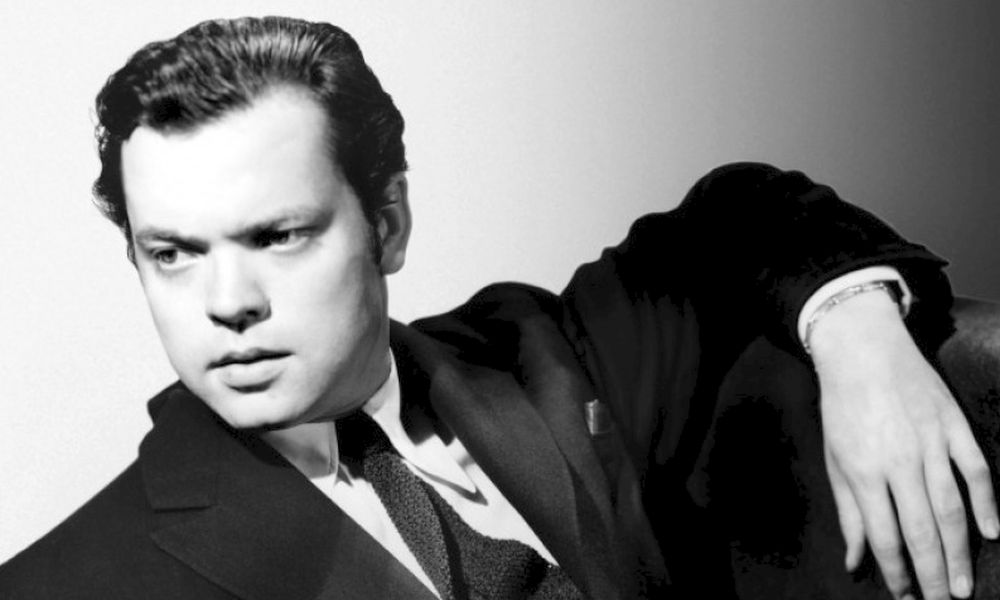
"The Wellesian cinema is the cinema of magic and marvels, and everything, and especially its prime protagonist, is larger than life. The dramatic conflict in a Welles film often arises from the dialectical collision between morality and megalomania, and Welles more often than not plays the megalomaniacal villain without stilling the calls of conscience." - Andrew Sarris (The American Cinema, 1968)
Orson Welles
Director / Actor / Screenwriter / Producer / Editor
(1915-1985) Born May 6, Kenosha, Wisconsin, USA
Top 250 Directors / 50 Key Noir Directors
(1915-1985) Born May 6, Kenosha, Wisconsin, USA
Top 250 Directors / 50 Key Noir Directors
Key Production Countries: USA, France, Spain, Italy, West Germany
Key Genres: Drama, Period Film, Film Noir, Psychological Thriller, Documentary, Short Film, Thriller, Tragedy, Mystery, Comedy Drama, Avant-garde/Experimental
Key Collaborators: Joseph Cotten (Leading Character Actor), Erskine Sanford (Character Actor), Jeanne Moreau (Leading Actress), Russell Metty (Cinematographer), Gary Graver (Cinematographer), Akim Tamiroff (Leading Character Actor), Ray Collins (Leading Character Actor), Angelo Francesco Lavagnino (Composer), Paul Stewart (Character Actor), Oja Kodar (Leading Actress/Screenwriter), Everett Sloane (Leading Actor), Edmond Richard (Cinematographer)
Key Genres: Drama, Period Film, Film Noir, Psychological Thriller, Documentary, Short Film, Thriller, Tragedy, Mystery, Comedy Drama, Avant-garde/Experimental
Key Collaborators: Joseph Cotten (Leading Character Actor), Erskine Sanford (Character Actor), Jeanne Moreau (Leading Actress), Russell Metty (Cinematographer), Gary Graver (Cinematographer), Akim Tamiroff (Leading Character Actor), Ray Collins (Leading Character Actor), Angelo Francesco Lavagnino (Composer), Paul Stewart (Character Actor), Oja Kodar (Leading Actress/Screenwriter), Everett Sloane (Leading Actor), Edmond Richard (Cinematographer)
"If we have dwelt at some length on Orson Welles it is because the date of his appearance in the filmic firmament (1941) marks more or less the beginning of a new period and also because his case is the most spectacular and, by virtue of his very excesses, the most significant. Yet Citizen Kane is part of a general movement, of a vast stirring of the geological bed of cinema, confirming that everywhere up to a point there had been a revolution in the language of the screen." - André Bazin (What is Cinema? Volume 1, 1967)
"Like von Stroheim and von Sternberg, although otherwise hardly in similar mould, Wisconsin-born Welles was one of Hollywood's enfants terribles, beginning with brilliance but soon falling out with the studio, having his work hacked down and setting off on wanderings round the world, forever in search of another masterpiece and the money to make one." - David Quinlan (Quinlan's Film Directors, 1999)
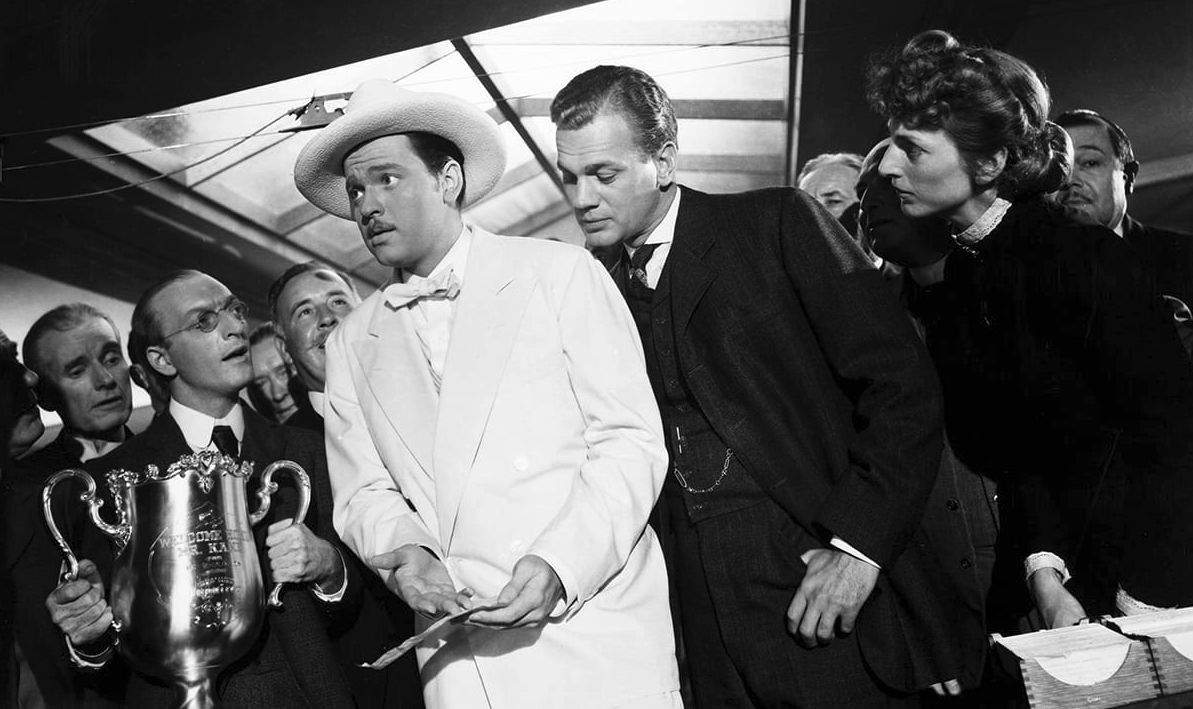
Citizen Kane (1941)
"It is almost tragically ironic that George Orson Welles, without doubt one of the greatest filmmakers ever, was forced to work for most of his career under the most adverse of conditions. Such were his genius and ambition that his films, years ahead of their time, still astonish by their inventiveness, stylistic virtuosity and freshness; while the widely held view that he never fulfilled his early promise fails to take account of the thematic and moral consistency of his work, not to say its restless experimentalism." - Geoff Andrew (The Film Handbook, 1989)
"A prodigy in theatre, radio and film directing, Welles became a star at an early age. His empathetic approach to working with actors, and his skill for uniting all aspects of film production, including script, music, sound and lighting, were vital for the progress of film as an art form… A lifelong artist, Welles created a great body of work, and contributed enormously to a filming and distribution system which opened up the possibilities of cinema. Although few of his films were completely finished, he worked at a pace ahead of his peers." - Georgia Korossi (BFI, 2015)
"Welles’s outsider status in connection with the American film industry is an interesting part of cinema history in itself, but his importance as a director is due to the innovations he introduced through his films and the influence they have had on filmmaking and film theory. Considering the turbulent relationship Welles experienced with Hollywood and the circumstances under which his films were made in Europe, it is surprising there is any thematic and stylistic consistency in his work at all." - Susan Doll (International Dictionary of Films and Filmmakers, 2000)
"The greatness of Welles and the “Welles” image, as well as any misgivings we may have about him, seems inseparable from notions of a grand, epic quality in all things: an outsized personality with a voice like a cartoon giant (albeit one capable of subtler textures than most would guess), given to larger-than-life acting roles and grand, theatrical gestures. Stupendous and superlative achievements. Great risks and bold experimentation. Leave it to the hack poet journalist to equate his enormous girth with enormity in self-image, excess in dreaming and plans with no follow-through. He did not suffer from an excess of money, or we might have a few more finished works. It’s difficult to imagine that, like Kane, his lasting dream would have been to acquire a warehouse full of great artworks—and the available evidence would seem to hint at the possibility for a few—for no one to look at." - Jaime N. Christley (Senses of Cinema, 2003)
"One of the most important filmmakers to emerge since the advent of the talkie. Welles was one of the first in Hollywood to realize the potential of elliptical narratives and deep focus in the construction of camera angles. His oeuvre consists of complex tales with themes of truth and illusion (Citizen Kane, 41; The Magnificent Ambersons, 42; Touch of Evil, 58; Chimes at Midnight, 66). Welles is also one of the few commercial filmmakers to experiment with the soundtrack of a film." - William R. Meyer (The Film Buff's Catalog, 1978)
“I started at the top,” Orson Welles said, “and worked down.” For his first film, he was swept into Hollywood on a wave of success that had been rising since his childhood. Studio doors and coffers stood open to him. But for his last film, unfinished when he died, he had to beg, borrow, and sell himself.” - Dian G. Smith (Great American Film Directors, 1987)
"People should cross themselves when they say his name." - Marlene Dietrich
"I want to give the audience a hint of a scene. No more than that. Give them too much and they won't contribute anything themselves. Give them just a suggestion and you get them working with you. That's what gives the theater meaning: when it becomes a social act." - Orson Welles
"Hollywood is the only industry, even taking in soup companies, which does not have laboratories for the purpose of experimentation." - Orson Welles
Selected Filmography
Loading filmography...
Orson Welles / Favourite Films
The Baker's Wife (1938) Marcel Pagnol, Battleship Potemkin (1925) Sergei Eisenstein, The Best Years of Our Lives (1946) William Wyler, Bicycle Thieves (1948) Vittorio De Sica, City Lights (1931) Charles Chaplin, La Grande illusion (1937) Jean Renoir, Greed (1924) Erich von Stroheim, Intolerance (1916) D.W. Griffith, Nanook of the North (1922) Robert J. Flaherty, Ninotchka (1939) Ernst Lubitsch, Shoeshine (1946) Vittorio De Sica, Stagecoach (1939) John Ford.
Source: Cinematheque Belgique (1952)
The Baker's Wife (1938) Marcel Pagnol, Battleship Potemkin (1925) Sergei Eisenstein, The Best Years of Our Lives (1946) William Wyler, Bicycle Thieves (1948) Vittorio De Sica, City Lights (1931) Charles Chaplin, La Grande illusion (1937) Jean Renoir, Greed (1924) Erich von Stroheim, Intolerance (1916) D.W. Griffith, Nanook of the North (1922) Robert J. Flaherty, Ninotchka (1939) Ernst Lubitsch, Shoeshine (1946) Vittorio De Sica, Stagecoach (1939) John Ford.
Source: Cinematheque Belgique (1952)
Orson Welles / Fan Club
Jonathan Rosenbaum, Martin Scorsese, Kenneth Turan, José Luis Guarner, Andrew Sarris, David Sterritt, Geoff Andrew, Derek Malcolm, Peter Bogdanovich, Roger Ebert, Joe Dante, Joseph McBride.
Jonathan Rosenbaum, Martin Scorsese, Kenneth Turan, José Luis Guarner, Andrew Sarris, David Sterritt, Geoff Andrew, Derek Malcolm, Peter Bogdanovich, Roger Ebert, Joe Dante, Joseph McBride.
"Fan Club"
These film critics/filmmakers have, on multiple occasions, selected this director’s work within film ballots/lists that they have submitted.
These film critics/filmmakers have, on multiple occasions, selected this director’s work within film ballots/lists that they have submitted.