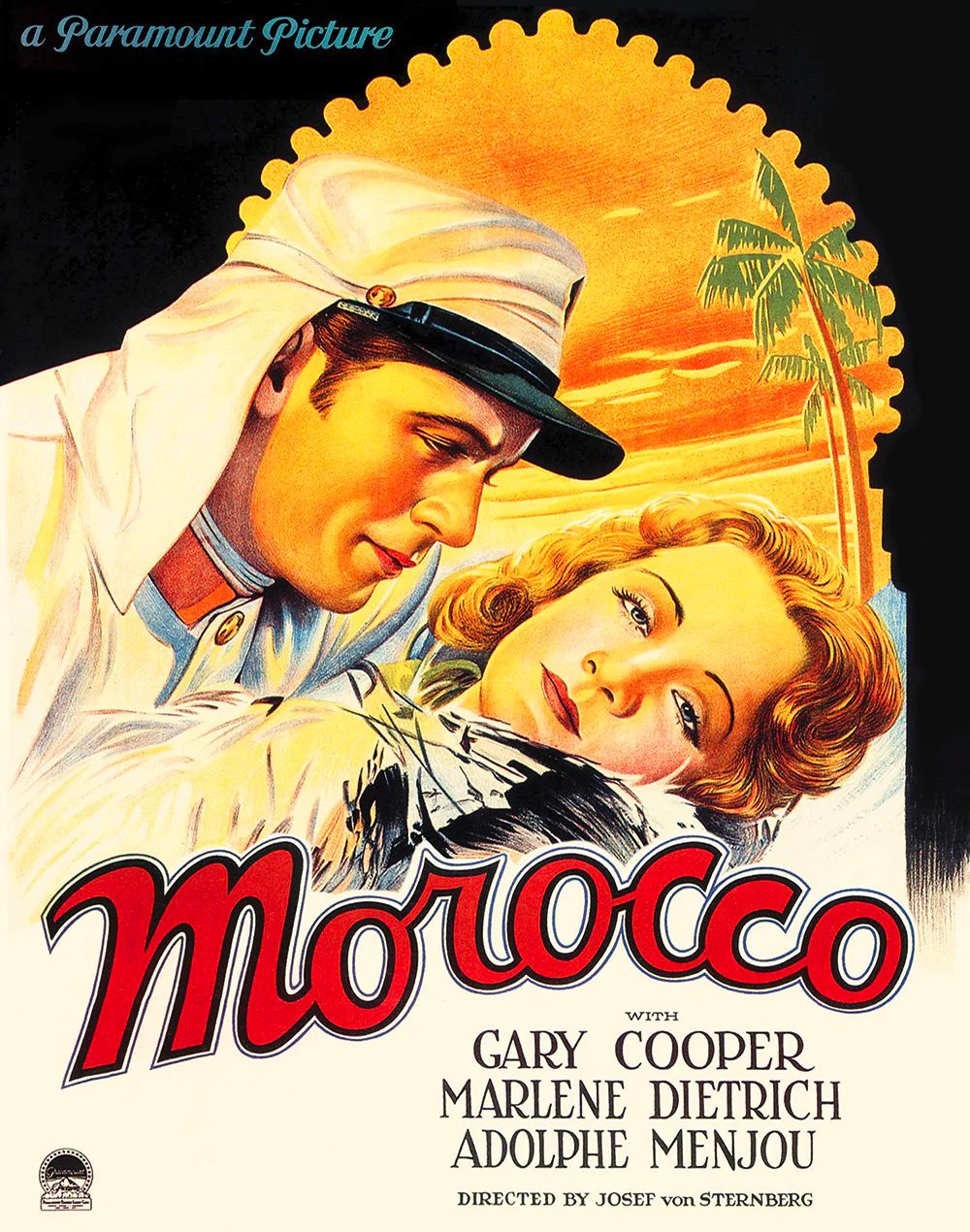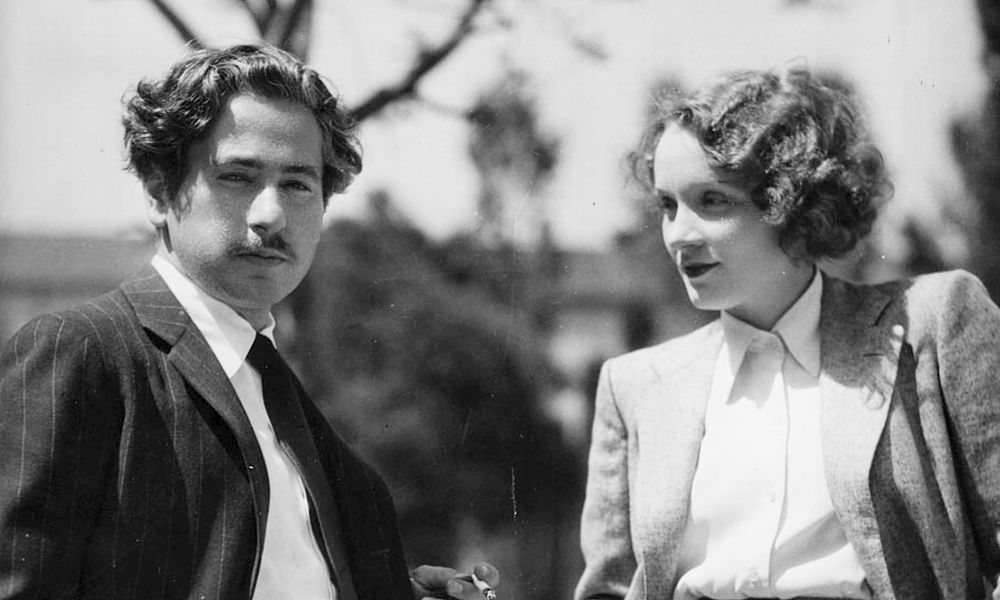
"Sternberg must figure among the top half-dozen stylists in the history of the cinema: his films shimmer with light (Marlene Dietrich photographed through a mist of veils, shrouds, silks and sequins), artificiality and sexual cruelty. They are confections for voyeurs and connoisseurs of high art in the cinema alike." - The Illustrated Who's Who of Cinema, 1983
Josef von Sternberg
Director / Screenwriter / Editor / Producer / Cinematographer
(1894-1969) Born May 29, Vienna, Austria-Hungary (now Austria)
Top 250 Directors
(1894-1969) Born May 29, Vienna, Austria-Hungary (now Austria)
Top 250 Directors
Key Production Country: USA
Key Genres: Drama, Melodrama, Romance, Crime, Crime Drama, Romantic Drama, Period Film, Psychological Drama
Key Collaborators: Hans Dreier (Production Designer), Marlene Dietrich (Leading Actress), Jules Furthman (Screenwriter), Lee Garmes (Cinematographer), Bert Glennon (Cinematographer), S.K. Winston (Editor), George Bancroft (Leading Actor), Adolph Zukor (Producer), Gustav von Seyffertitz (Leading Character Actor), W. Franke Harling (Composer), Karl Hajos (Composer), John Leipold (Composer)
Key Genres: Drama, Melodrama, Romance, Crime, Crime Drama, Romantic Drama, Period Film, Psychological Drama
Key Collaborators: Hans Dreier (Production Designer), Marlene Dietrich (Leading Actress), Jules Furthman (Screenwriter), Lee Garmes (Cinematographer), Bert Glennon (Cinematographer), S.K. Winston (Editor), George Bancroft (Leading Actor), Adolph Zukor (Producer), Gustav von Seyffertitz (Leading Character Actor), W. Franke Harling (Composer), Karl Hajos (Composer), John Leipold (Composer)
"Born in Vienna, raised and educated in both Austria and the United States, Josef von Sternberg was one of several contract directors who brought a distinctly European inflection to Paramount’s house style. In Sternberg’s case the accent was notably Germanic. He fashioned a unique Hollywood expressionism, with its play of light and shadow, sensuous images and exotic production design, sexual symbology and frank eroticism. Sternberg’s best films—all made for Paramount between 1930 and 1935—often were set in foreign locales and were populated by cynical, dissolute outcasts; they generally were weak on plot but remarkably strong on style and characterization. And they all starred Marlene Dietrich, whose rapid rise in Hollywood coincided with Sternberg’s, and whose screen persona was perhaps the most essential component of his inimitable style." - Thomas Schatz (Schirmer Encyclopedia of Film, 2007)
"There is a sense in which Josef von Sternberg never grew up. In his personality, the twin urges of the disturbed adolescent towards self-advertisement and self-effacement fuse with a brilliant visual imagination to create an artistic vision unparalleled in the cinema... His films reflect a schoolboy's fascination with sensuality and heroics. That they are sublime visual adventures from an artist who contributed substantially to the sum of cinema technique is one paradox to add to the stock that make up his career." - John Baxter (The St. James Film Directors Encyclopedia, 1998)
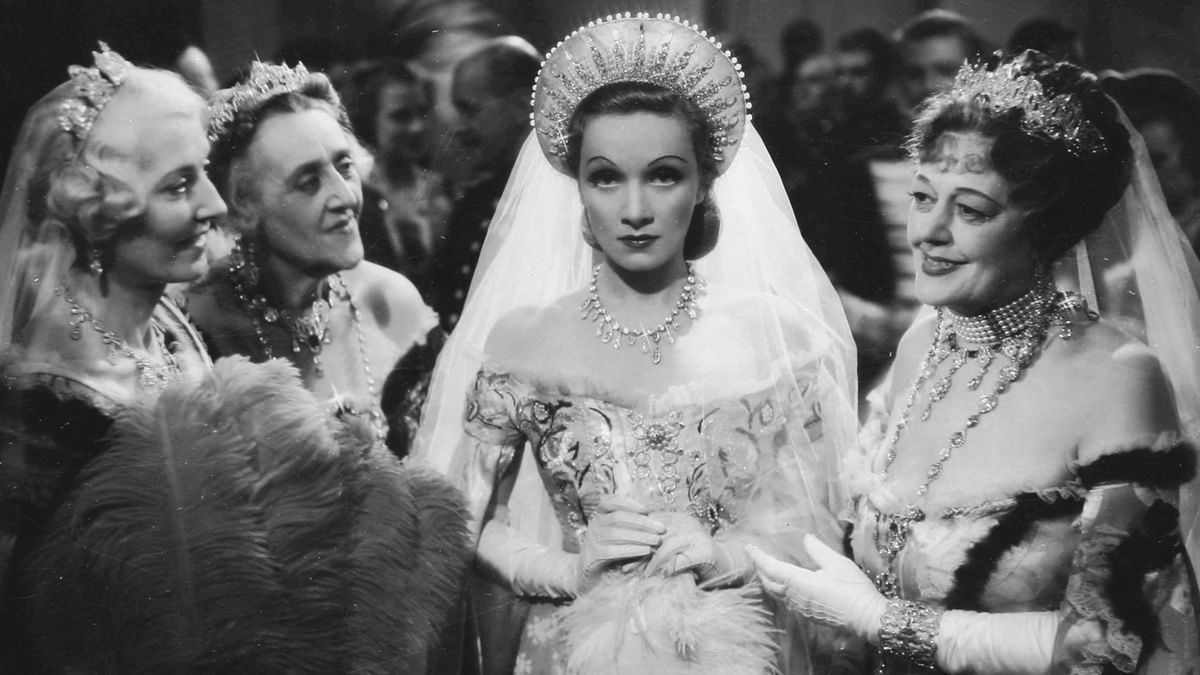
The Scarlet Empress (1934)
"Best known for the exotic, ironic melodramas he made with Marlene Dietrich, Jonas Sternberg was one of the most personal, ambitious and imaginative of early film-makers. Uninterested in naturalism, and fascinated by film's visual potential, he repeatedly revealed his cynical, detached attitude to the world by focusing attention on male-female obsession, humiliation and cruel, casual betrayal, often by a contemptuous femme fatale." - Geoff Andrew (The Film Handbook, 1989)
"Von Sternberg was a singular stylist, who conjured up exhilarating and exotic worlds onscreen. Whether recreating a perilous train ride across revolutionary China on a Paramount backlot for Shanghai Express (1932), or invoking a South Sea island idyll on a Kyoto soundstage for The Saga of Anatahan (1953), mise-en-scène was where he dazzled; his images suffused with dappled light, hazy fogs and the defining swirls of cigarette smoke within a frame that left little by way of empty space. All this contributed to a constructed otherworldliness in which his characters were very much a part of the cluttered decor." - Jasper Sharp (BFI, 2019)
"In a sense, Sternberg entered the cinema through the camera rather than the cutting room, and thus became a lyricist of light and shadow rather than a master of montage. The control he achieved over his studio surroundings encouraged him to concentrate on the spatial integrity of his images rather than on their metaphorical juxtaposition. Sternberg's cinema, for better or worse, represents a distinctively Germanic camera movement - from Murnau and Lang - in contrast to Eisenstein's fashionably Marxist montage." - Andrew Sarris (The American Cinema, 1968)
"His films build dream worlds around the edges of society, and then they shatter the illusion. He fills his work with expressive lighting which illuminates the actors and with lush imagery. Von Sternberg could make the most unbelievable plots seem plausible." - William R. Meyer (The Film Buff's Catalog, 1978)
"Shadow is mystery and light is clarity. Shadow conceals--light reveals. To know what to reveal and what to conceal and in what degrees to do this is all there is to art." - Josef von Sternberg
Selected Filmography
Loading filmography...
GF Greatest Films ranking (★ Top 1000 ● Top 2500)
T TSPDT N 1,000 Noir Films
R Jonathan Rosenbaum S Martin Scorsese
T TSPDT N 1,000 Noir Films
R Jonathan Rosenbaum S Martin Scorsese
Josef von Sternberg / Fan Club
Dan Sallitt, Andrew Sarris, Tony Rayns, Paul Vecchiali, Juzaburo Futaba, José Luis Guarner, Enno Patalas, Jonathan Rosenbaum, Richard Brody, Miguel Marías, Arturo Ripstein, Tag Gallagher, James Gray.
Dan Sallitt, Andrew Sarris, Tony Rayns, Paul Vecchiali, Juzaburo Futaba, José Luis Guarner, Enno Patalas, Jonathan Rosenbaum, Richard Brody, Miguel Marías, Arturo Ripstein, Tag Gallagher, James Gray.
"Fan Club"
These film critics/filmmakers have, on multiple occasions, selected this director’s work within film ballots/lists that they have submitted.
These film critics/filmmakers have, on multiple occasions, selected this director’s work within film ballots/lists that they have submitted.