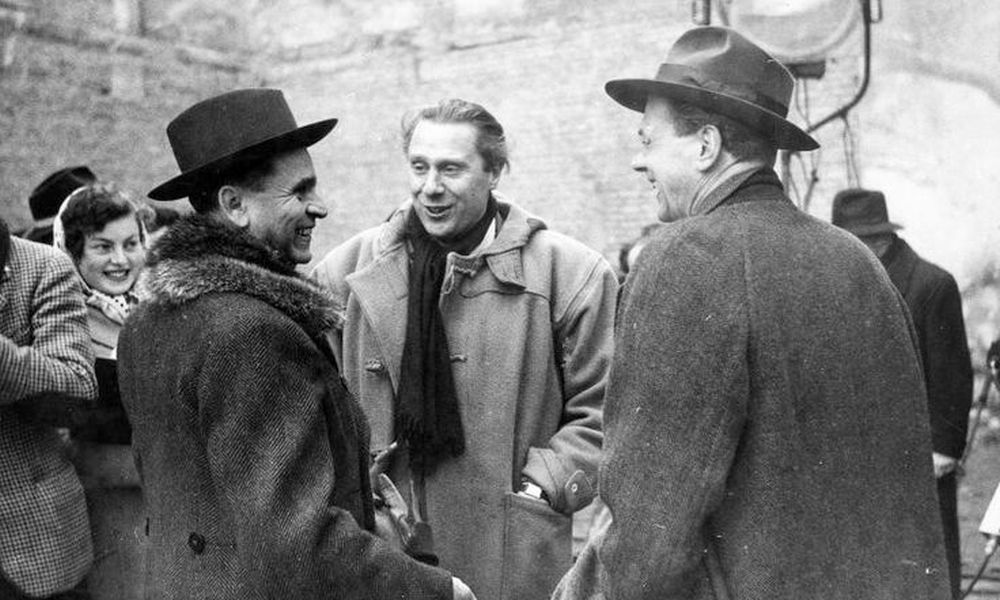
"It is easy to dismiss Reed as the ultimate professional, reliant upon his writers, honing their scripts with the dedication of a painstaking craftsman. This is to seriously underestimate his achievements as his films are rarely without some merit. There may have been a decline in his later career, but at his peak, particularly with that magnificent trilogy of 1940s films, he won his place among the elite of British directors." - Robert Shail (British Film Directors: A Critical Guide, 2007)
Carol Reed
Director / Producer
(1906-1976) Born December 30, Putney, London, England
Top 250 Directors / 50 Key Noir Directors
(1906-1976) Born December 30, Putney, London, England
Top 250 Directors / 50 Key Noir Directors
Key Production Countries: UK, USA
Key Genres: Drama, Comedy, Spy Film, Childhood Drama, Mystery, Psychological Thriller
Key Collaborators: Bert Bates (Editor), Margaret Lockwood (Leading Actress), Ralph Richardson (Leading Actor), Graham Greene (Screenwriter), Edward Black (Producer), R.E. Dearing (Editor), William Alwyn (Composer), Vincent Korda (Production Designer), Felix Aylmer (Character Actor), James Mason (Leading Actor), Rex Harrison (Leading Actor), Robert Morley (Leading Actor)
Key Genres: Drama, Comedy, Spy Film, Childhood Drama, Mystery, Psychological Thriller
Key Collaborators: Bert Bates (Editor), Margaret Lockwood (Leading Actress), Ralph Richardson (Leading Actor), Graham Greene (Screenwriter), Edward Black (Producer), R.E. Dearing (Editor), William Alwyn (Composer), Vincent Korda (Production Designer), Felix Aylmer (Character Actor), James Mason (Leading Actor), Rex Harrison (Leading Actor), Robert Morley (Leading Actor)
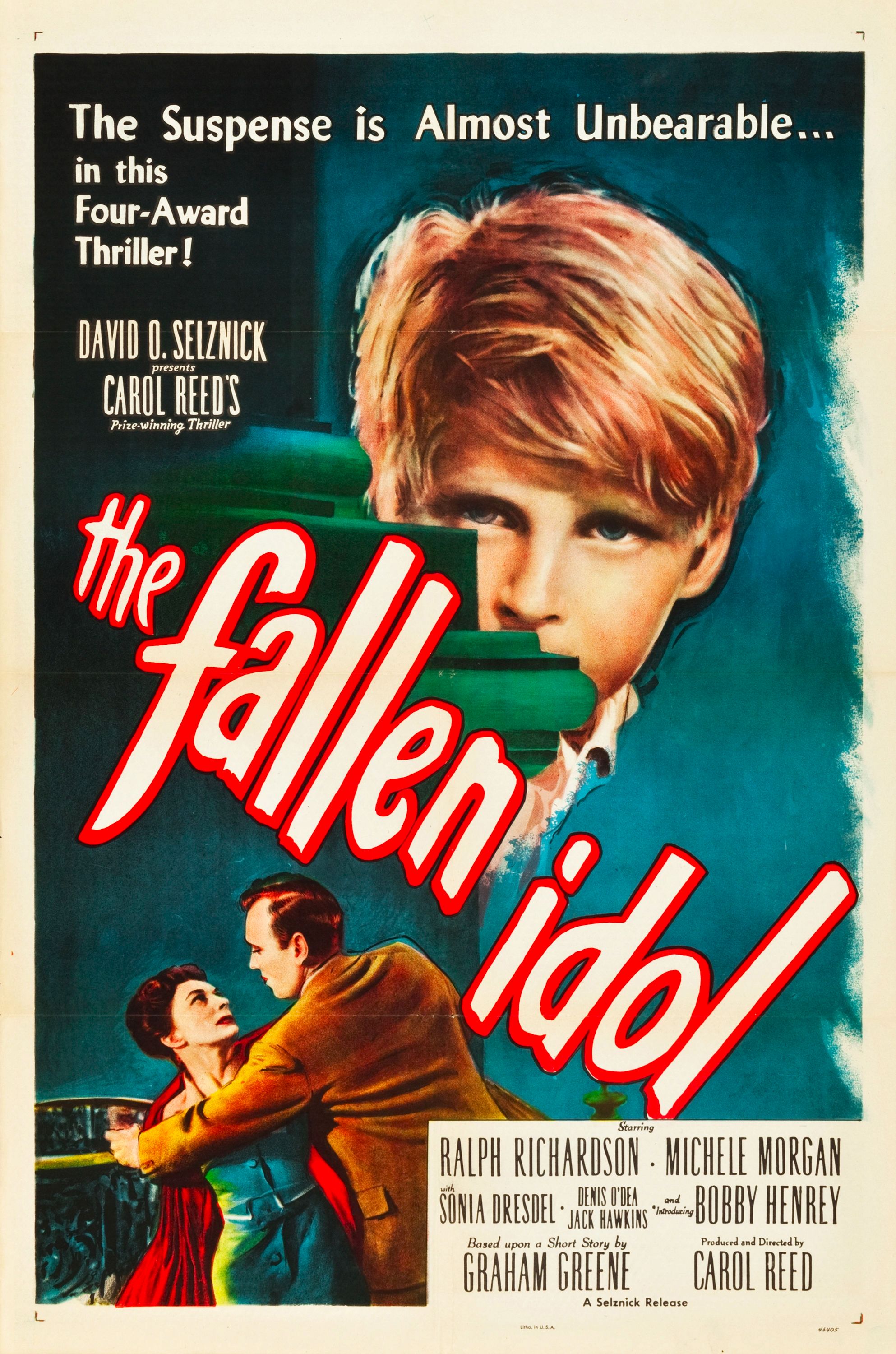
"The more enterprising British producers believed that films should be made to appeal primarily to the home market rather than to the elusive American market. Yet the films that Carol Reed and some others were creating in the post-war years—films which were wholly British in character and situation—were the first such movies to win wide popularity in the United States… The Fallen Idol was the first of a trio of masterful films which he made in collaboration with novelist-screenwriter Graham Greene, one of the most significant creative associations between a writer and a director in the history of film. The team followed The Fallen Idol with The Third Man, which dealt with the black market in post-war Vienna, and, a decade later, Our Man in Havana." - Gene D. Phillips (International Dictionary of Films and Filmmakers, 2000)
"Directing a number of skilled dramas with excellent actors, Carol Reed created films that are rich in atmosphere and milieu. Most of Carol Reed's successes were literary adaptations with complex lead characters... Reed once commented: "I give the public what I like, and hope they will like it too." - Ronald Bergan (Film - Eyewitness Companions, 2006)
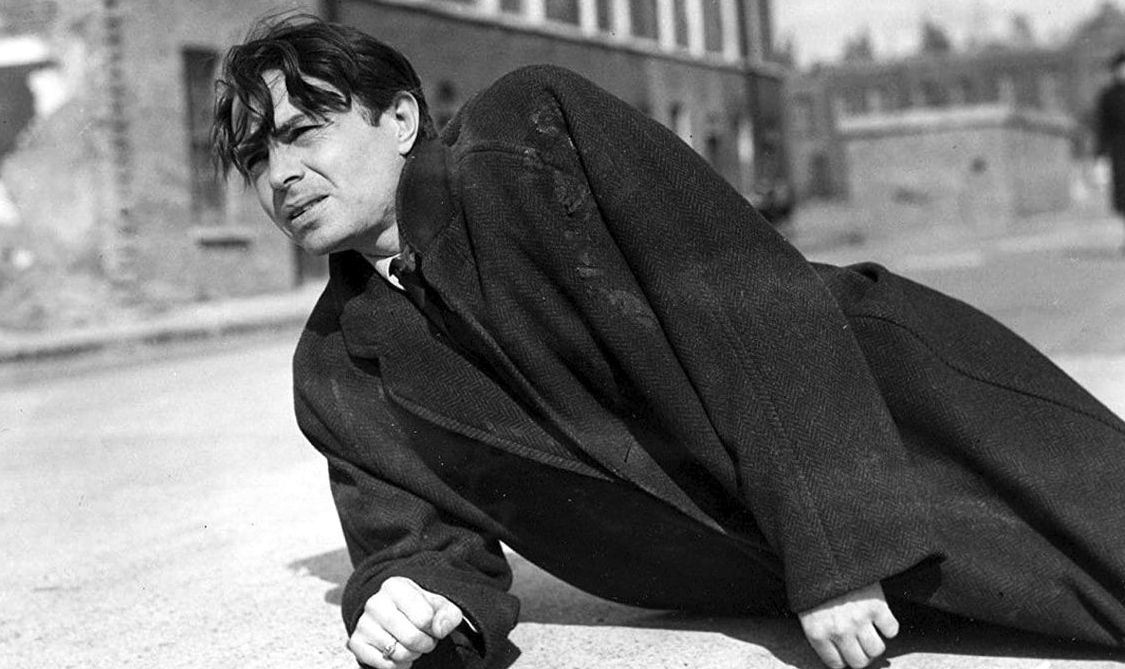
Odd Man Out (1947)
"Once deemed a major British director, Sir Carol Reed was in fact a competent craftsman who hit his peak during a brief period at the end of the '40s with three consecutive literary adaptations. Even in his best work, however, his penchant for unusually angled shots and Expressionist lighting can seem studied and irrelevant." - Geoff Andrew (The Film Handbook, 1989)
"Michael Powell observed of Reed that "Carol could put a film together like a watchmaker puts together a watch". The watchmaker in him is visible in his early films, the films of a complete professional able to make something presentable out of virtually any kind of material, though rarely imposing any personal signature. Then, three times in rapid succession, he directed films that seemed to reveal something deeper and darker in his personality - a fatalism, a sense of the tragic ironies of life. After Odd Man Out, The Fallen Idol and The Third Man he appeared to lose his professional assurance, as if this moment of self-revelation had disturbed his equilibrium. Most of the later films are a sad disappointment. But for that brief time in the late 1940s Carol Reed was perhaps what some earlier critics had claimed him to be: the greatest director in the world." - Philip Kemp, BFI Screen Online
"It was in the first few years after the war that Reed revealed himself: Odd Man Out, The Fallen Idol, and The Third Man were three winners in a row - with directing nominations for the latter two, and a knighthood in 1952... But then Reed ran out of steam, or need." - David Thomson (The New Biographical Dictionary of Film, 2002)
"Subtle studies of the working class (The Stars Look Down, 39) led to more complex thrillers filmed in a realist vein (Odd Man Out, 47; The Third Man, 49). The films of Reed's final period tend to suffer from his inability to balance the tonal elements in his scripts." - William R. Meyer (The Film Buff's Catalog, 1978)
"Peter Bogdanovich once described The Third Man (1949) as "the greatest non-auteur film ever made", thereby implying that Carol Reed was more technician than artist... However, if we look at Reed's career as a whole, we may also conclude that he was deprived of the basic continuities that allowed Hollywood directors of his generation to flourish within the studio system. Reed made three masterpieces in three years (1947-49), but rather lost his way in the 1950s, partly due to the demands of Hollywood backers and calls to make films with greater international appeal. At any rate, as the first film director to be knighted, Reed had no need to press his artistic credentials, even if his critical reputation seesawed." - Tom Charity (The Rough Guide to Film, 2007)
"In the postwar cinema, Reed, like David Lean, comes close to being a 'classic' British film-maker, his acknowledged classics being The Way Ahead (1944), Odd Man Out (1947), The Fallen Idol (1948) and his best-known film, The Third Man (1949), the last two scripted by Graham Greene, with whom he also made Our Man in Havana (1960). These films confirmed his critical reputation as a leading director of British quality cinema, a reputation which was enhanced by Outcast of the Islands (1951) and The Man Between (1953)." - John Caughie (Encyclopedia of European Cinema, 1995)
"All I believe the director can do is to approach his subject with a meticulously prepared list of scenes to be shot with their general description and the dialogue entailed in each, and an absolutely clear idea of the effect he wants to achieve." - Carol Reed
Selected Filmography
Loading filmography...
GF Greatest Films ranking (★ Top 1000 ● Top 2500)
T TSPDT N 1,000 Noir Films
R Jonathan Rosenbaum S Martin Scorsese
T TSPDT N 1,000 Noir Films
R Jonathan Rosenbaum S Martin Scorsese
Carol Reed / Favourite Films
All Quiet on the Western Front (1930) Lewis Milestone, The Baker's Wife (1938) Marcel Pagnol, Carnival in Flanders (1935) Jacques Feyder, City Lights (1931) Charles Chaplin, Les Enfants du paradis (1945) Marcel Carné, Gone with the Wind (1939) Victor Fleming, Ninotchka (1939) Ernst Lubitsch, Pygmalion (1938) Anthony Asquith & Leslie Howard, La Ronde (1950) Max Ophüls, Variety (1925) E.A. Dupont.
Source: Cinematheque Belgique (1952)
All Quiet on the Western Front (1930) Lewis Milestone, The Baker's Wife (1938) Marcel Pagnol, Carnival in Flanders (1935) Jacques Feyder, City Lights (1931) Charles Chaplin, Les Enfants du paradis (1945) Marcel Carné, Gone with the Wind (1939) Victor Fleming, Ninotchka (1939) Ernst Lubitsch, Pygmalion (1938) Anthony Asquith & Leslie Howard, La Ronde (1950) Max Ophüls, Variety (1925) E.A. Dupont.
Source: Cinematheque Belgique (1952)
Carol Reed / Fan Club
Martin Scorsese, José Luis Guarner, Kenneth Turan, Michael Sragow, Roger Ebert, Nasreen Munni Kabir, Monte Hellman, Michel Hazanavicius, Agnieszka Holland, Mark Dujsik, Pedro Maso, Archer Winsten.
Martin Scorsese, José Luis Guarner, Kenneth Turan, Michael Sragow, Roger Ebert, Nasreen Munni Kabir, Monte Hellman, Michel Hazanavicius, Agnieszka Holland, Mark Dujsik, Pedro Maso, Archer Winsten.
"Fan Club"
These film critics/filmmakers have, on multiple occasions, selected this director’s work within film ballots/lists that they have submitted.
These film critics/filmmakers have, on multiple occasions, selected this director’s work within film ballots/lists that they have submitted.