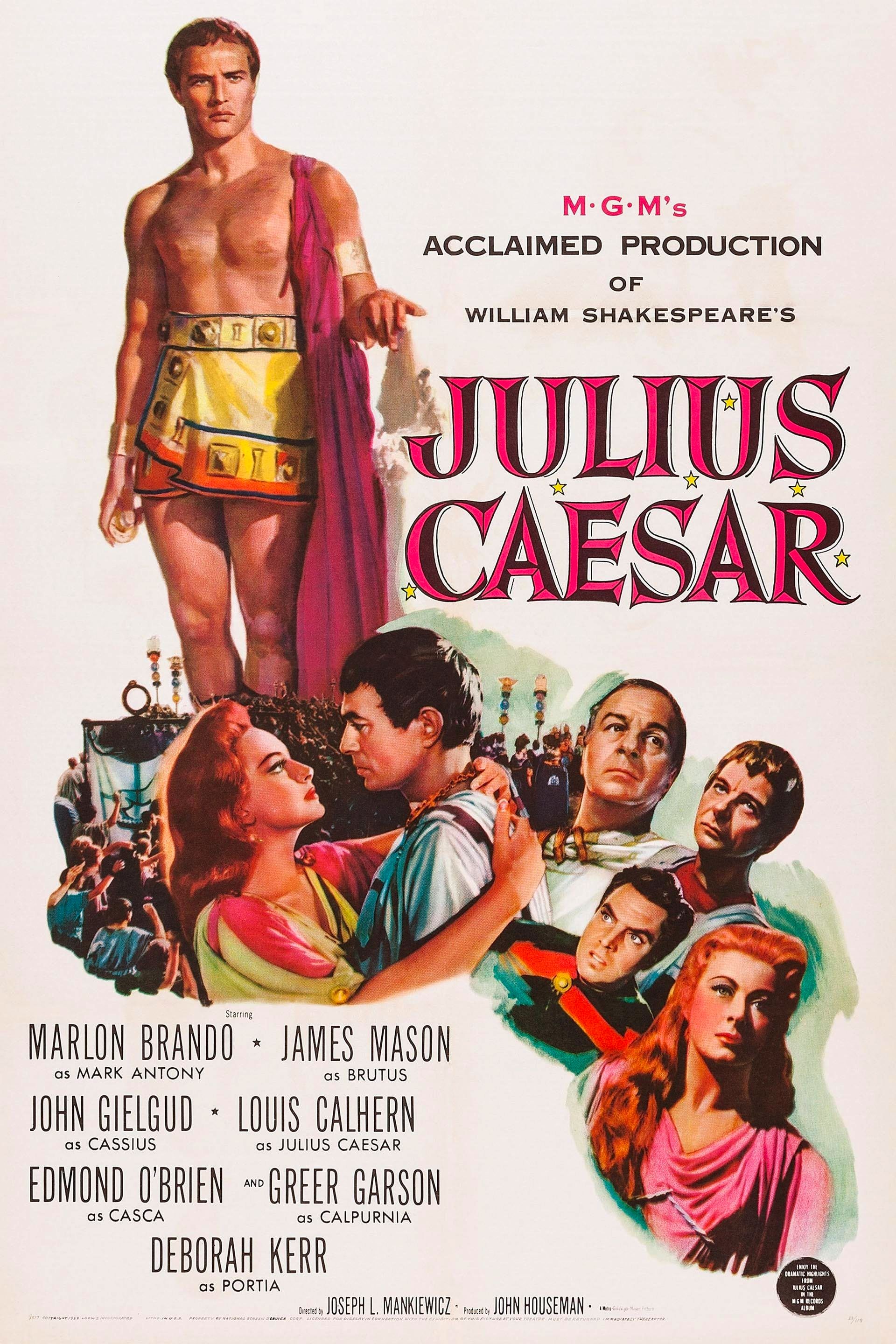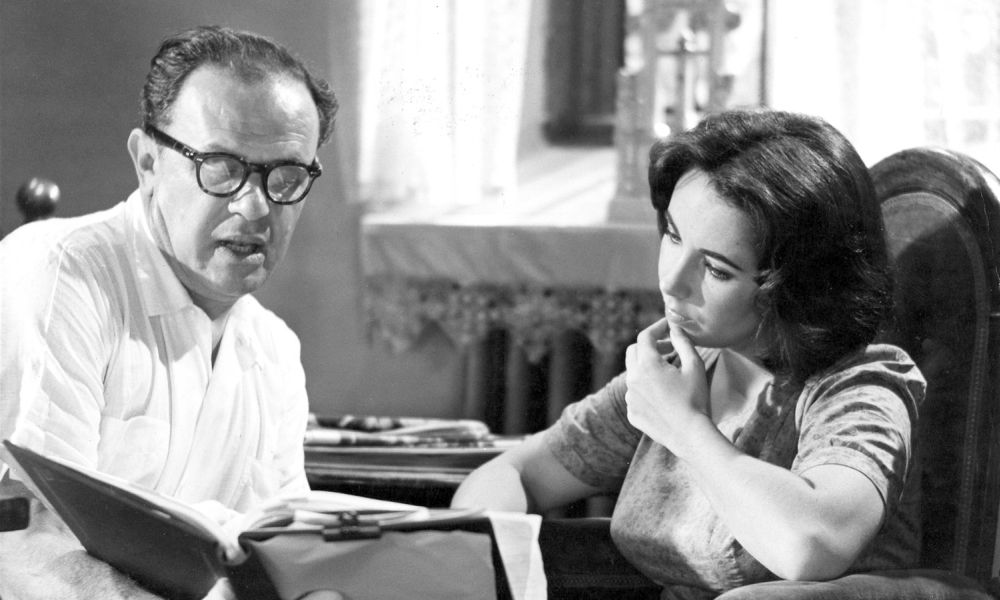
"He reigned in the late 1940s and throughout the 1950s as the premier writer-director of Hollywood's most literate and sophisticated fare, many of his movies highly successful at the box office, as well. If he had a plodding and uninspired visual style as a director, his witty, biting scripts more than made up for the lapse." - The Encyclopedia of Hollywood, 2004
Joseph L. Mankiewicz
Director / Screenwriter / Producer
(1909-1993) Born February 11, Wilkes-Barre, Pennsylvannia, USA
Top 250 Directors
(1909-1993) Born February 11, Wilkes-Barre, Pennsylvannia, USA
Top 250 Directors
Key Production Country: USA
Key Genres: Drama, Comedy Drama, Mystery, Comedy, Showbiz Drama, Psychological Thriller, Melodrama, Medical Drama, Historical Film, Historical Epic, Psychological Drama, Thriller
Key Collaborators: Lyle Wheeler (Production Designer), George W. Davis (Production Designer), Rex Harrison (Leading Actor), Darryl F. Zanuck (Producer), Milton Krasner (Cinematographer), Alfred Newman (Composer), Philip Dunne (Screenwriter), Barbara McLean (Editor), Dorothy Spencer (Editor), James B. Clark (Editor), William Hornbeck (Editor), Hume Cronyn (Leading Character Actor)
Key Genres: Drama, Comedy Drama, Mystery, Comedy, Showbiz Drama, Psychological Thriller, Melodrama, Medical Drama, Historical Film, Historical Epic, Psychological Drama, Thriller
Key Collaborators: Lyle Wheeler (Production Designer), George W. Davis (Production Designer), Rex Harrison (Leading Actor), Darryl F. Zanuck (Producer), Milton Krasner (Cinematographer), Alfred Newman (Composer), Philip Dunne (Screenwriter), Barbara McLean (Editor), Dorothy Spencer (Editor), James B. Clark (Editor), William Hornbeck (Editor), Hume Cronyn (Leading Character Actor)
"It's always apparent that he was a writer first, a producer second, and a director last. In a Mankiewicz picture the dialogue does all the talking. And rich, polysyllabic, epigrammatic talk it is too... Mankiewicz's literary qualities have led to his over- and underestimation as critical fashions have ebbed and flowed. His is a theatrical and artificial screen world, and in his films life often seems like a parlour game - or a debating club. But he knew how to stage a scene and he generally drew the best out of performers." - Tom Charity (The Rough Guide to Film,. 2007)
"People Will Talk (1951) is one of the most appropriate titles in Joseph L. Mankiewicz's filmography. The screen was mostly a vehicle for his literate, witty, and satirical screenplays. Although Mankiewicz's films are dialogue-driven, they are not filmed plays. They have an elegant visual style, and many experiment with narrative form, being told from different points of view with an effective use of flashbacks." - Ronald Bergan (Film - Eyewitness Companions, 2006)
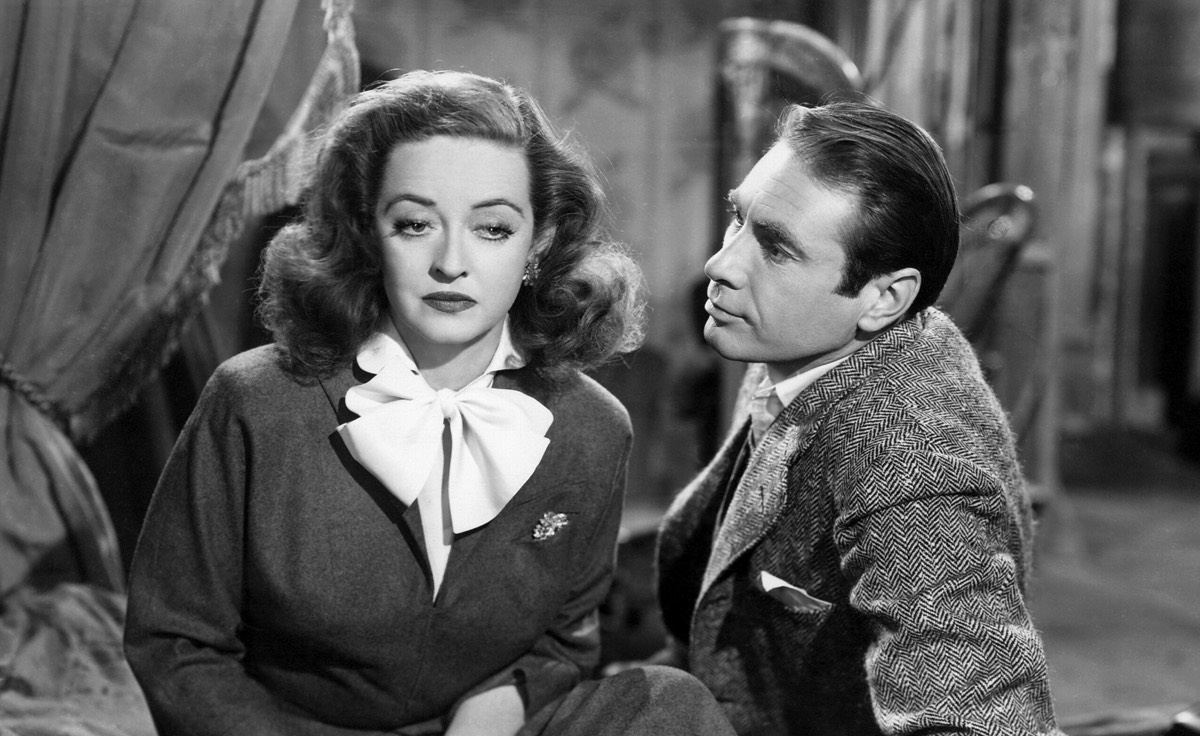
All About Eve (1950)
"Perhaps because he began as a screenwriter, Mankiewicz has often been thought of as a scenarist first and a director only second. But not only was he an eloquent scriptwriter, he was also an elegant visual stylist whose talents as a director far exceeded his reputation. He is one of the few major American directors who was more appreciated during the early years of his career than during the later stages." - Eric Smoodin (The St. James Film Directors Encyclopedia, 1998)
"The brilliant films and career of Joseph L. Mankiewicz have long occupied a paradoxical and stubbornly unclassifiable place in the history of the American cinema. In many ways Mankiewicz's immeasurable talents as both screenwriter and director seem to be neatly summarized in All About Eve, the dazzling and trenchant satire of stardom and celebrity Darwinism that remains his disproportionately best known work… Yet, the full range of Mankiewicz's innovative artistic vision went far beyond his iconic Broadway cautionary tale to span a long and impressively diverse career successfully mastering a wide variety of different genres – from the dark, gothic melodrama of Suddenly, Last Summer and Dragonwyck, to the historical costume epic of Cleopatra, the nostalgic period comedy of The Late George Apley, the stylish musical of Guys and Dolls and the espionage thriller of 5 Fingers." - Haden Guest (Harvard Film Archive, 2011)
"The cinema of Joseph L. Mankiewicz is a cinema of intelligence without inspiration. His best films - All About Eve and The Barefoot Contessa - bear the signature of a genuine auteur... Mankiewicz's cranky liberalism sometimes gets the better of him, particularly when he wrenches scenes out of their context to inveigh against the evils of farm subsidies (People Will Talk) and oil-depletion allowances (The Barefoot Contessa)." - Andrew Sarris (The American Cinema, 1968)
"Conflicts between the psychologically strong and powerful interest Mankiewicz. The inevitable downfall of at least one of those is usually caused by an ironic flaw in that individual's makeup or strategy." - William R. Meyer (The Film Buff's Catalog, 1978)
"If film-makers can be classified by their preference for the word, the image, or the performance, Mankiewicz is certainly a proud resident of the first group: the 'screen playwrights' who see talking pictures as an extension of theatre, with the author controlling both the staging of his work and the movement of all those 'bodies with voices'." - Richard Corliss (Cinema: A Critical Dictionary, 1980)
"Mankiewicz was the epitome of smart entertainment. He got the best director and best screenplay Oscars two years in a row, with A Letter to Three Wives and All About Eve, and the latter won best picture. In addition, Mankiewicz was a droll talker, full of great anecdotes and magnificent indiscretion, not always reliable but usually biting. He could explain everything except the lack of a pressing theme in his own work.” - David Thomson (The New Biographical Dictionary of Film, 2010)
"The difference between life and the movies is that a script has to make sense, and life doesn't." - Joseph L. Mankiewicz
Selected Filmography
Loading filmography...
Joseph L. Mankiewicz / Fan Club
Martin Scorsese, José Luis Guarner, Richard Brody, Olivier Eyquem, Tara Brady, Terence Davies, Lorenzo Codelli, Pedro Almodóvar, Gerardo Vera, Javier Marias, Farran Smith Nehme, Patrick Brion.
Martin Scorsese, José Luis Guarner, Richard Brody, Olivier Eyquem, Tara Brady, Terence Davies, Lorenzo Codelli, Pedro Almodóvar, Gerardo Vera, Javier Marias, Farran Smith Nehme, Patrick Brion.
"Fan Club"
These film critics/filmmakers have, on multiple occasions, selected this director’s work within film ballots/lists that they have submitted.
These film critics/filmmakers have, on multiple occasions, selected this director’s work within film ballots/lists that they have submitted.