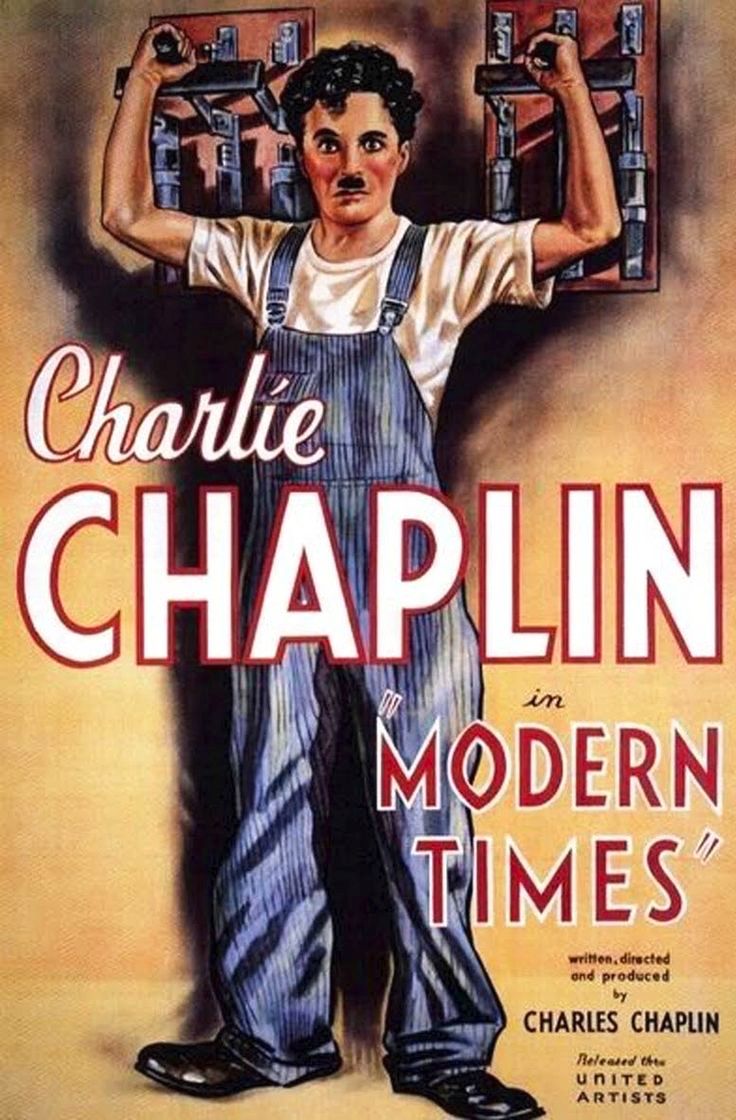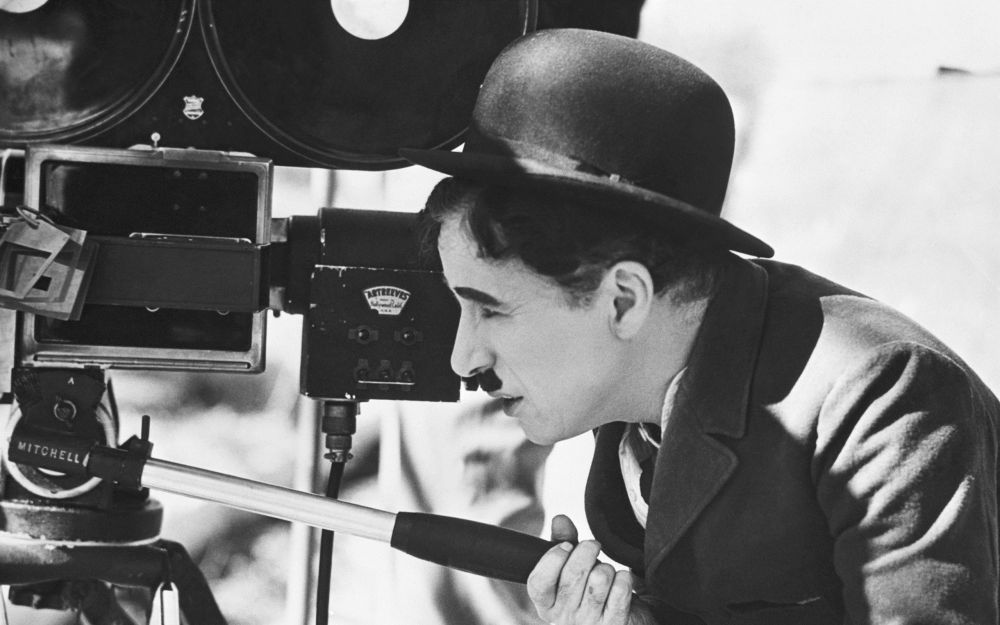
"Besides being the most celebrated silent slapstick comedy director, Sir Charles Chaplin was also a composer, early cinema's top star, and cofounder in 1919 of United Artists… Chaplin lowered his work rhythm to one film every few years, and his carefully choreographed gags, emotional tactfulness, and awareness for detail guaranteed brilliance." - Ernest Mathijs (501 Movie Directors, 2007)
Charles Chaplin
Director / Actor / Screenwriter / Editor / Producer / Composer
(1889-1977) Born April 16, Walworth, London, England
Top 250 Directors
(1889-1977) Born April 16, Walworth, London, England
Top 250 Directors
Key Production Country: USA
Key Genres: Comedy, Short Film, Slapstick, Comedy Drama, Melodrama, Romantic Comedy, Romance, Satire, Romantic Drama, Urban Comedy, Drama
Key Collaborators: Roland Totheroh (Cinematographer), Edna Purviance (Leading Character Actress), Henry Bergman (Leading Character Actor), Albert Austin (Character Actor), John Rand (Character Actor), Charles D. Hall (Production Designer), Henry P. Caulfield (Producer), Eric Campbell (Leading Character Actor), Maverick Terrell (Screenwriter), Vincent Bryan (Screenwriter), James T. Kelley (Character Actor), William C. Foster (Cinematographer)
Key Genres: Comedy, Short Film, Slapstick, Comedy Drama, Melodrama, Romantic Comedy, Romance, Satire, Romantic Drama, Urban Comedy, Drama
Key Collaborators: Roland Totheroh (Cinematographer), Edna Purviance (Leading Character Actress), Henry Bergman (Leading Character Actor), Albert Austin (Character Actor), John Rand (Character Actor), Charles D. Hall (Production Designer), Henry P. Caulfield (Producer), Eric Campbell (Leading Character Actor), Maverick Terrell (Screenwriter), Vincent Bryan (Screenwriter), James T. Kelley (Character Actor), William C. Foster (Cinematographer)
"Prior to Chaplin, no one had demonstrated that physical comedy could be simultaneously hilariously funny, emotionally passionate, and pointedly intellectual. While his cinema technique tended to be invisible—emphasizing the actor and his actions—he gradually evolved a principle of cinema based on framing: finding the exact way to frame a shot to reveal its motion and meaning completely, thus avoiding disturbing cuts." - Gerald Mast (International Dictionary of Films and Filmmakers, 1991)
"The sophisticated intelligence and skills he brought to slapstick comedy forced intellectuals to recognise that art could reside in a wholly popular entertainment, and not just in those self-consciously 'artistic' products with which the cinema first tried to court respectability. In the 1910s and 20s Chaplin's Tramp, combating a hostile and unrewarding world with cheek and gallantry, afforded a talisman and champion to the underprivileged millions who were the cinema's first mass audience." - David Robinson (The Oxford History of World Cinema, 1999)
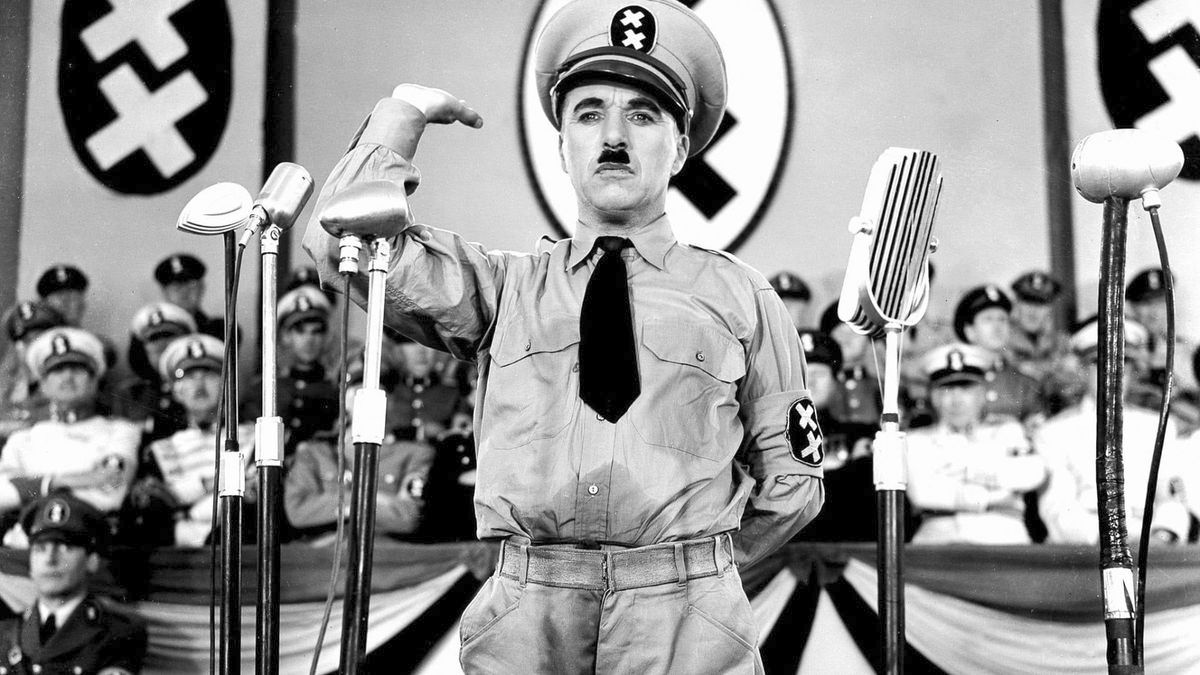
The Great Dictator (1940)
"Best known as the 'the little tramp', he drew on his childhood experiences of poverty and loss to depict a quintessential underdog, a rather exquisite, sentimentalised version of the Common Man eternally at odds with the strong and the rich, the powerful and unjust... In 1972 he received an honorary Oscar, followed three years later by a knighthood. While the awards were in recognition of his genius, he should be remembered less as a great film-maker than as the man who was the first real icon of cinema. Chaplin's importance lies in the way he embodied the movies' power to touch the world." - Geoff Andrew (The Film Handbook, 1989)
"One of film’s greatest geniuses both in front of and behind the camera, Charlie Chaplin was, for a time, the most popular entertainer in the world. From his early slapstick shorts, Chaplin pushed the envelope in developing the art of screen comedy, perfecting it in features like The Kid and The Gold Rush, in which he mined his Little Tramp persona for pathos as well as laughs. Even into the sound era, Chaplin continued to refine the art of the gag along with his masterful storytelling touch in classics like City Lights and Modern Times. Though his popularity faded later in his career, the controversial Monsieur Verdoux and the valedictory Limelight now shine as brilliant late works from a filmmaker who never lost an ounce of his artistic daring." - The Criterion Channel
"Chaplin, British-born, and raised and Hollywood-sharpened, offered the world an image - and was its own best salesman. As an actual film director, he was not of the first rank, but as an ideas man and a showcaser of his own talents, he was almost without peer." - David Quinlan (Quinlan's Film Directors, 1999)
"From the flickering images of the rowdy Keystone farces to the refined feature-length classics like The Gold Rush and City Lights, Chaplin’s career was long, varied and remarkable. He was instrumental in the development of cinema during its earliest stages from a storefront novelty into a form of artistic expression. His influence on screen comedy remains substantial." - James L. Neibaur (Senses of Cinema, 2008)
"The apparent simplicity of Chaplin's art should never be confused with lack of technique. For Chaplin, his other self on the screen has always been the supreme object of contemplation, and the style that logically followed from this assumption represents the antithesis to Eisenstein's early formulations on montage." - Andrew Sarris (The American Cinema, 1968)
"The first great screen comedian, Charles Chaplin was also one of the most gifted directors in history, in addition to being a formidable talent as a writer and composer… After D.W. Griffith, Chaplin was the most important filmmaker of the silent film era. Through his clear understanding of film and its capabilities, and his constant experimentation -- he frequently ran through hundreds of takes to get just the right shot and effect he wanted -- he set most of the rules for screen comedy that are still being followed, and his onscreen image remains one of the most familiar." - Allmovie
"Despite being a brilliant comic actor, Chaplin directed with a simple, sometimes awkward style. Yet his career is loaded with classics which are often as sentimental as they are funny. Chaplin's social conscience, first revealed in the pathetic wanderings of the Little Tramp, blossomed in the 1930s and 40s." - William R. Meyer (The Film Buff's Catalog, 1978)
"All my pictures are built around the idea of getting in trouble and so giving me the chance to be desperately serious in my attempt to appear as a normal little gentleman." - Charles Chaplin
"I do not have much patience with a thing of beauty that must be explained to be understood. If it does need additional interpretation by someone other than the creator, then I question whether it has fulfilled its purpose." - Charles Chaplin
Selected Filmography
Loading filmography...
Charles Chaplin / Fan Club
Andrew Sarris, Jonathan Rosenbaum, William Whitebait, Jeffrey M. Anderson, Guillermo del Toro, José Luis Guarner, Fernando Gonçalves Lavrador, Richard Brody, Gene Moskowitz, Irene Bignardi, David Robinson, Nagaharu Yodogawa.
Andrew Sarris, Jonathan Rosenbaum, William Whitebait, Jeffrey M. Anderson, Guillermo del Toro, José Luis Guarner, Fernando Gonçalves Lavrador, Richard Brody, Gene Moskowitz, Irene Bignardi, David Robinson, Nagaharu Yodogawa.
"Fan Club"
These film critics/filmmakers have, on multiple occasions, selected this director’s work within film ballots/lists that they have submitted.
These film critics/filmmakers have, on multiple occasions, selected this director’s work within film ballots/lists that they have submitted.