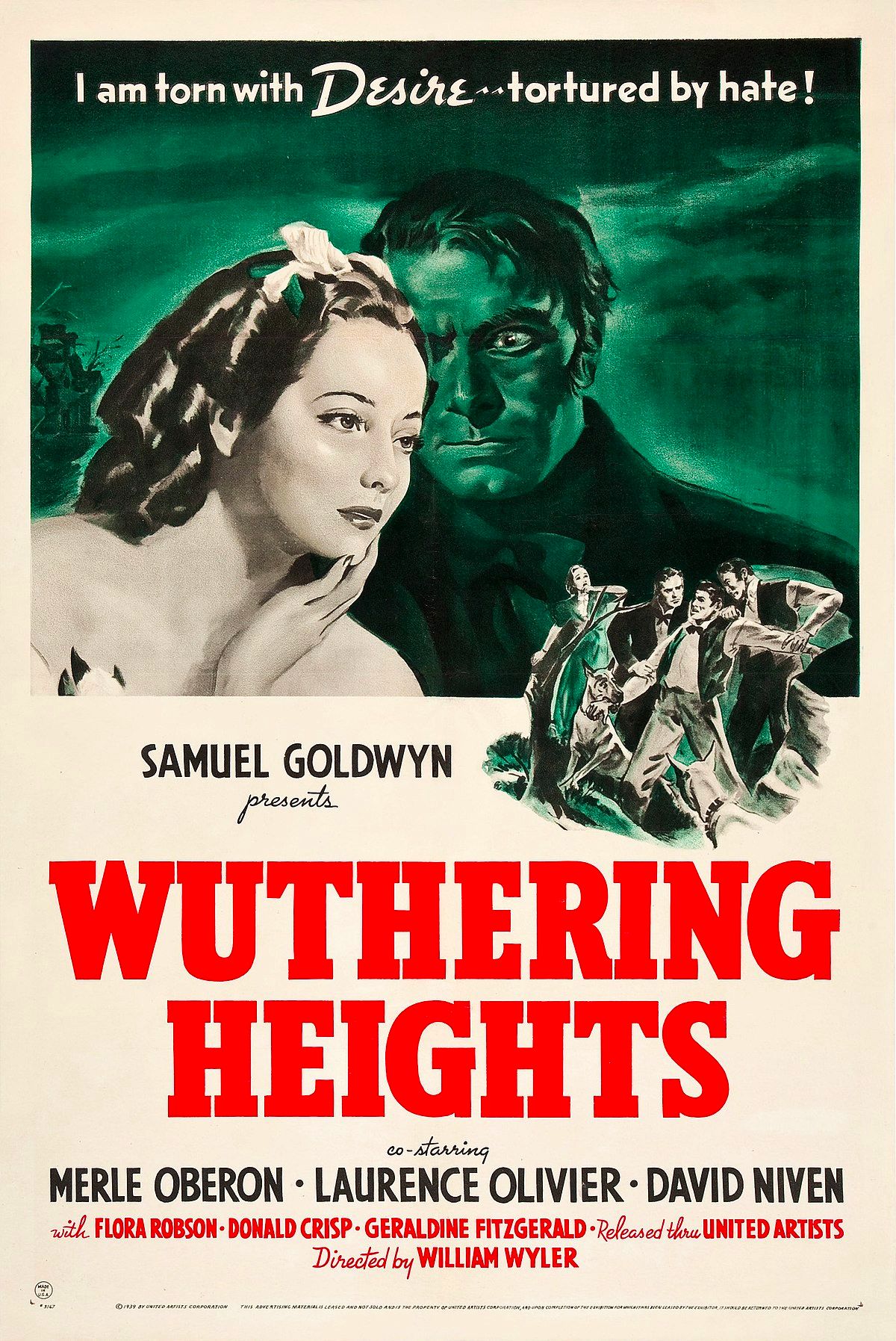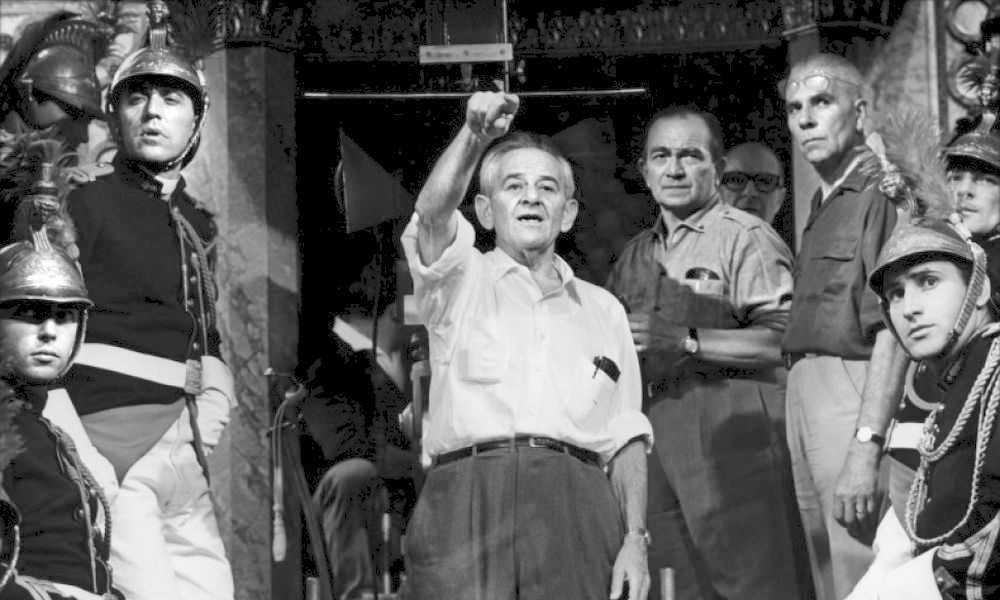
"Although William Wyler's credits extend officially from 1926 to 1970, his period of pre-eminence was between 1936 (Dodsworth) and 1946 (The Best Years of Our Lives). Orson Welles has called Wyler, not inaptly, the great producer among directors; that is to say, the masterly selector of shots, the compleat angler of the most gripping camera angles." - Andrew Sarris (Cinema: A Critical Dictionary, 1980)
William Wyler
Director / Producer
(1902-1981) Born July 1, Mülhausen, Alsace, Germany (now Mulhouse, Haut-Rhin, France)
Top 250 Directors
(1902-1981) Born July 1, Mülhausen, Alsace, Germany (now Mulhouse, Haut-Rhin, France)
Top 250 Directors
Key Production Country: USA
Key Genres: Drama, Family Drama, Melodrama, Romantic Drama, Romantic Comedy, Romance, Western, Comedy, Psychological Drama, Epic, War Drama, Crime Drama
Key Collaborators: Daniel Mandell (Editor), Robert Swink (Editor), Samuel Goldwyn (Producer), Gregg Toland (Cinematographer), Miriam Hopkins (Leading Actress), Alfred Newman (Composer), Hal Pereira (Production Designer), Bette Davis (Leading Actress), Audrey Hepburn (Leading Actress), Herbert Marshall (Leading Actor), Teresa Wright (Leading Actress), Lillian Hellman (Screenwriter)
Key Genres: Drama, Family Drama, Melodrama, Romantic Drama, Romantic Comedy, Romance, Western, Comedy, Psychological Drama, Epic, War Drama, Crime Drama
Key Collaborators: Daniel Mandell (Editor), Robert Swink (Editor), Samuel Goldwyn (Producer), Gregg Toland (Cinematographer), Miriam Hopkins (Leading Actress), Alfred Newman (Composer), Hal Pereira (Production Designer), Bette Davis (Leading Actress), Audrey Hepburn (Leading Actress), Herbert Marshall (Leading Actor), Teresa Wright (Leading Actress), Lillian Hellman (Screenwriter)
"There was a time when William Wyler was hailed as one of the finest of all directors, praised for his use of deep-focus cinematography and long, unbroken takes. Today his reputation has declined - a filmmaker dethroned by critical fashion, damned for those very qualities for which he was once lauded. His restraint has come to be seen as impersonality, his good taste as complacency, his seriousness as pomposity, his technical skill and lucidity as bland... Whatever the genre or the scale, Wyler never brought to any of his films less than impeccable craftsmanship." - Philip Kemp (501 Movie Directors, 2007)
"While there's no denying Wyler's expertise with actors or his ability to make the most out of a scene's topography in terms of the characters' emotional and psychological proximity to or distance from one another, his work could seem passionless and schematic... Whether working in historical or domestic drama, crime films or westerns, Wyler simply set about telling a story elegantly and sensitively, though in later epics like The Big Country and Ben-Hur, not to mention the musical Funny Girl, his solemnity merely seemed stolid and overblown." - Geoff Andrew (The Director's Vision, 1999)
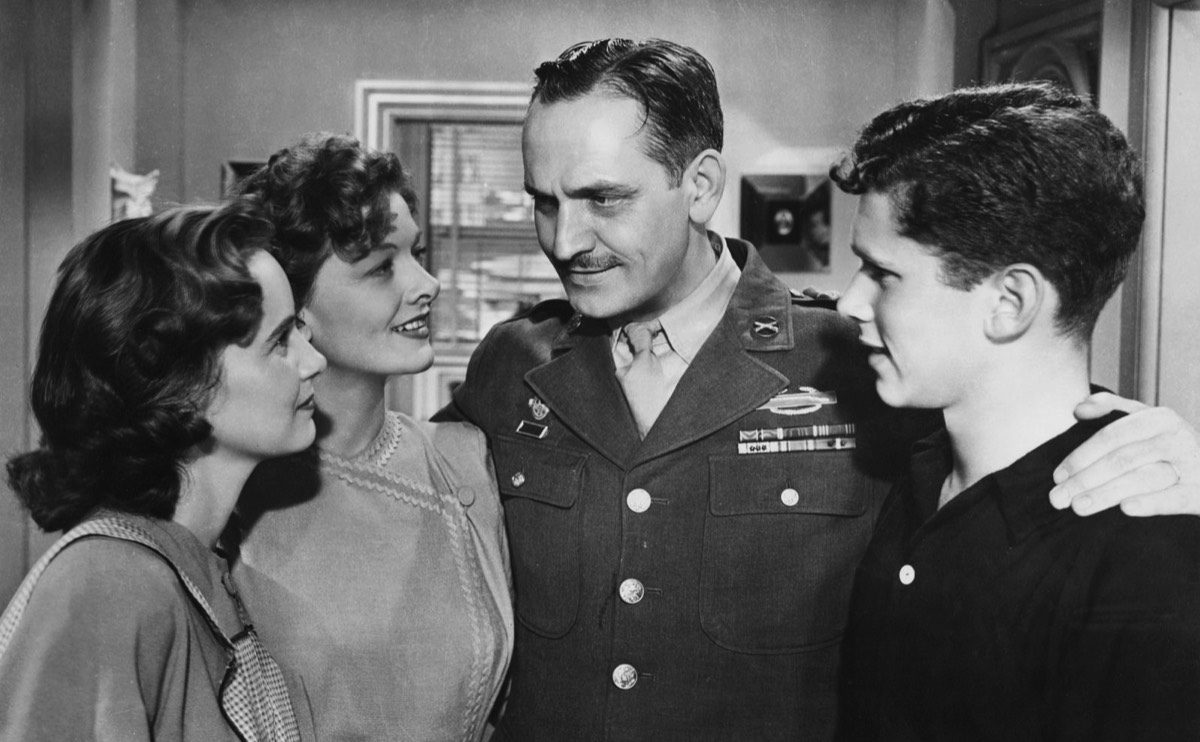
The Best Years of Our Lives (1946)
"Wyler's films, although in recent times they have undergone critical devaluation, are full of ringing, decisive and memorable emotional moments, and sharply etched acting performances. Most of the public, too, liked what they were seeing: it was crafted for their benefit with such care and attention to detail that the director at one time became known as '90-Take Wyler' for the number of times he would re-shoot his scenes to get exactly the right effect." - David Quinlan (Quinlan's Illustrated Guide to Film Directors, 1999)
"Wyler was a perfectionist who frequently antagonised actors by demanding constant retakes, a reputation which won him the nickname “90-take Wyler.” There was no clear thematic or stylistic consistency in his work, but the absolute professionalism of the best of it assures him a lasting place in the American cinema’s hall of fame." - The Guardian, 1981
"During the last decades of Wyler's career, many of the director's gifts, which flourished in contexts of extreme dramatic tension and the exigencies of studio shooting, were dissipated in excessively grandiose properties and "locations." There were, however, exceptions. Wyler's presence is strongly felt in the narrow staircase of The Heiress and the dingy station house of Detective Story." - Charles Affron (The St. James Film Directors Encyclopedia, 1998)
"William Wyler directed some of the greatest Hollywood movies of the twentieth century. He had his own way of doing things, and he was allowed to have his way on big productions because he made hits. His movies are unique both in how they are shot and in how closely the stories and characters are observed. There is an emotional depth and solidity to his work that you just don’t find everywhere else. From the domestic conflict of Dodsworth (1936) to the epic spectacle Ben-Hur (1959) and the extraordinary work in between, his films are so varied and so cinematic: beautiful-looking, dramatic, romantic, funny, and, above all else, intensely moving." - Kenneth Lonergan (The Criterion Collection, 2020)
"From 1936 onwards, he made sturdy, tasteful, smooth, respectable, quality entertainments that generally won Oscars... Gregg Toland's camerawork, especially his deep-focus photography, gave Wyler's films a definition they might not have had." - Ronald Bergan (A-Z of Movie Directors, 1983)
"Much of Wyler's work is centered on characters who are severely repressed, then give themselves over to their passions (Dodsworth, 36; The Letter, 40; The Collector, 65). The cause and effect are usually examined by the director, a fact which accounts for the high quality of Wyler's pulsating melodramas. In the course of his films, there are invariably images which brilliantly summarize a relationship or a moment." - William R. Meyer (The Film Buff's Catalog, 1978)
“Attracted to quality properties, most often plays like Dodsworth (1936), which earned him his first Oscar nomination, and Dead End (1937), Wyler soon established himself as one of Hollywood’s classiest directors, known as a perfectionist and hard taskmaster who demanded much of his cast, but achieved results which justified the hard work and multiple takes for every scene.” - Joel W. Finler (The Movie Directors Story, 1985)
“In a career spanning 45 years, he directed nearly 50 features. During his long and fruitful association with independent producer Samuel Goldwyn, Wyler became a director of prestige projects that were often adaptations of stage plays, many of them by the leading playwrights of his era. In an effort to remain true to the spatial relations of the plays he filmed, Wyler pioneered the use of deep-focus photography with the help of his cinematographer, Gregg Toland.” - The Encyclopedia of Hollywood, 2004
"I'm here to make good pictures. If I don't see it, I won't touch it. I may not make a good picture, but I still gotta believe in it." - William Wyler
Selected Filmography
Loading filmography...
GF Greatest Films ranking (★ Top 1000 ● Top 2500)
T TSPDT N 1,000 Noir Films
R Jonathan Rosenbaum S Martin Scorsese
T TSPDT N 1,000 Noir Films
R Jonathan Rosenbaum S Martin Scorsese
William Wyler / Favourite Films
All Quiet on the Western Front (1930) Lewis Milestone, Battleship Potemkin (1925) Sergei Eisenstein, The Best Years of Our Lives (1946) William Wyler, The Bridge on the River Kwai (1957) David Lean, The Cabinet of Dr. Caligari (1919) Robert Wiene, La Dolce vita (1960) Federico Fellini, Dr. Strangelove or: How I Learned to Stop Worrying and Love the Bomb (1964) Stanley Kubrick, Fanny (1932) Marc Allégret, The Treasure of the Sierra Madre (1948) John Huston, and several Charlie Chaplin films.
Source: Book of Lists (1977)
All Quiet on the Western Front (1930) Lewis Milestone, Battleship Potemkin (1925) Sergei Eisenstein, The Best Years of Our Lives (1946) William Wyler, The Bridge on the River Kwai (1957) David Lean, The Cabinet of Dr. Caligari (1919) Robert Wiene, La Dolce vita (1960) Federico Fellini, Dr. Strangelove or: How I Learned to Stop Worrying and Love the Bomb (1964) Stanley Kubrick, Fanny (1932) Marc Allégret, The Treasure of the Sierra Madre (1948) John Huston, and several Charlie Chaplin films.
Source: Book of Lists (1977)
William Wyler / Fan Club
Kent Jones, Martin Scorsese, Camille Paglia, Harlan Jacobson, Agustín Díaz Yanes, Farran Smith Nehme, Philip Concannon, Carrie Rickey, Jonathan Rosenbaum, Christopher McQuarrie, Oliver Stone, Cameron Crowe.
Kent Jones, Martin Scorsese, Camille Paglia, Harlan Jacobson, Agustín Díaz Yanes, Farran Smith Nehme, Philip Concannon, Carrie Rickey, Jonathan Rosenbaum, Christopher McQuarrie, Oliver Stone, Cameron Crowe.
"Fan Club"
These film critics/filmmakers have, on multiple occasions, selected this director’s work within film ballots/lists that they have submitted.
These film critics/filmmakers have, on multiple occasions, selected this director’s work within film ballots/lists that they have submitted.