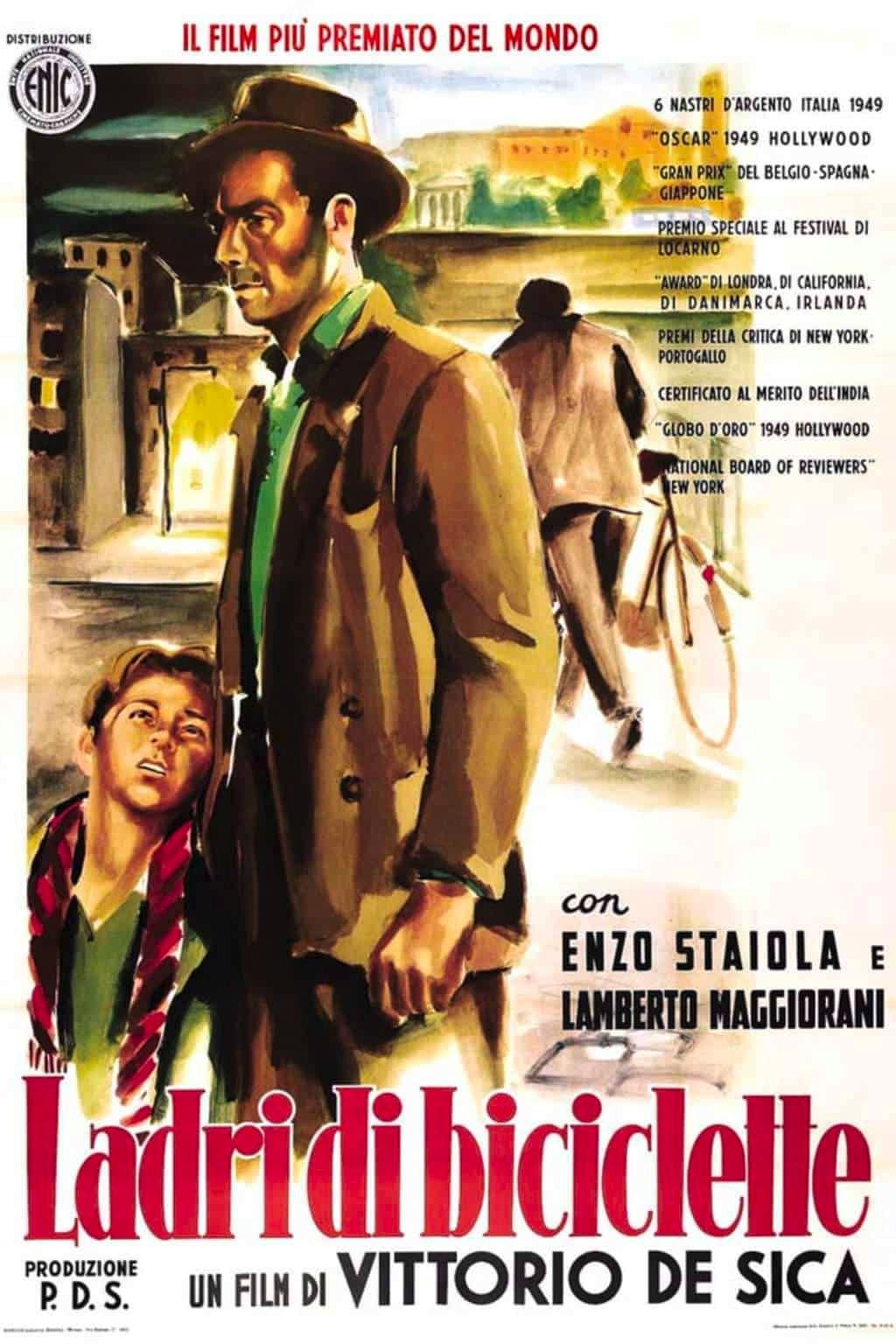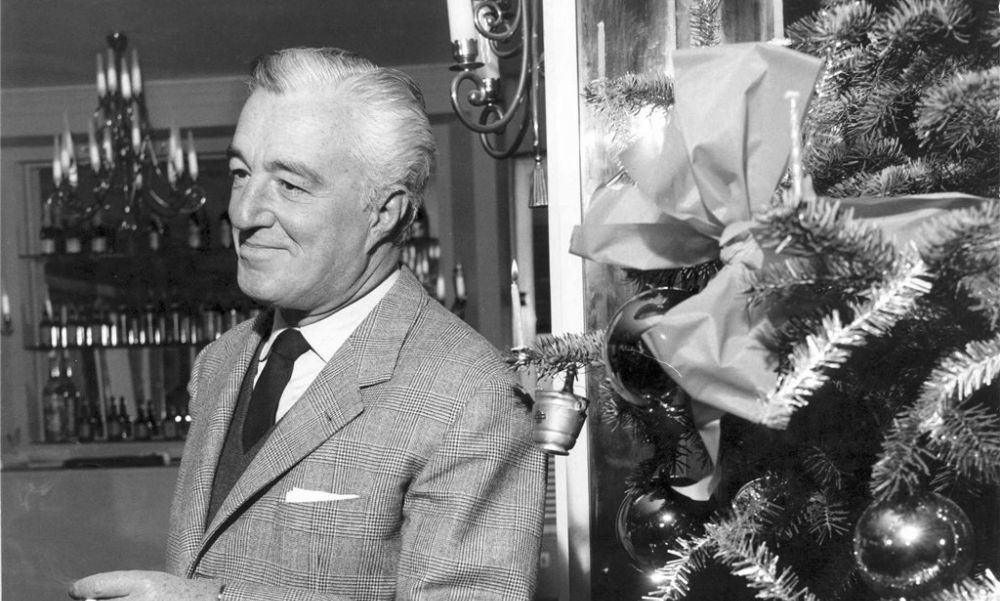
"In association with Cesare Zavattini, he played a major role in the development of neorealism 1944-52, creating the often imitated Bicycle Thieves and a vast tableau of life in Sciuscià, Umberto D, Miracle in Milan, and, later, in Il Tetto." - Georges Sadoul (Dictionary of Film Makers, 1972)
Vittorio De Sica
Director / Actor / Screenwriter / Producer
(1901-1974) Born July 7, Sora, Lazio, Italy
Top 250 Directors
(1901-1974) Born July 7, Sora, Lazio, Italy
Top 250 Directors
Key Production Countries: Italy, France
Key Genres: Drama, Melodrama, Comedy, Romantic Drama, War Drama, Family Drama, Romance, Comedy Drama, Coming-of-Age, Urban Drama, Crime Comedy, Satire
Key Collaborators: Cesare Zavattini (Screenwriter), Adriana Novelli (Editor), Alessandro Cicognini (Composer), Sophia Loren (Leading Actress), Carlo Ponti (Producer), Eraldo Da Roma (Editor), Adolfo Franci (Screenwriter), Paolo Stoppa (Leading Character Actor), Marcello Mastroianni (Leading Character Actor), Tecla Scarano (Character Actress), G.R. Aldo (Cinematographer), Carlo Montuori (Cinematographer)
Key Genres: Drama, Melodrama, Comedy, Romantic Drama, War Drama, Family Drama, Romance, Comedy Drama, Coming-of-Age, Urban Drama, Crime Comedy, Satire
Key Collaborators: Cesare Zavattini (Screenwriter), Adriana Novelli (Editor), Alessandro Cicognini (Composer), Sophia Loren (Leading Actress), Carlo Ponti (Producer), Eraldo Da Roma (Editor), Adolfo Franci (Screenwriter), Paolo Stoppa (Leading Character Actor), Marcello Mastroianni (Leading Character Actor), Tecla Scarano (Character Actress), G.R. Aldo (Cinematographer), Carlo Montuori (Cinematographer)
"The films of Vittorio De Sica are among the most enduring of the Italian post-war period. His career suggests an openness to form and a versatility uncommon among Italian directors… During his lifetime, De Sica acted in over one hundred films in Italy and abroad, using this means to finance his own directorial efforts… The influence of his tenure as actor cannot be overestimated in his directorial work, where the expressivity of the actor in carefully written roles was one of his foremost technical implements. In this vein De Sica has continually mentioned the influence on his work of Charlie Chaplin. The tensive continuity between tragic and comic, the deployment of a detailed yet poetic gestural language, and a humanist philosophy without recourse to the politically radical are all elements of De Sica’s work that are paralleled in the silent star’s films." - Joel Kanoff (International Dictionary of Films and Filmmakers, 2000)
"In retrospect, even De Sica's neo-realist work was marred by melodrama; the authenticity of location-shooting is undermined by schematic plots and excessive heart-on-the-sleeve sentimentality. The superbly naturalistic, non-professional performances in his best work, however, do convey an overwhelming emotional power." - Geoff Andrew (The Film Handbook, 1989)
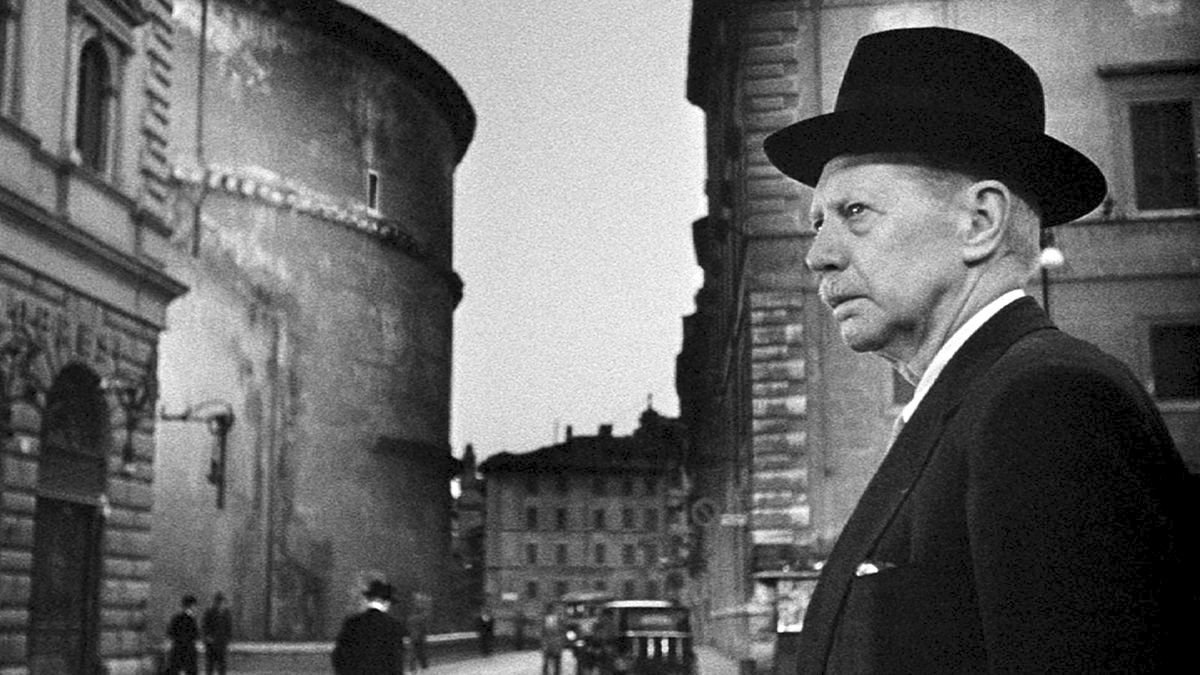
Umberto D. (1952)
"Although his detractors have argued that shallowness was never far away, it still seems unbelievable that the man who produced four consecutive masterpieces, which told us more about the plight and conditions of postwar Italians than any other films, could later have turned out such vapid and dispiriting stuff as Boccaccio 70, Marriage Italian Style, Yesterday, Today and Tomorrow and Woman Times Seven." - David Quinlan (Quinlan's Film Directors, 1999)
"Vittorio De Sica’s films contain much of the aching sadness of life, and much of the beauty, too. It is one of the small mysteries of cinema how De Sica, a lightweight actor (and very handsome man) accustomed to playing sentimental leads, should go on to become one of Europe’s greatest tragic film-makers. It’s as if Hugh Grant were to suddenly metamorphose into Ken Loach. Yet links remain between the comedic ham and the neorealist tragedian. De Sica enthusiastically carried his actor’s talent into his directing style, instructing his amateur performers on the way to perform, enacting the parts to show them how things should be done." - Michael Newton (The Guardian, 2015)
"Like many would-be documentarists, De Sica is actually uneasy about feeling. When it arises, he shuts it off brusquely, as if he mistrusted an over-sentimental reaction from his innate coldness. I do not mean that he was callous, but that his films skirt round feelings and prefer not to investigate character... He stands now as a minor director. But the films from 1943-1952, and The Gold of Naples, are still worth seeing." - David Thomson (The New Biographical Dictionary of Film, 2002)
"One of the most influential and talented directors of the postwar Italian cinema, Vittorio De Sica is credited as a progenitor of the neorealist movement that radically reshaped the cinematic landscape in Europe and beyond. De Sica’s early films defined the quintessence of neorealism by transforming their necessarily small budgets into an aesthetic creed, a commitment to working with nonprofessional actors, shooting on location using available lighting, and encouraging intense character exploration and improvisation." - Harvard Film Archive, 2010
"The neorealist films of Vittorio De Sica changed the face of Italian cinema, and the director claimed that, "my films are a word in favour of the poor and unhappy and against the indifference of society towards suffering." - Ronald Bergan (Film - Eyewitness Companions, 2006)
"A former romantic actor turned director (although he still acted on occasion to fund his other ventures), De Sica was the most Italian of creatures, a man who saw nothing strange in spanning three or even four different genres throughout his career, varying from the avant-garde to the blatantly commercial." - Mario Reading (The Movie Companion, 2006)
"The great humanist of Italian neo-realism, De Sica directed with an emphasis on truth, simple humanity, the goodness of man, comedy and faith." - William R. Meyer (The Film Buff's Catalog, 1978)
"I've lost all my money on these films. They are not commercial. But I'm glad to lose it this way. To have for a souvenir of my life pictures like Umberto D. and The Bicycle Thief." - Vittorio De Sica
Selected Filmography
Loading filmography...
Vittorio De Sica / Favourite Films
L'Atalante (1934) Jean Vigo, Battleship Potemkin (1925) Sergei Eisenstein, Carnival in Flanders (1935) Jacques Feyder, La Chienne (1931) Jean Renoir, Hallelujah! (1929) King Vidor, Kameradschaft (1931) G.W. Pabst, The Kid (1921) Charles Chaplin, Man of Aran (1934) Robert J. Flaherty, Le Million (1931) René Clair, Storm Over Asia (1928) Vsevolod Pudovkin.
Source: Cinematheque Belgique (1952)
L'Atalante (1934) Jean Vigo, Battleship Potemkin (1925) Sergei Eisenstein, Carnival in Flanders (1935) Jacques Feyder, La Chienne (1931) Jean Renoir, Hallelujah! (1929) King Vidor, Kameradschaft (1931) G.W. Pabst, The Kid (1921) Charles Chaplin, Man of Aran (1934) Robert J. Flaherty, Le Million (1931) René Clair, Storm Over Asia (1928) Vsevolod Pudovkin.
Source: Cinematheque Belgique (1952)
Vittorio De Sica / Fan Club
Michael Sragow, Fernando León de Aranoa, Robbie Collin, Kenneth Turan, Woody Allen, Liv Ullmann, Charles Burnett, Roy Andersson, Sukhdev Sandhu, Les Blank, Sanjeev Verma, Aki Kaurismäki.
Michael Sragow, Fernando León de Aranoa, Robbie Collin, Kenneth Turan, Woody Allen, Liv Ullmann, Charles Burnett, Roy Andersson, Sukhdev Sandhu, Les Blank, Sanjeev Verma, Aki Kaurismäki.
"Fan Club"
These film critics/filmmakers have, on multiple occasions, selected this director’s work within film ballots/lists that they have submitted.
These film critics/filmmakers have, on multiple occasions, selected this director’s work within film ballots/lists that they have submitted.