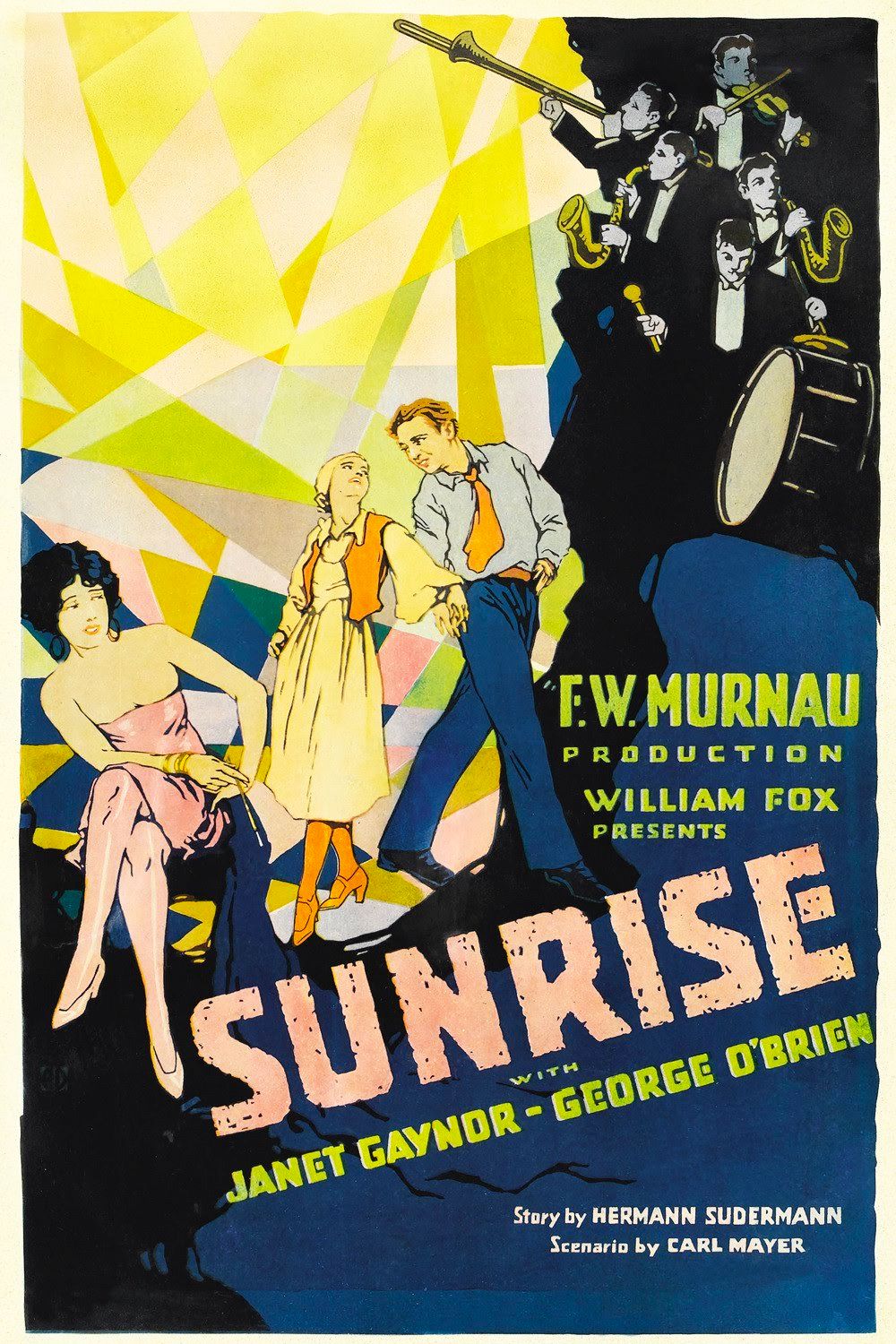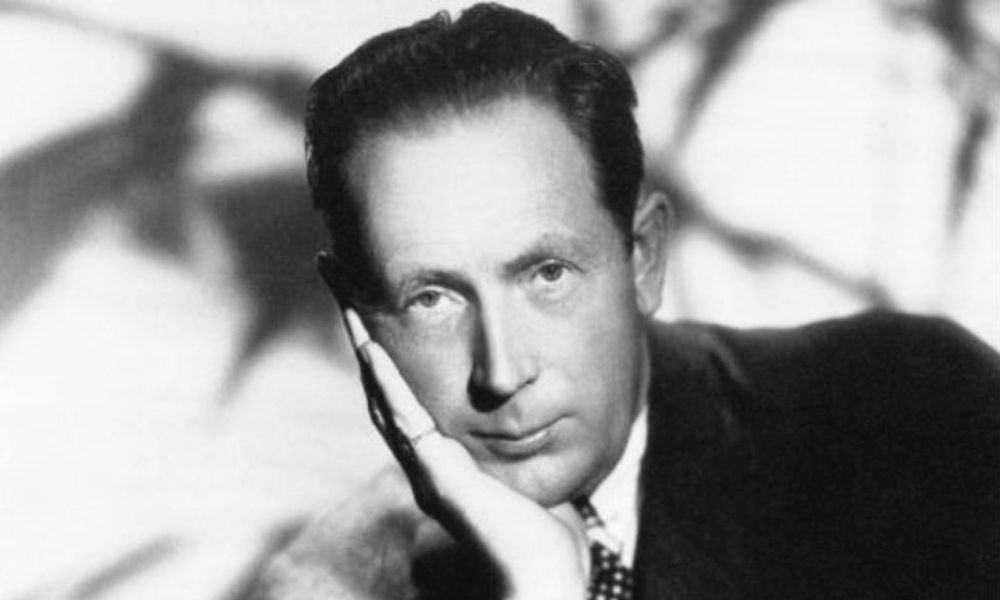
"He made 17 films in Germany, and a final four in America. Of these, only 12 survive. They form a body of work as startling, and as compelling, as any in cinema. Murnau is hard to pin down. His work has no unifying theme; what runs through it all is an attitude to the image on the screen and to what it can express. There is a sense of life in the whole of every frame." - The Illustrated Who's Who of Cinema, 1983
F.W. Murnau
Key Production Countries: Germany, USA
Key Genres: Drama, Fantasy, Gothic Film, Horror, Romance, Comedy
Key Collaborators: Erich Pommer (Producer), Carl Mayer (Screenwriter), Karl Freund (Cinematographer), Emil Jannings (Leading Actor), Thea von Harbou (Screenwriter), Fritz Arno Wagner (Cinematographer), Alfred Abel (Leading Charactor Actor), Robert Herlth (Production Designer), Walter Röhrig (Production Designer), Hermann Vallentin (Character Actor), Werner Krauss (Leading Actor), Sascha Goron (Producer)
Key Genres: Drama, Fantasy, Gothic Film, Horror, Romance, Comedy
Key Collaborators: Erich Pommer (Producer), Carl Mayer (Screenwriter), Karl Freund (Cinematographer), Emil Jannings (Leading Actor), Thea von Harbou (Screenwriter), Fritz Arno Wagner (Cinematographer), Alfred Abel (Leading Charactor Actor), Robert Herlth (Production Designer), Walter Röhrig (Production Designer), Hermann Vallentin (Character Actor), Werner Krauss (Leading Actor), Sascha Goron (Producer)
"Friedrich Wilhelm Murnau was at once a pioneer, yet at the same time he was a master of his medium who has rarely been rivalled since. Faced with a burning conviction that film was the natural successor to theatre, driven by a narrative talent, and inspired by an innovative genius, he became a worthy member of the pantheon of filmmakers who established cinema as both artistic endeavour and entertainment industry, on both sides of the Atlantic. Without him, the course of European film, and indeed the course of American film, would have been very different." - Ian Roberts (Studies in European Cinema: Volume 4/Number 3, 2007)
"Murnau's influence on the cinema has proved to be more lasting than Eisenstein's. Murnau's moving camera seems a more suitable style for exploring the world than does Eisenstein's dialectical montage, and the trend in modern movies has been towards escaping studio sets so as to discover the real world." - Andrew Sarris (The American Cinema, 1968)
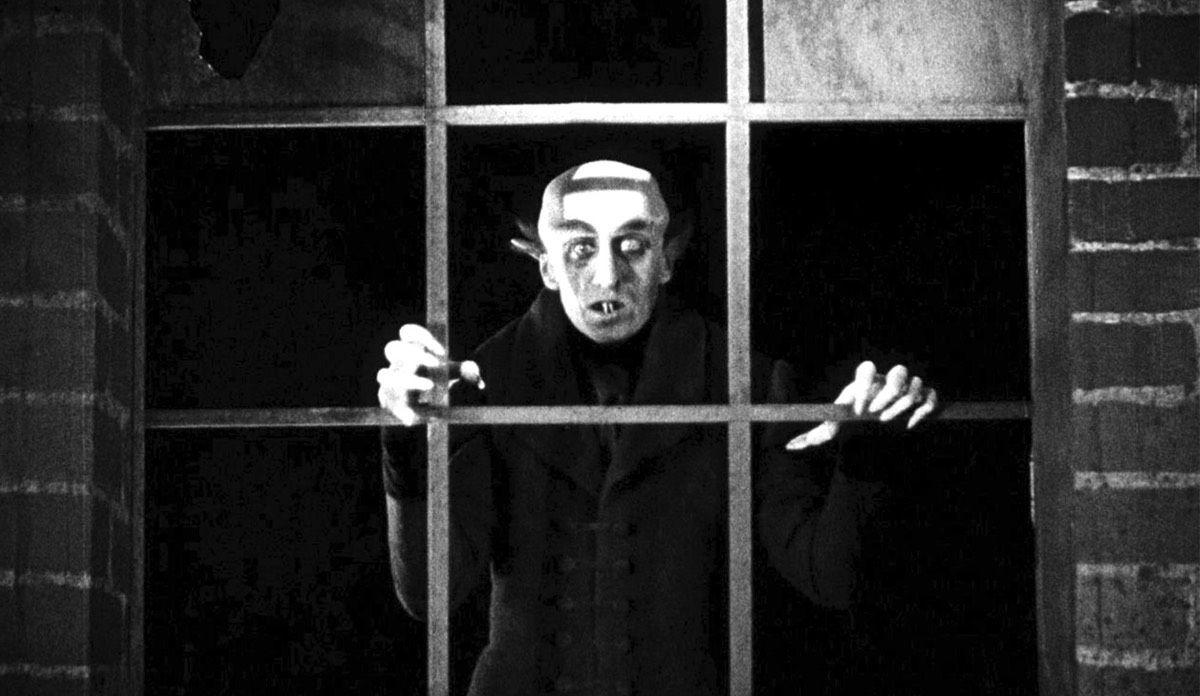
Nosferatu (1922)
"Enormously intelligent and far ahead of his time, Murnau worked to obtain new dramatic effects from the interrelation of fleeting shots in fragmenting sequences - in other words, working in filmic jigsaws whose individual scenes are suddenly stunningly effective when the final piece is fitted. Using a combination of the real world and a skilful manipulation of the audience's imaginations, Murnau used the power of suggestion in new and amazing ways: thus the unseen and unspoken is constantly sensed by his audiences, no matter what their intelligence." - David Quinlan (Quinlan's Illustrated Guide to Film Directors, 1999)
"F.W. Murnau not only exploited new filming techniques such as the use of negative exposure, stop-motion and low angle camera positions, but also made pioneering achievements in terms of film settings, choosing to film both in studios (Faust, The Last Laugh) and on location (Nosferatu, Sunrise). Along with G.W. Pabst, Robert Wiene and Fritz Lang, he established German expressionism as arguably the most significant movement of the silent film era. Working with the best cinematographers and set designers of his time, including Fritz Arno Wagner, Karl Freund, Karl Hoffmann, Walter Rohrig and Hermann Warm, Murnau crafted a body of work which penetrates deeply into the psychic world of his characters and constructs a remarkably distinct cinematic universe." - Harvard Film Archive, 2004
"Murnau's visual style unites the diverse themes and stories that constitute his best work; his fluently moving camera implies and openness of attitude that transcends both the rigid schematics of Expressionism and the limiting conventions of genre. His films are difficult to categorise (Nosferatu is too lyrical to be seen as mere horror, while many of his other works suggest and interest in metaphysics rather than simple story telling), but they retain an ability to touch the heart and stimulate both mind and eye." - Geoff Andrew (The Film Handbook, 1989)
"A filmmaker in the German expressionist tradition of the 1920s, Murnau rarely let symbolism or a mythical theme harm the humanity of his characters - which is why his work is still vibrant today." - William R. Meyer (The Film Buff's Catalog, 1978)
"The camera is the director's pencil. It should have the greatest possible mobility in order to record the most fleeting harmony of atmosphere. It is important that the mechanical factor should not stand between the spectator and the film." - F.W. Murnau
Selected Filmography
Loading filmography...
F.W. Murnau / Fan Club
Miguel Marías, Freddy Buache, Kent Jones, Jonathan Rosenbaum, José Manuel Costa, Luc Moullet, Pedro Butcher, Alexandre Astruc, Michel Ciment, Jean Douchet, Enno Patalas, Richard Brody.
Miguel Marías, Freddy Buache, Kent Jones, Jonathan Rosenbaum, José Manuel Costa, Luc Moullet, Pedro Butcher, Alexandre Astruc, Michel Ciment, Jean Douchet, Enno Patalas, Richard Brody.
"Fan Club"
These film critics/filmmakers have, on multiple occasions, selected this director’s work within film ballots/lists that they have submitted.
These film critics/filmmakers have, on multiple occasions, selected this director’s work within film ballots/lists that they have submitted.