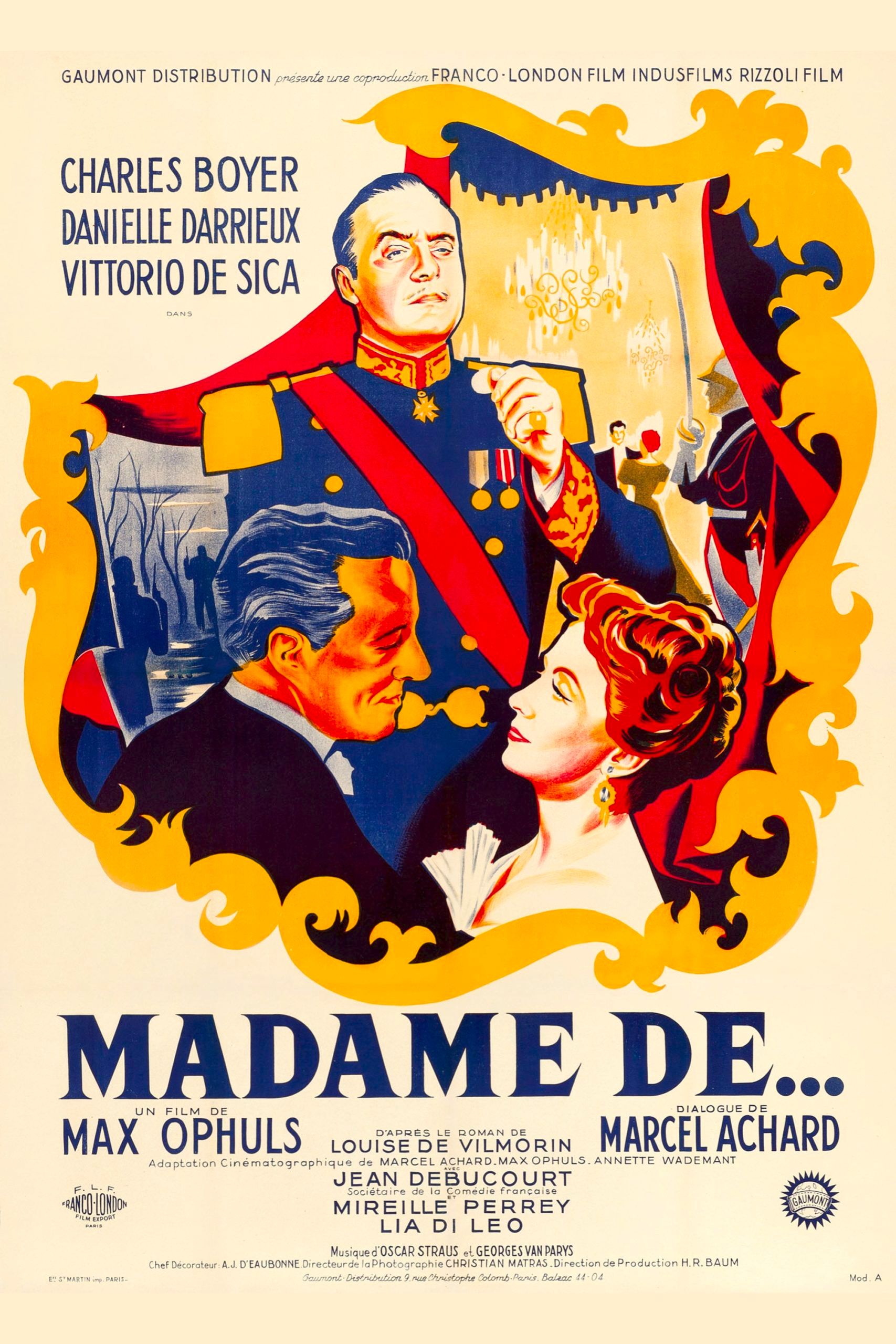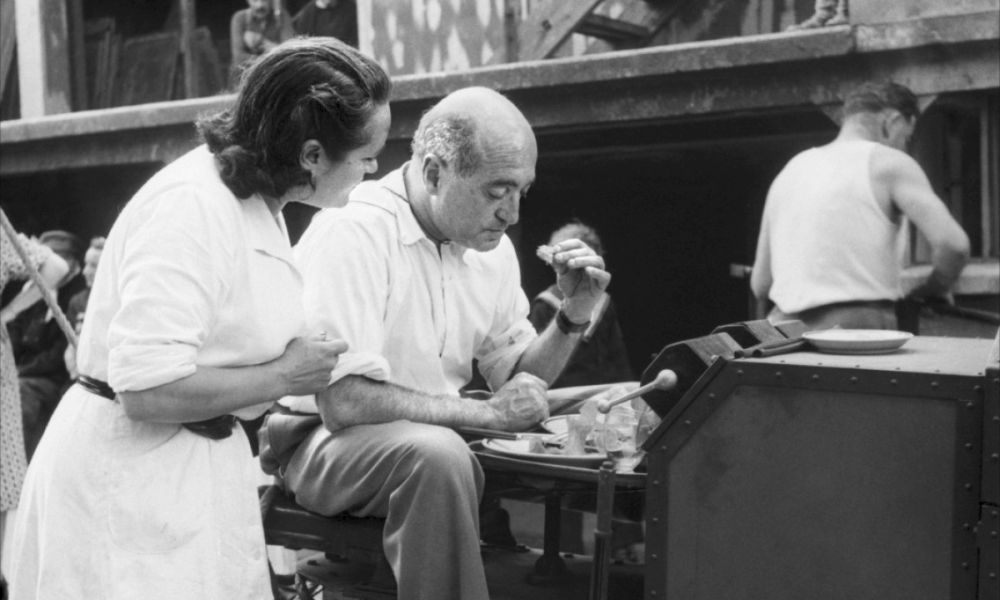
"Ophuls is, like all great directors, inimitable, and if all the dollies and cranes in the world snap to attention when his name is mentioned, it is because he gave camera movement its finest hours in the history of the cinema." - Andrew Sarris (The American Cinema, 1968)
Max Ophüls
Key Production Countries: France, USA, Germany
Key Genres: Drama, Melodrama, Romantic Drama, Romance, Period Film, Psychological Drama
Key Collaborators: Curt Alexander (Screenwriter), Jean d'Eaubonne (Production Designer), Franz Planer (Cinematographer), Christian Matras (Cinematographer), Jean Galland (Character Actor), Jacques Natanson (Screenwriter), Hans Wilhelm (Screenwriter), Ralph Baum (Producer), Eugen Schüfftan (Cinematographer), Danielle Darrieux (Leading Character Actress), Paul Azais (Leading Character Actor), Oscar Straus (Composer)
Key Genres: Drama, Melodrama, Romantic Drama, Romance, Period Film, Psychological Drama
Key Collaborators: Curt Alexander (Screenwriter), Jean d'Eaubonne (Production Designer), Franz Planer (Cinematographer), Christian Matras (Cinematographer), Jean Galland (Character Actor), Jacques Natanson (Screenwriter), Hans Wilhelm (Screenwriter), Ralph Baum (Producer), Eugen Schüfftan (Cinematographer), Danielle Darrieux (Leading Character Actress), Paul Azais (Leading Character Actor), Oscar Straus (Composer)
"Max Ophuls had a romantic sensibility that is among the most astute in all cinema, while his flowing, generous camera style reinforces the poetic intensity of his films. Regularly dismissed as a mere stylist, his reputation has soared over the last 25 years and he is now regarded as a master of the doomed love story, able, like Douglas Sirk, to transcend the limitations of the stereotypic "women's film... Arguably, for his control of narrative space and for their affecting orchestration of romantic regret, Ophuls' 1950s films were his most consummate." - Richard Alexander (The Rough Guide to Film, 2007)
"The identification with a female consciousness and the female predicament is the supreme characteristic of the Ophülsian thematic; at the same time, the Ophüls style - the commitment to grace, beauty, sensitivity - amounts to a celebration of what our culture defines as "femininity," combined with the force of authority, the drive, the organizational (directorial) abilities construed as masculine. In short, the supreme achievement of Ophüls' work is its concrete and convincing embodiment of the collapsibility of our culture's barriers of sexual difference." - Robin Wood (The St. James Film Directors Encyclopedia, 1998)
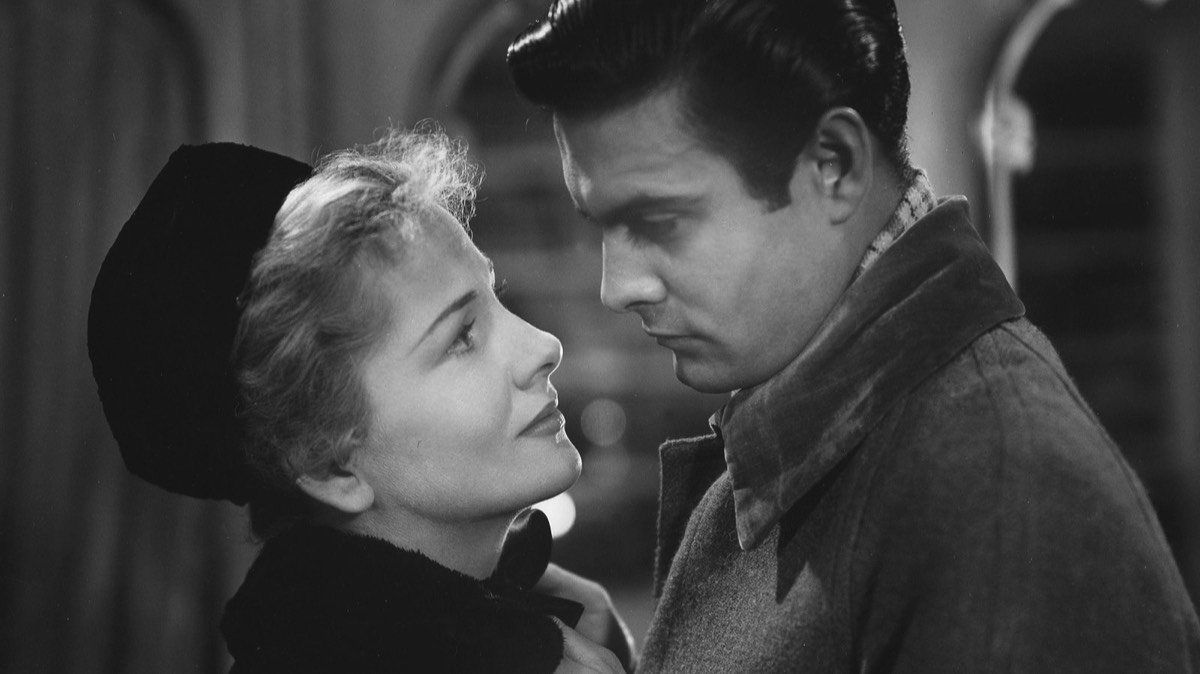
Letter from an Unknown Woman (1948)
"Repeatedly, Ophüls explored the gulf between idealised love and the reality of passion: in Liebelei, Letter from an Unknown Woman, Caught and Madame De... disappointment and despair darken the mood, yet the films finally reaffirm love's undying appeal - reflecting, ironically, on the romantic illusions proffered by cinema itself." - Geoff Andrew (The Director's Vision, 1999)
"Although Ophüls’ cinema also prospers with engaging storylines, strong performances, and a deft handling of multiple themes and historical concentrations, there remains a profound visual fascination, one hinging on the sheer joy of unbridled movement, the texture of an exotic location, the draw of beautiful people, and the visceral satisfaction of a medium’s potential. There is something magical about seeing an exceptional work of art, something special in its emotional-sensory stimulus. It’s what distinguished cinema’s genesis, and it’s part of the same romantic spell still cast by the films of Max Ophüls." - Jeremy Carr (Senses of Cinema, 2017)
"Max Ophüls is one of the greatest of film directors. He is frivolous only if it is frivolous to be obsessed by the gap between the ideal and the reality of love... No one had more sympathy for love than Ophüls, but no one knew so well how lovers remained unknown, strangers." - David Thomson (The New Biographical Dictionary of Film, 2002)
"Max Ophüls was a supreme stylist of the cinema and a master storyteller of romance, doomed love and sexual passion. Fusing the subject of his stories with his endlessly mobile camera, he choreographed emotion, overflowing into ecstatic and extended moments that merge images of desire with desire for cinema." - Laura Mulvey (Harvard Film Archive, 2009)
"A romantic with an eye for psychology, period detail, and sweeping camera movement who lensed melodramas about love and its joys and consequences." - William R. Meyer (The Film Buff's Catalog, 1978)
"A totally dedicated film maker, enamored of the cinema and its techniques, even though his experience was as a stage actor and producer (1919-32)." - Georges Sadoul (Dictionary of Film Makers, 1972)
"I was very influenced by the movies of Max Ophüls, who moved the camera all the time." - Vincente Minnelli
"The camera exists to create a new art and to show above all what cannot be seen elsewhere: neither in theater nor in life; otherwise, I'd have no need of it; doing photography doesn't interest me. That, I leave to the photographer." - Max Ophüls
Selected Filmography
Loading filmography...
Max Ophüls / Fan Club
Robin Wood, Andrew Sarris, Farran Smith Nehme, Tim Robey, Michel Ciment, José Luis Guarner, Molly Haskell, Kenneth Turan, Adrian Martin, Miguel Marías, Laura Mulvey, Pierre Rissient.
Robin Wood, Andrew Sarris, Farran Smith Nehme, Tim Robey, Michel Ciment, José Luis Guarner, Molly Haskell, Kenneth Turan, Adrian Martin, Miguel Marías, Laura Mulvey, Pierre Rissient.
"Fan Club"
These film critics/filmmakers have, on multiple occasions, selected this director’s work within film ballots/lists that they have submitted.
These film critics/filmmakers have, on multiple occasions, selected this director’s work within film ballots/lists that they have submitted.