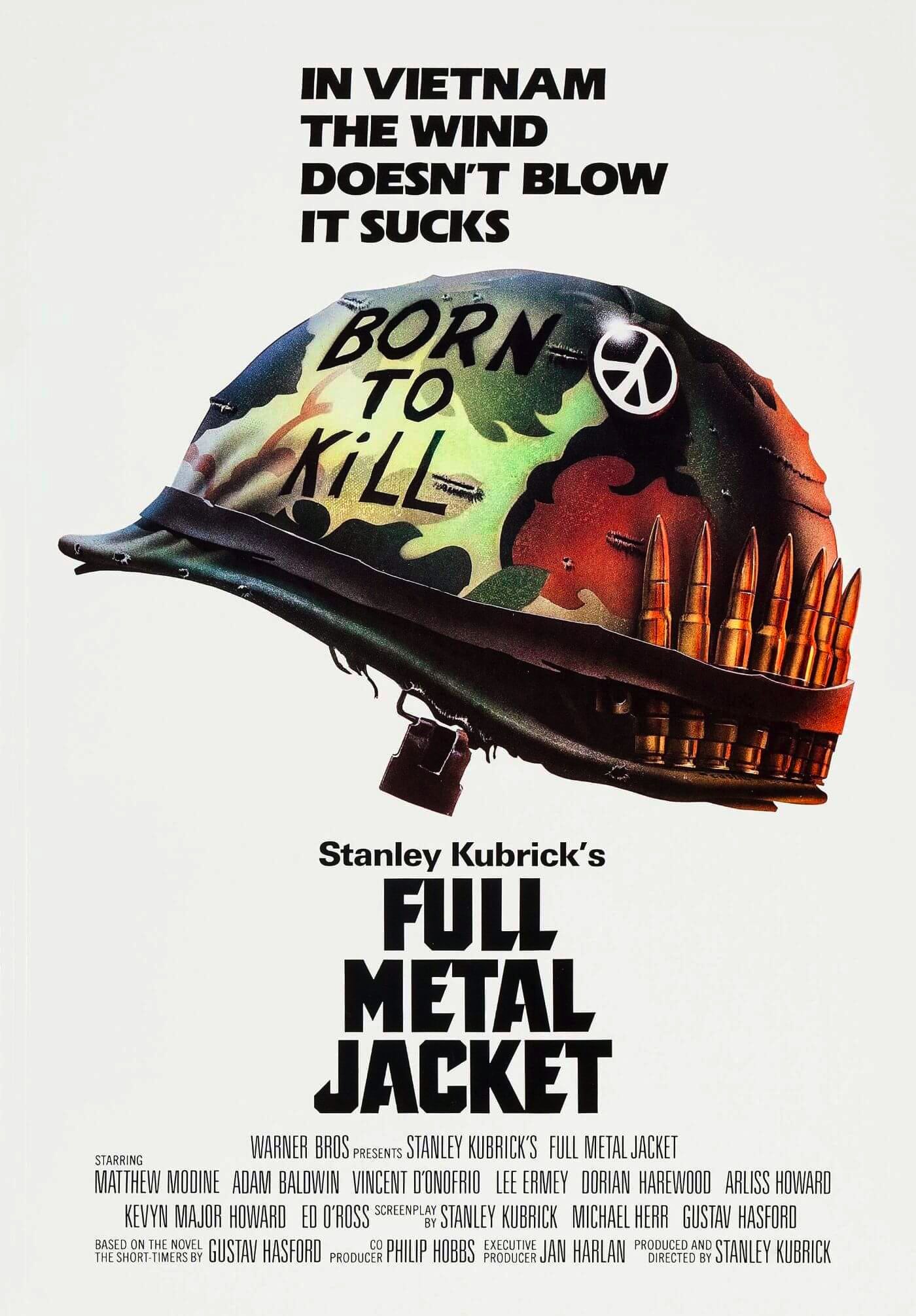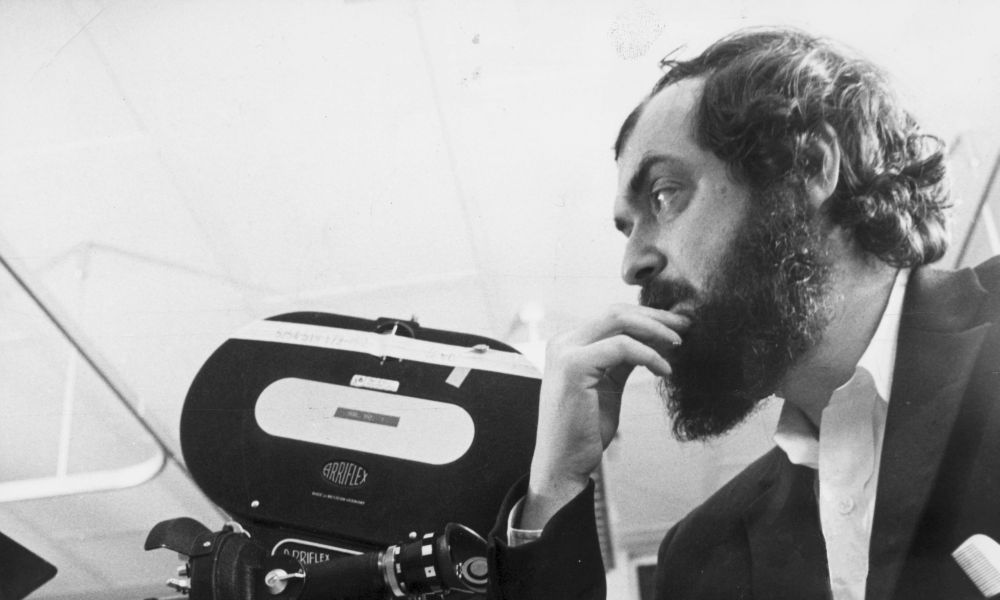
"The scrupulous care with which he chose his subjects, his slow method of working, and his reclusive personality created a rare expectancy every time Stanley Kubrick made a film. Deeply pessimistic and claustrophobic, Kubrick's films deal brilliantly with technical and textual complexities." - Ronald Bergan (Eyewitness Companions: Film, 2006)
Stanley Kubrick
Director / Screenwriter / Producer / Cinematographer / Editor
(1928-1999) Born July 26, New York City, New York, USA
Top 250 Directors / 50 Key Noir Directors
(1928-1999) Born July 26, New York City, New York, USA
Top 250 Directors / 50 Key Noir Directors
Key Production Countries: USA, UK
Key Genres: Drama, Anti-War Film, War Drama, Black Comedy, War, Satire, Science Fiction, Psychological Drama, Psychological Sci-Fi, Film Noir, Crime Thriller
Key Collaborators: Gerald Fried (Composer), James B. Harris (Producer), John Alcott (Cinematographer), Joseph Turkel (Character Actor), Frank Silvera (Leading Actor), Kirk Douglas (Leading Actor), Sterling Hayden (Leading Actor), Patrick Magee (Leading Actor), Peter Sellers (Leading Actor), Jim Thompson (Screenwriter), Ray Lovejoy (Editor), Anthony Harvey (Editor)
Key Genres: Drama, Anti-War Film, War Drama, Black Comedy, War, Satire, Science Fiction, Psychological Drama, Psychological Sci-Fi, Film Noir, Crime Thriller
Key Collaborators: Gerald Fried (Composer), James B. Harris (Producer), John Alcott (Cinematographer), Joseph Turkel (Character Actor), Frank Silvera (Leading Actor), Kirk Douglas (Leading Actor), Sterling Hayden (Leading Actor), Patrick Magee (Leading Actor), Peter Sellers (Leading Actor), Jim Thompson (Screenwriter), Ray Lovejoy (Editor), Anthony Harvey (Editor)
"Looking back on this remarkable filmography, it is clear that it has the distinctly architectonic quality of any great philosophical system: it says something about everything. All the facets of human nature are revealed in their wide-ranging diversity: high and low culture, love and sex, history, war, crime, madness, space travel, social conditioning, and technology. Yet, as internally diverse as Kubrick’s filmography is, taken as a whole, it is also quite coherent. It takes all the differentiated sides of reality and unifies them into one rich, complex philosophical vision that happens to be very close to existentialism." - Jerold J. Abrams (The Philosophy of Stanley Kubrick, 2009)
"Few American directors have been able to work within the studio system of the American film industry with the independence which Stanley Kubrick has achieved. By steadily building a reputation as a filmmaker of international importance, he has gained full artistic control over his films, guiding the production of each of them from the earliest stages of planning and scripting through post-production." - Gene D. Phillips (International Dictionary of Films and Filmmakers, 1991)
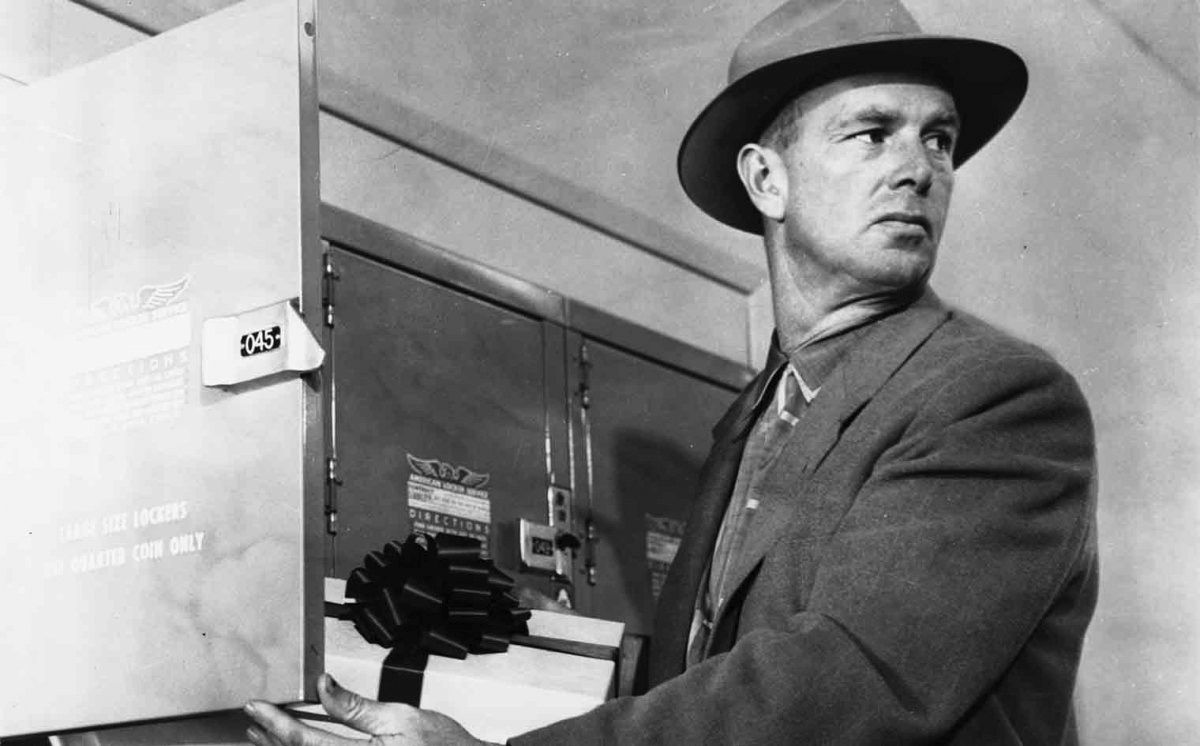
The Killing (1956)
"After 1961, Kubrick was based in England, with some of the precious decorousness of the writer in A Clockwork Orange who is broken in on by Alex and the Droogs. Five films were passed out to the world from that retreat, which took an increasingly sententious and nihilistic view of our social and moral ethics, but which are devoid of artistic personality as the worlds that Kubrick elegantly extrapolates." - David Thomson (The New Biographical Dictionary of Film, 2002)
"On a surface level, Kubrick seemed willing to alienate the audience for his desired effects. Yet the constant control and manipulation of all things surrounding his work also freed it up to interpretation. One knows, for the most part, that one is watching a Kubrick movie – its authorship is clear. Easy speculation and interpretation follow suit, but it is more of a challenge to dig beneath the popular veneer and debate the actual man and his deeper meanings." - Keith Uhlich (Senses of Cinema, 2002)
"Immensely talented American filmmaker with a sure visual sense. Perhaps, though, led astray by the (deserved) success of Spartacus, Kubrick's later films are the best possible proof that bigger does not necessarily mean better. Since the mid-1960s, Kubrick has become a maker of films for effect and has lost much of the narrative drive that once distinguished his work." - David Quinlan (Quinlan's Illustrated Guide to Film Directors, 1983)
"With an astonishing knowledge of cinema history, and a fastidious nature that involved him in frenzied and lengthy preparations for all his films, it is something of a miracle that he left us a filmography quite so rich and varied in its content." - Mario Reading (The Movie Companion, 2006)
"Clearly, the memorably vivid images he created are those of a superb craftsman; sadly, they tend to shout rather than speak, so that overall the exact meaning of his films often lacks subtlety and clarity." - Geoff Andrew (The Director's Vision, 1999)
"As a social satirist (Dr. Strangelove, 64; A Clockwork Orange, 71), Kubrick is a master. As a maker of mood pieces which outline man's place in society and civilization (2001, 68; Barry Lyndon, 76), he is interested more in the workings of various mechanical and social machines than in man. Kubrick is one of America's finest post-World War II filmmakers." - William R. Meyer (The Film Buff's Catalog, 1978)
"A film is - or should be - more like music than like fiction. It should be a progression of moods and feelings. The theme, what's behind the emotion, the meaning, all that comes later." - Stanley Kubrick
"The screen is a magic medium. It has such power that it can retain interest as it conveys emotions and moods that no other art form can hope to tackle." - Stanley Kubrick
Selected Filmography
Loading filmography...
Stanley Kubrick / Favourite Films
The Bank Dick (1940) Eddie Cline, Citizen Kane (1941) Orson Welles, City Lights (1931) Charles Chaplin, Hell's Angels (1930) Howard Hughes, Henry V (1944) Laurence Olivier, La Notte (1961) Michelangelo Antonioni, Roxie Hart (1942) William A. Wellman, The Treasure of the Sierra Madre (1948) John Huston, I Vitelloni (1953) Federico Fellini, Wild Strawberries (1957) Ingmar Bergman.
Source: Cinema (1963)
The Bank Dick (1940) Eddie Cline, Citizen Kane (1941) Orson Welles, City Lights (1931) Charles Chaplin, Hell's Angels (1930) Howard Hughes, Henry V (1944) Laurence Olivier, La Notte (1961) Michelangelo Antonioni, Roxie Hart (1942) William A. Wellman, The Treasure of the Sierra Madre (1948) John Huston, I Vitelloni (1953) Federico Fellini, Wild Strawberries (1957) Ingmar Bergman.
Source: Cinema (1963)
Stanley Kubrick / Fan Club
Martin Scorsese, Dennis Schwartz, Kent Jones, Michel Ciment, Tim Robey, David Sterritt, Ricardo Luis Alvarez, Roger Ebert, Edgar Wright, Alexander Walker, George Wu, Ian J. MacLeod.
Martin Scorsese, Dennis Schwartz, Kent Jones, Michel Ciment, Tim Robey, David Sterritt, Ricardo Luis Alvarez, Roger Ebert, Edgar Wright, Alexander Walker, George Wu, Ian J. MacLeod.
"Fan Club"
These film critics/filmmakers have, on multiple occasions, selected this director’s work within film ballots/lists that they have submitted.
These film critics/filmmakers have, on multiple occasions, selected this director’s work within film ballots/lists that they have submitted.