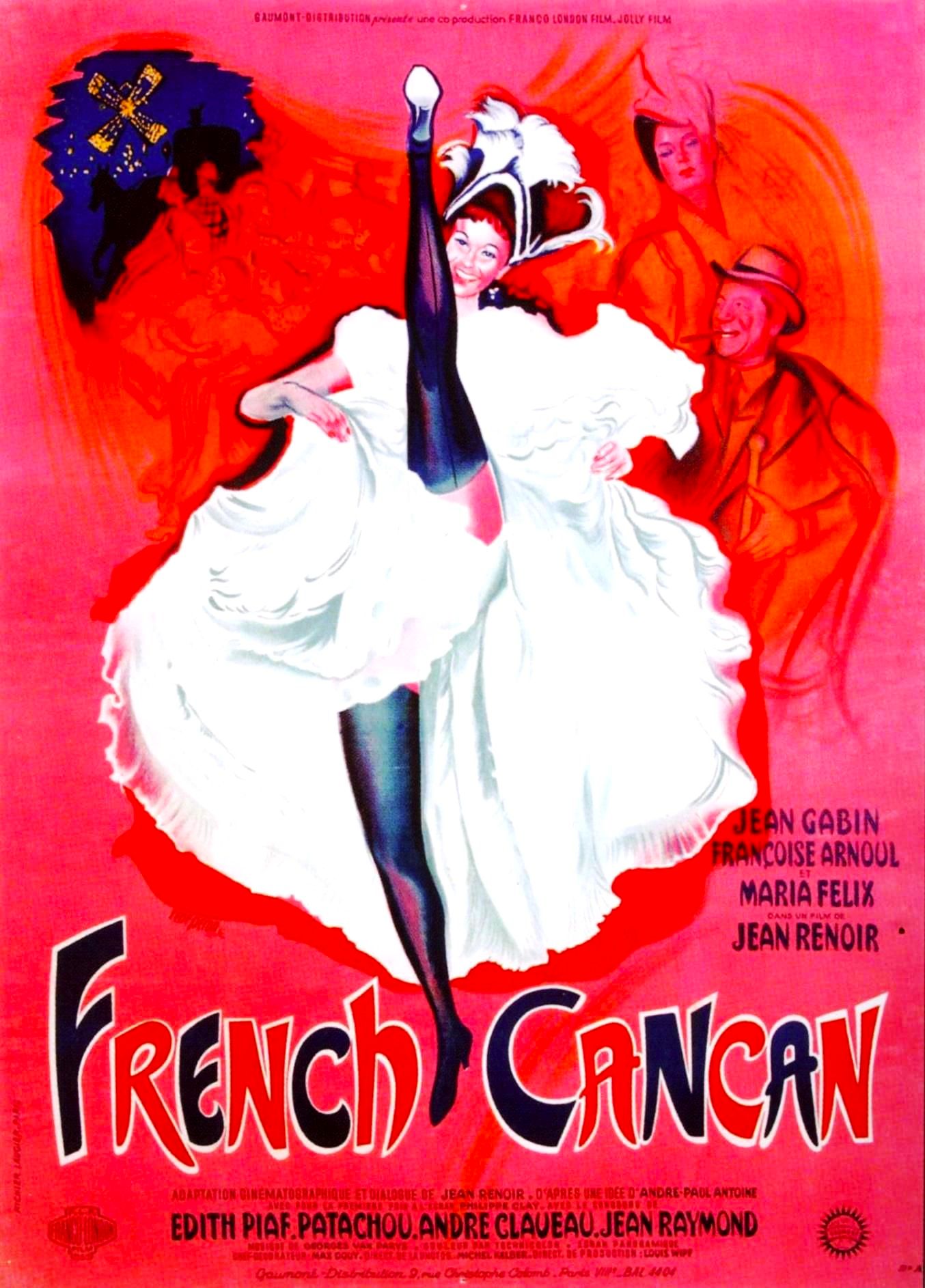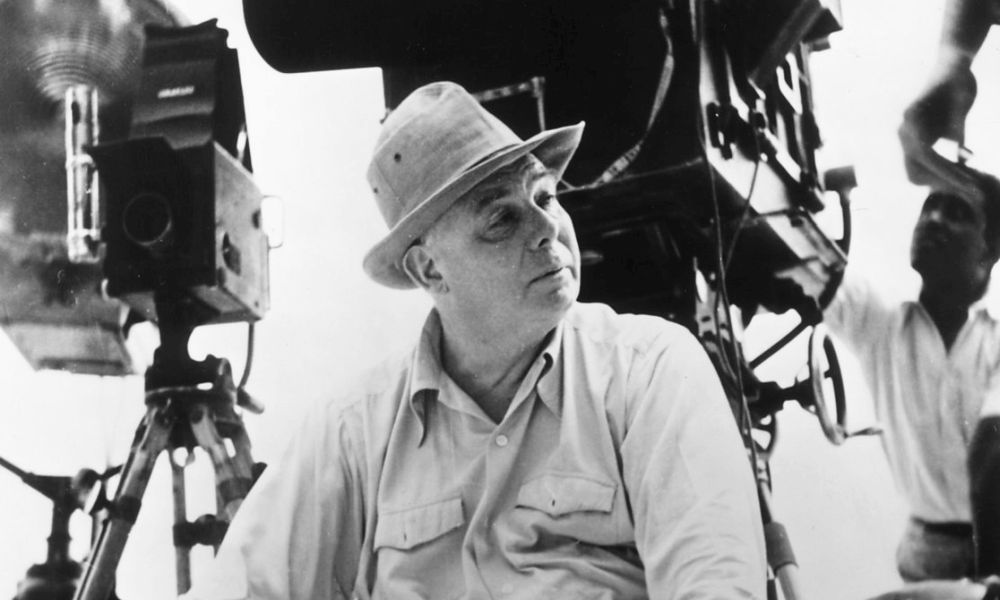
"Renoir's warmth (amounting, he would say, to love) in the handling of actors and actresses, and the humility with which he has always been prepared to abandon the established rules of film-making and permit improvisation, led him to anticipate post-war neo-realism and some of the technical freedoms adopted later by the French New Wave." - Roger Manvell (The International Encyclopedia of Film, 1972)
Jean Renoir
Director / Screenwriter / Actor / Producer
(1894-1979) Born September 15, Paris, France
Top 250 Directors
(1894-1979) Born September 15, Paris, France
Top 250 Directors
Key Production Countries: France, USA, Italy
Key Genres: Drama, Comedy Drama, Romantic Drama, Comedy of Manners, Period Film, Crime Drama, Psychological Drama, Melodrama, Romance, War Drama, Comedy, Satire
Key Collaborators: Marguerite Renoir (Editor), Jean Bachelet (Cinematographer), Joseph Kosma (Composer), Eugène Lourié (Production Designer), Claude Renoir (Cinematographer), Catherine Hessling (Leading Actress), Jean Gabin (Leading Actor), Pierre Braunberger (Producer), Georges Leclerc (Cinematographer), Julien Carette (Leading Character Actor), Jenny Hélia (Character Actress), Pierre Lestringuez (Character Actor)
Key Genres: Drama, Comedy Drama, Romantic Drama, Comedy of Manners, Period Film, Crime Drama, Psychological Drama, Melodrama, Romance, War Drama, Comedy, Satire
Key Collaborators: Marguerite Renoir (Editor), Jean Bachelet (Cinematographer), Joseph Kosma (Composer), Eugène Lourié (Production Designer), Claude Renoir (Cinematographer), Catherine Hessling (Leading Actress), Jean Gabin (Leading Actor), Pierre Braunberger (Producer), Georges Leclerc (Cinematographer), Julien Carette (Leading Character Actor), Jenny Hélia (Character Actress), Pierre Lestringuez (Character Actor)
"Son of the impressionist painter Pierre-Auguste, Jean Renoir was born with the advent of cinema itself. He went on to make more than forty films, stretching from the silent era to 1970. During his creative peak in the 1930s his abundant virtues were often overlooked, but Orson Welles, Charlie Chaplin and François Truffaut would all name him the greatest of filmmakers and he was probably the single most influential model for the nouvelle vague." - Tom Charity (The Rough Guide to Film, 2007)
"For certain directors, performance is the very heart of cinematic art. Jean Renoir provides the most prestigious example of a humanist aesthetic: his famed deep-focus photography, elaborate tracking shots, and long takes represent a concerted, empathetic effort to preserve the integrity of his actors’ performances within a fully realized social world."- Schirmer Encyclopedia of Film, 2006
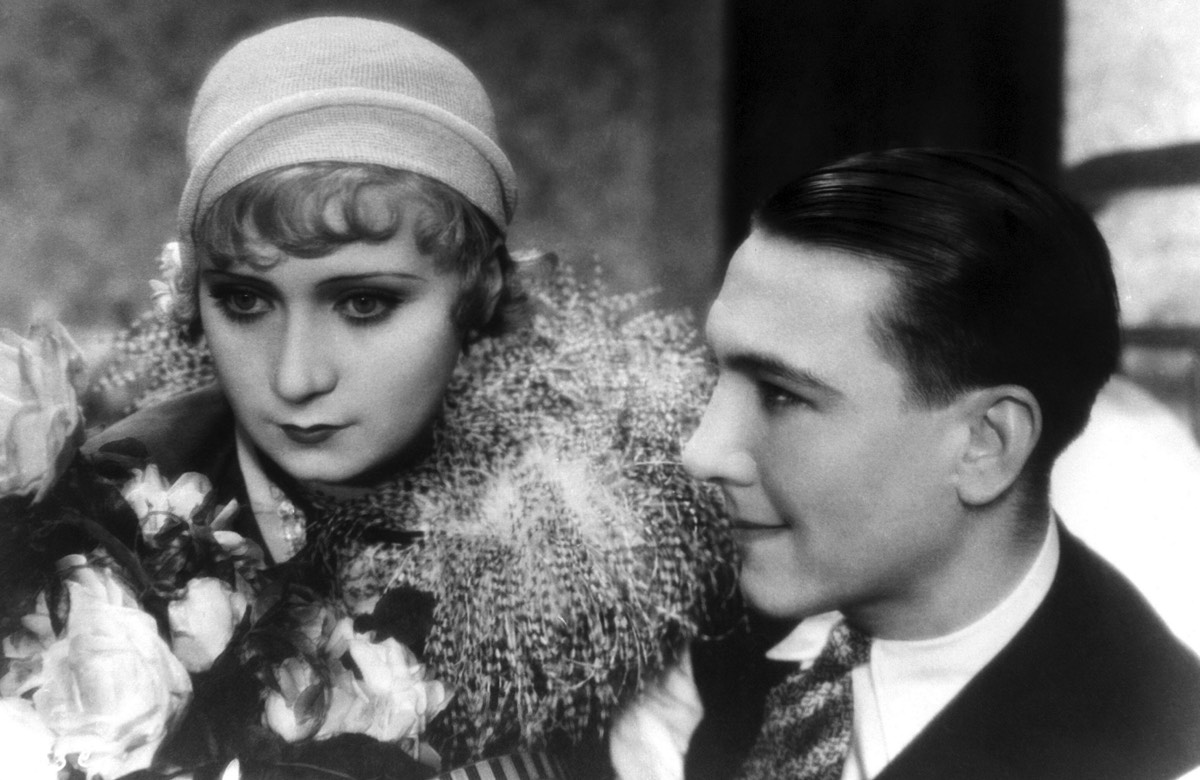
La Chienne (1931)
"Renoir's ouevre stands as a monument and a model of cinematography. By summoning the conditions of illusion and artifice of film, it rises out of the massive production of poetic realism of the 1930s in France. He develops a style that is the very tenor of a vehicle studying social contradiction. The films implicitly theorize the limits that cinema confronts in any narrative or documentary depiction of our world." - Tom Conley (International Dictionary of Films and Filmmakers, 1991)
"A true director’s director, loved and admired by the likes of Orson Welles, Peter Bogdanovich, Martin Scorsese, Wes Anderson and all the then-young guns of the emerging French New Wave, Renoir’s infallible romanticism and humanity flowed into all of his films. His motifs include theatricality, an idealization of country life, and the concept of a river, which often represented as the ultimate escape and always in flux." - Nikola Grozdanovic (IndieWire, 2015)
"Renoir asks us to see the variety and muddle of life without settling for one interpretation. He is the greatest of all directors; he justifies cinema. But he shrugs off the weight of "masterpieces" or "definitive statements". The impossibility of grasping final solutions or perfect works is his "rule". - David Thomson (The New Biographical Dictionary of Film, 2002)
"What makes Renoir’s work unusual among filmmakers, if not unique, is the diversity of the materials he draws upon during the realization of an individual project, and his ability to blend these elements together so that each works on the viewer but none obtrudes. Partly this is a result of the pleasure his art generates: with so much to perceive and enjoy there’s little time and space for the analysis of sources!" - James Leahy (Senses of Cinema, 2003)
"His signature is discernible in the generous, unsentimental humanity, the assured evocation of milieu, an awareness of the transience of life and love, and a subtle realism whose deceptive simplicity is derived from unobtrusive artifice: deep focus, long takes, complex camera movements, elegant framing, and a wealth of telling incidental detail...He was unquestionably a master of cinema; the apparent effortlessness of his art only confirms his genius." - Geoff Andrew (The Director's Vision, 1999)
"Whether his films were French or American, silent or sound, from the 1920s through 1970 Jean Renoir made cinema his little theater. By no means is this a bad thing. I feel comfortable calling Renoir a theatrical director for the same reason I feel comfortable calling him a humanist—his focus in his movies is always on people. The way people walk, the camera following gently, is central to him, whether Erich von Stroheim’s stiff dignity-grabbing in Grand Illusion or Michel Simon’s shambling, hunched sort of walk-ballet in La Chienne, Zachary Scott’s skinny alertness in The Southerner or Renoir himself, a pudgeball bounding forward in a bear suit in The Rules of the Game."- Aaron Cutler (Slant Magazine, 2010)
"Renoir's career is a river of personal expression. The waters may vary here and there in turbulence and depth, but the flow of personality is consistently directed to its final outlet in the sea of life. If the much-abused term "humanism," could be applied to Renoir's art and to no one else's, it might still provide an accurate definition for his work as a whole." - Andrew Sarris (The American Cinema, 1968)
"One of the great directors, Renoir combined a humanist view of the world with the use of deep focus shots, which enabled everything in a frame to be seen with clarity, thus enlarging the possibilities for action in each shot. This gave his films a richness of emotion and style few can match." - William R. Meyer (The Film Buff's Catalog, 1978)
"The world's greatest film-maker." - François Truffaut
"My dream is of a craftsman's cinema in which the author can express himself as directly as the painter in his paintings or the writer in his books." - Jean Renoir
Selected Filmography
Loading filmography...
Jean Renoir / Fan Club
Miguel Marías, José Manuel Costa, Martin Scorsese, Jonathan Rosenbaum, Andrew Sarris, José Luis Guarner, Paul Schrader, Luc Moullet, Carlos F. Heredero, Robin Wood, Bertrand Tavernier, Jean Douchet.
Miguel Marías, José Manuel Costa, Martin Scorsese, Jonathan Rosenbaum, Andrew Sarris, José Luis Guarner, Paul Schrader, Luc Moullet, Carlos F. Heredero, Robin Wood, Bertrand Tavernier, Jean Douchet.
"Fan Club"
These film critics/filmmakers have, on multiple occasions, selected this director’s work within film ballots/lists that they have submitted.
These film critics/filmmakers have, on multiple occasions, selected this director’s work within film ballots/lists that they have submitted.