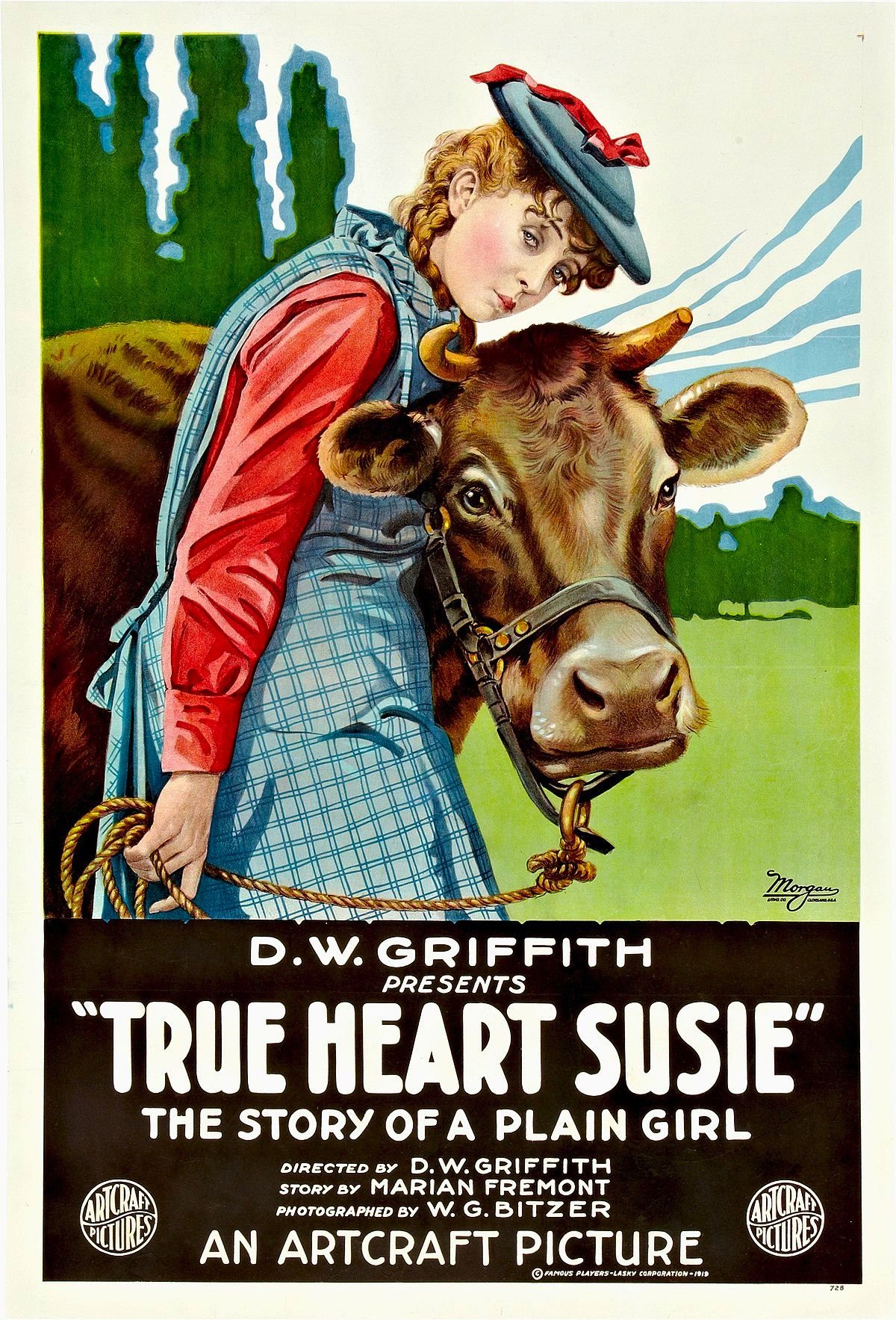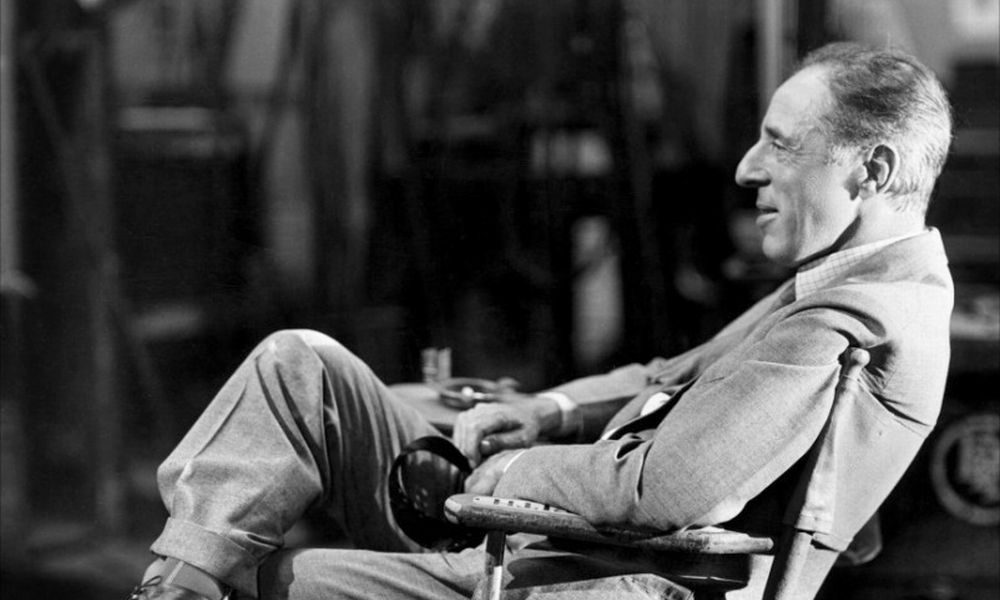
"The tall, imposing figure of D.W. (David Wark) Griffith stands alone, dominating the landscape of the early American cinema. During the years from 1908 when he arrived at the Biograph Studios through 1920… no single individual had so marked an effect on the development of the cinema both in the US and abroad as did Griffith." - Joel W. Finler (The Movie Directors Story, 1985)
D.W. Griffith
Director / Screenwriter / Producer
(1875-1948) Born January 22, LaGrange, Kentucky, USA
Top 250 Directors
(1875-1948) Born January 22, LaGrange, Kentucky, USA
Top 250 Directors
Key Production Country: USA
Key Genres: Short Film, Drama, Melodrama, Romance, Comedy, Historical Film, Historical Epic, Epic, War
Key Collaborators: G.W. Bitzer (Cinematographer), Robert Harron (Character Actor), James Smith (Editor), Kate Bruce (Leading Character Actress), Lillian Gish (Leading Actress), Alfred Paget (Character Actor), Carol Dempster (Leading Actress), Mae Marsh (Leading Character Actress), Gladys Egan (Leading Character Actress), Linda Arvidson (Leading Actress), Hendrik Sartov (Cinematographer), Rose Smith (Editor)
Key Genres: Short Film, Drama, Melodrama, Romance, Comedy, Historical Film, Historical Epic, Epic, War
Key Collaborators: G.W. Bitzer (Cinematographer), Robert Harron (Character Actor), James Smith (Editor), Kate Bruce (Leading Character Actress), Lillian Gish (Leading Actress), Alfred Paget (Character Actor), Carol Dempster (Leading Actress), Mae Marsh (Leading Character Actress), Gladys Egan (Leading Character Actress), Linda Arvidson (Leading Actress), Hendrik Sartov (Cinematographer), Rose Smith (Editor)
"Since the 1980s, Griffith’s status has been in nearly steady decline, or at least dramatic reassessment. An important renaissance of early film history has systematically rediscovered and reinserted other individuals, films, and social forces as crucial formative influences on the development of American and world cinema. Moreover, the insights of cultural studies made it impossible to continue forgiving the sexism and vicious racism at the core of his work while at the same time praising his craft and romanticizing his life. For many today, Griffith represents much that was wrong with Hollywood, American ideology, and even dominant film histories of the past. Nonetheless, Griffith’s films remain key texts for understanding the development of narration in cinema. Theorists interested in film language point to their shot scale and editing patterns as important markers of a developing cinematic code system, while others look to Griffith as a canonical source of gender and genre construction in cinema." - Richard Neupert (Schirmer Encyclopedia of Film, 2007)
"The single most important figure in the history of American film and one of the most influential in the development of world cinema as an art... From the very start, he showed a remarkable instinctive understanding of the creative potential of the medium, using inherently cinematic techniques - changing camera angles, intercutting, crosscutting, parallel action, camera movement. dramatic lighting, the close-up, the full shot, rhythmic editing, etc." - The MacMillan International Film Encyclopedia, 1994
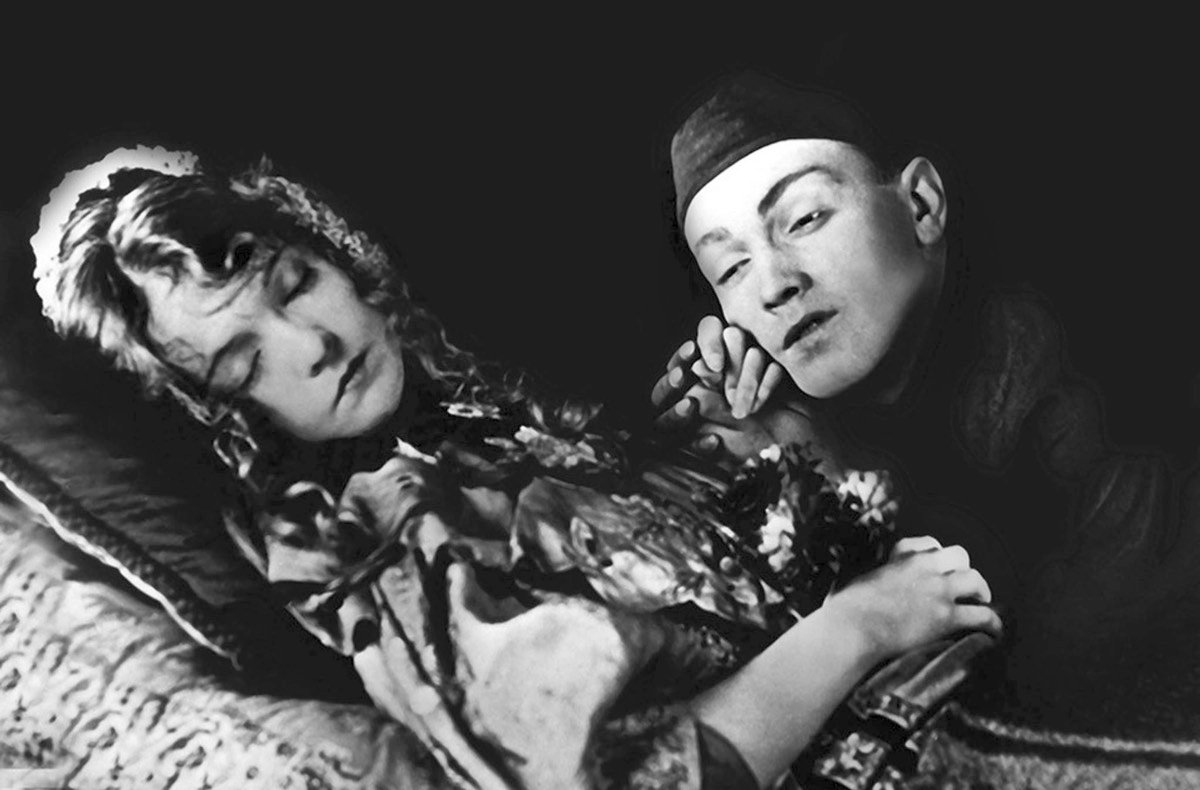
Broken Blossoms (1919)
"American pioneer of the silent cinema and of many of its more sophisticated techniques. Griffith is still generally regarded as the first great American director despite the failure of many of his later films; and, between 1914 and 1921, when his talent and confidence were in full flower, he was the maker of some of the most famous and exciting films in Hollywood history." - David Quinlan (Quinlan's Illustrated Guide to Film Directors, 1999)
"Despite the immensity of his place in cinema history, D.W. Griffith continues to evade a popular consensus. Or, rather, the consensus remains split along the same lines that bedeviled Griffith's career in his glory days. Eighty years after he completed his last feature film, The Struggle (1931), and more than a hundred after he directed his first one-reeler, The Adventures of Dollie (1908), his historic importance is as rock solid as that of Bach or Shakespeare. No one questions his standing in creating motion pictures as an art and as an industry, his innovative genius in devising and exploiting the grammar of film, or his titanic vision for a new mode of storytelling, more grand and ambitious than anything before. Where the consensus falters is with the work itself, and what audiences in a new century are to make of it: Does Griffith speak to us, or is he a relic to be respected but not necessarily embraced?" - Gary Giddins (Directors Guild of America, 2010)
"Griffith devised a grammar of emotions through his expressive editing. The focal length of his lens became a function of feeling. Close-ups not only intensified an emotion; they shifted characters from the republic of prose to the kingdom of poetry. Griffith's privileged moments are still among the most beautiful in all cinema. They belong to him alone, since they are beyond mere technique. Griffith invented this "mere" technique, but he also transcended it." - Andrew Sarris (The American Cinema, 1968)
"With Griffith’s naïve belief in the potential of film came an equally naïve blindness to the possibility that the art form could be used for evil ends. To the end of his life, Griffith never acknowledged the harm that he had wrought with The Birth of a Nation. Nevertheless, Griffith’s contribution to the art of film, and his personal dedication to expanding the range of film as an art form, can never be denied." - John Steinle (Senses of Cinema, 2006)
"A giant of the industry, Griffith more than anyone else was responsible for creating or refining film technique into a mode of creative expression. His genius covered writing, directing, editing, and even advertising a film." - William R. Meyer (The Film Buff's Catalog, 1978)
"American film director D.W. Griffith was a pivotal figure in cinema’s ascendance as a mass medium and modern art form. He is best known for developing editing techniques, such as montage, that brought a new fluency and excitement to cinematic storytelling. He is also remembered for directing the racist blockbuster The Birth of a Nation, a film that has become iconic in prejudiced circles for its anti-African American message." - Grant Wiedenfeld (Routledge Encyclopedia of Modernism)
"Talkies, squeakies, moanies, songies, squawkies... Just give them ten years to develop and you're going to see the greatest artistic medium the world has known." - D.W. Griffith
"Actors should never be important. Only directors should have power and place." - D.W. Griffith
Selected Filmography
Loading filmography...
D.W. Griffith / Fan Club
Kent Jones, Miguel Marías, Andrew Sarris, J. Hoberman, Armond White, Richard Brody, Richard Combs, Werner Herzog, Richard Koszarski, Filipe Furtado, Peter von Bagh, Edgardo Cozarinsky.
Kent Jones, Miguel Marías, Andrew Sarris, J. Hoberman, Armond White, Richard Brody, Richard Combs, Werner Herzog, Richard Koszarski, Filipe Furtado, Peter von Bagh, Edgardo Cozarinsky.
"Fan Club"
These film critics/filmmakers have, on multiple occasions, selected this director’s work within film ballots/lists that they have submitted.
These film critics/filmmakers have, on multiple occasions, selected this director’s work within film ballots/lists that they have submitted.