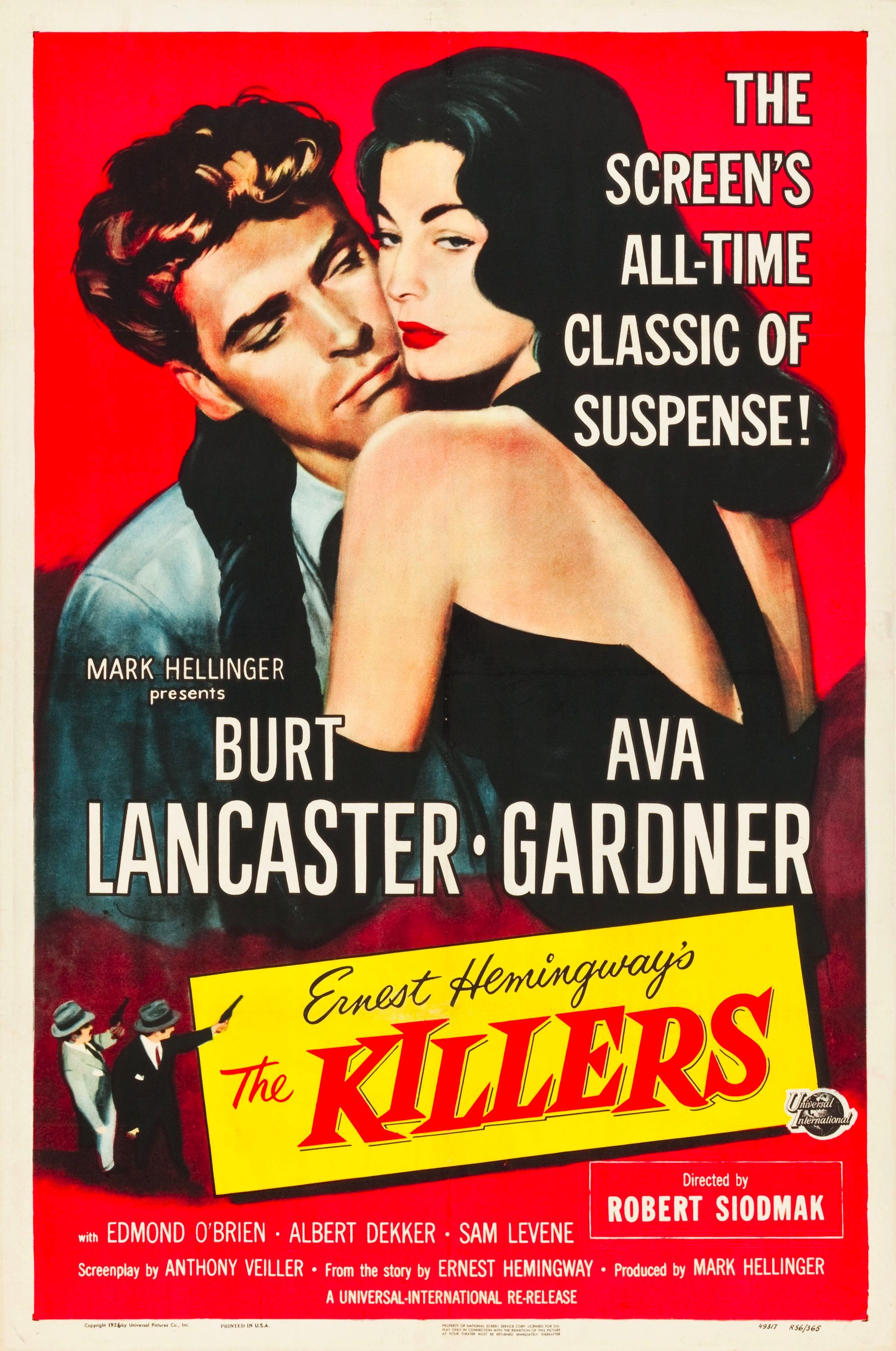
“Dynamic American director who trained in France and Germany and developed a masterly technique with powerful suspense melodramas such as The Spiral Staircase (1945), and crime thrillers such as The Killers (1946), Cry of the City and Criss Cross (1949).” - The International Encyclopedia of Film, 1972
Robert Siodmak
Key Production Countries: USA, France, Germany, West Germany
Key Genres: Drama, Film Noir, Crime Drama, Thriller, Crime, Psychological Thriller, Mystery, Crime Thriller, Police Detective Film, Adventure, Melodrama, Romantic Drama
Key Collaborators: John B. Goodman (Production Designer), Arthur Hilton (Editor), Hans J. Salter (Composer), Samuel S. Hinds (Character Actor), Burt Lancaster (Leading Actor), Ella Raines (Leading Actress), Erich Pommer (Producer), Otto Baecker (Cinematographer), Elwood Bredell (Cinematographer), Viktor Gertler (Editor), Martin Obzina (Production Designer), Ava Gardner (Leading Actress)
Key Genres: Drama, Film Noir, Crime Drama, Thriller, Crime, Psychological Thriller, Mystery, Crime Thriller, Police Detective Film, Adventure, Melodrama, Romantic Drama
Key Collaborators: John B. Goodman (Production Designer), Arthur Hilton (Editor), Hans J. Salter (Composer), Samuel S. Hinds (Character Actor), Burt Lancaster (Leading Actor), Ella Raines (Leading Actress), Erich Pommer (Producer), Otto Baecker (Cinematographer), Elwood Bredell (Cinematographer), Viktor Gertler (Editor), Martin Obzina (Production Designer), Ava Gardner (Leading Actress)
"The reputation of Robert Siodmak rests on a number of thrillers made during a few brief years in the '40s. Although his work in Europe both before and after that period is now rarely seen, he remains an important, if underrated, figure in the development and exploration of the style now known as film noir... Siodmak's murky, morbidly fatalistic and expertly crafted thrillers focussed on a gallery of vividly drawn characters involved in deathly struggles... Time and again, the pitfalls of melodrama are avoided by finely judged performances and the director's astute, economic characterisation through visual means. In the '50s Siodmak's career went into decline... But his late '40s crime films have rarely been bettered, and his work is ripe for reappraisal." - Geoff Andrew (The Film Handbook, 1989)
"Siodmak's most successful projects - Phantom Lady, Christmas Holiday, The Suspect, Uncle Harry, The Spiral Staircase, The Killers - represent a fortuitous conjunction of such attractive actresses as Ella Raines, Dorothy McGuire, Ava Gardner, and even an absurdly lurid Deanna Durbin, with perverse subjects and expert technicians all whipped together with a heavy Teutonic sauce and served to the customers as offbeat art." - Andrew Sarris (The American Cinema, 1968)
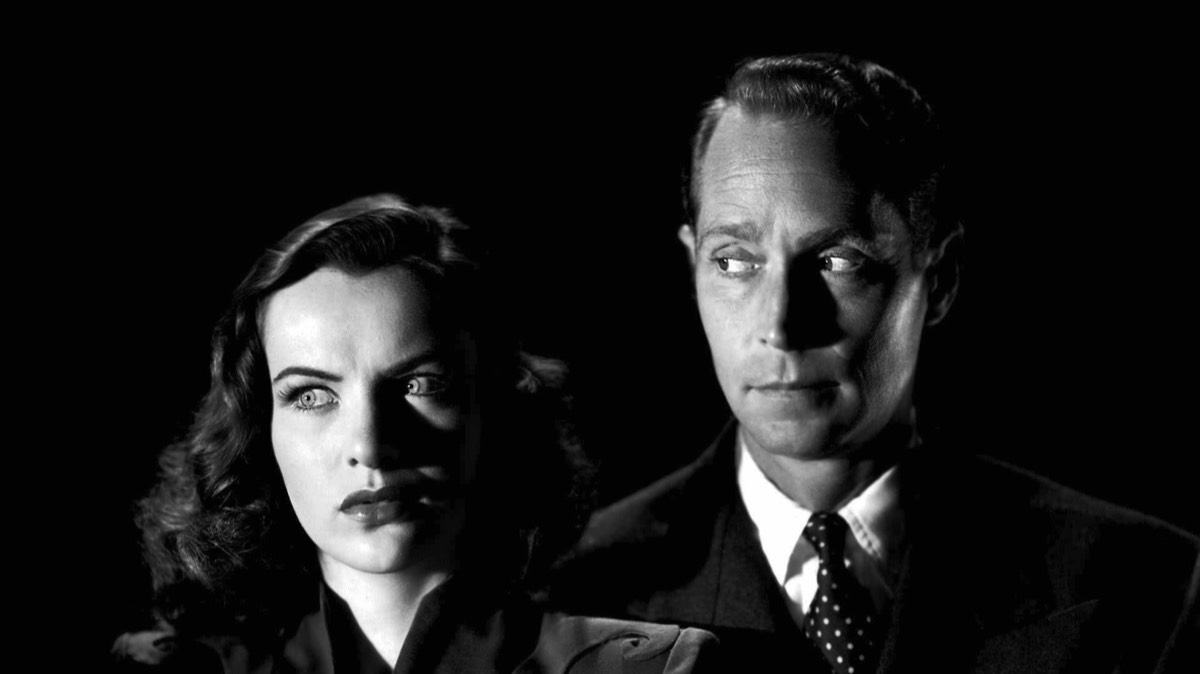
Phantom Lady (1944)
"Being Jewish, Siodmak had to flee the Nazis, arriving in Hollywood in 1940. Film noir gave him the opportunity to use his pictorial sense and his narrative skills, and he directed a string of atmospheric thrillers, including Phantom Lady (1944), The Killers and The Dark Mirror (both 1946), Cry of the City (1948) and Criss Cross (1949)." - The Movie Book, 1999
"Of all the great filmmakers who fled Europe amid the ascent of the Nazis in Germany and turned up in Hollywood, few did more to shape our sense of film genre than Robert Siodmak. Born to German Jewish parents at the dawn of the 20th century, Siodmak spent decades honing his chameleonic sensibility and influential style across a variety of studios and national cinemas. Perhaps his most vital contributions came within the domain of film noir—such richly atmospheric and sophisticatedly hard-edged works as The Killers (1946), Criss Cross (1949), Phantom Lady (1944), and The Suspect (1942)—but each film that Siodmak directed, no matter the genre and no matter whether in Germany, France nor Hollywood, powerfully bears his imprint." - Film at Lincoln Center, 2024
"An innovative and cinematic director, he explored the criminal or psychotic impulses in his characters through the ambience of his elegant mise-en-scène. The control of all cinematic tools at his command - camera angle, lighting, composition, movement, and design - was used to establish effectively a world of fate, passion, obsession, and compulsion. Although his reputation has been elevated in recent years, his name deserves to be better known." - Jeanine Basinger (International Dictionary of Films and Filmmakers, 1991)
"Siodmak didn’t patent the noir formula, but he showed how to blend German expressionism and French existentialism with American angst and, in the process, he directed more canonical landmarks than anyone else in the new genre’s heyday. Dismayed by the world around him, Siodmak examined societal injustice, domestic turmoil, gender conflict, sexual repression, psychological trauma and the rise of the career criminal." - David Parkinson (BFI, 2015)
"During the 1940s, Siodmak developed into a formidable director of suspense and crime films. He was influenced by the German schools of expressionism and realism prevalent in the 20s. Both rubbed off into a blend which distinguishes his Hollywood period." - William R. Meyer (The Film Buff's Catalog, 1978)
"Robert Siodmak evokes the night world of film noir: Alan Curtis stalking the streets and bars in search of the mysterious Phantom Lady; Burt Lancaster in the deep shadows of his room, stoically awaiting the arrival of The Killers; mute Dorothy McGuire, watched in the darkness by a maniac bent on murder in The Spiral Staircase. For a period of time in the forties, mostly at Universal, Robert Siodmak directed these and other tense thrillers with forthright assurance." - Ted Sennett (Great Movie Directors, 1986)
Selected Filmography
Loading filmography...
Robert Siodmak / Fan Club
Richard Brody, Martin Scorsese, Ricardo Bedoya, Nick Schager, Antti Alanen, José Luis Guarner, Freddy Buache, Eddie Muller, Sam Wigley, Matt Zoller Seitz, Hervé Dumont.
Richard Brody, Martin Scorsese, Ricardo Bedoya, Nick Schager, Antti Alanen, José Luis Guarner, Freddy Buache, Eddie Muller, Sam Wigley, Matt Zoller Seitz, Hervé Dumont.
"Fan Club"
These film critics/filmmakers have, on multiple occasions, selected this director’s work within film ballots/lists that they have submitted.
These film critics/filmmakers have, on multiple occasions, selected this director’s work within film ballots/lists that they have submitted.