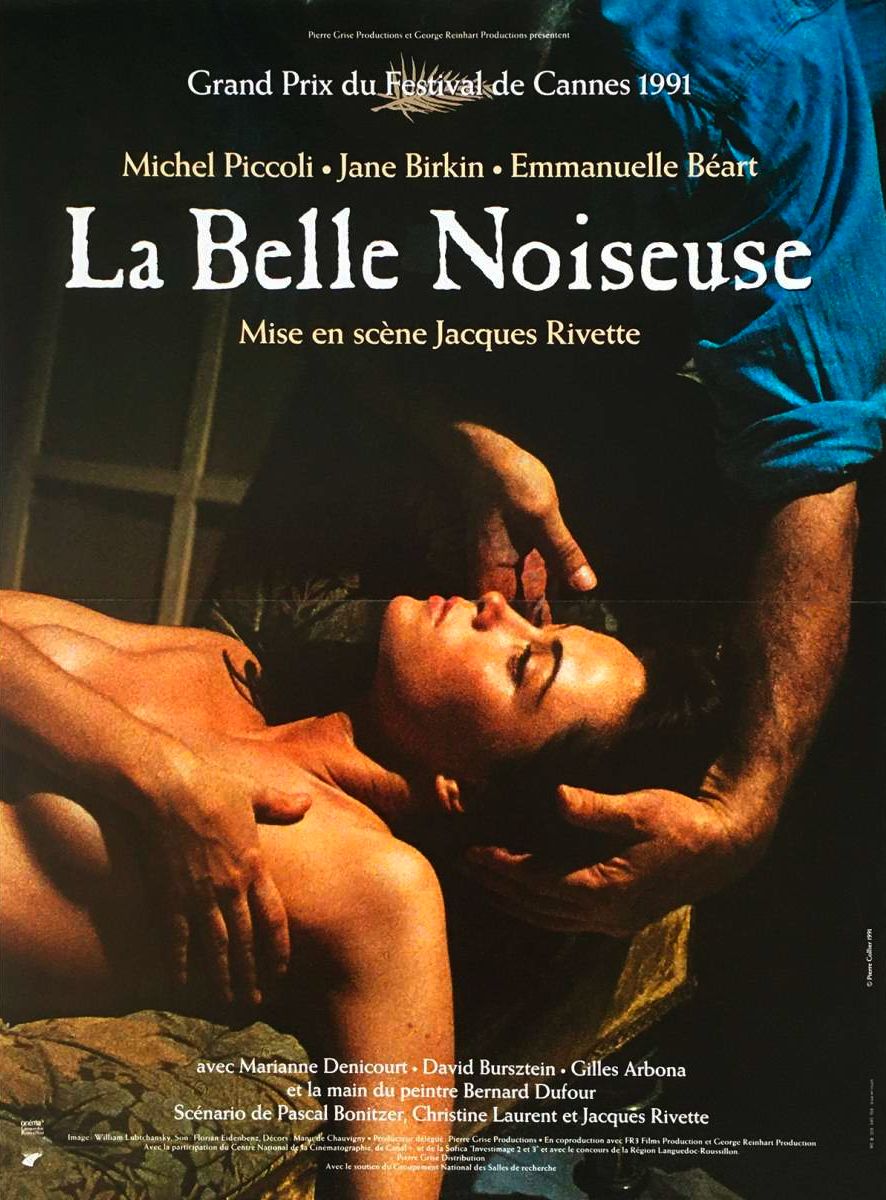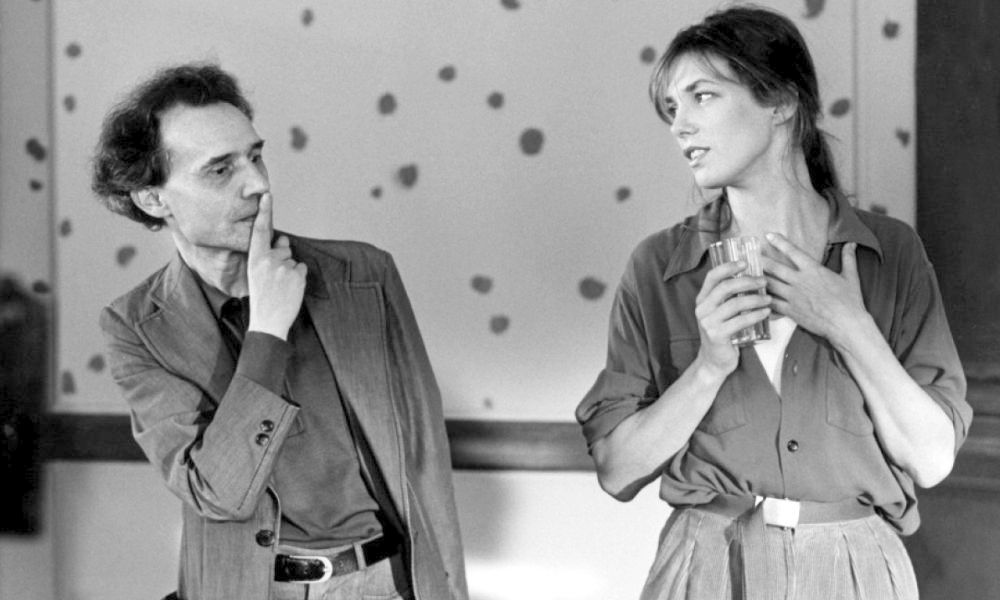
"Rivette is an unorthodox, uncommercial director who came ashore with the nouvelle vague. With one exception, La Religieuse, an adaptation from Diderot, he has refused to be absorbed into the mainstream, and his movies are encumbered with neither straightforward narratives nor any clear message, other than that film itself is a language for communication." - The Illustrated Who's Who of Cinema, 1983
Jacques Rivette
Key Production Countries: France, Italy
Key Genres: Drama, Psychological Drama, Romantic Drama, Period Film, Avant-garde/Experimental, Biography, Epic, Showbiz Drama, Ensemble Film, Romance, Comedy, Historical Epic
Key Collaborators: Nicole Lubtchansky (Editor), William Lubtchansky (Cinematographer), Pascal Bonitzer (Screenwriter), Emmanuel de Chauvigny (Production Designer), Martine Marignac (Producer), Bulle Ogier (Leading Actress), Christine Laurent (Screenwriter), Suzanne Schiffman (Screenwriter), Juliet Berto (Leading Character Actress), Eduardo de Gregorio (Screenwriter), Maurice Tinchant (Producer), André Marcon (Leading Character Actor)
Key Genres: Drama, Psychological Drama, Romantic Drama, Period Film, Avant-garde/Experimental, Biography, Epic, Showbiz Drama, Ensemble Film, Romance, Comedy, Historical Epic
Key Collaborators: Nicole Lubtchansky (Editor), William Lubtchansky (Cinematographer), Pascal Bonitzer (Screenwriter), Emmanuel de Chauvigny (Production Designer), Martine Marignac (Producer), Bulle Ogier (Leading Actress), Christine Laurent (Screenwriter), Suzanne Schiffman (Screenwriter), Juliet Berto (Leading Character Actress), Eduardo de Gregorio (Screenwriter), Maurice Tinchant (Producer), André Marcon (Leading Character Actor)
"Jacques Rivette is one of the most highly regarded directors of the French New Wave. Throughout his career, he has offered a variety of complex experiences, from the epic Out 1 (1971) to the delicate La belle noiseuse (1991). Admittedly, such movies require a degree of intellectual commitment from spectators that is at odds with conventional viewing habits. Yet despite, or perhaps because of, the difficult nature of Rivette's work, the rewards are often all the greater... Rivette remains a key figure of the French New Wave, and the creator of some of cinema's most challenging films." - Guy Crucianelli (501 Movie Directors, 2007)
"He is hardly the most prolific director and the length of his films has often counted against him. Nonetheless, his clinical, self-reflexive essays in film form, the sophisticated games he continues to play within the "house of fiction," reveal him as a cinematic purist whose commitment to the celluloid muse has hardly diminished since the heady days of the 1950s." - G.C. Macnab (International Dictionary of Films and Filmmakers, 1991)
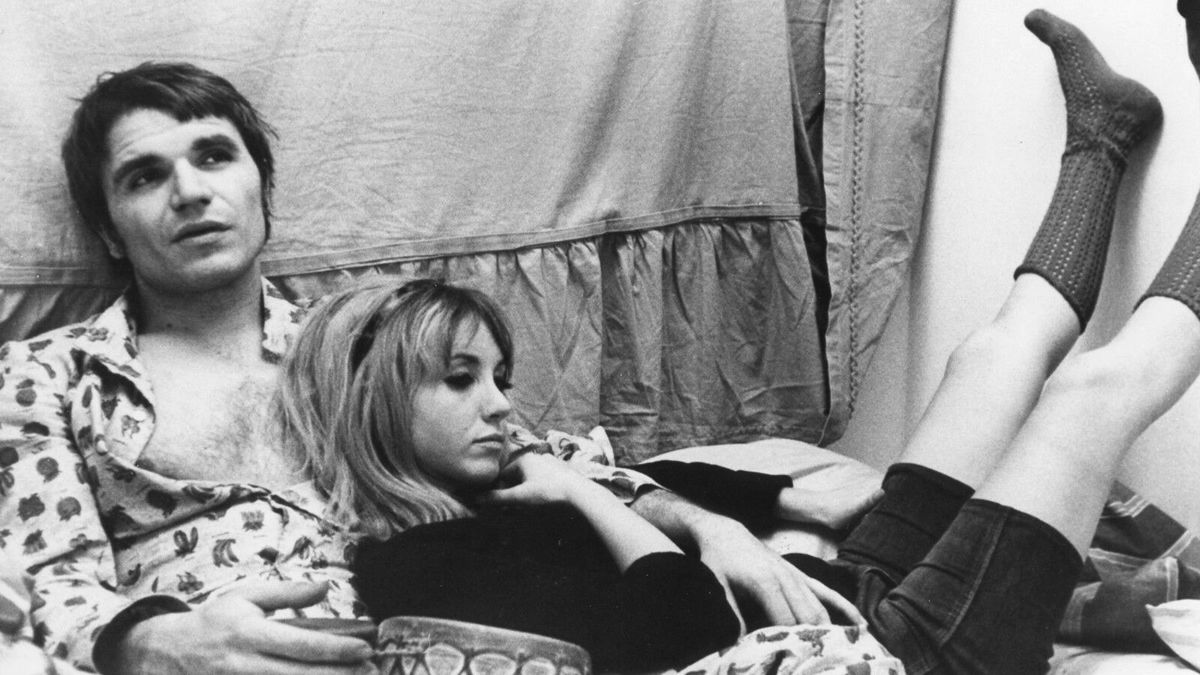
L'Amour fou (1968)
"The informed filmgoer might not leap to support the contention that Rivette is the most important filmmaker of the last thirty-five years. After all, Rivette has made films blatantly outside the conventional scheme... A time will come when proper retrospective will prove his greatness, but at the cost of so many younger and flashier reputations. No one has done more to experiment with narrative and duration than Rivette." - David Thomson (The New Biographical Dictionary of Film, 2002)
"The French New Wave came into being when several young critics on the influential magazine Cahiers du Cinéma decided to take practical action in their battle against the more traditional films made by an earlier generation, which they dubbed the Cinéma du Papa. The leading figures of the group were François Truffaut, Jean-Luc Godard, Alain Resnais, Claude Chabrol, Eric Rohmer and Jacques Rivette… Rivette’s challenging, intellectually inquiring, uncompromisingly long films are probably the most under-appreciated among the works of this outstanding group, but he managed to build up an impressive and consistent oeuvre over 50 years." - Ronald Bergan (The Guardian, 2016)
"French film-maker whose movies are almost all unorthodox, beautiful to watch, long, and alternately rewarding or infuriating. Some film enthusiasts of my acquaintance would not go near a Rivette film. Others regard him as the greatest of living film-makers. Such polarization must at least denote a director of some stature... The lesson is clear: take a thinking cap and a pack of sandwiches - and be prepared for a stimulating evening or a battle against sleep, according to your disposition." - David Quinlan (Quinlan's Illustrated Guide to Film Directors, 1999)
"Jacques Rivette, who emerged in the 1950s, along with Jean-Luc Godard, François Truffaut, Eric Rohmer, and Claude Chabrol, as one of the primary filmmakers of the French New Wave, is the most underappreciated (and under-screened) of this legendary group. Rivette’s deliberately challenging, super-size films defy easy assimilation, and demand a level of attention unusual even to his compatriots’ works. In addition to being considered difficult, however, Rivette’s body of work is also, arguably, the richest of the New Wave era, possessing an intellectual inquiry and humanity unmatched in the French cinema of his time. He has also managed the difficult trick of producing relevant and intriguing films for over 40 years, from Paris nous appartient (1960) to Va savoir (2001)." - Saul Austerlitz (Senses of Cinema, 2003)
"Controversial filmmaker of the French New Wave whose few, unorthodox films have baffled or bored some critics and fascinated others... Rivette, who served as editor-in-chief of Cahiers du Cinéma from 1963 to 1965, is the only New Wave director, with the possible exception of Jean-Luc Godard, who remained tenaciously faithful to the movement's stated principles, an uncompromising filmmaker with an unwavering personal vision." - The MacMillan International Film Encyclopedia, 1994
"Rivette has obsessively explored the thin line between reality and artifice, shifting between them until it's hard to tell where 'performance' begins and ends. The unexplained coincidences and mystificatory hints of arcane ritual, while echoing our need to make sense of life's chaos, may seem frustratingly obscure or portentous. Nevertheless, the long, meandering, often unresolved narratives - comprising casually composed shots elliptically and ingeniously edited to create an air of magic and mystery - can make for thought-provoking, hypnotically compelling cinema." - Geoff Andrew (The Director's Vision, 1999)
"When you see the films of certain young directors, you get the impression that film history begins for them around 1980." - Jacques Rivette
Selected Filmography
Loading filmography...
Jacques Rivette / Favourite Films
L'Atalante (1934) Jean Vigo, Day of Wrath (1943) Carl Theodor Dreyer, Germany, Year Zero (1947) Roberto Rossellini, Ivan the Terrible, Parts 1 and 2 (1944/46) Sergei Eisenstein, The Life of Oharu (1952) Kenji Mizoguchi, Monsieur Verdoux (1947) Charles Chaplin, Mr. Arkadin (1955) Orson Welles, The River (1951) Jean Renoir, Sunrise (1927) F.W. Murnau, True Heart Susie (1919) D.W. Griffith.
Source: Sight & Sound (1962)
L'Atalante (1934) Jean Vigo, Day of Wrath (1943) Carl Theodor Dreyer, Germany, Year Zero (1947) Roberto Rossellini, Ivan the Terrible, Parts 1 and 2 (1944/46) Sergei Eisenstein, The Life of Oharu (1952) Kenji Mizoguchi, Monsieur Verdoux (1947) Charles Chaplin, Mr. Arkadin (1955) Orson Welles, The River (1951) Jean Renoir, Sunrise (1927) F.W. Murnau, True Heart Susie (1919) D.W. Griffith.
Source: Sight & Sound (1962)
Jacques Rivette / Fan Club
Jonathan Rosenbaum, Karlheinz Oplustil, David Thomson, David Ehrenstein, Jonathan Romney, B. Kite, Miriam Bale, Michael Atkinson, Ty Burr, M.K. Raghavendra, David Heslin, Dennis Lim.
Jonathan Rosenbaum, Karlheinz Oplustil, David Thomson, David Ehrenstein, Jonathan Romney, B. Kite, Miriam Bale, Michael Atkinson, Ty Burr, M.K. Raghavendra, David Heslin, Dennis Lim.
"Fan Club"
These film critics/filmmakers have, on multiple occasions, selected this director’s work within film ballots/lists that they have submitted.
These film critics/filmmakers have, on multiple occasions, selected this director’s work within film ballots/lists that they have submitted.