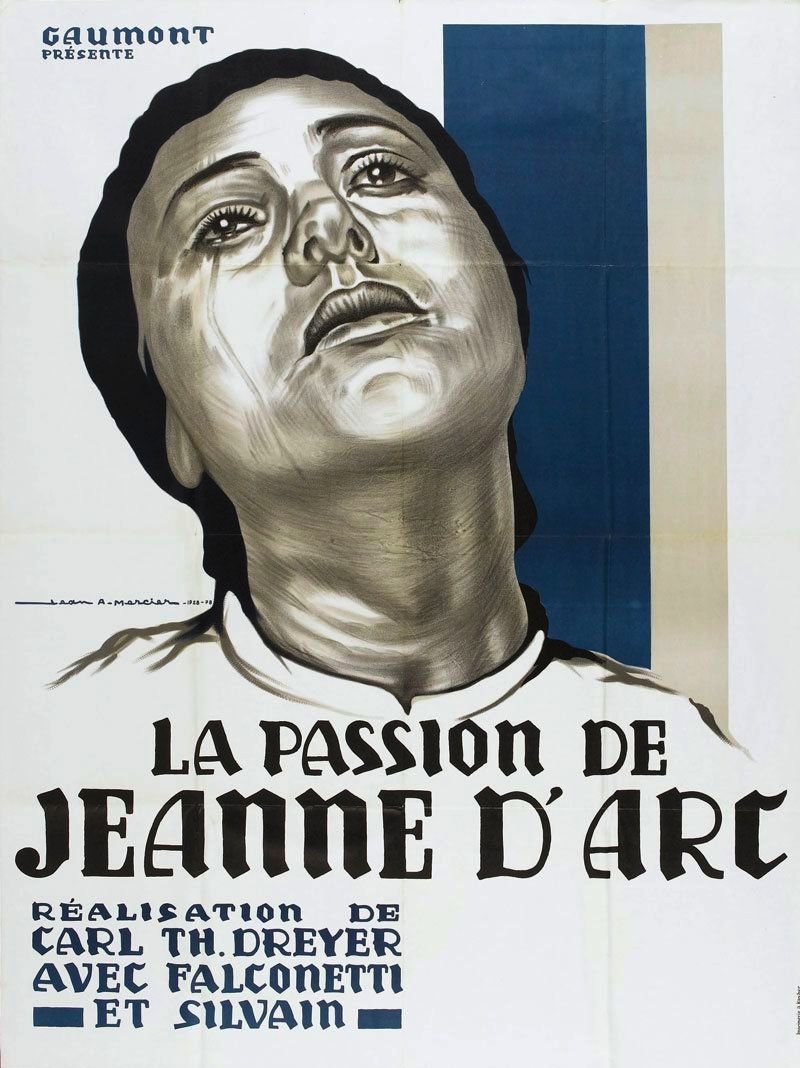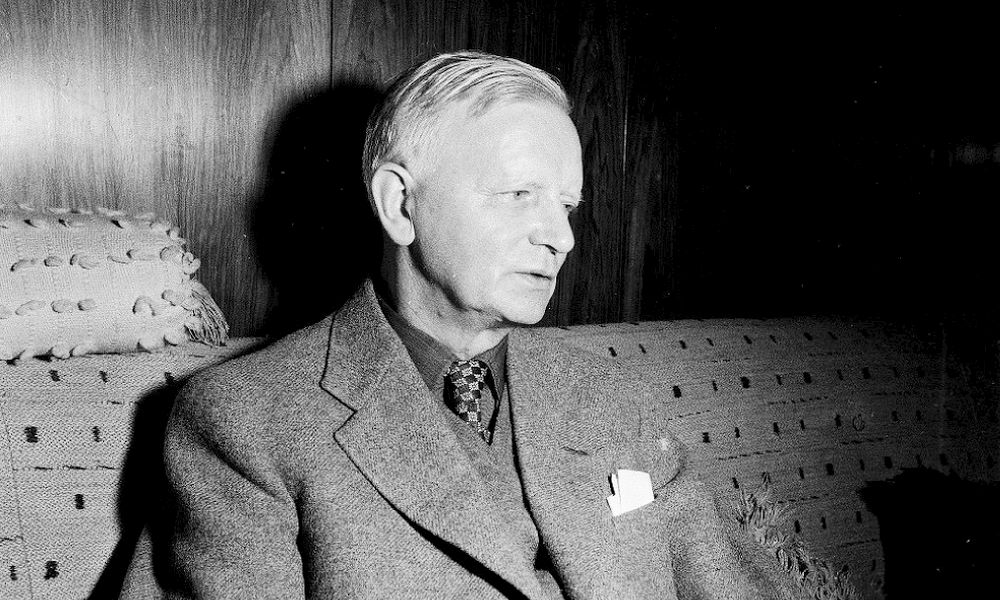
"Though his work is associated with emotional austerity and slow, stately pacing, Carl Theodor Dreyer made films that glisten with blood, sweat and tears; the Scandinavian winter wind may forever howl outside the door, but inside it's a hothouse of conflicting desires and orthodoxies." - Jessica Winter (The Rough Guide to Film, 2007)
Carl Theodor Dreyer
Director / Screenwriter / Editor / Production Designer / Producer
(1889-1968) Born February 3, Copenhagen, Denmark
Top 250 Directors
(1889-1968) Born February 3, Copenhagen, Denmark
Top 250 Directors
Key Production Countries: Denmark, Sweden, Germany
Key Genres: Drama, Psychological Drama, Religious Drama, Marriage Drama, Horror, Gothic Film
Key Collaborators: Rudolph Maté (Cinematographer), George Schneevoigt (Cinematographer), Johannes Meyer (Leading Character Actor), Halvard Hoff (Leading Actor), Maurice Schutz (Leading Actor), Hallander Helleman (Leading Actor), Tage Nielsen (Producer), Edith Schlüssel (Editor), Mathilde Nielsen (Leading Character Actress), Poul Schierbeck (Composer), Jens G. Lind (Production Designer), Hermann Warm (Production Designer)
Key Genres: Drama, Psychological Drama, Religious Drama, Marriage Drama, Horror, Gothic Film
Key Collaborators: Rudolph Maté (Cinematographer), George Schneevoigt (Cinematographer), Johannes Meyer (Leading Character Actor), Halvard Hoff (Leading Actor), Maurice Schutz (Leading Actor), Hallander Helleman (Leading Actor), Tage Nielsen (Producer), Edith Schlüssel (Editor), Mathilde Nielsen (Leading Character Actress), Poul Schierbeck (Composer), Jens G. Lind (Production Designer), Hermann Warm (Production Designer)
"Dreyer continues to be admired for his visual style, which, despite surface dissimilarities, is recognized as having a basic internal unity and consistency, but the thematic coherence of his work-around issues of the unequal struggle of women and the innocent against repression and social intolerance, the inescapability of fate and death, the power of evil in earthly life-is less widely appreciated." - The Oxford History of World Cinema, 1999
"Dreyer's pared-down style takes him beyond surface realism to something more mysterious and abstract: sounds or shadows (as in the truly eerie Vampyr) evoke the presence of unseen beings, landscape and architecture are invested, by lighting, design and composition, with supernatural force. Paradoxically, by rejecting anything superfluous to his purposes, this undisputed master of the cinema created some of its richest, most affecting and wondrously beautiful studies of the human condition." - Geoff Andrew (The Director's Vision, 1999)
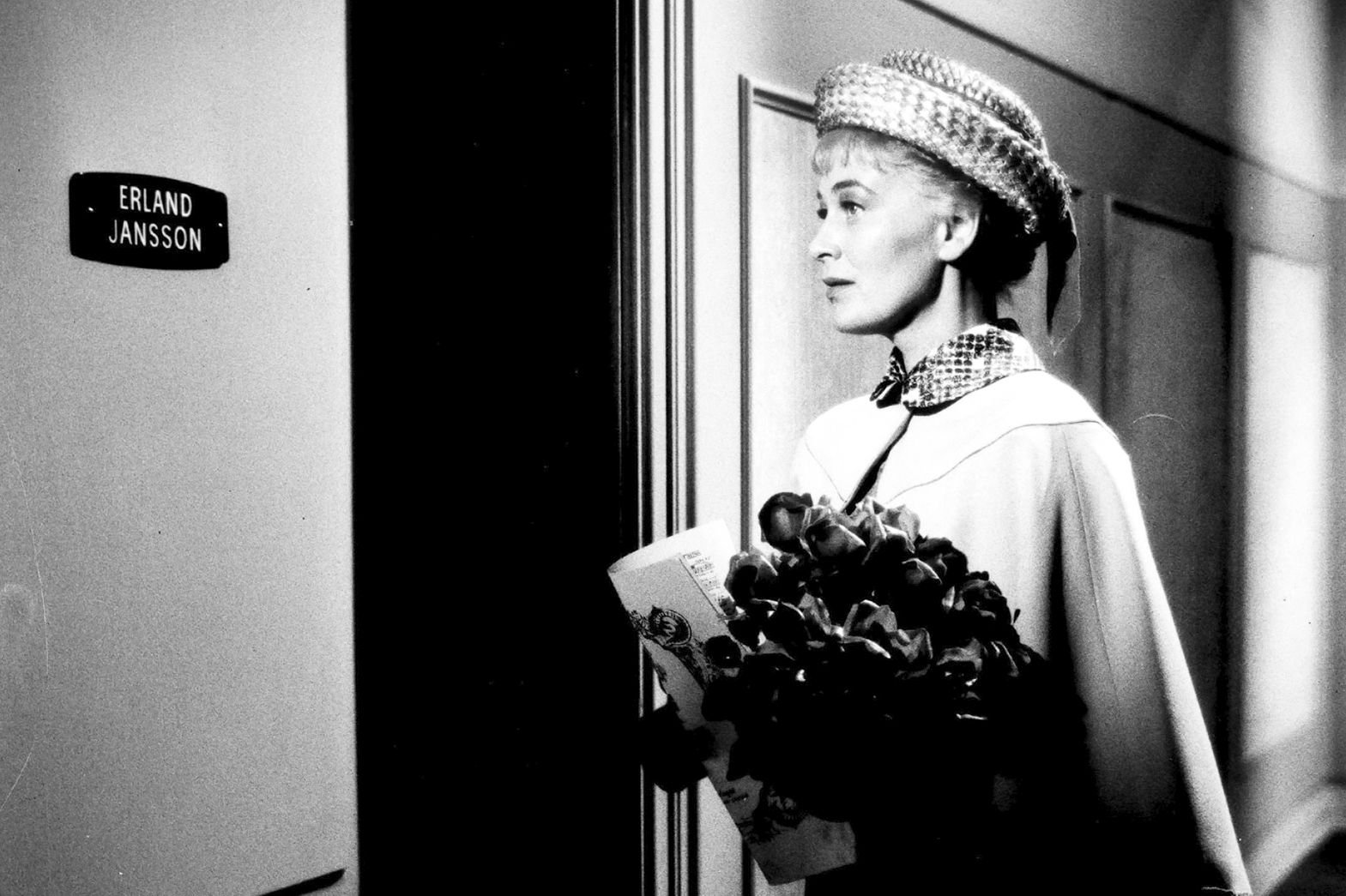
Gertrud (1964)
"Dreyer's work is always based on the beauty of the image, which in turn is a record of the luminous conviction and independence of human beings. His films are devoted principally to human emotions, and if they seem relatively subdued, then that may be a proper reason for calling in Danishness. But simplicity and purity of style do not argue against intensity, Dreyer's greatness is in the way that he makes a tranquil picture of overwhelming feelings. His art, and his intelligence, make passion orderly without ever cheating on it." - David Thomson (The New Biographical Dictionary of Film, 2002)
"Carl Theodor Dreyer is the greatest filmmaker in the Danish cinema, where he was always a solitary personality. But he is also among the few international directors who turned films into an art and made them a new means of expression for the artistic genius." - Ib Monty (The St. James Film Directors Encyclopedia, 1998)
"Although he was sometimes austere and ponderous, Dreyer's vision and drive for perfection made him the greatest director Denmark has ever produced. Unfortunately, the commercial failure of most of his films and his own perfectionism meant that his output was extremely limited… Dreyer was a film-maker before his time, even if his habit of using amateur players on occasions could work against his films. Nowadays he would find the world's film climate much more to his liking and would no doubt be allowed the artistic and financial freedom he always desired." - David Quinlan (Quinlan's Film Directors, 1999)
"For all their outward austerity, Dreyer's films are made with deep feeling and sympathy, particularly towards women. He died without realising the project he had in mind for decades - a film on the life of Christ." - Roger Manvell (The International Encyclopedia of Film, 1972)
"Man as a social animal is generally the subject of Dreyer's greatest films, which are some of the beacons of the cinema. The director is an antecedent of Bergman through the depiction of human love, anxiety, and spirituality." - William R. Meyer (The Film Buff's Catalog, 1978)
"Nothing in the world can be compared to the human face. It is a land one can never tire of exploring. There is no greater experience in a studio than to witness the expression of a sensitive face under the mysterious power of inspiration. To see it animated from inside, and turning into poetry." - Carl Theodor Dreyer
Selected Filmography
Loading filmography...
Carl Theodor Dreyer / Favourite Films
Battleship Potemkin (1925) Sergei Eisenstein, The Birth of a Nation (1915) D.W. Griffith, Brief Encounter (1945) David Lean, The Gold Rush (1925) Charles Chaplin, Henry V (1944) Laurence Olivier, The Petrified Forest (1936) Archie Mayo, Port of Shadows (1938) Marcel Carné, Rome, Open City (1945) Roberto Rossellini, The Treasure of Arne (1919) Mauritz Stiller, Under the Roofs of Paris (1930) René Clair.
Source: Cinematheque Belgique (1952)
Battleship Potemkin (1925) Sergei Eisenstein, The Birth of a Nation (1915) D.W. Griffith, Brief Encounter (1945) David Lean, The Gold Rush (1925) Charles Chaplin, Henry V (1944) Laurence Olivier, The Petrified Forest (1936) Archie Mayo, Port of Shadows (1938) Marcel Carné, Rome, Open City (1945) Roberto Rossellini, The Treasure of Arne (1919) Mauritz Stiller, Under the Roofs of Paris (1930) René Clair.
Source: Cinematheque Belgique (1952)
Carl Theodor Dreyer / Fan Club
Jonathan Rosenbaum, Pierre Leon, Miguel Marías, Jeffrey M. Anderson, Martin Scorsese, Carlos F. Heredero, Manoel de Oliveira, Dennis Grunes, José Manuel Costa, Paul Schrader, Drake Stutesman, José Geraldo Couto.
Jonathan Rosenbaum, Pierre Leon, Miguel Marías, Jeffrey M. Anderson, Martin Scorsese, Carlos F. Heredero, Manoel de Oliveira, Dennis Grunes, José Manuel Costa, Paul Schrader, Drake Stutesman, José Geraldo Couto.
"Fan Club"
These film critics/filmmakers have, on multiple occasions, selected this director’s work within film ballots/lists that they have submitted.
These film critics/filmmakers have, on multiple occasions, selected this director’s work within film ballots/lists that they have submitted.