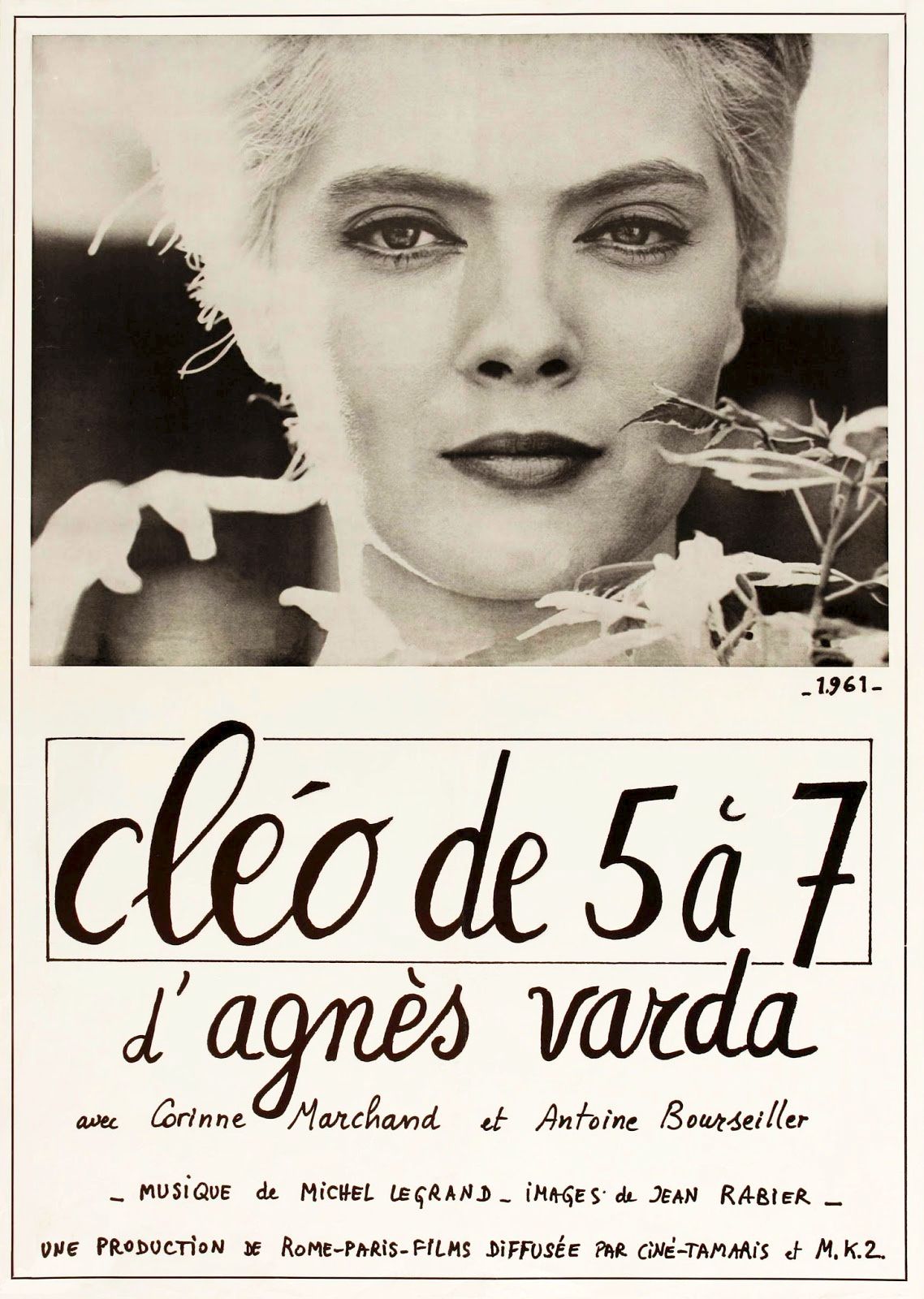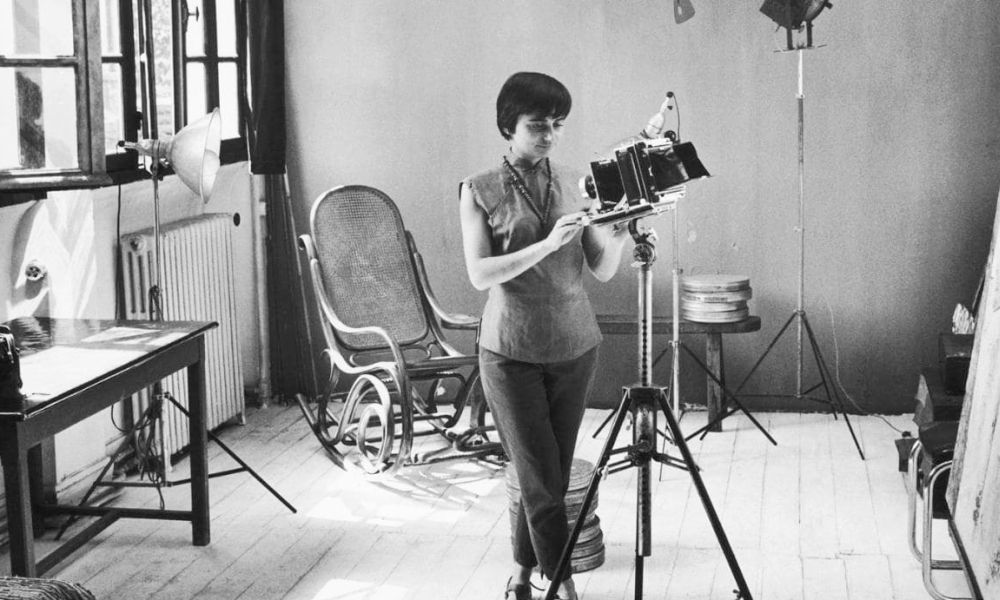
"Independent and original, she is one of the most important filmmakers of the nouvelle vague, with a sharp, highly personal vision of both people and life, a feeling for the eternal drama reflected in the most direct actuality (La Point courte, Cléo de 5 à 7) and a gentle irony (the shorts O saisons, O château, Opera Mouffe)." - Georges Sadoul (Dictionary of Film Makers, 1972)
Agnès Varda
Director / Screenwriter / Editor / Producer / Cinematographer
(1928-2019) Born May 30, Brussels, Belgium
Top 250 Directors / 21st Century's Top 100 Directors
(1928-2019) Born May 30, Brussels, Belgium
Top 250 Directors / 21st Century's Top 100 Directors
Key Production Countries: France, USA
Key Genres: Documentary, Short Film, Drama, Culture & Society, Biography, Comedy Drama, Psychological Drama, History, Feminist Film, Essay Film, Romantic Drama, Anthropology
Key Collaborators: Joanna Bruzdowicz (Composer), Mathieu Demy (Character Actor), Nurith Aviv (Cinematographer), Janine Verneau (Editor), Marie-Jo Audiard (Editor), Michel Legrand (Composer), Rosalie Varda (Character Actress), Catherine Deneuve (Leading Actress), Jean Rabier (Cinematographer), Georges Strouvé (Cinematographer), Stéphane Krausz (Cinematographer), Sabine Mamou (Editor)
Key Genres: Documentary, Short Film, Drama, Culture & Society, Biography, Comedy Drama, Psychological Drama, History, Feminist Film, Essay Film, Romantic Drama, Anthropology
Key Collaborators: Joanna Bruzdowicz (Composer), Mathieu Demy (Character Actor), Nurith Aviv (Cinematographer), Janine Verneau (Editor), Marie-Jo Audiard (Editor), Michel Legrand (Composer), Rosalie Varda (Character Actress), Catherine Deneuve (Leading Actress), Jean Rabier (Cinematographer), Georges Strouvé (Cinematographer), Stéphane Krausz (Cinematographer), Sabine Mamou (Editor)
"Agnès Varda’s startlingly individualistic films have earned her the title ‘‘grandmother of the New Wave’’ of French filmmaking. Her statement that a filmmaker must exercise as much freedom as a novelist became a mandate for New Wave directors, especially Chris Marker and Alain Resnais. Varda’s first film, La Pointe courte, edited by Resnais, is regarded, as Georges Sadoul affirms, as "the first film of the French nouvelle vague. Its interplay between conscience, emotions, and the real world make it a direct antecedent of Hiroshima, mon amour"... Varda’s reputation as a filmmaker dazzles and endures." - Louise Heck-Rabi (International Dictionary of Films and Filmmakers, 2000)
"Agnès Varda is a major force in the French New Wave who happily has remained true to her vision as an independent and uncompromising artist, has readily adapted to technological change in the cinema, and is still active today as a digital filmmaker with a wide audience... Varda is as up to date and modern as many of her younger colleagues, and the grandmother of the New Wave continues to inspire a new generation of filmmakers." - Wheeler Winston Dixon (501 Movie Directors, 2007)
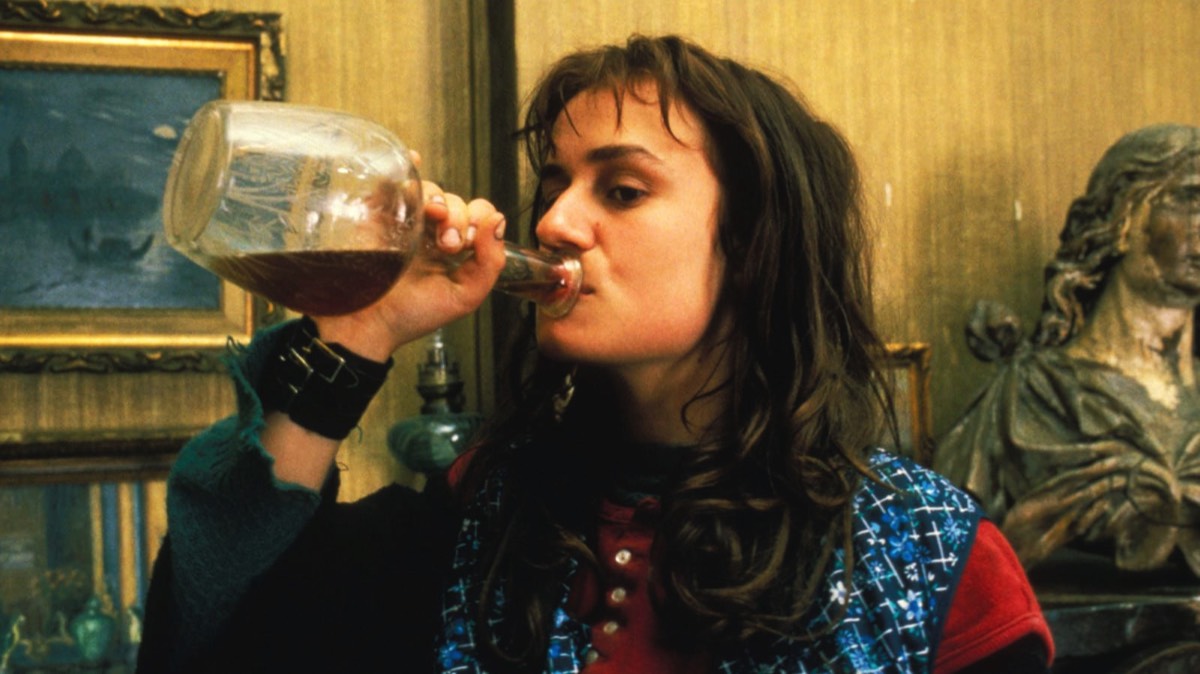
Vagabond (1985)
"Agnès Varda used the skills she honed early in her career as a photographer to create some of the most nuanced, thought-provoking films of the past fifty years. She is widely believed to have presaged the French new wave with her first film, La Pointe Courte, long before creating one of the movement’s benchmarks, Cléo from 5 to 7. Later, with Le bonheur and Vagabond, Varda further shook up art-house audiences, challenging bourgeois codes with her inscrutable characters and offering effortlessly beautiful compositions and editing. Now working largely as a documentarian, Varda remains one of the essential cinematic poets of our time and a true visionary." - The Criterion Collection
"Varda has stayed loyal to documentary, given the flavor of essay or even the charm of storytelling—as in Jacquot de Nantes, her tribute to the dying Jacques Demy. But easily her most powerful film of recent years—and probably her best ever—is Vagabond, the tracking of a fierce, willful outcast, set more surely on a path to death than Cléo ever contemplated. Vagabond burns in the memory, lucid and unsentimental, like the challenging gaze of Sandrine Bonnaire." - David Thomson (The New Biographical Dictionary of Film, 2010)
"For me, Agnès Varda was the greatest of that great and long-lived generation of the French New Wave. She was a master of personal cinema and essay cinema, drama, satire, documentary and romance, and her work had a distinctive richness and wisdom. Her debut feature, La Pointe Courte (1954), is a study in contemporary relationships with a poetic poise that surpasses Hiroshima Mon Amour (whose director, Alain Resnais, worked on Pointe Courte as editor). Her early masterpiece Cléo from 5 to 7 (1961) is news that stays news: a thrillingly urgent, intensely sexy and melancholy despatch from the epicentre of the 60s Parisian zeitgeist, which is far more interesting and conceptually supple than Jean-Luc Godard’s Breathless." - Peter Bradshaw (The Guardian, 2019)
"Agnès Varda has been dubbed the grandmother of the nouvelle vague. Her 1954 debut , La pointe courte, was an iconoclastic synthesis of ragged documentary and Bergmanesque fiction that ran counter to the French tradition of quality cinema, controversially using nonprofessional actors and real locations (as opposed to studio sets)... She essayed a series of documentaries before Cléo from 5 to 7 (1961). Along with Le bonheur (1965), a visually sensuous exploration of a love triangle, it cemented Varda's reputation as one of the most important women directors in the history of cinema." - Lloyd Hughes (The Rough Guide to Film, 2007)
"The fusion of direct observation and aesthetic contemplation, of documentary proximity and sociological reflection, led Varda to make films of passionate political engagement that drew, too, on her own experience. She was vigorously involved, in the early nineteen-seventies, in the battle to legalize abortion in France, and that battle—set in the much wider context of the lives of women (whether artists or working people) who took part in that struggle—gave rise to Varda’s great, all-too-rare drama One Sings, the Other Doesn’t, from 1977, which, in dramatizing the lives of two women, embraces the passion and ferment of an entire era." - Richard Brody (The New Yorker, 2019)
"You know, the boundaries between contemporary art and cinema are so rigid. It's unbelievable. The film critics don't know my artwork and the art world doesn't know my films." - Agnès Varda
"I would like to be remembered as a film-maker [who] enjoyed life, including pain. This is such a terrible world, but I keep the idea that every day should be interesting. What happens in my days – working, meeting people, listening – convinces me that it’s worth being alive." - Agnès Varda, 2018
Selected Filmography
Loading filmography...
Agnès Varda / Fan Club
Sukhdev Sandhu, Agnieszka Holland, Richard Brody, Adrian Danks, Carrie Rickey, Ginette Vincendeau, Jonathan Rosenbaum, David Sterritt, Pamela Hutchinson, J.M. Tyree, Kiva Reardon, Carol Morley.
Sukhdev Sandhu, Agnieszka Holland, Richard Brody, Adrian Danks, Carrie Rickey, Ginette Vincendeau, Jonathan Rosenbaum, David Sterritt, Pamela Hutchinson, J.M. Tyree, Kiva Reardon, Carol Morley.
"Fan Club"
These film critics/filmmakers have, on multiple occasions, selected this director’s work within film ballots/lists that they have submitted.
These film critics/filmmakers have, on multiple occasions, selected this director’s work within film ballots/lists that they have submitted.