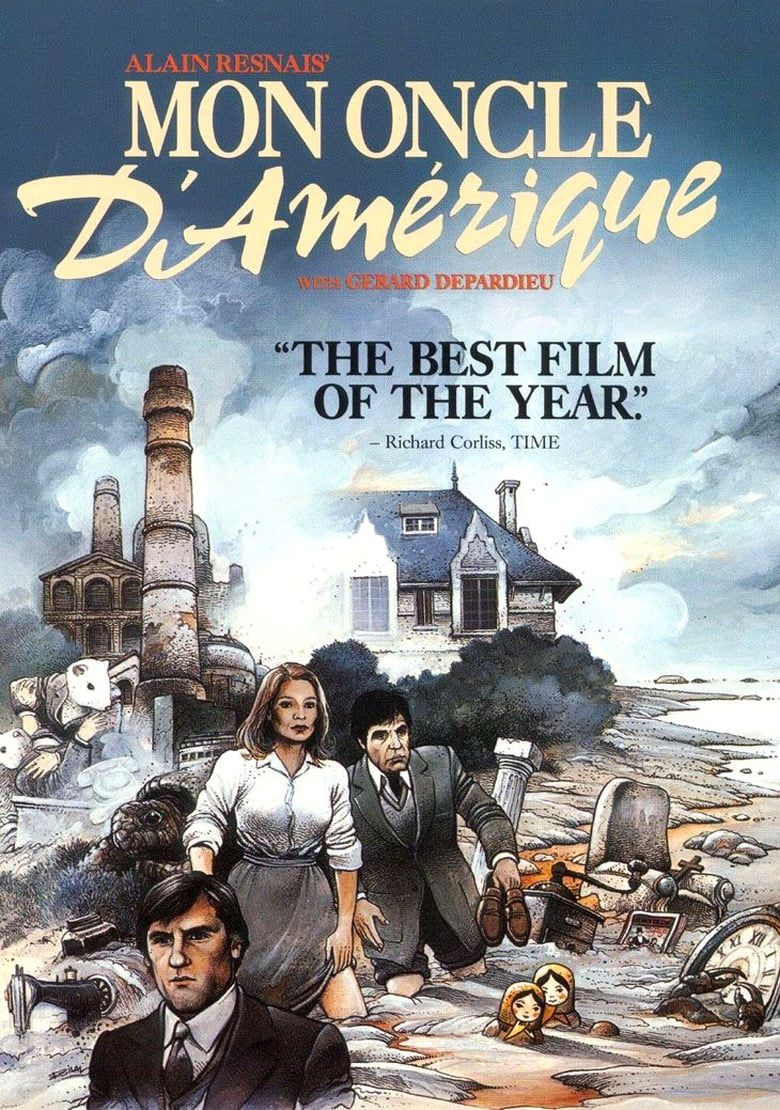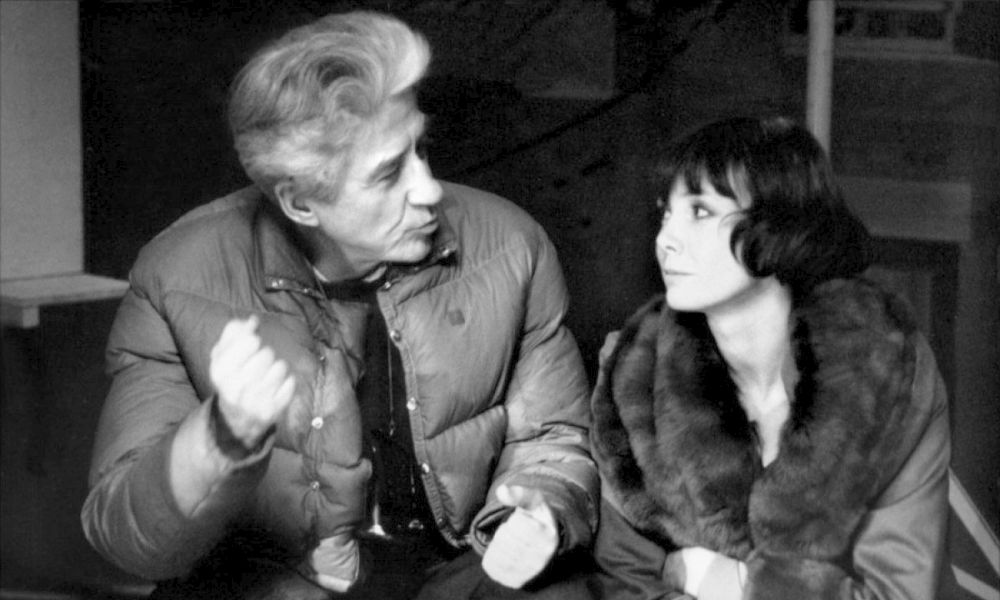
"An impeccable formalist, Resnais is probably the single most important director to emerge from the ranks of the French Nouvelle Vague. Although he has relied on collaboration with writers in all his films, he is considered an auteur by critics subscribing to the theory, because of his consistent adherence to distinctive themes and the highly personal technique he has developed." - The Macmillan International Film Encyclopedia, 1994
Alain Resnais
Key Production Countries: France, Italy, Switzerland
Key Genres: Drama, Psychological Drama, Documentary, Short Film, Comedy of Manners, Comedy Drama, Romantic Drama, Ensemble Film, Avant-garde/Experimental, Satire, Romantic Comedy, History
Key Collaborators: Jacques Saulnier (Production Designer), Sabine Azéma (Leading Actress), Pierre Arditi (Leading Actor), Albert Jurgenson (Editor), Sacha Vierny (Cinematographer), André Dussollier (Leading Character Actor), Hervé de Luze (Editor), Mark Snow (Composer), Lambert Wilson (Character Actor), Jean Daste (Character Actor), Michel Vuillermoz (Character Actor), Fanny Ardant (Leading Actress)
Key Genres: Drama, Psychological Drama, Documentary, Short Film, Comedy of Manners, Comedy Drama, Romantic Drama, Ensemble Film, Avant-garde/Experimental, Satire, Romantic Comedy, History
Key Collaborators: Jacques Saulnier (Production Designer), Sabine Azéma (Leading Actress), Pierre Arditi (Leading Actor), Albert Jurgenson (Editor), Sacha Vierny (Cinematographer), André Dussollier (Leading Character Actor), Hervé de Luze (Editor), Mark Snow (Composer), Lambert Wilson (Character Actor), Jean Daste (Character Actor), Michel Vuillermoz (Character Actor), Fanny Ardant (Leading Actress)
"Resnais, though often associated with the New Wave, is distinguished from the typical New Wave directors by his willingness to efface himself through the adaptation of works by other writers, and by his highly intellectualized approach. His major films from the late 1950s and 1960s include Hiroshima mon amour, with a script by Marguerite Duras, and Last Year at Marienbad, produced in collaboration with Alain Robbe-Grillet, starring the cult actress Delphine Seyrig, and with costumes by Coco Chanel… Resnais has continued to make interesting films into his eighties, but his reputation rests primarily on his uncompromisingly modernist works under the nouvelle vague umbrella in the period from 1959 to 1966." - Schirmer Encyclopedia of Film, 2007
"Resnais's filmic output has been relatively small. He nonetheless stands as a significant figure in modernist cinema. His strategies of fragmented point-of-view and multiple temporality, as well as his use of the medium to convey past/present and fantasy/imagination/reality as equivocal and equivalent modes of experience have amplified our understanding of film's capacity for expression." - M.B. White (International Dictionary of Films and Filmmakers, 1991)
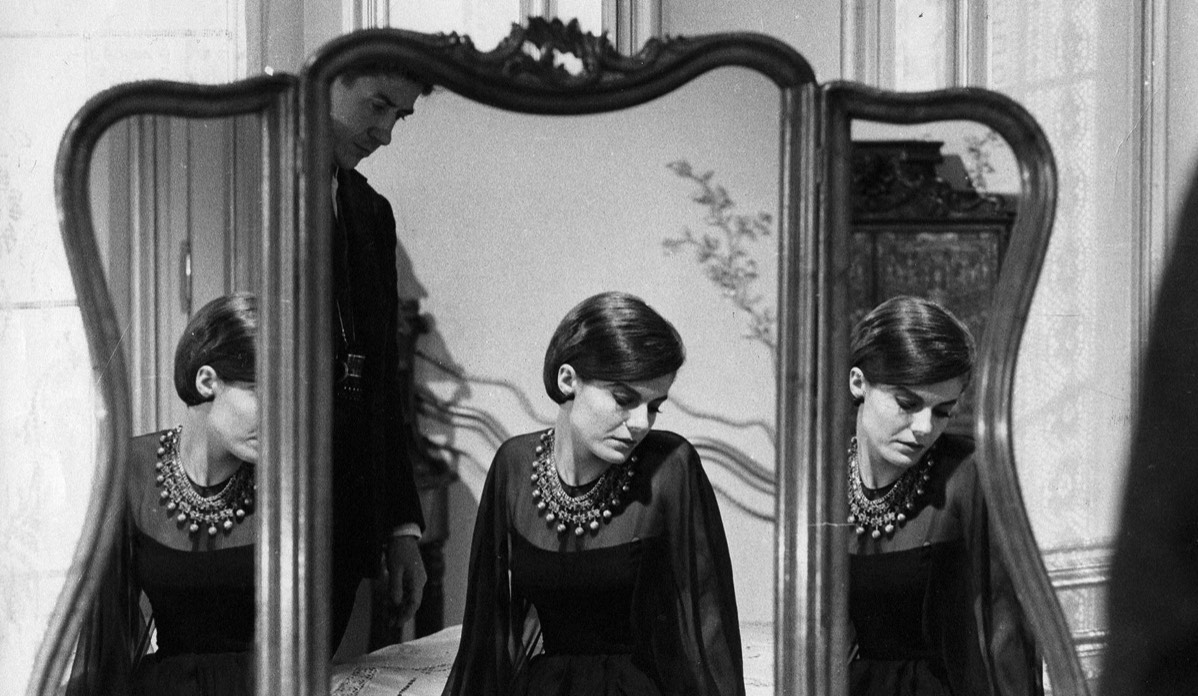
Last Year at Marienbad (1961)
"Resnais has made fifteen feature films in forty years, and has confessed sometimes to wondering where a next picture might come from. Is this sparseness the result of an uncompromisingly difficult artistic personality or does Resnais pursue complexity at the expense of self-expression? It is all very well to claim that Resnais is dedicated to the immense subjects of time and memory, and then adopt his rather pusillanimous defenses of his own films." - David Thomson (The New Biographical Dictionary of Film, 2002)
"Alain Resnais… was a director of elegance and distinction who, despite generally working from the screenplays of other writers, established an auteurist reputation. His films were singular, instantly recognisable by their style as well as through recurring themes and preoccupations. Primary concerns were war, sexual relationships and the more abstract notions of memory and time. His characters were invariably adult (children were excluded as having no detailed past) middle-class professionals. His style was complex, notably in the editing and often – though not always – dominated by tracking shots and multilayered sound." - Brian Baxter (The Guardian, 2014)
"A leading figure in the development of a modernist cinema, Alain Resnais seems recently to have retreated further into an hermetic artiness that takes little account of the demands of the popular audience. In dealing repeatedly with the effect of memory and the imagination upon human passions, his intellectual, near-abstract approach to plot and character counteracts emotional involvement." - Geoff Andrew (The Film Handbook, 1989)
"For Alain Resnais, filmmaking is editing. It is less creation than selection and arrangement. It is an exploration of the world at one remove. All of Resnais’s films are dependent upon the initial shaping of experience by another artist, whether Van Gogh or Picasso (the subject matter of two of his documentaries) or Marguerite Duras or Jorge Semprun (the scenarists for two of his features). Unlike Godard or Fellini, Resnais does not appear to be exploring the world with his camera: he remolds the explorations of somebody else. To film is to interpret, to rearrange, to edit—to stand back and reflect. There is thus an air of detachment about his films that links him, in a way, with Antonioni, but more directly with Eisenstein." - Peter Harcourt (Film Comment, 1973)
"One of the most consistently interesting auteurs of French cinema, Resnais was making short films as early as 1936... Resnais' interest in social and political issues, his modernist concerns and drawing on serious literature (rather than pulp fiction) set him apart from other New Wave directors right from his first feature, Hiroshima mon amour (1959)." - Ginette Vincendeau (Encyclopedia of European Cinema, 1995)
"Themes of time and memory haunt this director's brilliant career, with the individual consciousness the dictator of his narratives, rather than the traditionally uninterrupted beginning, middle, and end. Resnais' films flow from one association to another, yet are not as inaccessible as might be expected. The human being is his subject, and that accounts for the beauty, strength, and empathy in his quilted stories." - William R. Meyer (The Film Buff's Catalog, 1978)
"Resnais is a cubist. I mean that he is the first modern filmmaker of the sound film." - Eric Rohmer
"I never had any special appetite for filmmaking, but you have to make a living and it is miraculous to earn a living working in film." - Alain Resnais
Selected Filmography
Loading filmography...
Alain Resnais / Fan Club
Jonathan Rosenbaum, Michel Ciment, Sylvain Lafrenière, Jean-Pierre Berthomé, Lúcia Murat, Pier Marton, Michael Haneke, Kent Jones, Adrian Martin, Joachim Trier, Atilla Dorsay, Esteve Riambau.
Jonathan Rosenbaum, Michel Ciment, Sylvain Lafrenière, Jean-Pierre Berthomé, Lúcia Murat, Pier Marton, Michael Haneke, Kent Jones, Adrian Martin, Joachim Trier, Atilla Dorsay, Esteve Riambau.
"Fan Club"
These film critics/filmmakers have, on multiple occasions, selected this director’s work within film ballots/lists that they have submitted.
These film critics/filmmakers have, on multiple occasions, selected this director’s work within film ballots/lists that they have submitted.