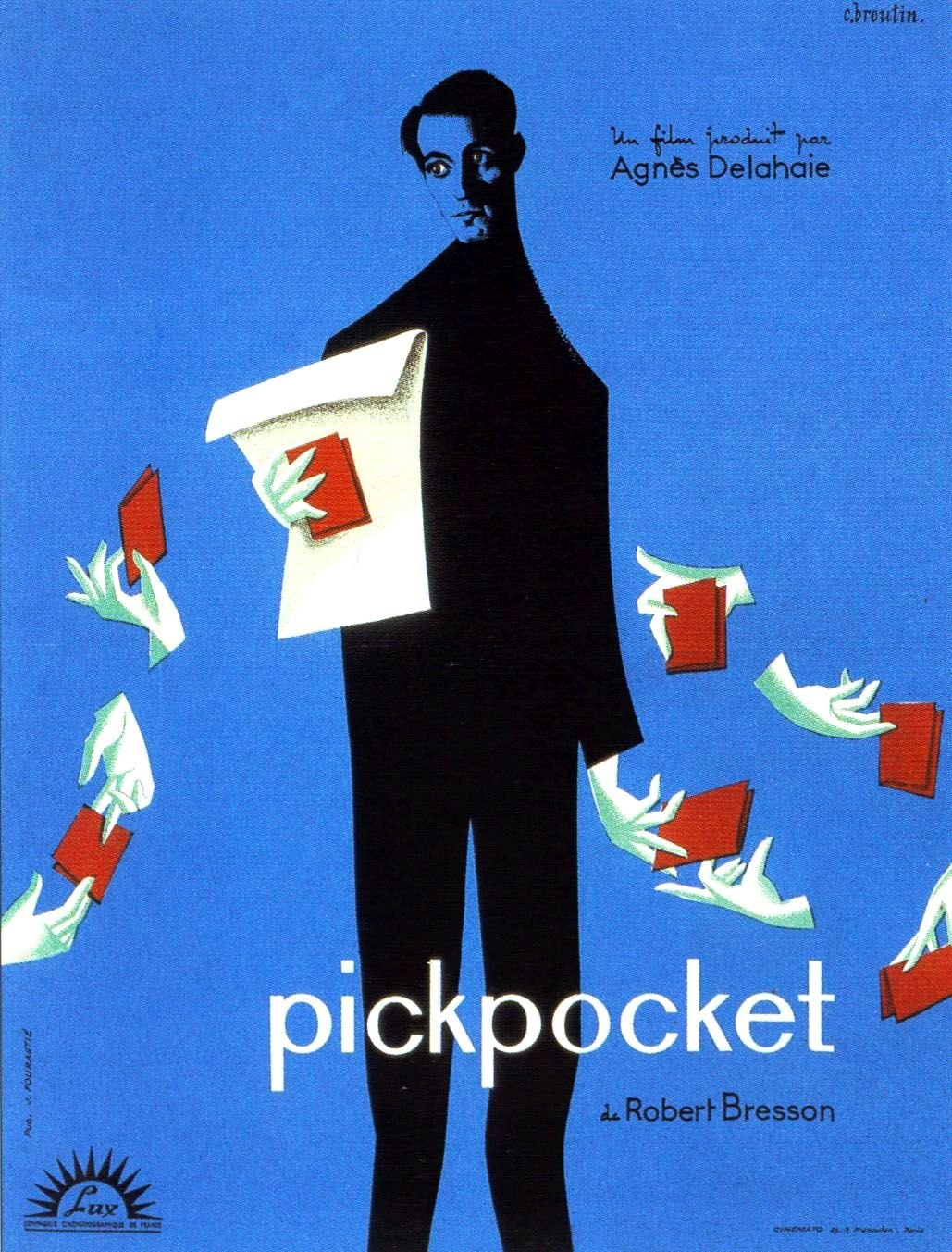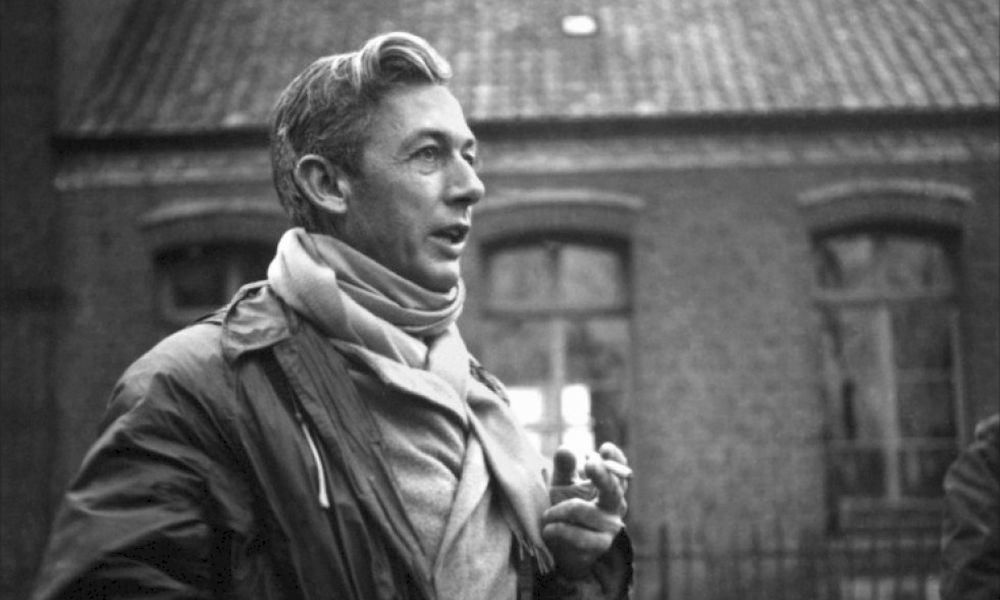
"In film after film (though he was never prolific), he finds spiritual transcendence, through death and communion, in a resolutely unglamorous France peopled by closed-off, often unsympathetic characters… The uncompromising gravity of his vision is demanding, his humanity and genius undeniable." - Geoff Andrew (The Director's Vision, 1999)
Robert Bresson
Director / Screenwriter
(1901-1999) Born September 25, Bromont-Lamothe, Puy-de-Dôme, France
Top 250 Directors
(1901-1999) Born September 25, Bromont-Lamothe, Puy-de-Dôme, France
Top 250 Directors
Key Production Country: France
Key Genres: Drama, Psychological Drama, Period Film, Crime Drama, Religious Drama, Prison Film
Key Collaborators: Pierre Charbonnier (Production Designer), Raymond Lamy (Editor), Léonce-Henri Burel (Cinematographer), Pasqualino De Santis (Cinematographer), Ghislain Cloquet (Cinematographer), Jean-Jacques Grünenwald (Composer), Jean Wiener (Composer), Mag Bodard (Producer), Agnes Delahaie (Producer), Philippe Agostini (Cinematographer), Germaine Artus (Editor), Jean-Claude Guilbert (Leading Character Actor)
Key Genres: Drama, Psychological Drama, Period Film, Crime Drama, Religious Drama, Prison Film
Key Collaborators: Pierre Charbonnier (Production Designer), Raymond Lamy (Editor), Léonce-Henri Burel (Cinematographer), Pasqualino De Santis (Cinematographer), Ghislain Cloquet (Cinematographer), Jean-Jacques Grünenwald (Composer), Jean Wiener (Composer), Mag Bodard (Producer), Agnes Delahaie (Producer), Philippe Agostini (Cinematographer), Germaine Artus (Editor), Jean-Claude Guilbert (Leading Character Actor)
"Bresson is perhaps the only man in the cinema to have achieved the perfect fusion of the finished work with a concept theoretically formulated beforehand. I know of no other artist as consistent as he is in this respect. His guiding principle was the elimination of what is known as expressiveness, in the sense that he wanted to do away with the frontier between the image and actual life; that is, to render life itself graphic and expressive. No special feeding in of material, nothing laboured, nothing that smacks of deliberate generalisation." - Andrei Tarkovsky (Sculpting in Time, 1989)
"For the most part, Bresson employs only amateur actors. He avoids histrionics and seldom permits his "models" (as he calls them, drawing a metaphor from painting) to give a traditional performance. The emotional tensions of the films derive from the elaborate interchange of glances, subtle camera movements, off-screen sounds, carefully placed bits of baroque and classical music, and rhythmical editing." - P. Adams Sitney (The St. James Film Directors Encyclopedia, 1998)
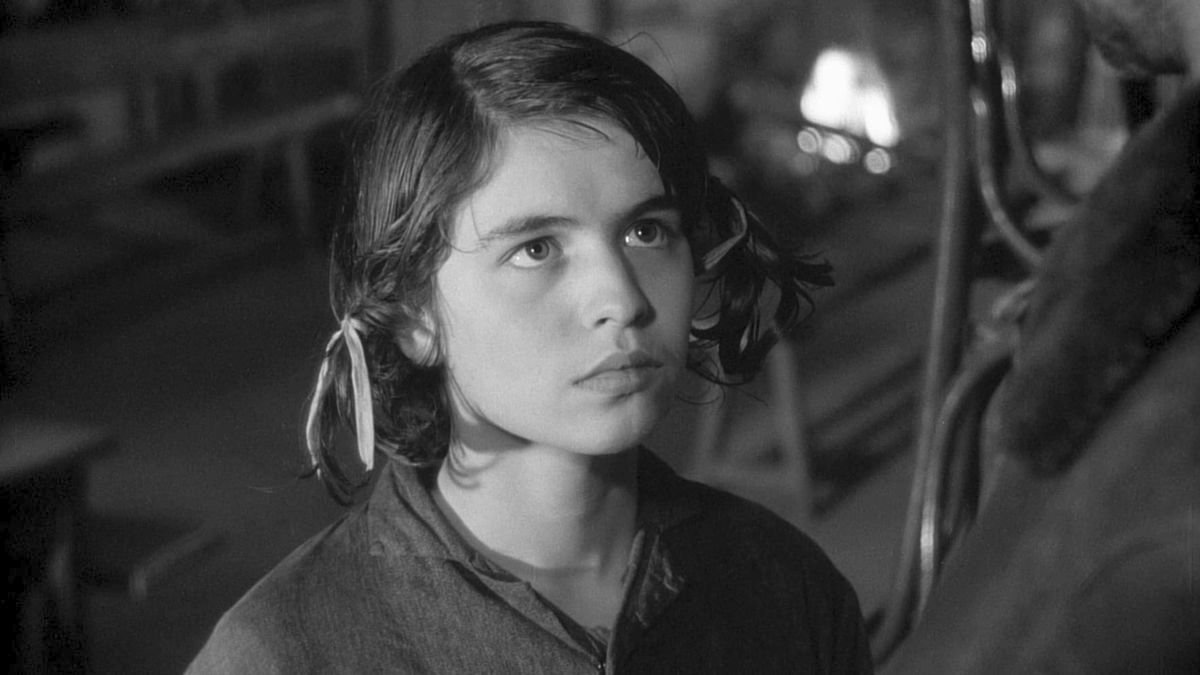
Mouchette (1967)
"He is an example of pure cinema in the sense that he photographs reserved faces to evoke all the wildest emotions of the spirit. To see his films is to marvel that other directors have had the ingenuity to evolve such elaborate styles and yet restrict them to superficial messages... He is a great director, even if no other great director seems less intrigued by cinema itself." - David Thomson (The New Biographical Dictionary of Film, 2002)
"Bresson occupies a unique place in French cinema. He cannot be classified with either the old guard or the New Wave but is highly respected by both for pursuing his own individual style, unperturbed by the cinema around him. "He expresses himself cinematographically as a poet would with his pen," Jean Cocteau said of him. "His cinema is closer to painting than to photography," says Truffaut. Others see in him a philosopher with a camera, an uncompromising Jansenist rigorously preoccupied with ideas of predestination and spiritual grace." - The MacMillan International Film Encyclopedia, 1994
"One of the most respected auteurs of world cinema, described by admirer Paul Schrader as 'the most important spiritual artist' and as a 'Jansenist' by his detractors. Bresson's originality within French cinema is twofold. First, he is almost unique in pursuing a religious discourse; second, his dislike of actors and use of unknown amateurs runs counter to the great French tradition of performance - and dialogue-based cinema." - Ginette Vincendeau (Encyclopedia of European Cinema, 1995)
"Bresson studies people, but in an extremely stylistic mode." - William R. Meyer (The Film Buff's Catalog, 1978)
“Robert Bresson is French cinema, as Dostoevsky is the Russian novel and Mozart is the German music." - Jean-Luc Godard
"My movie is born first in my head, dies on paper; is resuscitated by the living persons and real objects I use, which are killed on film but, placed in a certain order and projected on to a screen, come to life again like flowers in water." - Robert Bresson
"The most ordinary word, when put into place, suddenly acquires brilliance. That is the brilliance with which your images must shine." - Robert Bresson
Selected Filmography
Loading filmography...
Robert Bresson / Favourite Films
Battleship Potemkin (1925) Sergei Eisenstein, Bicycle Thieves (1948) Vittorio De Sica, Brief Encounter (1945) David Lean, City Lights (1931) Charles Chaplin, The Gold Rush (1925) Charles Chaplin, Louisiana Story (1948) Robert Flaherty, Man of Aran (1934) Robert Flaherty.
Source: Cinematheque Belgique (1952)
Battleship Potemkin (1925) Sergei Eisenstein, Bicycle Thieves (1948) Vittorio De Sica, Brief Encounter (1945) David Lean, City Lights (1931) Charles Chaplin, The Gold Rush (1925) Charles Chaplin, Louisiana Story (1948) Robert Flaherty, Man of Aran (1934) Robert Flaherty.
Source: Cinematheque Belgique (1952)
Robert Bresson / Fan Club
Paul Schrader, David Sterritt, Jonathan Rosenbaum, Amy Taubin, B. Kite, Andrei Tarkovsky, Dan Sallitt, Agnieszka Holland, Olivier Assayas, Manohla Dargis, Benny Safdie, Michael Haneke.
Paul Schrader, David Sterritt, Jonathan Rosenbaum, Amy Taubin, B. Kite, Andrei Tarkovsky, Dan Sallitt, Agnieszka Holland, Olivier Assayas, Manohla Dargis, Benny Safdie, Michael Haneke.
"Fan Club"
These film critics/filmmakers have, on multiple occasions, selected this director’s work within film ballots/lists that they have submitted.
These film critics/filmmakers have, on multiple occasions, selected this director’s work within film ballots/lists that they have submitted.