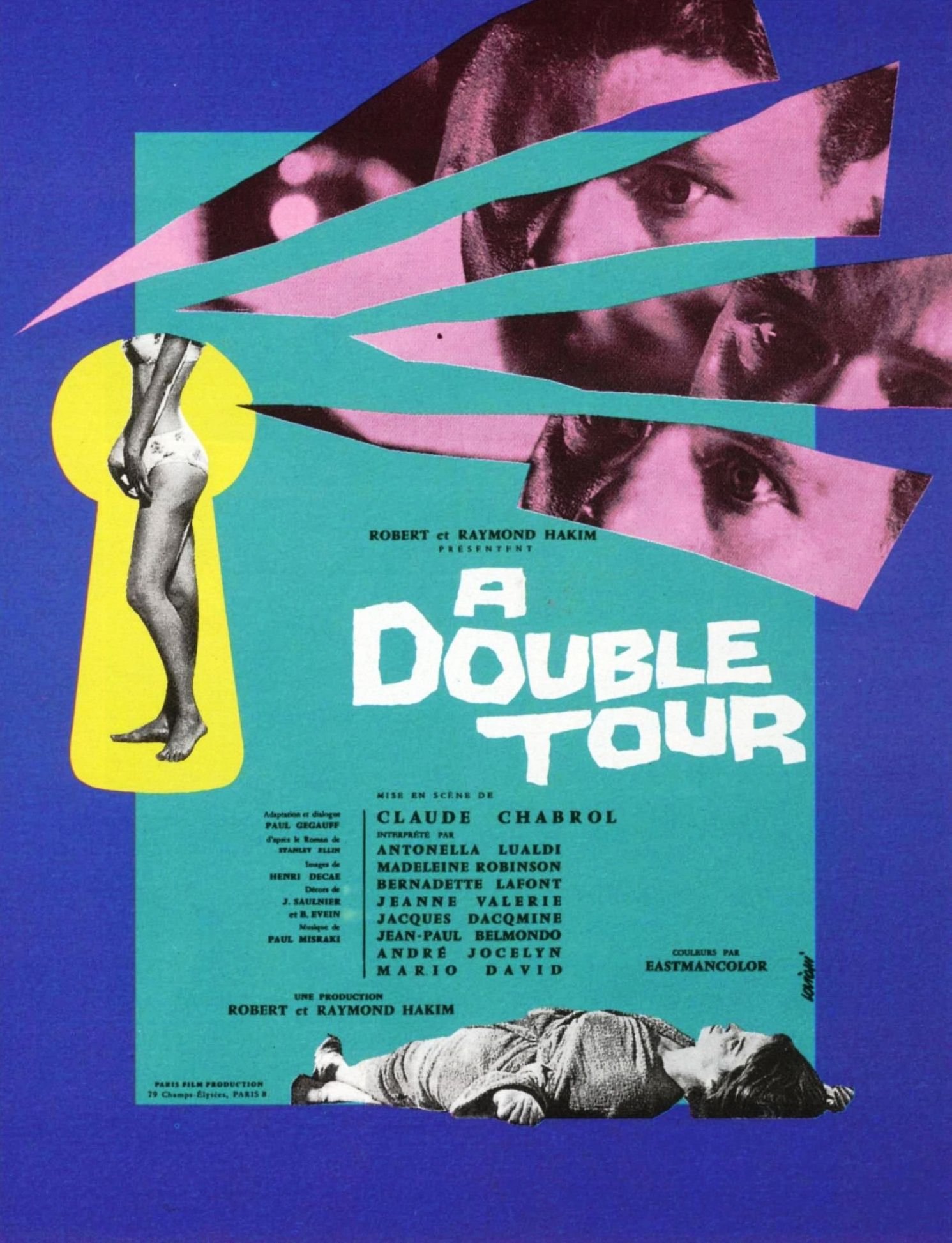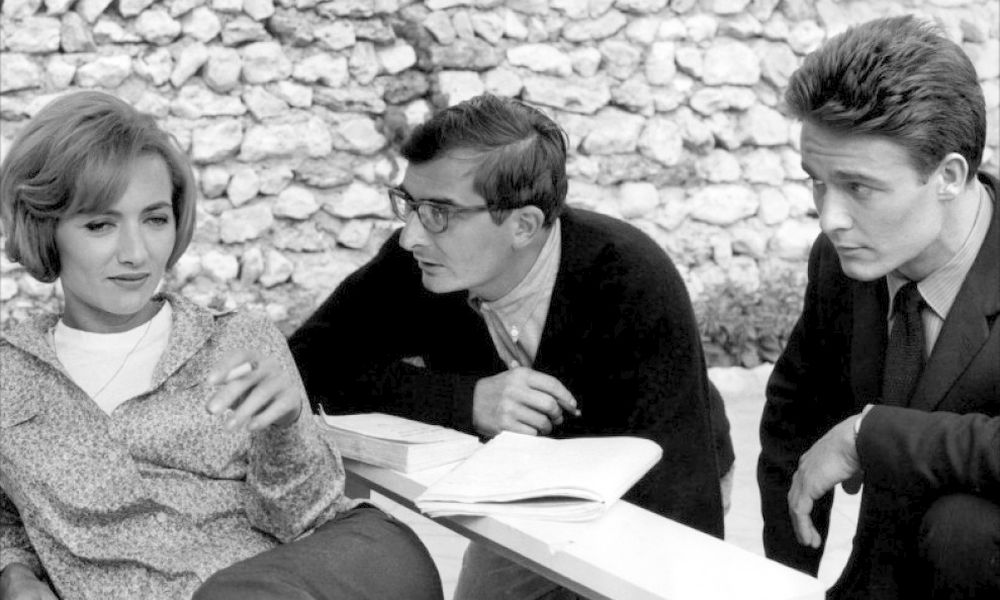
"Although occasionally controversial - Une affair des femmes' account of Vichy politics sparked public protests in 1988 - Chabrol's work has seldom generated the cinephiliac excitement attending Godard, or the devoted crowd for Truffaut. But the best Chabrols rank alongside vintage Hitchcock and Lang." - Richard Armstrong (The Rough Guide to Film, 2007)
Claude Chabrol
Key Production Countries: France, Italy, Germany, Switzerland
Key Genres: Drama, Psychological Drama, Crime Drama, Thriller, Mystery, Psychological Thriller, Post-Noir (Modern Noir), Police Detective Film, Satire, Marriage Drama, Paranoid Thriller, Whodunit
Key Collaborators: Jean Rabier (Cinematographer), Monique Fardoulis (Editor), Jacques Gaillard (Editor), Pierre Jansen (Composer), Stéphane Audran (Leading Actress), Matthieu Chabrol (Composer), Thomas Chabrol (Character Actor), Marin Karmitz (Producer), André Génovès (Producer), Françoise Benoît-Fresco (Production Designer), Paul Gégauff (Screenwriter), Guy Littaye (Production Designer)
Key Genres: Drama, Psychological Drama, Crime Drama, Thriller, Mystery, Psychological Thriller, Post-Noir (Modern Noir), Police Detective Film, Satire, Marriage Drama, Paranoid Thriller, Whodunit
Key Collaborators: Jean Rabier (Cinematographer), Monique Fardoulis (Editor), Jacques Gaillard (Editor), Pierre Jansen (Composer), Stéphane Audran (Leading Actress), Matthieu Chabrol (Composer), Thomas Chabrol (Character Actor), Marin Karmitz (Producer), André Génovès (Producer), Françoise Benoît-Fresco (Production Designer), Paul Gégauff (Screenwriter), Guy Littaye (Production Designer)
"His admiration for Hitchcock turned him toward moody psychodramas, often with touches of grotesque humor (Les Bonnes femmes, Ophélia). Chabrol churned out lurid espionage pictures before embarking on a series of psychological thrillers: La Femme infidele (1969), This Man Must Die (1969), Le Boucher (1970), and others. Like Hitchcock, Chabrol traces how the tensions of middle-class life explode into madness and violence. By 2001, Chabrol had made over fifty features and several television episodes, remaining the most commercially flexible and pragmatic of the directors to emerge from Cahiers." - Kristin Thompson & David Bordwell (Film History: An Introduction, 2009)
"If Jean-Luc Godard appeals to critics because of his extreme interest in politics and film theory and if François Truffaut appeals to the popular audience because of his humanism and sentimentality, it is Claude Chabrol - film critic, filmmaker, philosopher - whose work consistently offers the opportunity for the most balanced appeal... Chabrol's work can perhaps best be seen as a cross between the unassuming and popular genre film and the pretentious elitist art film." - Charles Derry (The St. James Film Directors Encyclopedia, 1998)
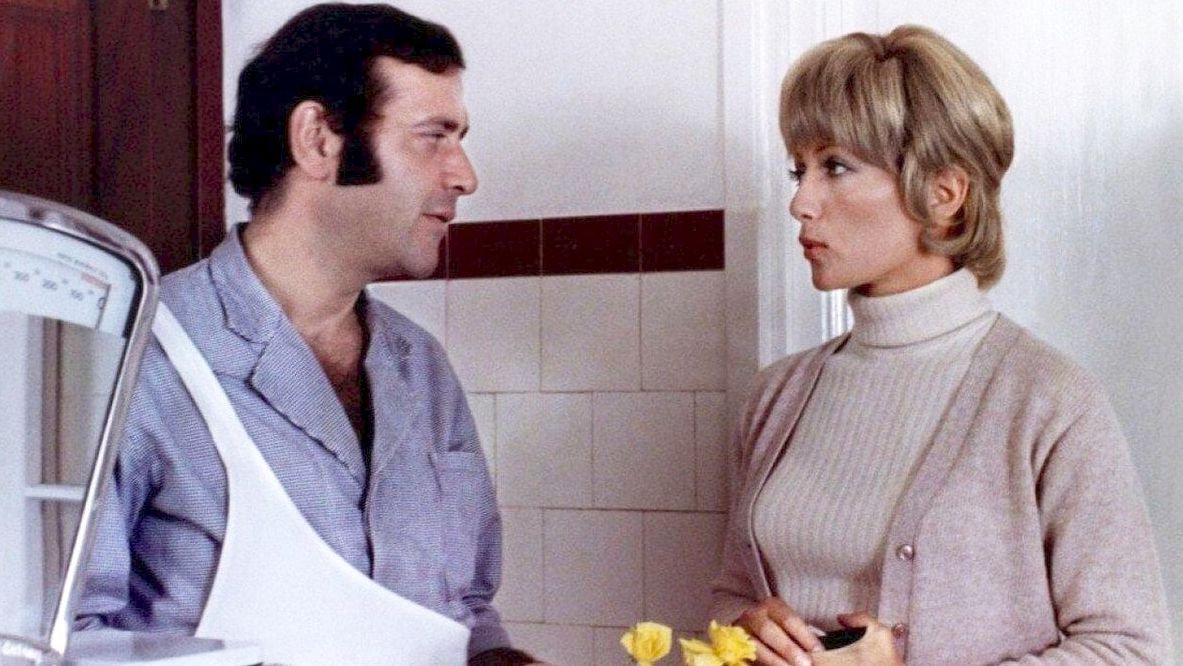
Le Boucher (1970)
"Intensely prolific, and arguably not super-picky (averaging two or three films a year at times), Chabrol seemed to simply love making movies whether he originated the idea or not — indeed, unlike his fellow New Wave auteurs, Chabrol was happy to take on studio assignments. By the time of his death in 2010 at the age of 80, the filmmaker had made over 50 feature-length films, many of them suspense dramas often centered around the lives and fates of women." - The Playlist Staff (IndieWire, 2011)
"Chabrol, whose admiration for the Hitchcock thriller style is evident in some of his own films (The Champagne Murders, This Man Must Die, Cop au Vin), is more typically concerned with exploring, in a curiously detached way, personal relationships (Les Cousins, Les Biches). His favorite target remains the urban French petite-bourgeoisie, the milieu of his youth." - The MacMillan International Film Encyclopedia, 1994
"The prolific Chabrol – he made more than 60 films over 50 years – rang endless changes on the theme of infidelity leading to murder. His dissections of bourgeois marriage were spiced up by the presence of Stéphane Audran, his wife from 1964 to 1980, who played adulterous and/or betrayed wives in almost all of their films together, making it one of the most captivating husband-wife teams in all cinema. After their divorce, Chabrol explained: "My rapport with Stéphane as an actress is more agreeable now than when we were married. When you spend your days and nights with your wife and then you look through the camera and see her again, it's just too much." - Ronald Bergan (The Guardian, 2010)
"While Claude Chabrol is certainly one of the most important filmmakers to have emerged from the the French New Wave, his consistency of theme and assured, expressive style are often betrayed by poor material, resulting in a career as uneven as it is prolific... A consummate craftsman, his interest in human emotions often seems intellectually motivated, which may explain the erratic nature of his work." - Geoff Andrew (The Film Handbook, 1989)
"Hugely prolific (he made almost a film a year from 1958 until his death in 2010), he was a director of scrupulous formalism who, despite covering a wide variety of genres and subjects, always returned to thrillers that explored the darkness lurking just beneath the surface of the French bourgeoisie. Like Georges Simenon and Patricia Highsmith, both of whom he adapted, Chabrol was not so much interested in the criminal mind per se, but rather in the complex psychological negotiations that make up that mindset." - Craig Williams (BFI, 2016)
"Sometimes dubbed "The French Hitchcock", Claude Chabrol made his name as a director of mystery and crime thrillers that were really studies in character psychology as well as explorations of the social and class backgrounds of his protagonists. For Chabrol, brutality could erupt at any time within the most banal and everyday of settings, and his films frequently take a jaundiced, but keenly political, look at society. His movies are characterised by sudden, abrupt shifts in tone, and are permeated by a restless, menacing sense that the norms and laws of civility can break down without warning." - Matt Hills (501 Movie Directors, 2007)
"Chabrol’s reputation as one of France’s great filmmakers rests first upon his films of the late 1950s and the late 1960s. Eschewing overt visual stylization, these films favor a cool, crisp classical style that makes clear Chabrol’s admiration for Fritz Lang. His other master was Alfred Hitchcock who inspired Chabrol’s ironic distance from his characters as well as his fascination with pathology and its roots in sexual (mis)behavior. Chabrol’s ability to work quickly and efficiently, combined with his constant return to the suspense and thriller genres, allowed him to remain both prolific and popular for decades." - Haden Guest (The Museum of Modern Art, 2011)
"Emotional relationships marked by physical and psychological violence distinguish Chabrol's films." - William R. Meyer (The Film Buff's Catalog, 1978)
"I like making black and white films in natural surroundings, but I much prefer shooting a color film inside a studio where the colors are easier to control." - Claude Chabrol
"It's often wrong to write for specific actors because one ends up using what is least interesting about them, their mannerisms and habits. I prefer not to write for specific people." - Claude Chabrol
Selected Filmography
Loading filmography...
Claude Chabrol / Favourite Films
À nous la liberté (1931) René Clair, La Bête humaine (1938) Jean Renoir, Casque d'or (1952) Jacques Becker, M (1931) Fritz Lang, Madame de... (1953) Max Ophüls, Meet John Doe (1941) Frank Capra, Notorious (1946) Alfred Hitchcock, The Prisoner of Shark Island (1936) John Ford, The Soft Skin (1964) François Truffaut, Strangers on a Train (1951) Alfred Hitchcock, Sunrise (1927) F.W. Murnau, To Be or Not to Be (1942) Ernst Lubitsch.
Source: Cinemateca Portuguesa (1987)
À nous la liberté (1931) René Clair, La Bête humaine (1938) Jean Renoir, Casque d'or (1952) Jacques Becker, M (1931) Fritz Lang, Madame de... (1953) Max Ophüls, Meet John Doe (1941) Frank Capra, Notorious (1946) Alfred Hitchcock, The Prisoner of Shark Island (1936) John Ford, The Soft Skin (1964) François Truffaut, Strangers on a Train (1951) Alfred Hitchcock, Sunrise (1927) F.W. Murnau, To Be or Not to Be (1942) Ernst Lubitsch.
Source: Cinemateca Portuguesa (1987)
Claude Chabrol / Fan Club
Dan Sallitt, Richard Combs, Filipe Furtado, Bong Joon-ho, Christian Petzold, Jeanine Basinger, Bertrand Tavernier, William Friedkin, Arturo Ripstein, Louise Dumas, Dan Daor, Roger Ebert.
Dan Sallitt, Richard Combs, Filipe Furtado, Bong Joon-ho, Christian Petzold, Jeanine Basinger, Bertrand Tavernier, William Friedkin, Arturo Ripstein, Louise Dumas, Dan Daor, Roger Ebert.
"Fan Club"
These film critics/filmmakers have, on multiple occasions, selected this director’s work within film ballots/lists that they have submitted.
These film critics/filmmakers have, on multiple occasions, selected this director’s work within film ballots/lists that they have submitted.