"Rohmer's awareness of human relationships is matchless, especially the intricate verbal games people play when trying to justify their desires. For his characters, the mind too often tries to trump the heart, and therein lies both their appeal and their tragedy." - Michael Brooke (The Rough Guide to Film, 2007)
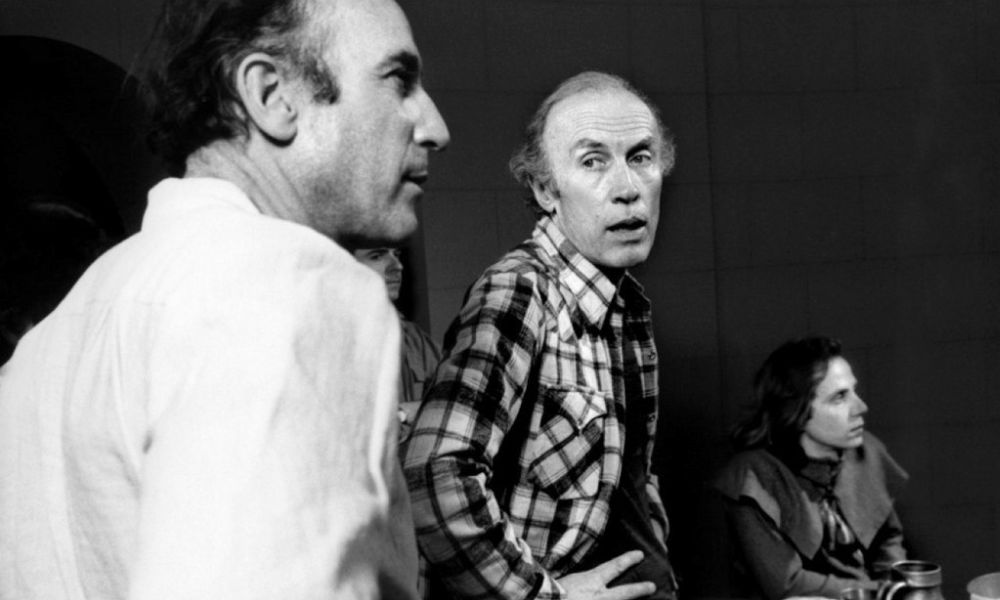
Eric Rohmer
Key Production Country: France
Key Genres: Comedy of Manners, Comedy Drama, Drama, Romantic Drama, Romance, Urban Comedy, Short Film, Period Film, Romantic Comedy, Comedy, Psychological Drama, Documentary
Key Collaborators: Margaret Ménégoz (Producer), Nestor Almendros (Cinematographer), Cécile Decugis (Editor), Mary Stephen (Editor), Marie Rivière (Leading Character Actress), Françoise Etchegaray (Producer), Barbet Schroeder (Producer), Diane Baratier (Cinematographer), Béatrice Romand (Leading Character Actress), Fabrice Luchini (Leading Character Actor), Rosette (Character Actress), Pierre Cottrell (Producer)
Key Genres: Comedy of Manners, Comedy Drama, Drama, Romantic Drama, Romance, Urban Comedy, Short Film, Period Film, Romantic Comedy, Comedy, Psychological Drama, Documentary
Key Collaborators: Margaret Ménégoz (Producer), Nestor Almendros (Cinematographer), Cécile Decugis (Editor), Mary Stephen (Editor), Marie Rivière (Leading Character Actress), Françoise Etchegaray (Producer), Barbet Schroeder (Producer), Diane Baratier (Cinematographer), Béatrice Romand (Leading Character Actress), Fabrice Luchini (Leading Character Actor), Rosette (Character Actress), Pierre Cottrell (Producer)
"Eric Rohmer... was one of the founding figures of the French New Wave and the director of more than 50 films, including the Oscar-nominated My Night at Maud’s... In opposition both to the intensely personal, confessional tone of much of the work of Truffaut and to the politically provocative films of Godard, Mr. Rohmer remained true to a restrained, rationalist aesthetic, close to the principles of the 18th-century thinkers whose words he frequently cited in his movies. And yet Mr. Rohmer’s work was warmed by an undercurrent of romanticism and erotic yearning, made perhaps all the more affecting for never quite breaking through the surface of his elegant, orderly films." - Dave Kehr (The New York Times, 2010)
"All the literary content is peripheral to Rohmer's eye. It is in the quality of his imagery that we feel the intellectual appeal of experience. The camera style is classically simple, but Rohmer adores the effects of natural light, whether the reflections from snow in Maud, the rainy day in Claire, or the Côte d'Azur interiors in La Collectionneuse." - David Thomson (The New Biographical Dictionary of Film, 2002)
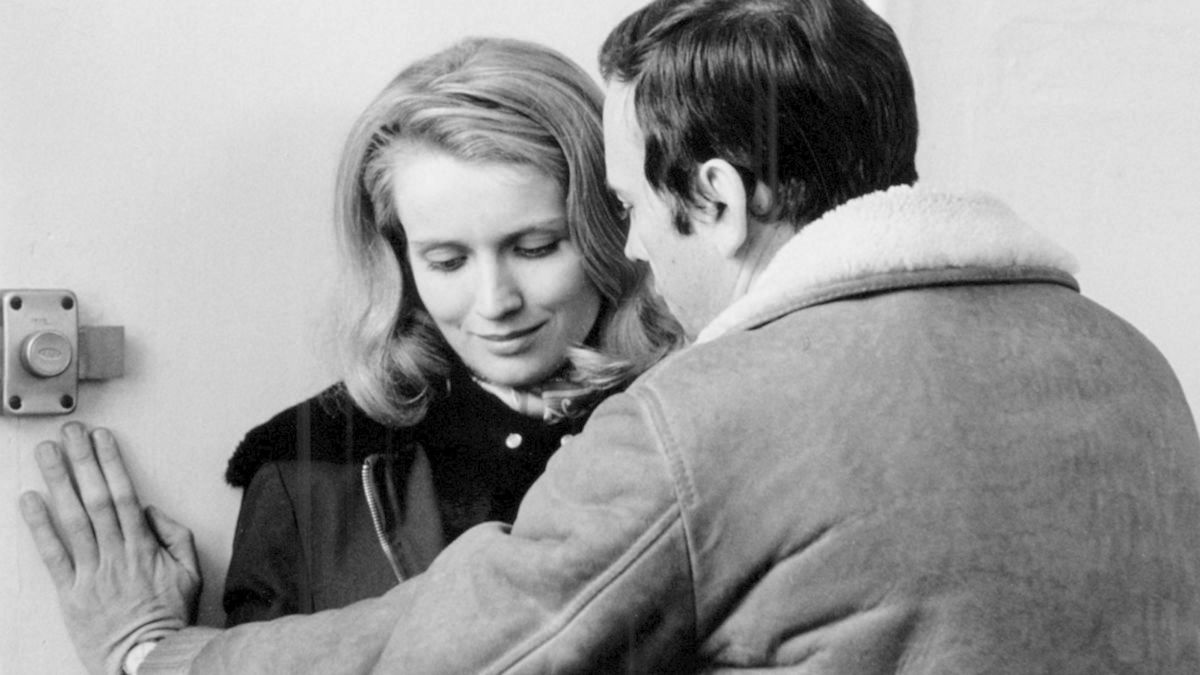
My Night at Maud's (1969)
"Emerging from the crucible of the French New Wave, Rohmer has forged a style that combines the best qualities of Bresson and Renoir with distinctive traits of the Hollywood masters. And though he was never as flamboyant as Godard or Truffaut, Rohmer's appeal has proved much hardier." - Dennis Nastav (International Dictionary of Films and Filmmakers, 1991)
"We can hardly fail to recognise when we are in the presence of a Rohmer film – characters, dialogue, locales would be tangible evidence enough of that Rohmerian world, however, it is in the manner of how he makes us perceive things, what he asks of our gaze (and our intelligence), that gives his films their singularity." - Roland Caputo & Michelle Carey (Senses of Cinema, 2010)
"In their own world, Rohmer's films are guaranteed to run and run. This may be because, although they are more or less conversation pieces, they are also cleverly constructed (he always writes his own screenplays) in such a way as to keep an audience's interest alive until matters dovetail at the end, by which time most of Rohmer's characters know more about themselves than when the film began." - David Quinlan (Quinlan's Film Directors, 1999)
"Such celebrated films as My Night at Maud’s, Claire’s Knee, Summer [The Green Ray], and A Tale of Springtime have made Rohmer (as his biographers note) the inventor of a genre unto himself. Namely, the Éric Rohmer film, in which people talk to each other with dialectical precision, intellectual flair, and a stylish offhandedness, on location in striking settings (usually a comfortably tamed nature and architecturally distinctive urban locales), about their emotions and their ideas in pursuit of love and sex, not always with the same person—and do so filmed in images that are both fluid and taut, relaxed and precise. The action meanders but seems held together with a relentlessly unifying purity of cinematic style and idealistic intentions." - Richard Brody (The New Yorker, 2016)
"Highly intellectual writer-director and former film critic/historian - in 1957 he cowrote a book on Hitchcock with fellow enthusiast and director-to-be Claude Chabrol - whose dialogue-heavy, deceptively simple cinematic parables and proverbs on love and morality among the young French bourgeoisie actually represent some of the most astute and philosophically trenchant filmmaking ever." - Leonard Maltin's Movie Encyclopedia, 1995
"The characters in Rohmer's delicious comedies of error are largely defined by their relationships with the opposite sex. The sumptuous, hedonistic settings and seductive characters are essentially what the conversations, narrations, and diary extracts in the plots are all about. For films that deal to a large extent with resistance to temptation, they are tantalisingly erotic." - Ronald Bergan (Film - Eyewitness Companions, 2006)
"Despite the casual naturalism and delicious sense of ambiguity, nothing was ever arbitrary in a Rohmer film. He put his often non-professional players through extensive rehearsals and amended the script as new ideas arose. On location, he preferred to shoot in sequence, according to the state of the weather and the time of day, and worked quickly (two or three takes) with a small crew." - David Parkinson (BFI, 2015)
"Rohmer's films are often criticized as being "uncinematic," meaning they are more akin to filmed stage plays, the action confined to very few locations and occurring in a short period of time when nothing much seems to happen. The average shot length in Rohmer's films is significantly longer than those of contemporary Hollywood. This doesn't make Rohmer's movies uncinematic, however. When directing, Rohmer maintains a talking distance from his actors that lends his scenes an intimacy not achievable in conventional stage productions." - Aaron Smuts (501 Movie Directors, 2007)
"An important figure in the French new wave, Rohmer is known primarily for his "moral tales," which leisurely speak of men and women, and the things they do to each other." - William R. Meyer (The Film Buff's Catalog, 1978)
"I'm less concerned with what people do than what is going on in their minds while they're doing it." - Eric Rohmer
Selected Filmography
Loading filmography...
Eric Rohmer / Favourite Films
The General (1926) Buster Keaton & Clyde Bruckman, Ivan the Terrible Parts 1 & 2 (1944/1946) Sergei Eisenstein, Pickpocket (1959) Robert Bresson, La Pyramide humaine (1961) Jean Rouch, Red River (1948) Howard Hawks, The Rules of the Game (1939) Jean Renoir , Sunrise (1927) F.W. Murnau, True Heart Susie (1919) D.W. Griffith, Vertigo (1958) Alfred Hitchcock, Voyage in Italy (1953) Roberto Rossellini.
Source: Sight & Sound (1962)
The General (1926) Buster Keaton & Clyde Bruckman, Ivan the Terrible Parts 1 & 2 (1944/1946) Sergei Eisenstein, Pickpocket (1959) Robert Bresson, La Pyramide humaine (1961) Jean Rouch, Red River (1948) Howard Hawks, The Rules of the Game (1939) Jean Renoir , Sunrise (1927) F.W. Murnau, True Heart Susie (1919) D.W. Griffith, Vertigo (1958) Alfred Hitchcock, Voyage in Italy (1953) Roberto Rossellini.
Source: Sight & Sound (1962)
Eric Rohmer / Fan Club
Dan Sallitt, Geoff Andrew, Fernando Méndez-Leite, John Davies, Sam Wigley, Carlos F. Heredero, David Jenkins, Corneliu Porumboiu, Chris Fujiwara, Michael Wilmington, Mia Hansen-Løve, David Pirie.
Dan Sallitt, Geoff Andrew, Fernando Méndez-Leite, John Davies, Sam Wigley, Carlos F. Heredero, David Jenkins, Corneliu Porumboiu, Chris Fujiwara, Michael Wilmington, Mia Hansen-Løve, David Pirie.
"Fan Club"
These film critics/filmmakers have, on multiple occasions, selected this director’s work within film ballots/lists that they have submitted.
These film critics/filmmakers have, on multiple occasions, selected this director’s work within film ballots/lists that they have submitted.