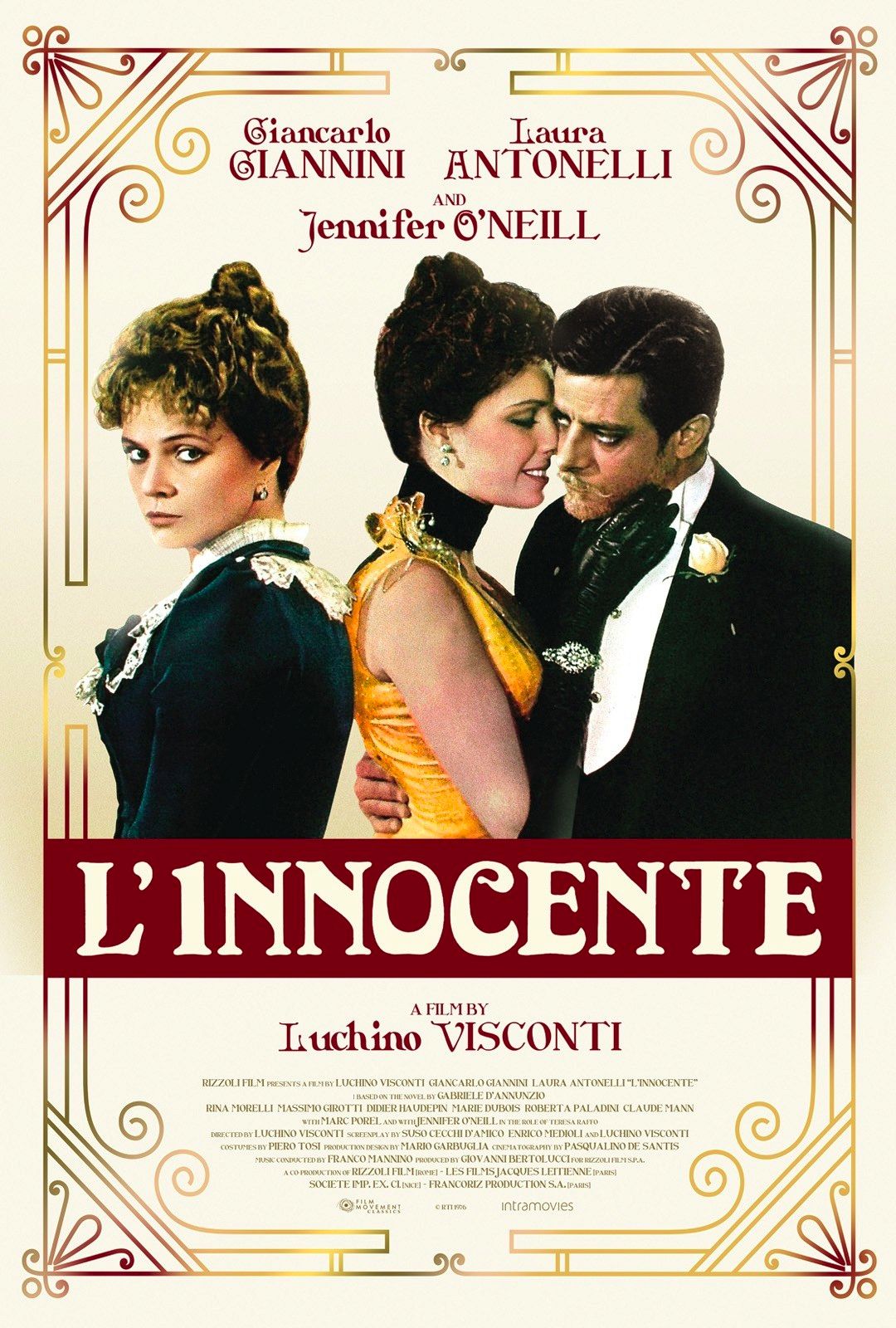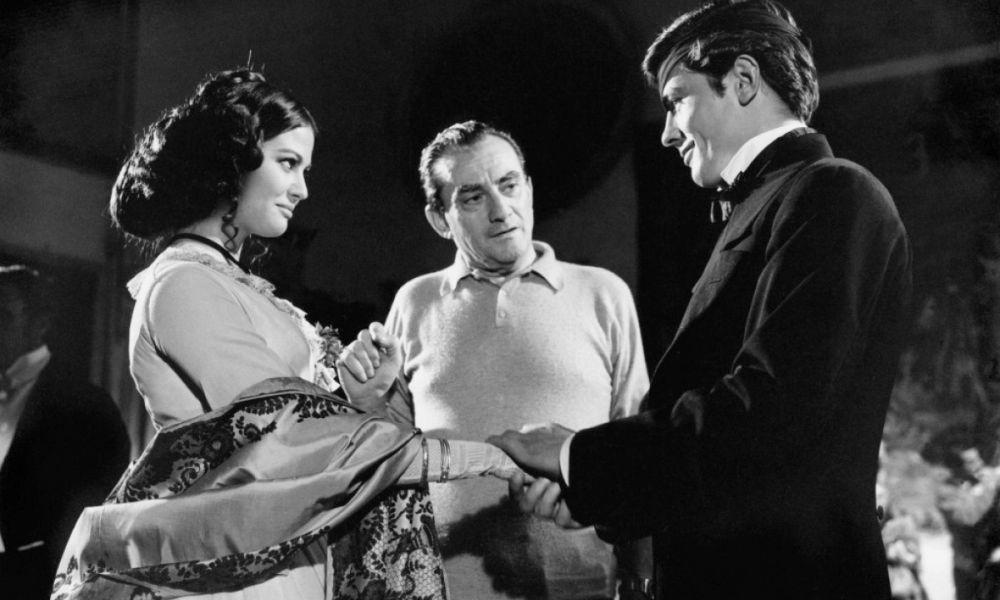
"The films of Luchino Visconti are among the most stylistically and intellectually influential of postwar Italian cinema. Born a scion of ancient nobility, Visconti integrated the most heterogeneous elements of aristocratic sensibility and taste with a committed Marxist political consciousness, backed by a firm knowledge of Italian class structure." - Joel Kanoff (The St. James Film Directors Encyclopedia, 1998)
Luchino Visconti
Key Production Countries: Italy, France
Key Genres: Drama, Psychological Drama, Family Drama, Period Film, Romantic Drama, Melodrama, Historical Epic, Historical Film, Marriage Drama, Crime Drama
Key Collaborators: Suso Cecchi d'Amico (Screenwriter), Mario Serandrei (Editor), Enrico Medioli (Screenwriter), Mario Garbuglia (Production Designer), Ruggero Mastroianni (Editor), Franco Mannino (Composer), Giuseppe Rotunno (Cinematographer), Pasqualino De Santis (Cinematographer), Helmut Berger (Leading Actor), Silvana Mangano (Leading Actress), Domenico Scala (Cinematographer), Armando Nannuzzi (Cinematographer)
Key Genres: Drama, Psychological Drama, Family Drama, Period Film, Romantic Drama, Melodrama, Historical Epic, Historical Film, Marriage Drama, Crime Drama
Key Collaborators: Suso Cecchi d'Amico (Screenwriter), Mario Serandrei (Editor), Enrico Medioli (Screenwriter), Mario Garbuglia (Production Designer), Ruggero Mastroianni (Editor), Franco Mannino (Composer), Giuseppe Rotunno (Cinematographer), Pasqualino De Santis (Cinematographer), Helmut Berger (Leading Actor), Silvana Mangano (Leading Actress), Domenico Scala (Cinematographer), Armando Nannuzzi (Cinematographer)
"Visconti was a major theater director, and his films flaunted sumptuous costumes and settings, florid acting, and overpowering music... La Terra trema, Senso, Rocco and His Brothers, The Leopard, The Damned, Ludwig, and Conversation Piece all trace the decline of a family in a period of drastic historical upheaval. Visconti evokes the lifestyles of the rich, but he also usually reveals the class conflict that those lifestyles conceal. Foreign powers conspire with the ruling class to oppress the populace (Senso); the aristocrats must give way to democracy (The Leopard); a bourgeoisie collapses through its own corruption (The Damned)." - Kristin Thompson & David Bordwell (Film History: An Introduction, 2009)
"This Italian director offered strong, stern, unremitting portraits of societies, often high, and veneers crumbling under exterior pressures. Most of them are impressive, and beautifully decorated with all the visual elegance of a man who was both set designer and costume designer early in his career. However, after 1960, they have progressively less to offer in terms of entertainment. A trip to a late Visconti film became increasingly an occasion for admiration rather than enjoyment." - David Quinlan (Quinlan's Film Directors, 1999)
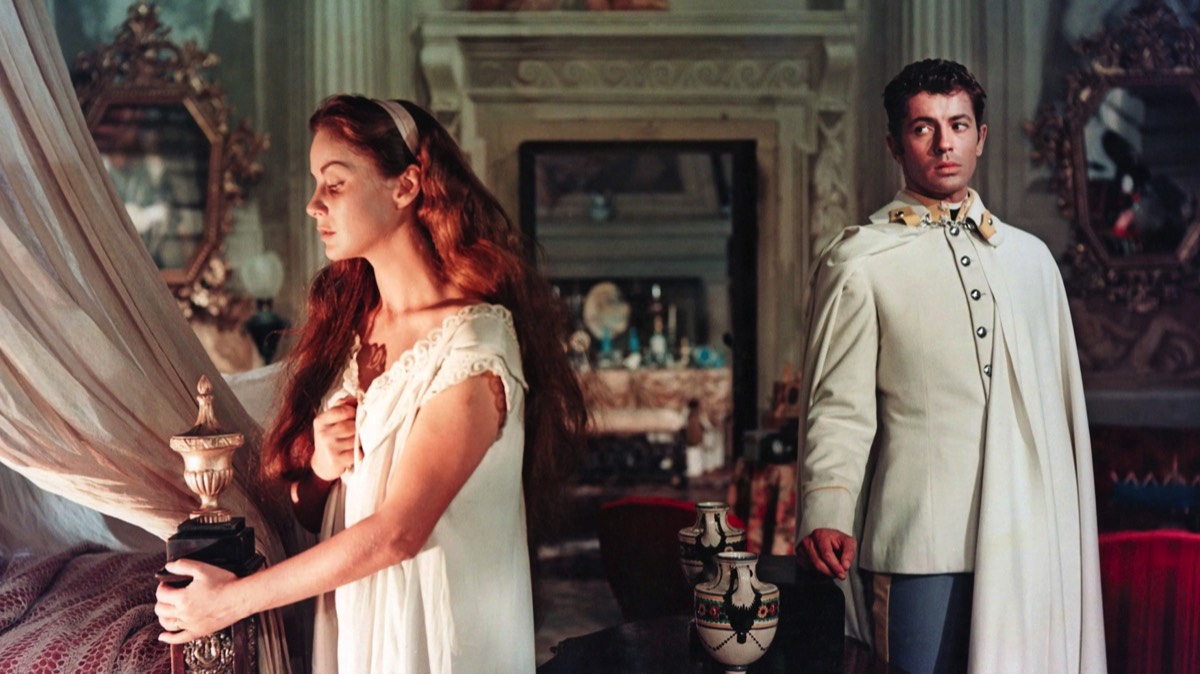
Senso (1954)
"A Marxist aristocrat, Count Don Luchino Visconti di Morone was widely praised for both the realism and vaguely politicised tone of his early films, and the operatic sumptuousness of his later historical costume dramas. Throughout his career, however, style dominated content; all too often, the result was camp, decorative melodrama disguised as solemn, socially significant art." - Geoff Andrew (The Film Handbook, 1989)
"Luchino Visconti was both a progenitor of Italian neorealism—crafting powerful depictions of the lives of laborers like the impoverished fishermen in La terra trema—and a virtuoso of opulent historical dramas, chronicling nineteenth-century Sicilian aristocrats in The Leopard. Though the working-class characters of Bellissima, Ossessione, and Rocco and His Brothers may seem to share little with the princes, countesses, and kings in The Leopard, Senso, and Ludwig, Visconti’s films are connected by his primary concern: the expression of history as it is lived by people. His characters are caught between tradition and modernity, attempting to achieve or preserve a good life while navigating the unrelenting forces of social, economic, and political change." - Kate MacKay (BAMPFA, 2018)
"The themes that predominate in his work are the solidarity and destructive power of family relationships, either corporate (as in The Damned and Rocco) or separate. Visconti's understanding of family as a dynastic entity is expanded in The Leopard and Senso, where he examines the substance of the old order, the challenge of the new." - Margaret Hinxman (The International Encyclopedia of Film, 1972)
"He was a great lover and director of opera, and his films are highly operatic in the intensity of feeling on display - often against the background of great historical events. It's an oeuvre that owes as much to Freud as it does to Marx. Visconti's homosexuality is also a key aspect of his vision. There's an uninhibited sensuousness about the way the camera dwells on beautiful young men in La terra trema, Rocco and His Brothers and, most obviously, in Death in Venice (1971), while Senso is almost entirely seen from the viewpoint of the lovelorn countess who is obsessed with Farley Granger's narcissistic pretty boy." - Tom Charity (The Rough Guide to Film, 2007)
"Aristocrat, Marxist, Neo-Realist, theatre and opera director, and decadence-monger, Luchino Visconti was a man of contradictions, a fact that is reflected in his work." - Ronald Bergan (Film - Eyewitness Companions, 2006)
"A director of intense, frequently opulent dramas, Visconti began his career as one of the purveyors of Italian neorealism (La Terra trema, 48) of a heavy, surging kind. Later he was more grandiose, cutting to the depths of human emotions in decadent atmospheres." - William R. Meyer (The Film Buff's Catalog, 1978)
"Forerunner and practitioner of neo-realism, Visconti was instrumental in transcending its limitations by incorporating influences from the other arts (primarily literature, but also opera and theatre) as well as legitimising forays into historical subject matters. He had an enormous impact on successive generations of film-makers, including Bernardo Bertolucci, Franco Zeffirelli, Francesco Rosi, Liliana Cavani, and Stanley Kubrick." - Millicent Marcus (Encyclopedia of European Cinema, 1995)
"When I'm directing an opera, I dream about a film, when I'm working on a film, I dream about an opera, and when I'm doing a play, I'm dreaming about music. Working in another field is a change, a rest. You must always work with pleasure. The work is bad if you do not do it with pleasure." - Luchino Visconti
Selected Filmography
Loading filmography...
Luchino Visconti / Favourite Films
Battleship Potemkin (1925) Sergei Eisenstein, Les Enfants du paradis (1945) Marcel Carné, La Grande illusion (1937) Jean Renoir, Greed (1924) Erich von Stroheim, Hallelujah! (1929) King Vidor, The Lost Weekend (1945) Billy Wilder, Monsieur Verdoux (1947) Charles Chaplin, Que viva Mexico! (1932) Sergei Eisenstein, Stagecoach (1939) John Ford, Tabu (1931) F.W. Murnau.
Source: Cinematheque Belgique (1952)
Battleship Potemkin (1925) Sergei Eisenstein, Les Enfants du paradis (1945) Marcel Carné, La Grande illusion (1937) Jean Renoir, Greed (1924) Erich von Stroheim, Hallelujah! (1929) King Vidor, The Lost Weekend (1945) Billy Wilder, Monsieur Verdoux (1947) Charles Chaplin, Que viva Mexico! (1932) Sergei Eisenstein, Stagecoach (1939) John Ford, Tabu (1931) F.W. Murnau.
Source: Cinematheque Belgique (1952)
Luchino Visconti / Fan Club
Martin Scorsese, Olivier Assayas, Freddy Buache, Andreas Kilb, Ginette Vincendeau, Andrei Plakhov, Ulrich Gregor, James Gray, John Francis Lane, Nagaharu Yodogawa, Humberto Solás, Makoto Naito.
Martin Scorsese, Olivier Assayas, Freddy Buache, Andreas Kilb, Ginette Vincendeau, Andrei Plakhov, Ulrich Gregor, James Gray, John Francis Lane, Nagaharu Yodogawa, Humberto Solás, Makoto Naito.
"Fan Club"
These film critics/filmmakers have, on multiple occasions, selected this director’s work within film ballots/lists that they have submitted.
These film critics/filmmakers have, on multiple occasions, selected this director’s work within film ballots/lists that they have submitted.