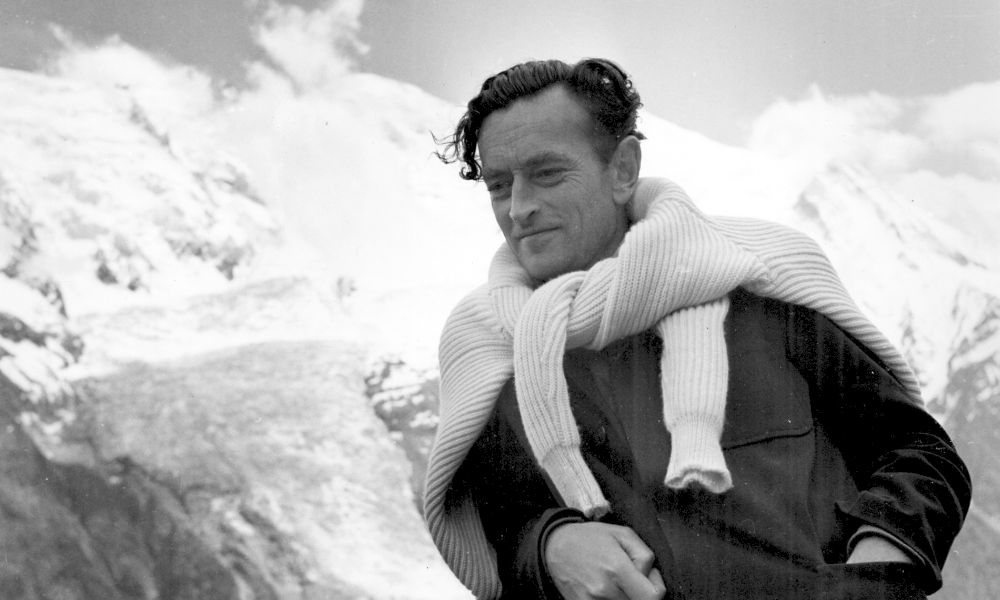
"A giant of the British cinema, Sir David Lean demonstrated how to make big pictures that would turn a sizeable profit on the international market. Lean's five huge projects, spanning three decades, earned him worldwide renown." - R. Barton Palmer (501 Movie Directors, 2007)
David Lean
Director / Screenwriter / Editor / Producer
(1908-1991) Born March 25, Croydon, Surrey, England
Top 250 Directors
(1908-1991) Born March 25, Croydon, Surrey, England
Top 250 Directors
Key Production Countries: UK, USA
Key Genres: Drama, Period Film, Romantic Drama, Melodrama, Romance, Courtroom Drama, Epic, British Empire Film
Key Collaborators: Alec Guinness (Leading Character Actor), Jack Harris (Editor), John Mills (Leading Actor), Jack Hildyard (Cinematographer), Guy Green (Cinematographer), Maurice Jarre (Composer), John Bryan (Production Designer), Ann Todd (Leading Actress), Trevor Howard (Leading Actor), Stanley Haynes (Screenwriter), Robert Bolt (Screenwriter), Noël Coward (Screenwriter/Director)
Key Genres: Drama, Period Film, Romantic Drama, Melodrama, Romance, Courtroom Drama, Epic, British Empire Film
Key Collaborators: Alec Guinness (Leading Character Actor), Jack Harris (Editor), John Mills (Leading Actor), Jack Hildyard (Cinematographer), Guy Green (Cinematographer), Maurice Jarre (Composer), John Bryan (Production Designer), Ann Todd (Leading Actress), Trevor Howard (Leading Actor), Stanley Haynes (Screenwriter), Robert Bolt (Screenwriter), Noël Coward (Screenwriter/Director)
"Alfred Hitchcock, Michael Powell and David Lean: the three great British filmmakers of their generation were born within a radius of fifty miles and just nine years apart. Each of them served an apprenticeship in the silent era, learned their craft from the bottom up, proved their mettle in their thirties, and hit a creative peak in middle age... Lean was first and foremost a superb craftsman. In the pre-war years he developed a reputation as the best editor in the country; his films are distinguished by their control of rhythm and shrewd use of counterpoint. Lean's camera is more self-effacing than Hitchcock's or Powell's, and although he was famed for his perfectionist compositional sense, his eye was more conventional. It's in the cutting that you feel both the romantic ardour and the repression that create the central tension in his work." - Tom Charity (The Rough Guide to Film, 2007)
"All of his films, no matter how small or large their dimensions, demonstrate an obsessive cultivation of craft, a fastidious concern with production detail that defines the "quality" postwar British cinema. That craft and concern are as hyperbolic in their devices as is the medium itself. Viewers surprised at the attention to detail and composition in Ryan's Daughter, a work whose scope would appear to call for a more modest approach, had really not paid attention to the truly enormous dimensions of Brief Encounter, a film that defines, for many, intimist cinema." - Charles Affron (The St. James Film Directors Encyclopedia, 1998)
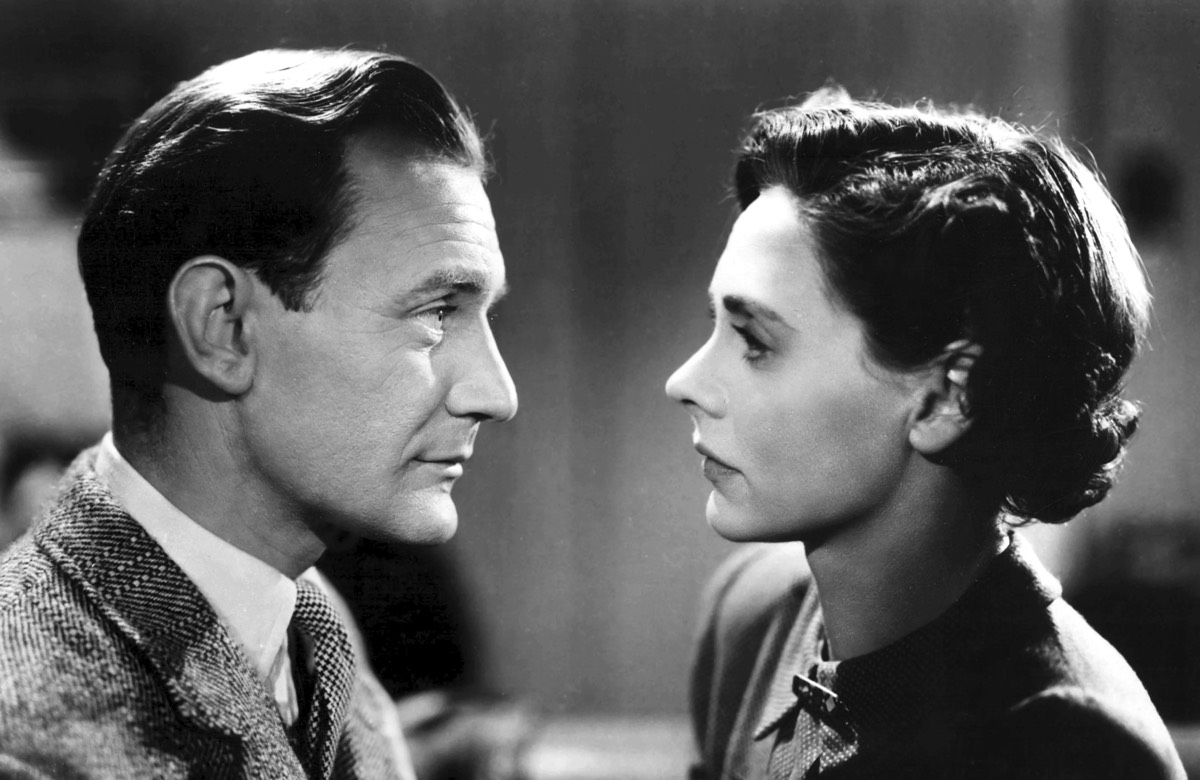
Brief Encounter (1945)
"Notoriously a pernickety perfectionist, he favoured weighty historical and literary subjects but regularly succumbed to visual grandiosity... Indeed, his early, more modest films are his best, notably his versions of Dickens' Great Expectations and Oliver Twist, where his feel for design and sharp editing combine to create lively, intelligent entertainments in which the characters are not yet overshadowed by milieu." - Geoff Andrew (The Director's Vision, 1999)
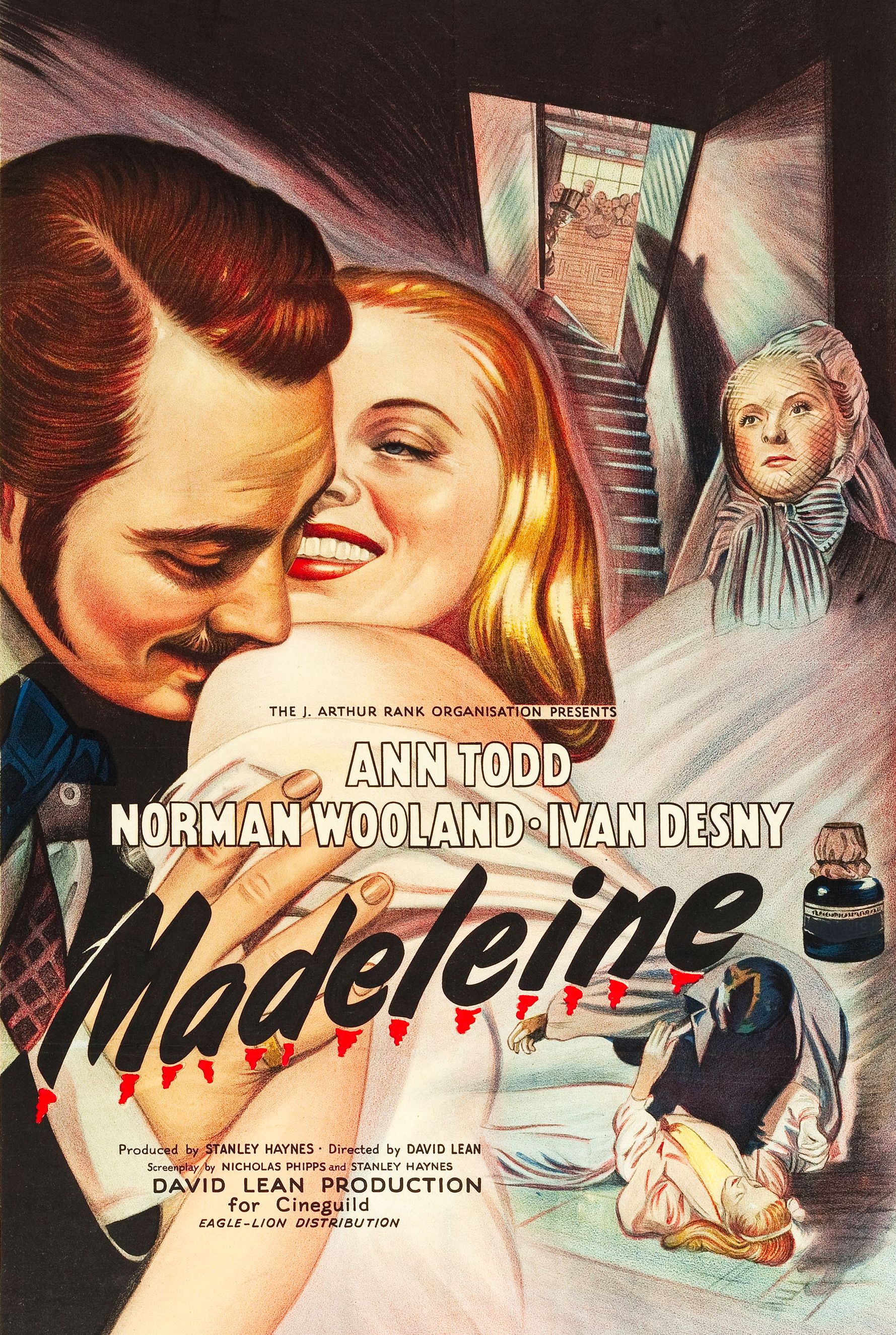
"I am more than ever of the opinion that Lean became lost in the sense of his own pictorial grandeur. The Passionate Friends and Madeleine, for instance, stand up so much better than those battleship pictures that came later. Not even the re-release of Lawrence - beautiful, and with some lost material restored - could furnish any sense of ideas behind it... I challenge anyone to see Oliver Twist and Dr. Zhivago and not admit the loss. It will take a very good biography to explain that process." - David Thomson (The New Biographical Dictionary of Film, 2002)
"The late Fifties and Sixties were perhaps the last time in which the yearning for lavish spectacle on an epic scale could be fulfilled. In many ways, David Lean was the master of the form, the unassuming heir to DeMille's throne though he (and scriptwriter Robert Bolt) took their subjects from contemporary history, rather than the bible." - The Illustrated Who's Who of the Cinema, 1983
"A conscientious, honest, painstaking director who justifies the proverb, "Every soldier carries a field marshall's baton in his knapsack." Like many English directors he gained experience as an editor, first on newsreels in the early Thirties, then on, e.g., Czinner's Escape Me Never (35) and Asquith's Pygmalion (38) and French Without Tears (39)." - Georges Sadoul (Dictionary of Film Makers, 1972)
"Brief Encounter (46) illustrates Lean's great ability with modest drama; Great Expectations (47) likewise for period stories. The director's understanding that grandeur can never replace plot and character accounts for the brilliance of his spectacles (Bridge on the River Kwai, 57; Lawrence of Arabia, 62), which are pictorially stunning and dramatically powerful." - William R. Meyer (The Film Buff's Catalog, 1978)
"My distinguishing talent is the ability to put people under the microscope, perhaps to go one or two layers farther down than some other directors." - David Lean
Selected Filmography
Loading filmography...
David Lean / Favourite Films
À nous la liberté (1931) René Clair, Citizen Kane (1941) Orson Welles, City Lights (1931) Charles Chaplin, The Crowd (1928) King Vidor, Les Enfants du paradis (1945) Marcel Carné, La Grande illusion (1937) Jean Renoir, Intolerance (1916) D.W. Griffith, Le Jour se lève (1939) Marcel Carné, Variety (1925) E.A. Dupont, White Shadows in the South Seas (1928) W.S. Van Dyke.
Source: Cinematheque Belgique (1952)
À nous la liberté (1931) René Clair, Citizen Kane (1941) Orson Welles, City Lights (1931) Charles Chaplin, The Crowd (1928) King Vidor, Les Enfants du paradis (1945) Marcel Carné, La Grande illusion (1937) Jean Renoir, Intolerance (1916) D.W. Griffith, Le Jour se lève (1939) Marcel Carné, Variety (1925) E.A. Dupont, White Shadows in the South Seas (1928) W.S. Van Dyke.
Source: Cinematheque Belgique (1952)
David Lean / Fan Club
Julian Mateos, Martin Scorsese, John Woo, Barry Norman, Roger Corman, Todd McCarthy, Harlan Jacobson, Jean-Paul Torok, Masato Harada, Armond White, Mike D'Angelo, Paul W.S. Anderson.
Julian Mateos, Martin Scorsese, John Woo, Barry Norman, Roger Corman, Todd McCarthy, Harlan Jacobson, Jean-Paul Torok, Masato Harada, Armond White, Mike D'Angelo, Paul W.S. Anderson.
"Fan Club"
These film critics/filmmakers have, on multiple occasions, selected this director’s work within film ballots/lists that they have submitted.
These film critics/filmmakers have, on multiple occasions, selected this director’s work within film ballots/lists that they have submitted.