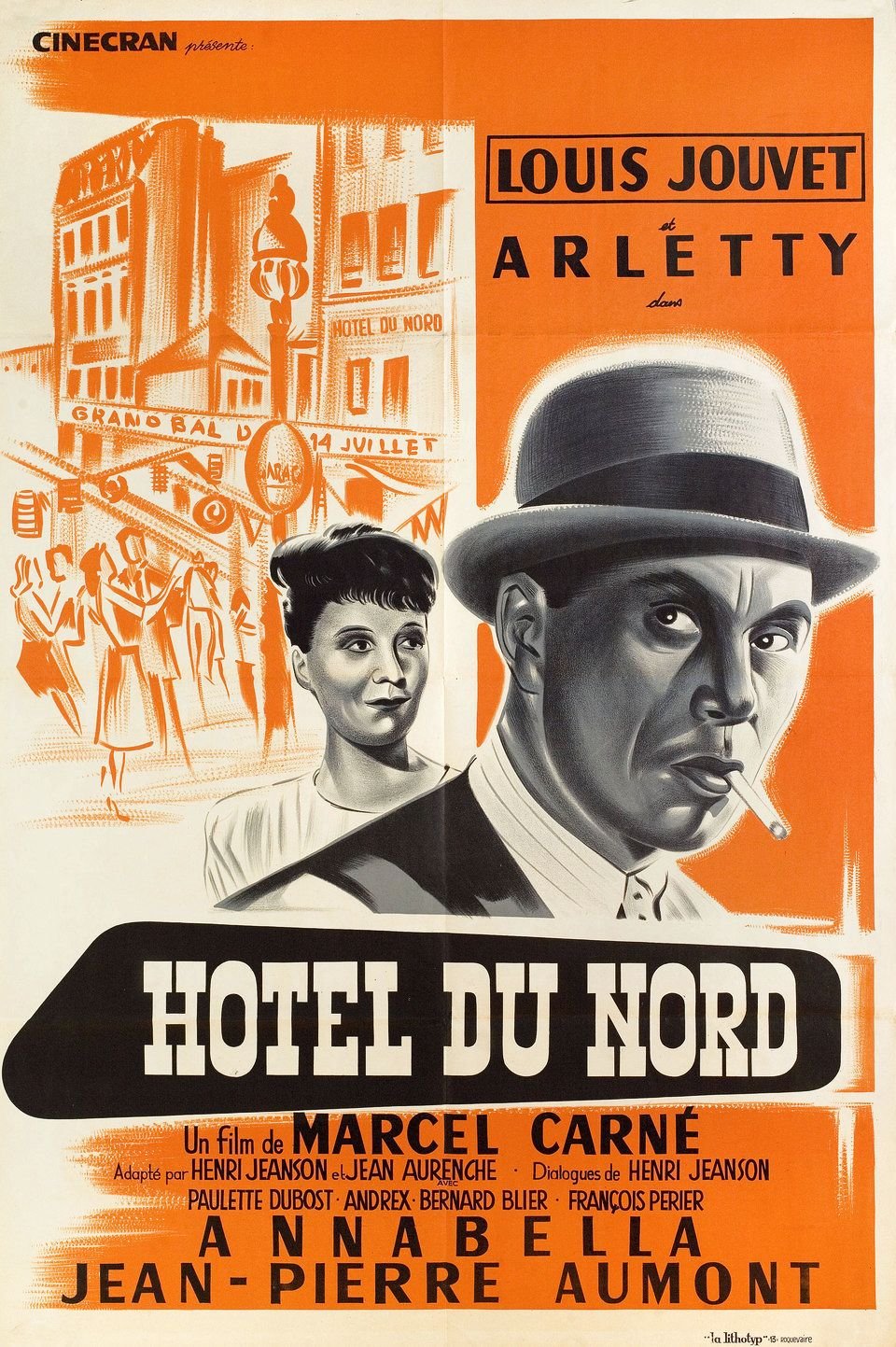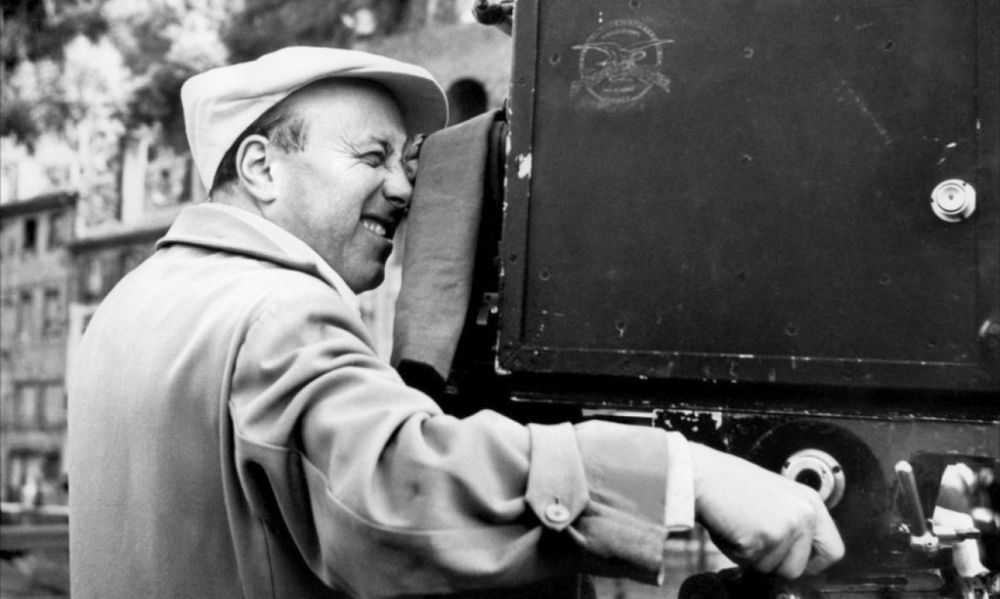
"Carné's place in film history is assured as the foremost exponent of Poetic Realism, especially in his collaborations with the poet/scriptwriter Jacques Prévert... With Jenny (1936), Carné established his poetic-realist universe: stylised urban decors, a cast of workers and marginals, a dark and pervasive atmosphere of doom shot through with genuine poetry of the everyday." - Ginette Vincendeau (Encyclopedia of European Cinema, 1995)
Marcel Carné
Key Production Countries: France, Italy
Key Genres: Drama, Urban Drama, Romantic Drama, Romance, Psychological Drama, Crime Drama, Melodrama
Key Collaborators: Alexander Trauner (Production Designer), Jacques Prévert (Screenwriter), Arletty (Leading Actress), Henri Rust (Editor), Maurice Jaubert (Composer), Joseph Kosma (Composer), Jean Gabin (Leading Actor), Pierre Brasseur (Leading Actor), Eugen Schüfftan (Cinematographer), Roger Hubert (Cinematographer), Maurice Thiriet (Composer), Jane Marken (Character Actress)
Key Genres: Drama, Urban Drama, Romantic Drama, Romance, Psychological Drama, Crime Drama, Melodrama
Key Collaborators: Alexander Trauner (Production Designer), Jacques Prévert (Screenwriter), Arletty (Leading Actress), Henri Rust (Editor), Maurice Jaubert (Composer), Joseph Kosma (Composer), Jean Gabin (Leading Actor), Pierre Brasseur (Leading Actor), Eugen Schüfftan (Cinematographer), Roger Hubert (Cinematographer), Maurice Thiriet (Composer), Jane Marken (Character Actress)
"For a period of seven or eight years, roughly 1938 to 1946, Marcel Carné was held in higher esteem than any other French filmmaker, even Jean Renoir... Jenny (1936) was the beginning of a spectacularly fruitful collaboration with screenwriter Jacques Prévert - a partnership which might be compared to Powell and Pressburger on the other side of the channel. A surrealist, who revelled in puns, word play, symbolism, farce and romantic ardour, Prévert brought wit and poetry to the table. In celebrating Prévert, critics have perhaps undervalued Carné's distinctive attributes: his refined sense of composition and light, and his ability to endow studio artifice with life." - Tom Charity (The Rough Guide to Film, 2007)
"Marcel Carné was an unfashionable figure long before his directing career came to an end. Scorned by a new generation of filmmakers, Carné grew more and more out of touch with contemporary developments, despite an eagerness to explore new subjects and use young performers... While future critics are unlikely to find much to salvage from the latter part of his career, films like Drole de drame and Quai des brumes, Le Jour se lève and Les Enfants du paradis, remain rich and complex monuments to a decade of filmmaking that will reward fresh and unbiased critical attention." - Roy Armes (The St. James Film Directors Encyclopedia, 1998)
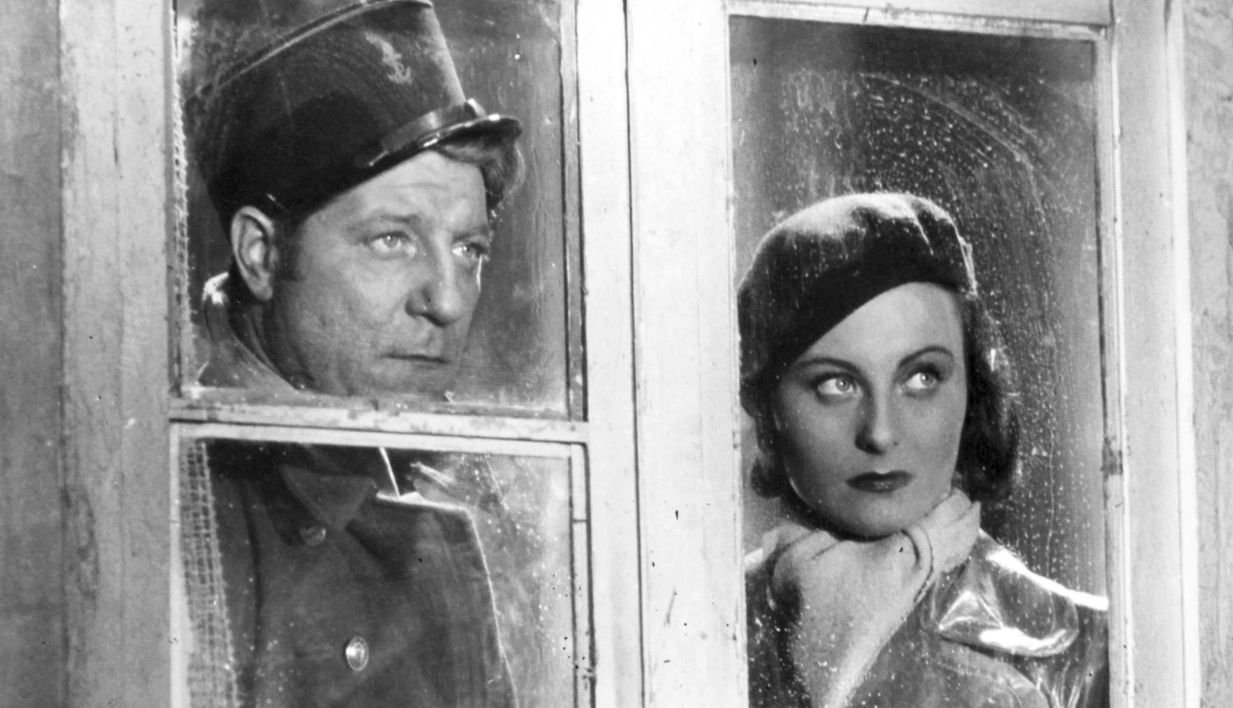
Port of Shadows (1938)
"Working closely with poet-screenwriter Jacques Prévert, Carné rose to great prominence in the French cinema of the late 30s and early 40s. Their collaboration produced such memorable films as Drole de Drame/Bizarre Bizarre, Quai des Brumes/Port of Shadows, and Le Jour se lève/Daybreak, which were permeated with romantic fatalism and have become prime examples of the "poetic realism" school of the French cinema of the period." - The MacMillan International Film Encyclopedia, 1994
"Those who criticise Carné for not ‘going down onto the street’, and denounce him for remaining in thrall to the studio aspect of film-making, conveniently forget that a built studio set allowed Carné to impose his vision of things and to compose a universe in harmony with the action. His realism always remained ‘true to life’ and through stylisation was nudged into the realms of the poetic." - Ben McCann (Senses of Cinema, 2011)
"If Carné never fulfilled his early promise, his status as an accomplished craftsman remains assured. His most memorable work, made between the fall of the Popular Front and the Liberation, stands as a lasting testimony to the mood of France at that time." - Geoff Andrew (The Film Handbook, 1989)
"Early success with symbolic works such as the brilliant, humanistic, funny Les Enfants du paradis (45) wasn't repeated with later, more down-to-earth productions." - William R. Meyer (The Film Buff's Catalog, 1978)
"Nowadays, they don't gamble; they're scared. They're watching the ticket sales, day after day. They don't want to take risks." - Marcel Carné
Selected Filmography
Loading filmography...
Marcel Carné / Fan Club
Kenneth Turan, Farran Smith Nehme, Michael Sragow, Freddy Buache, Tim Robey, Peter Cowie, Nagaharu Yodogawa, Toshiro Ishido, Paul Vecchiali, Michał Oleszczyk, Amir Labaki, Tom Charity.
Kenneth Turan, Farran Smith Nehme, Michael Sragow, Freddy Buache, Tim Robey, Peter Cowie, Nagaharu Yodogawa, Toshiro Ishido, Paul Vecchiali, Michał Oleszczyk, Amir Labaki, Tom Charity.
"Fan Club"
These film critics/filmmakers have, on multiple occasions, selected this director’s work within film ballots/lists that they have submitted.
These film critics/filmmakers have, on multiple occasions, selected this director’s work within film ballots/lists that they have submitted.