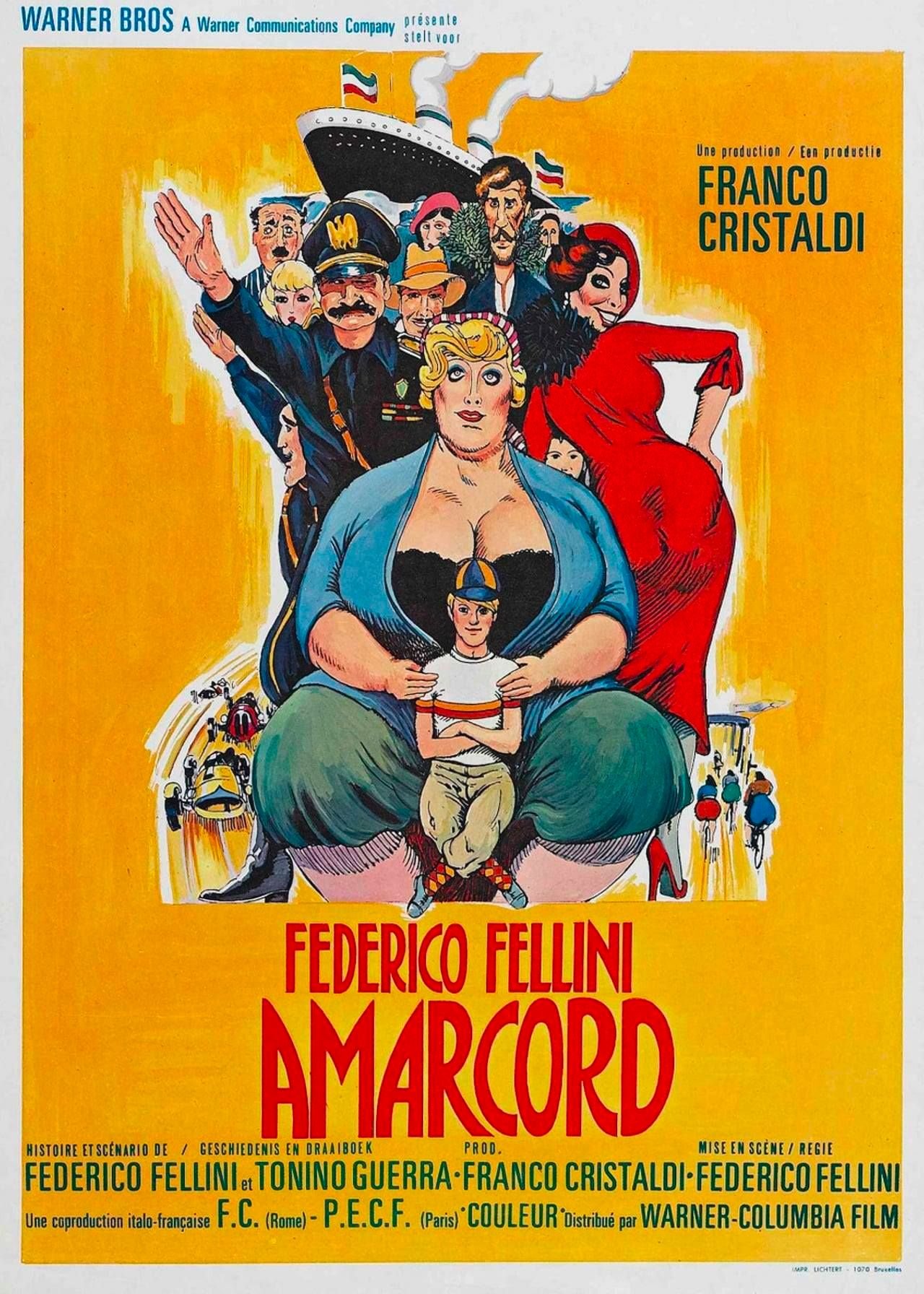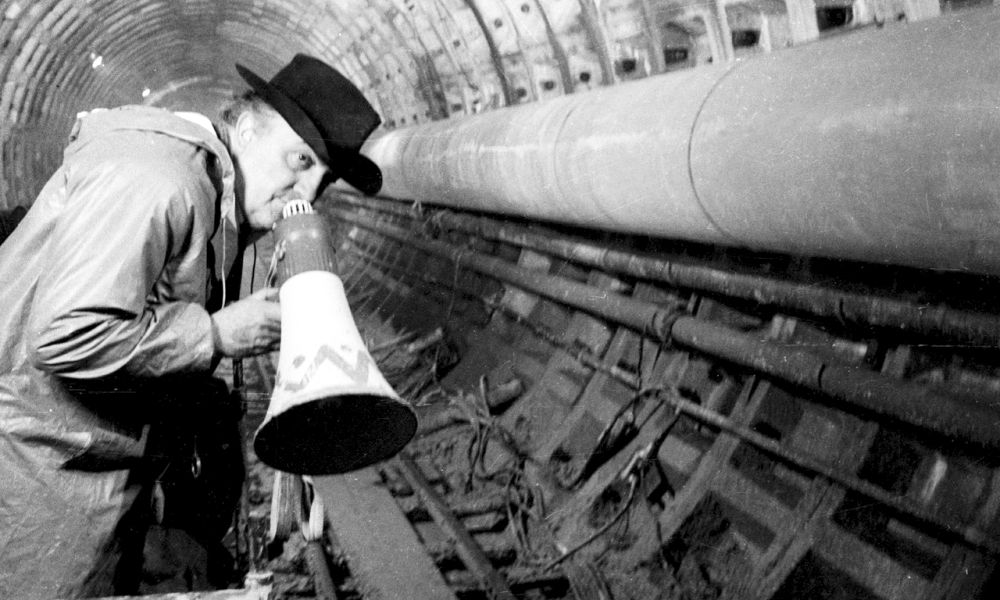
"Although the confessional element in Fellini's work was only unmistakable from 8½ onward, we can now see that no other Italian so absorbed himself in the act of being an international film director. No other director - apart from Orson Welles - so insisted on the personal derivation of all his work, nor managed to make even fragments of film or biographical incidents seem like parts of a total oeuvre." - David Thomson (The New Biographical Dictionary of Film, 2002)
Federico Fellini
Key Production Countries: Italy, France
Key Genres: Comedy Drama, Satire, Ensemble Film, Drama, Period Film, Showbiz Comedy, Fantasy Comedy, Comedy, Surrealist Film, Urban Comedy, Fantasy, Melodrama
Key Collaborators: Nino Rota (Composer), Tullio Pinelli (Screenwriter), Ruggero Mastroianni (Editor), Ennio Flaiano (Screenwriter), Giuseppe Rotunno (Cinematographer), Giulietta Masina (Leading Actress), Bernardino Zapponi (Screenwriter), Marcello Mastroianni (Leading Character Actor), Brunello Rondi (Screenwriter), Danilo Donati (Production Designer), Otello Martelli (Cinematographer), Leo Catozzo (Editor)
Key Genres: Comedy Drama, Satire, Ensemble Film, Drama, Period Film, Showbiz Comedy, Fantasy Comedy, Comedy, Surrealist Film, Urban Comedy, Fantasy, Melodrama
Key Collaborators: Nino Rota (Composer), Tullio Pinelli (Screenwriter), Ruggero Mastroianni (Editor), Ennio Flaiano (Screenwriter), Giuseppe Rotunno (Cinematographer), Giulietta Masina (Leading Actress), Bernardino Zapponi (Screenwriter), Marcello Mastroianni (Leading Character Actor), Brunello Rondi (Screenwriter), Danilo Donati (Production Designer), Otello Martelli (Cinematographer), Leo Catozzo (Editor)
"Like Dickens, Fellini was attracted to the theatrical. Both men mined their childhood experiences; both craved an audience. A hallmark of creativity in narrative fiction is the freedom to embroider the past, constructing a scenario which may have little to do with fact so long as it makes a good story. Fellini was blatant in mining his past, so if incidents which are presented as autobiography do not ring true, the audience is entitled to feel cheated. Events need to cohere in a convincing narrative which holds the interest of the audience as much as the creator. Fellini’s diversions verge on self-obsession." - Philip Gillett (Movie Greats: A Critical Study of Classic Cinema, 2008)
"In an era when Italian cinema means the easy consolations of Roberto Benigni's Life is Beautiful, the aesthetic and moral challenges posed by Federico Fellini seem at once important and exotic." - Richard Armstrong (The Rough Guide to Film, 2007)
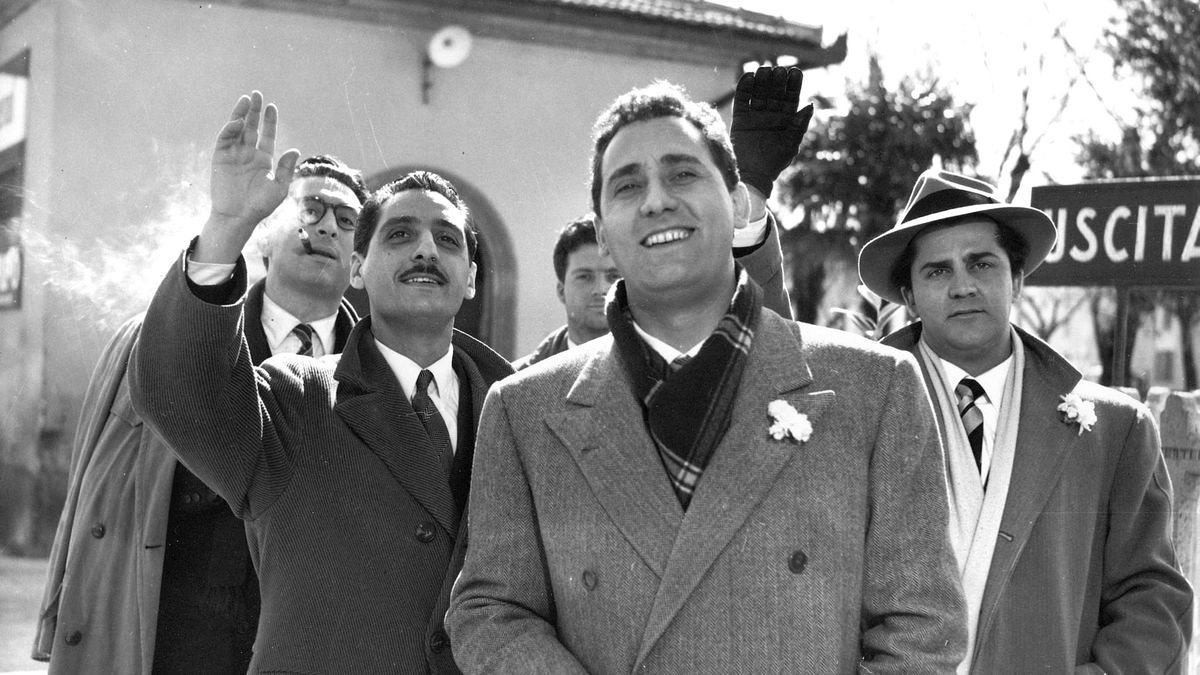
I Vitelloni (1953)
"If this Italian film-maker had been restrained by the Hollywood system, one feels that his films might have pleased himself less, but pleased his audiences more. No doubt about it, Fellini was a brilliant creator of unforgettable images, the screen's nearest equivalent to a modern Spanish painter somewhere between Dalí and Miró. What might have happened if this talent had been harnessed, channelled into a recognizable shape?" - David Quinlan (Quinlan's Film Directors, 1999)
"Certainly Allen has earned his place in the pantheon of film-makers. Born Allen Konigsberg to a working-class Brooklyn family, he wrote gags for Bob Hope and Sid Caesar before becoming a standup on the 1960s comedy circuit, where he would fumble with his glasses, gulp in faux-terror and deliver devastating one-liners with a boxer's timing. Shifting into movies, he pioneered a new brand of romantic comedy, installing himself as an emblematic urban everyman; the nerd who gets the girl (and then usually loses her). He pursued a flighty Diane Keaton in the Oscar-winning Annie Hall, romanced a teenage Mariel Hemingway in Manhattan, and fell foul of the Mob in 1984's Broadway Danny Rose… Throughout his 1970s and 80s heyday, Allen's patented blend of borscht-belt comedy, psychoanalysis and the tenets of the European art film was an intoxicating brew." - Xan Brooks (The Guardian, 2004)
"Unlike the contemporaries (Alain Resnais and Michelangelo Antonioni) with whom Fellini would be bunched in Pauline Kael’s infamous “sick-soul-of-Europe” designation, the Italian maestro infused his films with a showman’s brio and an eagerness to enchant that he inherited from his childhood fascination: the circus. Though he was often exhuming private obsessions, he worked from a well of cultural memory and indulged a rustic, Rabelaisian sense of humor that spoke to a far broader audience than the intelligentsia." - Carson Lund (Harvard Film Archive, 2022)
"Whether it was the world he loved or simply the fruits of his very public fantasy is open to debate; whatever, while his work was extremely uneven, he evidently saw himself as a great artist, whereas a more accurate assessment might describe him as a magnificent showman." - Geoff Andrew (The Director's Vision, 1999)
"In retrospect I Vitelloni (1953) now seems to be his masterpiece, simply because it managed to encapsulate the boredom and the random but natural desire for existential recognition that underlie all his later, more self-consciously contrived films. Fellini remains a master, but a flawed one, capable of raising us briefly on his waxen wings, and making us forget that what we are seeing below us is only make believe and papier-mâché." - Mario Reading (The Movie Companion, 2006)
"Federico Fellini, the circus ringmaster of Italian movies, was a giant of world cinema. His deeply autobiographical work brought the European art film on to the world stage, winning the Academy Award for the Best Foreign Film four times. His work, informed as it was by his love of comic books, theatre - especially circus - women and food, progressively grew away from realism and storytelling into imaginative flights of fantasy, and his films are sensual and luxurious, revelling in astonishing sights and intoxicating sounds. So well defined and coherent was his world view that his surname has become and adjective, Felliniesque being a watchword for absurd, decadent extravagance." - Ian Freer (Movie Makers, 2009)
"His international reputation grew throughout the 1950s, culminating in the success of La Dolce vita (1960). His later films became increasingly autobiographical and reflected his love of extravagant fantasy, dreams and the grotesque." - Chambers Film Factfinder, 2006
"With roots in Italian neo-realism, Fellini has grown into a brilliant stylist who depicts man's appetites with particular vigor." - William R. Meyer (The Film Buff's Catalog, 1978)
"It's absolutely impossible to improvise. Making a movie is a mathematical operation. It is like sending a missile to the moon. It isn't improvised. It is too defined to be called improvisational, too mechanical. Art is a scientific operation, so I can say that what we usually call improvisation is in my case just having an ear and eye for things that sometimes occur during the time we are making the picture." - Federico Fellini (Directing the Film, 1976)
"Cinema is an old whore, like circus and variety, who knows how to give many kinds of pleasure. Besides, you can't teach old fleas new dogs." - Federico Fellini
Selected Filmography
Loading filmography...
Federico Fellini / Favourite Films
City Lights (1931) Charles Chaplin, The Discreet Charm of the Bourgeoisie (1972) Luis Buñuel, Fellini's Intervista (1987) Federico Fellini, Frankenstein (1931) James Whale, Maciste in Hell (1926) Guido Brignone, Paisan (1946) Roberto Rossellini, Stagecoach (1939) John Ford, Totò e Peppino divisi a Berlino (1962) Giorgio Bianchi, 2001: A Space Odyssey (1968) Stanley Kubrick.
Source: Sight & Sound (1992)
City Lights (1931) Charles Chaplin, The Discreet Charm of the Bourgeoisie (1972) Luis Buñuel, Fellini's Intervista (1987) Federico Fellini, Frankenstein (1931) James Whale, Maciste in Hell (1926) Guido Brignone, Paisan (1946) Roberto Rossellini, Stagecoach (1939) John Ford, Totò e Peppino divisi a Berlino (1962) Giorgio Bianchi, 2001: A Space Odyssey (1968) Stanley Kubrick.
Source: Sight & Sound (1992)
Federico Fellini / Fan Club
Martin Scorsese, James Gray, Shin'ichi Ichikawa, Roger Ebert, Gilles Jacob, John Nesbit, Michel Ciment, Andrei Konchalovsky, Roger Michell, Dan Fainaru, Atom Egoyan, Irene Bignardi.
Martin Scorsese, James Gray, Shin'ichi Ichikawa, Roger Ebert, Gilles Jacob, John Nesbit, Michel Ciment, Andrei Konchalovsky, Roger Michell, Dan Fainaru, Atom Egoyan, Irene Bignardi.
"Fan Club"
These film critics/filmmakers have, on multiple occasions, selected this director’s work within film ballots/lists that they have submitted.
These film critics/filmmakers have, on multiple occasions, selected this director’s work within film ballots/lists that they have submitted.