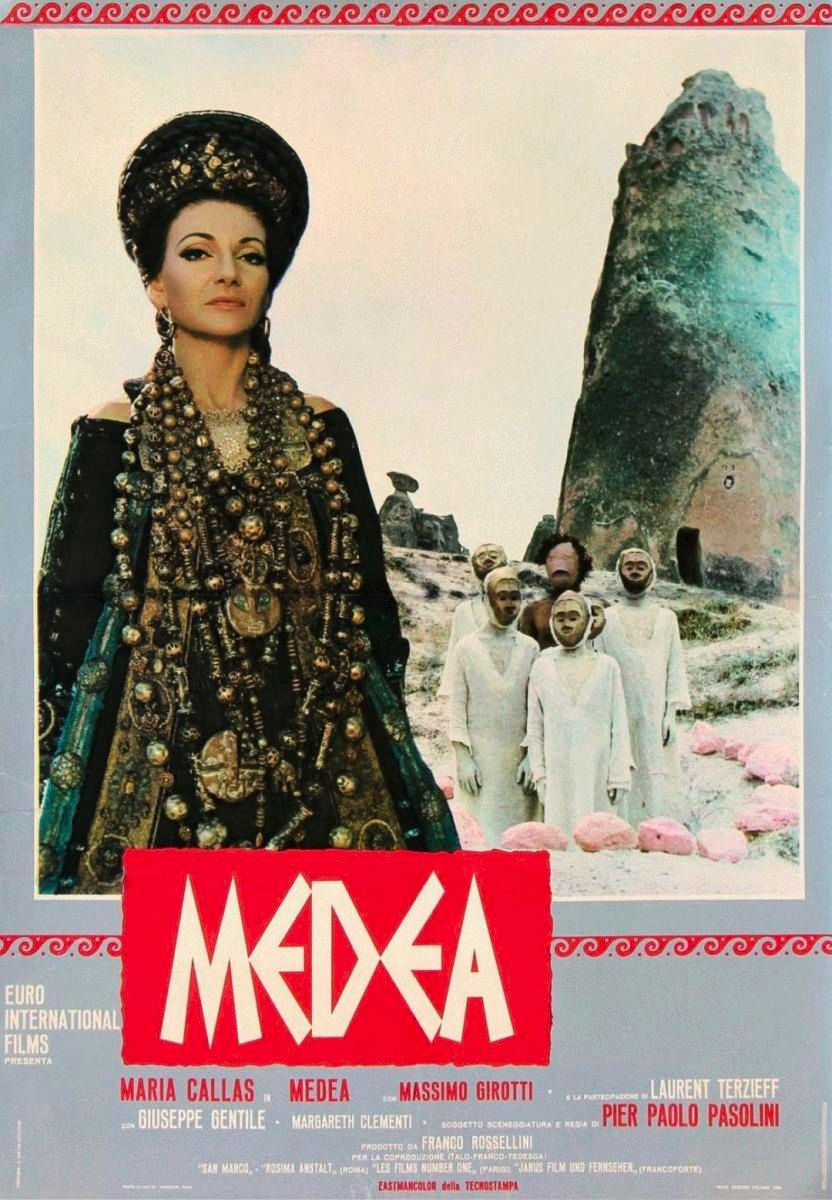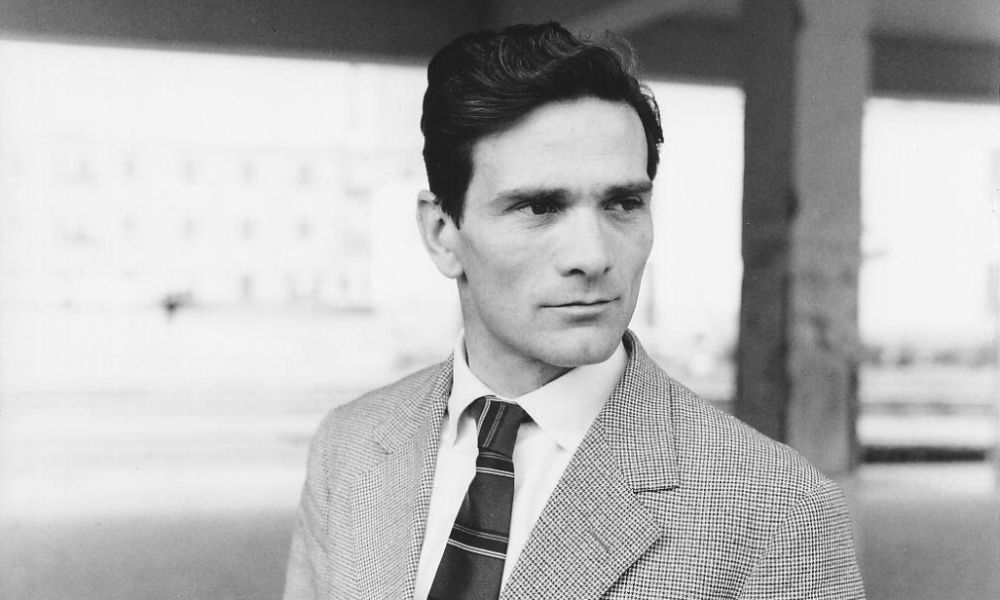
"His attitudes to Marxism, Catholicism and other prickly subjects in Italy reveal themselves in his films. Together with these elements, and their more overt content… Pasolini's films were certain targets for controversy. But many of them also have a rare beauty that renders their less digestible content more palatable." - David Quinlan (Quinlan's Film Directors, 1999)
Pier Paolo Pasolini
Director / Screenwriter / Editor
(1922-1975) Born March 5, Bologna, Emilia-Romagna, Italy
Top 250 Directors
(1922-1975) Born March 5, Bologna, Emilia-Romagna, Italy
Top 250 Directors
Key Production Countries: Italy, France
Key Genres: Drama, Satire, Comedy, Documentary, Period Film, Urban Drama, Religious Drama, Sex Comedy, Tragedy, Culture & Society, Political Satire, Religious Comedy
Key Collaborators: Nino Baragli (Editor), Tonino Delli Colli (Cinematographer), Ninetto Davoli (Leading Character Actor), Franco Citti (Leading Actor), Alfredo Bini (Producer), Ennio Morricone (Composer), Dante Ferretti (Production Designer), Alberto Grimaldi (Producer), Giuseppe Ruzzolini (Cinematographer), Laura Betti (Leading Character Actress), Luigi Scaccianoce (Production Designer), Adele Cambria (Character Actress)
Key Genres: Drama, Satire, Comedy, Documentary, Period Film, Urban Drama, Religious Drama, Sex Comedy, Tragedy, Culture & Society, Political Satire, Religious Comedy
Key Collaborators: Nino Baragli (Editor), Tonino Delli Colli (Cinematographer), Ninetto Davoli (Leading Character Actor), Franco Citti (Leading Actor), Alfredo Bini (Producer), Ennio Morricone (Composer), Dante Ferretti (Production Designer), Alberto Grimaldi (Producer), Giuseppe Ruzzolini (Cinematographer), Laura Betti (Leading Character Actress), Luigi Scaccianoce (Production Designer), Adele Cambria (Character Actress)
"Pier Paolo Pasolini is among the most challenging and important directors of the postwar European Marxist cinema. A prolific poet and essayist, Pasolini was sometimes confusing in his ideological convictions. His open homosexuality and support of the Vatican’s views on abortion caused his expulsion from the Italian Communist Party. His belief in a progressive reading of Christianity motivated his reverential, multicultural film about the life of Jesus, The Gospel According to Saint Matthew (1964). Yet his Marxism was caustic, complex but uncompromised." - Christopher Sharrett (Schirmer Encyclopedia of Film, 2006)
"Despite admiration for Pasolini as a theorist, I cannot like his films too much. He often inflicted a portentous mystery on his images, and was not the most graceful of visual realizers. His strident compositions were clumsy and monotonous, and his appetite for faces often overrode the ability to edit shots together fluently. The style was top-heavy, just as the meanings of his films were too literary, too immediate, and too inconsistent." - David Thomson (The New Biographical Dictionary of Film, 2002)
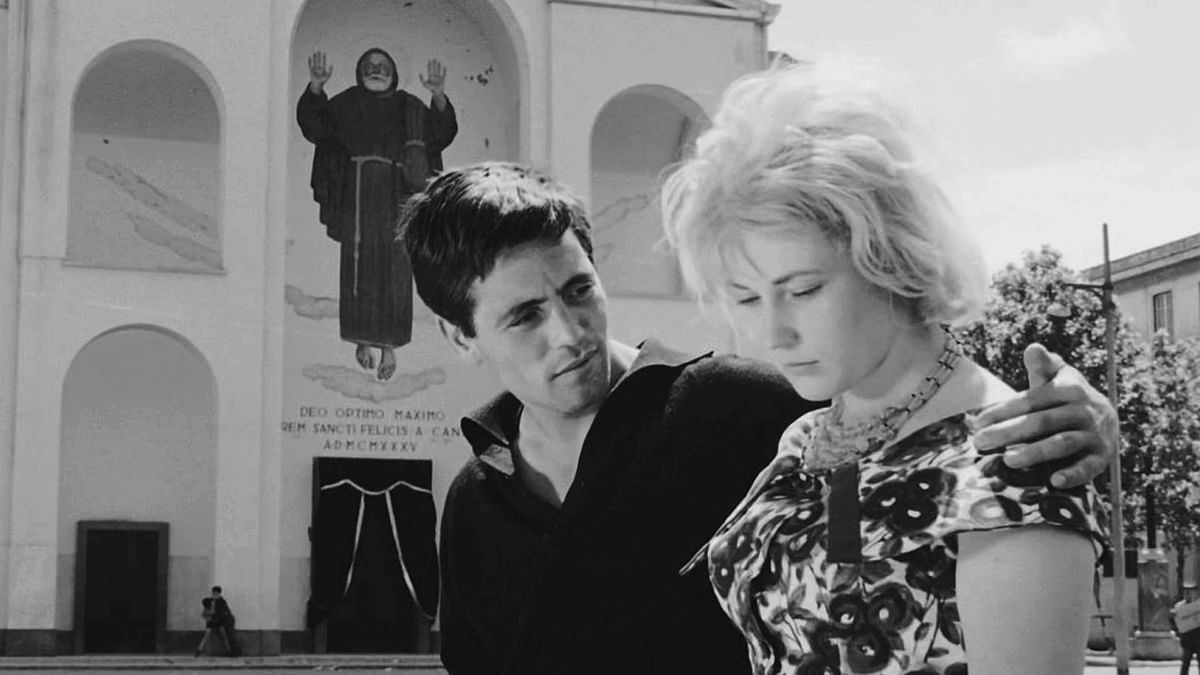
Accattone (1961)
"Pier Paolo Pasolini, poet, novelist, philosopher, and filmmaker, came of age during the reign of Italian fascism, and his art is inextricably bound to his politics. Pasolini's films, like those of his early apprentice Bernardo Bertolucci, began under the influence of neorealism. He also did early scriptwriting with Bolognini and Fellini. Besides these roots in neorealism, Pasolini's works show a unique blend of linguistic theory and Italian Marxism." - Tony D'Arpino (The St. James Film Directors Encyclopedia, 1998)
"A brilliant artist who was at the center of the intellectual life of postwar Europe, the influential Italian director Pier Paolo Pasolini enjoyed a multidisciplinary career as a novelist, poet, playwright, actor, painter, polemicist, and filmmaker. No stranger to controversy, scandal, and censure (he was involved in some thirty-three trials during his lifetime), Pasolini represented and articulated many critical perspectives: as a defiant homosexual, a nonaligned leftist, a Catholic (who was arrested for insulting the Church), and a visionary artist. Pasolini’s cinema takes its inspiration from many sources: Renaissance painting, Romanticism, Freudian psychology, Italian neorealism, ethnographic filmmaking, and music. His films share an affinity to musical structures and form. His aesthetic often rebuked traditional film grammar, opting instead for a spirit of experimentation. More often than not, he drew upon nonprofessional actors, casting peasants and urban youths who brought an authenticity and edginess to his narrative films." - Susan Oxtoby (BAMPFA, 2022)
"Although inconsistent and erratic in the quality of his film work, Pasolini was certainly among the most intriguing and controversial of contemporary directors, a complex artist constantly juggling the conflicting forces that influenced his art, in a brave attempt to reconcile his allegiances to Marx, Freud, and Jesus Christ." - The MacMillan International Film Encyclopedia, 1994
"Pier Paolo Pasolini is a great filmmaker, one of cinema's true artists, and yet he has arguably made only one really great film. There's a very good reason for this apparent paradox. What Pasolini was attempting, as a novelist, poet and director, was so insanely ambitious and experimental that it veered into the quixotic. He was trying to rewrite the language of film and construct his own cinema of poetry. This was not to be a lyricism stuffed with chocolate-box beauty, but a difficult, gnarly poetry that wasn't wasy to consume. And like all true experiments, it didn't always work." - Lloyd Hughes (The Rough Guide to Film, 2007)
"Explored myth in enigmatic, sometimes scorchingly humorous and violent productions." - William R. Meyer (The Film Buff's Catalog, 1978)
"Compared with neo-realism, I think I have introduced a certain realism, but it would be hard to define it exactly." - Pier Paolo Pasolini
Selected Filmography
Loading filmography...
Pier Paolo Pasolini / Fan Club
Michael Haneke, Nadav Lapid, Bruce LaBruce, Constantine Giannaris, Omar Al-Qattan, Martin Scorsese, Peter Debruge, Wang Bing, Gaspar Noé, Amos Gitai, Abel Ferrara, Bertrand Bonello.
Michael Haneke, Nadav Lapid, Bruce LaBruce, Constantine Giannaris, Omar Al-Qattan, Martin Scorsese, Peter Debruge, Wang Bing, Gaspar Noé, Amos Gitai, Abel Ferrara, Bertrand Bonello.
"Fan Club"
These film critics/filmmakers have, on multiple occasions, selected this director’s work within film ballots/lists that they have submitted.
These film critics/filmmakers have, on multiple occasions, selected this director’s work within film ballots/lists that they have submitted.