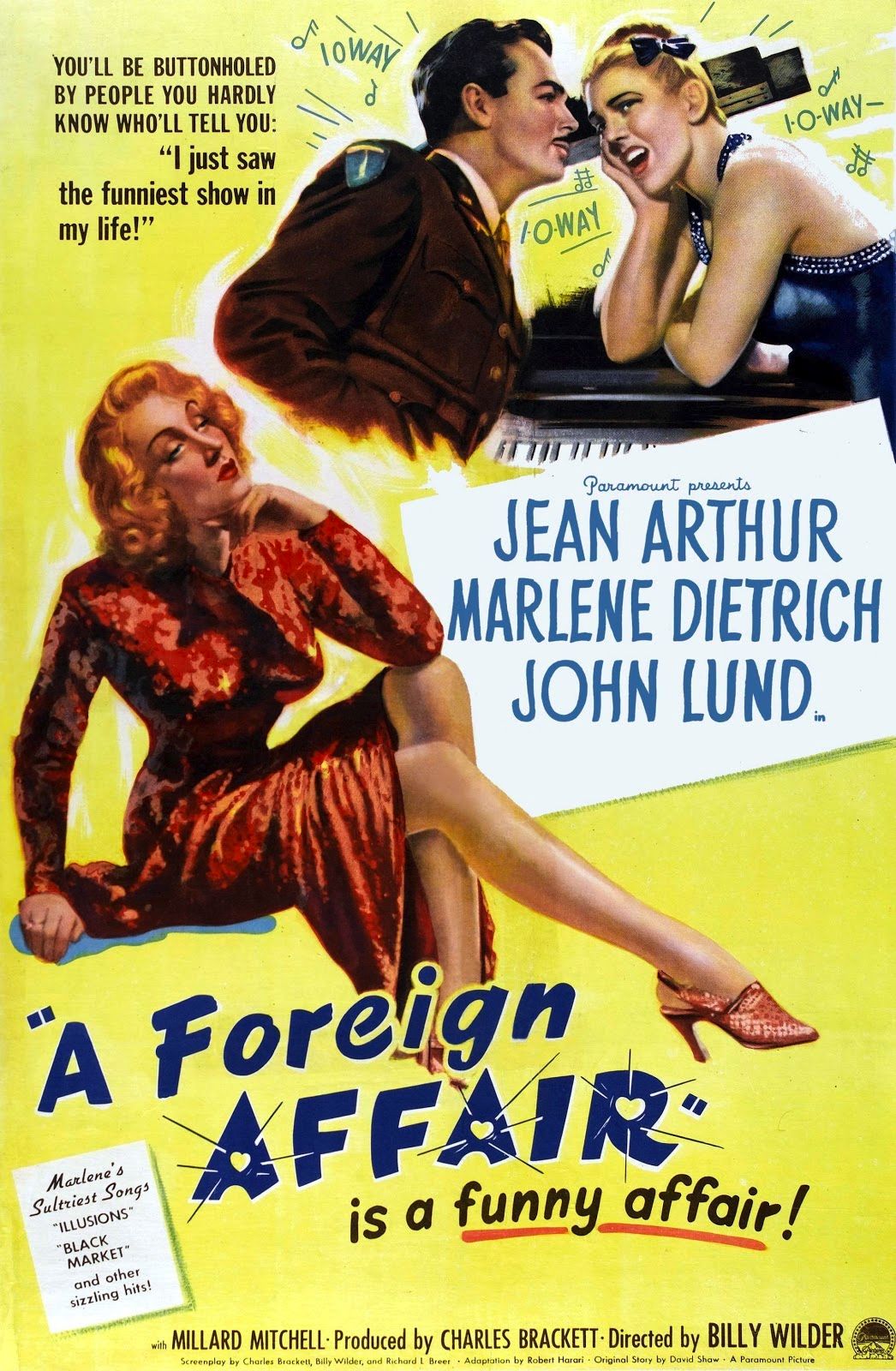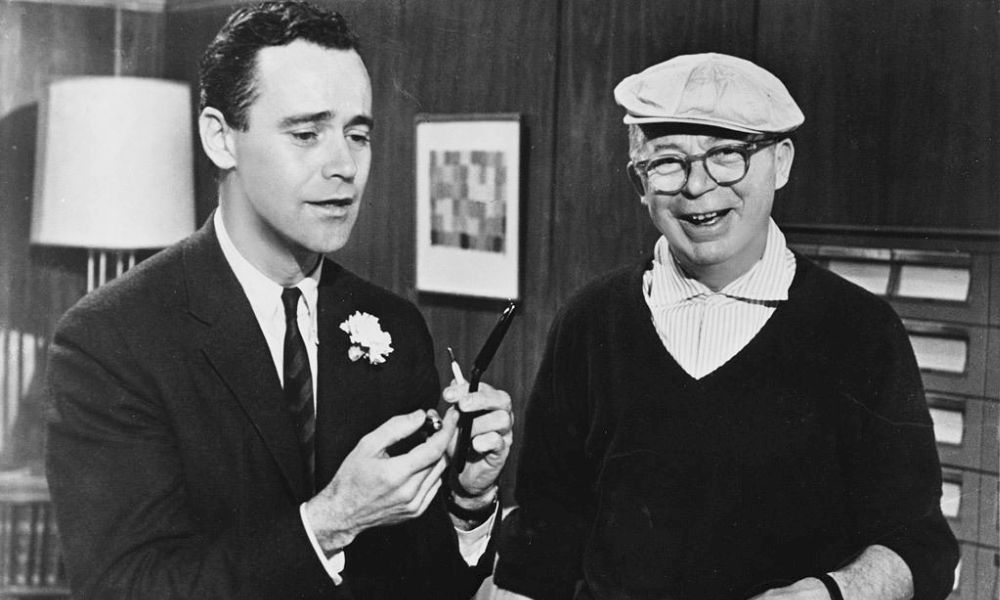
"Wilder created one of the most brilliant and eclectic canons of work in U.S. cinema, his films characterised by their tight plots, smart characters, and clever dialogue. Unusually, perhaps, for a director so associated with comedy, Wilder consistently pushed the limits of U.S. censorship of the day with his provocative choice of subject matter." - Garrett Chaffin-Quiray (501 Movie Directors, 2007)
Billy Wilder
Director / Screenwriter / Producer
(1906-2002) Born June 22, Sucha, Galicia, Austria-Hungary (now Sucha Beskidzka, Malopolskie, Poland)
Top 250 Directors / 50 Key Noir Directors
(1906-2002) Born June 22, Sucha, Galicia, Austria-Hungary (now Sucha Beskidzka, Malopolskie, Poland)
Top 250 Directors / 50 Key Noir Directors
Key Production Country: USA
Key Genres: Comedy, Romantic Comedy, Comedy Drama, Romance, Sex Comedy, Drama, Satire, Farce, Comedy of Manners, Urban Comedy, Odd Couple Film, Mystery
Key Collaborators: I.A.L. Diamond (Screenwriter), Alexander Trauner (Production Designer), Jack Lemmon (Leading Actor), Daniel Mandell (Editor), Hans Dreier (Production Designer), Charles Brackett (Screenwriter/Producer), Doane Harrison (Editor), Arthur Schmidt (Editor), Miklos Rozsa (Composer), William Holden (Leading Actor), Joseph LaShelle (Cinematographer), Charles Lang (Cinematographer)
Key Genres: Comedy, Romantic Comedy, Comedy Drama, Romance, Sex Comedy, Drama, Satire, Farce, Comedy of Manners, Urban Comedy, Odd Couple Film, Mystery
Key Collaborators: I.A.L. Diamond (Screenwriter), Alexander Trauner (Production Designer), Jack Lemmon (Leading Actor), Daniel Mandell (Editor), Hans Dreier (Production Designer), Charles Brackett (Screenwriter/Producer), Doane Harrison (Editor), Arthur Schmidt (Editor), Miklos Rozsa (Composer), William Holden (Leading Actor), Joseph LaShelle (Cinematographer), Charles Lang (Cinematographer)
"Although known for their caustic wit, Wilder’s films fluctuate between two polarities—the utterly romantic and the utterly cynical. The best of his work—Avanti (1972), The Apartment (1960), Sunset Boulevard (1949)—blends the two. At the extremes, however, we have the romantic The Private Life of Sherlock Holmes (1969) and the cynical Ace in the Hole (1951) and Kiss Me Stupid (1964). But all of Wilder’s films share the director’s idea that the very existence of his characters is at stake." - Ken Dancyger (The Director's Idea: The Path to Great Directing, 2006)
"For all its wittiness, Wilder's hard-boiled scepticism was regularly undercut by sentimentality, and only in the utterly cynical Ace in the Hole (aka The Big Carnival) and the wholly romantic The Private Life of Sherlock Holmes was his tone consistent and truly persuasive - films in which, respectively, a grimly unglamorous mid-Western landscape and the splendour of the Scottish Highlands mirrored the protagonists' inner torments." - Geoff Andrew (The Director's Vision, 1999)
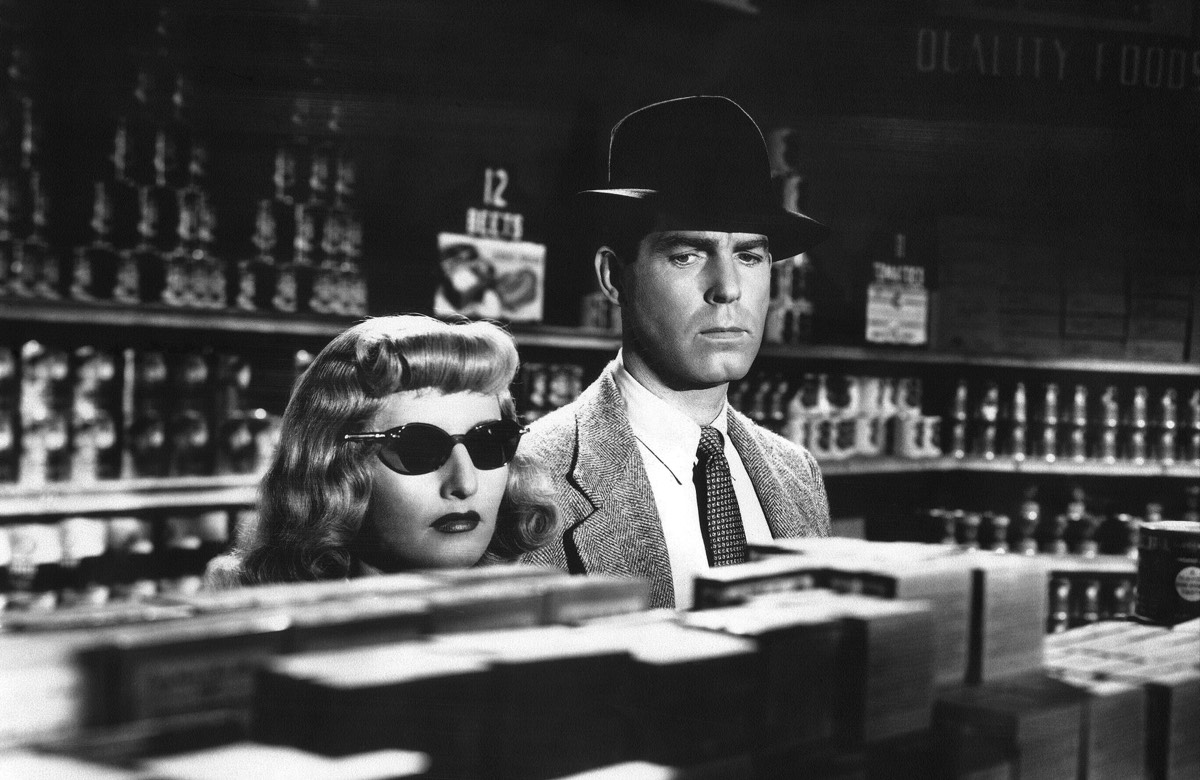
Double Indemnity (1944)
"Along the way, in fifty years, Wilde had some great picture ideas, visions of men as pretty (and pretty-talking) reptiles, drunks, fantasists, and sexual wrecks. Of course, he was correct. But with that knowledge, if he'd had a pinch more courage and grace he could have been a great man - instead of just a scathing observer. As it is, too often I feel he's dead, or lost, to the life of his films, a grinning corpse floating on top, preserved by sardonic fluids and voice-over." - David Thomson (The New Biographical Dictionary of Film, 2002)
"Bridging the transition between the studio system and the rise of independent producer-directors, and still active in the ‘New Hollywood’ era, Billy Wilder was a key player in the American cinema throughout the postwar period. A ’30s screenwriter who became a contract director in the ’40s, by 1950 Wilder had come to be regarded as a consummate studio auteur. Producing from the mid-1950s, he and his co-screenwriters were renowned in front office and fan magazine for making money, teasing audience sensibilities, and pleasing the critics. If the early-1960s saw a critical downturn, by the mid-1970s Wilder’s reputation led to accolades and awards." - Richard Armstrong (Senses of Cinema, 2002)
"By his own admission, Wilder became a director only to protect his scripts, and his shooting style is essentially functional. But though short on intricate camerawork and stunning compositions, his films are by no means visually drab. Several of them contain scenes that lodge indelibly in the mind: Swanson as the deranged Norma Desmond, regally descending her final staircase; Jack Lemmon dwarfed by the monstrous perspectives of a vast open-plan office... o film-maker capable of creating images as potent - and as cinematic - as these can be readily written off." - Philip Kemp (International Dictionary of Films and Filmmakers, 1991)
"Wilder's work has included crime thrillers, romantic comedies, black comedies, films of social crusading, studies of human eccentricity. It has engendered much controversy. Many of his films were accused of tastelessness when they first appeared; these same films are now attacked for their lurking sentimentality. Both charges have some foundation, but neither has much relevance to Wilder's best work." - The Illustrated Who's Who of the Cinema, 1983
"Provocative writer and director with a penchant for strongly satirical themes, ribald sexual comedy and sardonic appraisals of the American scene… While working within the Hollywood system, he has enjoyed a greater degree of control over the finished product than many of his peers. His films bear the unmistakable Wilder stamp: thus while Sunset Boulevard (1950), Ace in the Hole (1951) and The Seven Year Itch (1955) may appear totally dissimilar, the nuances of Wilder's style and comment unite them." - Margaret Hinxman (The International Encyclopedia of Film, 1972)
"Wilder re-creates, mourns, and satirizes the Old World in his comedies and dramas. Like Stroheim, he can find the seamy underside of just about any culture, character, or situation. But he is also something of a romantic idealist, which gives his films a fascinating balance." - William R. Meyer (The Film Buff's Catalog, 1978)
"An audience is never wrong. An individual member of it may be an imbecile, but a thousand imbeciles together in the dark - that is critical genius." - Billy Wilder
"All that's left on the cutting-room floor when I'm through are cigarette butts, chewing gum wrappers and tears. A director must be a policeman, a midwife, a psychoanalyst, a sycophant, and a bastard." - Billy Wilder
"Now, what is it which makes a scene interesting? If you see a man coming through a doorway, it means nothing. If you see him coming through a window - that is at once interesting." - Billy Wilder
Selected Filmography
Loading filmography...
Billy Wilder / Favourite Films
The Best Years of Our Lives (1946) William Wyler, Bicycle Thieves (1948) Vittorio De Sica, The Bridge on the River Kwai (1957) David Lean, The Conformist (1970) Bernardo Bertolucci, Les Diaboliques (1955) Henri-Georges Clouzot, La Dolce vita (1960) Federico Fellini, 42nd Street (1933) Lloyd Bacon, La Grande illusion (1937) Jean Renoir, Seduced and Abandoned (1964) Pietro Germi, The Shop Around the Corner (1940) Ernst Lubitsch.
Source: Time Out (1995)
The Best Years of Our Lives (1946) William Wyler, Bicycle Thieves (1948) Vittorio De Sica, The Bridge on the River Kwai (1957) David Lean, The Conformist (1970) Bernardo Bertolucci, Les Diaboliques (1955) Henri-Georges Clouzot, La Dolce vita (1960) Federico Fellini, 42nd Street (1933) Lloyd Bacon, La Grande illusion (1937) Jean Renoir, Seduced and Abandoned (1964) Pietro Germi, The Shop Around the Corner (1940) Ernst Lubitsch.
Source: Time Out (1995)
Billy Wilder / Fan Club
Mike D'Angelo, José Luis Garci, Fernando Trueba, Daniel Sánchez Arévalo, Carlos Boyero, José Luis Guarner, Lorenzo Codelli, Pedro Almodóvar, Joseph McBride, Roger Ebert, Martin Scorsese, Andrew Sarris.
Mike D'Angelo, José Luis Garci, Fernando Trueba, Daniel Sánchez Arévalo, Carlos Boyero, José Luis Guarner, Lorenzo Codelli, Pedro Almodóvar, Joseph McBride, Roger Ebert, Martin Scorsese, Andrew Sarris.
"Fan Club"
These film critics/filmmakers have, on multiple occasions, selected this director’s work within film ballots/lists that they have submitted.
These film critics/filmmakers have, on multiple occasions, selected this director’s work within film ballots/lists that they have submitted.