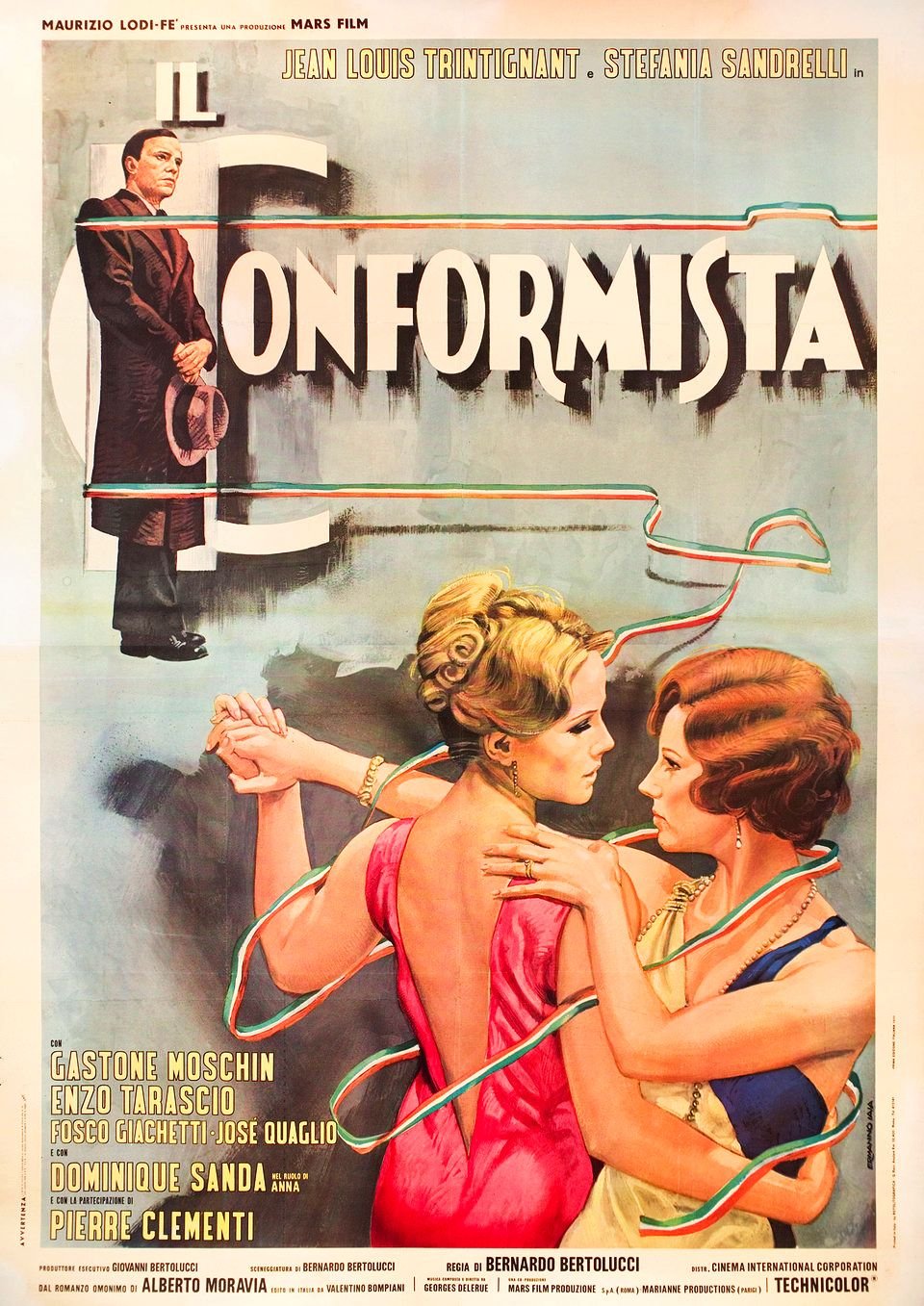
"One of the most respected figures of Italian cinema, Bernardo Bertolucci is responsible for some of the most vibrant and provocative films the medium has ever seen. He remains, after 40 years, as controversial as he is revered." - Joshua Klein (501 Movie Directors, 2007)
Bernardo Bertolucci
Key Production Countries: Italy, France, UK
Key Genres: Drama, Psychological Drama, Political Drama, Erotic Drama, Biography, Romance, Family Drama, Coming-of-Age, Period Film
Key Collaborators: Vittorio Storaro (Cinematographer), Jeremy Thomas (Producer), Ennio Morricone (Composer), Giovanni Bertolucci (Producer), Gabriella Cristiani (Editor), Roberto Perpignani (Editor), Gianni Silvestri (Production Designer), Veronica Lazar (Character Actress), Stefania Sandrelli (Character Actress), Alain Midgette (Character Actor), Mark Peploe (Screenwriter), Fabio Cianchetti (Cinematographer)
Key Genres: Drama, Psychological Drama, Political Drama, Erotic Drama, Biography, Romance, Family Drama, Coming-of-Age, Period Film
Key Collaborators: Vittorio Storaro (Cinematographer), Jeremy Thomas (Producer), Ennio Morricone (Composer), Giovanni Bertolucci (Producer), Gabriella Cristiani (Editor), Roberto Perpignani (Editor), Gianni Silvestri (Production Designer), Veronica Lazar (Character Actress), Stefania Sandrelli (Character Actress), Alain Midgette (Character Actor), Mark Peploe (Screenwriter), Fabio Cianchetti (Cinematographer)
"Bernardo Bertolucci was, until the 1980s, another identifiably political Italian director, whose best remembered films were very much influenced by the political activity of the 1960s in Europe and the United States. From his first feature, Before the Revolution (1964) his films display nostalgia for the old order simultaneous with its denunciation. The disintegration of macho masculinity in the face of a (potentially) revolutionary Europe was central to Last Tango in Paris (1972), Bertolucci’s most controversial film... Bertolucci’s epic 1900 (1976), a portrayal of the rise of Italian communism and the struggle of the peasantry against the aristocracy, may be his defining political statement, after which he gradually abandoned many of his radical convictions." - Schirmer Encyclopedia of Film, 2006
"At the age of twenty-one, Bernardo Bertolucci established himself as a major artist in two distinct art forms, winning a prestigious award in poetry and receiving high critical acclaim for his initial film, La commare secca. This combination of talents is evident in all of his films, which have a lyric but exceptionally concrete style." - Robert Burgoyne (The St. James Film Directors Encyclopedia, 1998)
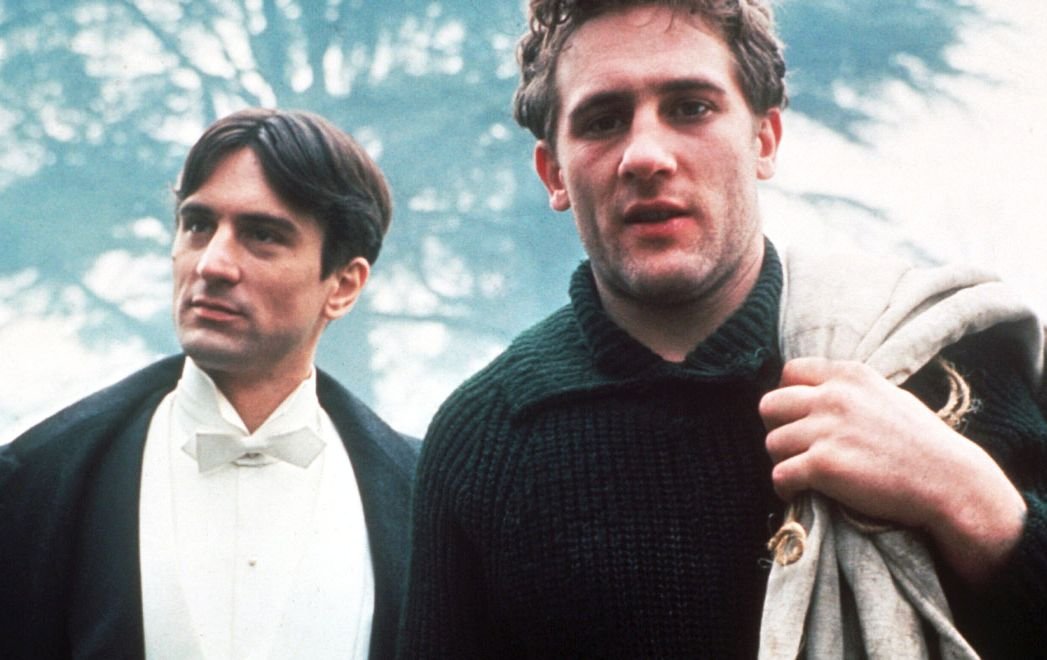
1900 (1976)
"Very few international directors in the past four decades have managed to remain at the “critically successful” as consistently as Italian filmmaker Bernardo Bertolucci, whose career has straddled three generations of filmmaking, four continents, and several movie industries. Alongside his provocative explorations of sexuality and ideology, his highly kinetic visual style – often characterised by elaborate camera moves, meticulous lighting, symbolic use of colour, and inventive editing – has influenced several generations of filmmakers, from the American “movie brats” of the 1970s to the music video auteurs of the ’80s and ’90s." - Bilge Ebiri (Senses of Cinema, 2004)
"One of the cinema's greatest masters of visual beauty, especially when assisted by cinematographer Vittorio Storaro, Bertolucci's films are also dramatically naive and pretentious far too often, even addled at times, resulting in risible scenes even when respected actors are used. But at least the nine Oscars won by The Last Emperor, one of his three near-masterpieces, have assured that Bertolucci will not simply go down in history as the man who made Last Tango in Paris." - David Quinlan (Quinlan's Film Directors, 1999)
"One of the most accomplished directors of the contemporary Italian cinema... Bertolucci, who believes that "cinema is the true poetic language", had applied his celluloid poesy mostly to political-human themes, but with Last Tango in Paris (1972) he moved into the realm of the purely human. It established Bertolucci as a commercially viable director as well as a highly gifted one." - The MacMillan International Film Encyclopedia, 1994
"He was Pier Paolo Pasolini's assistant on Accatone (1961), and, like so many filmmakers of his generation, fell under the influence of Jean-Luc Godard - to whom he paid homage in 2003 in The Dreamers (an affectionate, if disappointingly depoliticized souvenir of Paris in the 1960s) and, less flatteringly, in Last Tango. His early films are intellectually inquiring, digressive and allusive, his cinematic exuberance balanced by social-realist concerns and Marxist leanings." - Tom Charity (The Rough Guide to Film, 2007)
"He is a visual stylist whose films often tackle the tensions between conventionality and rebellion, or explore the relationship between politics, sex and violence." - Chambers Film Factfinder, 2006
"The psychological and intellectual man in society has been brilliantly explored by Bertolucci." - William R. Meyer (The Film Buff's Catalog, 1978)
"Bertolucci has made a substantial journey, from the romantic disenchantment of Before the Revolution, through the canceling of feelings in The Conformist, to the misanthropic howl of Last Tango in Paris, to the internationalism of The Last Emperor. Last Tango was an international cause célèbre, reflecting on different countries according to how many seconds they cut from it, and enticing into cinemas people who hover round notoriety and who must have been baffled by most of Last Tango. What could he do next?" - David Thomson (The New Biographical Dictionary of Film, 2010)
"I'm no longer interested in making political films. There's something old-fashioned about them. Young people now don't care for politics. It isn't present in life as it used to be. And increasingly I like films which reflect present-day reality." - Bernardo Bertolucci (1999)
Selected Filmography
Loading filmography...
Bernardo Bertolucci / Favourite Films
Accattone (1961) Pier Paolo Pasolini, Blue Velvet (1986) David Lynch, Breathless (1960) Jean-Luc Godard, City Lights (1931) Charles Chaplin, Germany, Year Zero (1947) Roberto Rossellini, Marnie (1964) Alfred Hitchcock, The Rules of the Game (1939) Jean Renoir, Sansho the Bailiff (1954) Kenji Mizoguchi, Stagecoach (1939) John Ford, Touch of Evil (1958) Orson Welles.
Source: Sight & Sound (2002)
Accattone (1961) Pier Paolo Pasolini, Blue Velvet (1986) David Lynch, Breathless (1960) Jean-Luc Godard, City Lights (1931) Charles Chaplin, Germany, Year Zero (1947) Roberto Rossellini, Marnie (1964) Alfred Hitchcock, The Rules of the Game (1939) Jean Renoir, Sansho the Bailiff (1954) Kenji Mizoguchi, Stagecoach (1939) John Ford, Touch of Evil (1958) Orson Welles.
Source: Sight & Sound (2002)
Bernardo Bertolucci / Fan Club
Paul Schrader, Luca Guadagnino, Stanley Kwan, Bilge Ebiri, Gérard Legrand, Michael Atkinson, Jean-Philippe Domecq, Wendy Ide, David Thomson, David Thompson, Lizzie Borden, Shun'ya Ito.
Paul Schrader, Luca Guadagnino, Stanley Kwan, Bilge Ebiri, Gérard Legrand, Michael Atkinson, Jean-Philippe Domecq, Wendy Ide, David Thomson, David Thompson, Lizzie Borden, Shun'ya Ito.
"Fan Club"
These film critics/filmmakers have, on multiple occasions, selected this director’s work within film ballots/lists that they have submitted.
These film critics/filmmakers have, on multiple occasions, selected this director’s work within film ballots/lists that they have submitted.