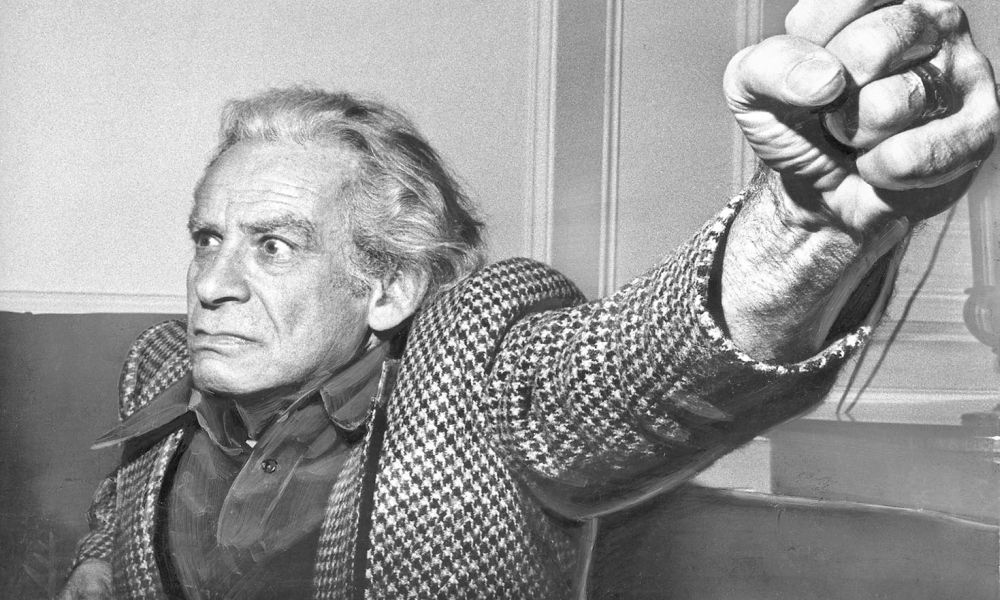
"His films are filled with startling images, and complex and beautiful camera movements; they are deeply pessimistic, presenting a world in which there is a hysterical struggle for survival. This is the world of Fuller's own pulp novels, but on screen it is redeemed by the director's sheer delight in the medium, and at times suffused with a lyrical intensity." - The Illustrated Who's Who of Cinema, 1983
Samuel Fuller
Director / Screenwriter / Producer / Actor
(1912-1997) Born August 12, Worcester, Massachusetts, USA
Top 250 Directors / 50 Key Noir Directors
(1912-1997) Born August 12, Worcester, Massachusetts, USA
Top 250 Directors / 50 Key Noir Directors
Key Production Countries: USA, France
Key Genres: War Drama, War, Drama, Western, Psychological Drama, Combat Films, Thriller, Action, Crime, Spy Film, Film Noir, Detective Film
Key Collaborators: Paul Dubov (Character Actor), Gene Evans (Leading Actor), Paul Dunlap (Composer), Joseph Biroc (Cinematographer), Jerome Thoms (Editor), Harry Sukman (Composer), Lyle Wheeler (Production Designer), Gerald Milton (Character Actor), Joseph MacDonald (Cinematographer), Gene Fowler Jr. (Editor), Philip Cahn (Editor), Glenn Corbett (Leading Character Actor)
Key Genres: War Drama, War, Drama, Western, Psychological Drama, Combat Films, Thriller, Action, Crime, Spy Film, Film Noir, Detective Film
Key Collaborators: Paul Dubov (Character Actor), Gene Evans (Leading Actor), Paul Dunlap (Composer), Joseph Biroc (Cinematographer), Jerome Thoms (Editor), Harry Sukman (Composer), Lyle Wheeler (Production Designer), Gerald Milton (Character Actor), Joseph MacDonald (Cinematographer), Gene Fowler Jr. (Editor), Philip Cahn (Editor), Glenn Corbett (Leading Character Actor)
"A former crime reporter, he envisaged his viscerally dynamic camerawork and hard-hitting stories in terms of cinematic headlines... Though seldom subtle, Fuller's films were dramatically powerful and, thanks to their dark ironies, complex in depicting America as a melting pot constantly boiling over into insane, violent aggression. In particular, few film-makers have been so brutally explicit about racial tensions... In short, Fuller's sensibility was inherently cinematic, and the meaning of his work is embodied in its raw confrontational style." - Geoff Andrew (The Director's Vision, 1999)
"Fuller is an authentic American primitive whose works have to be seen to be understood. Seen, not heard or synopsized... Fuller's ideas are undoubtedly too broad and over-simplified for any serious analysis, but it is the artistic force with which his ideas are expressed that makes his career so fascinating to critics who can rise above their political prejudices... It is time the cinema followed the other arts in honoring its primitives. Fuller belongs to the cinema, and not to literature and sociology." - Andrew Sarris (The American Cinema, 1968)
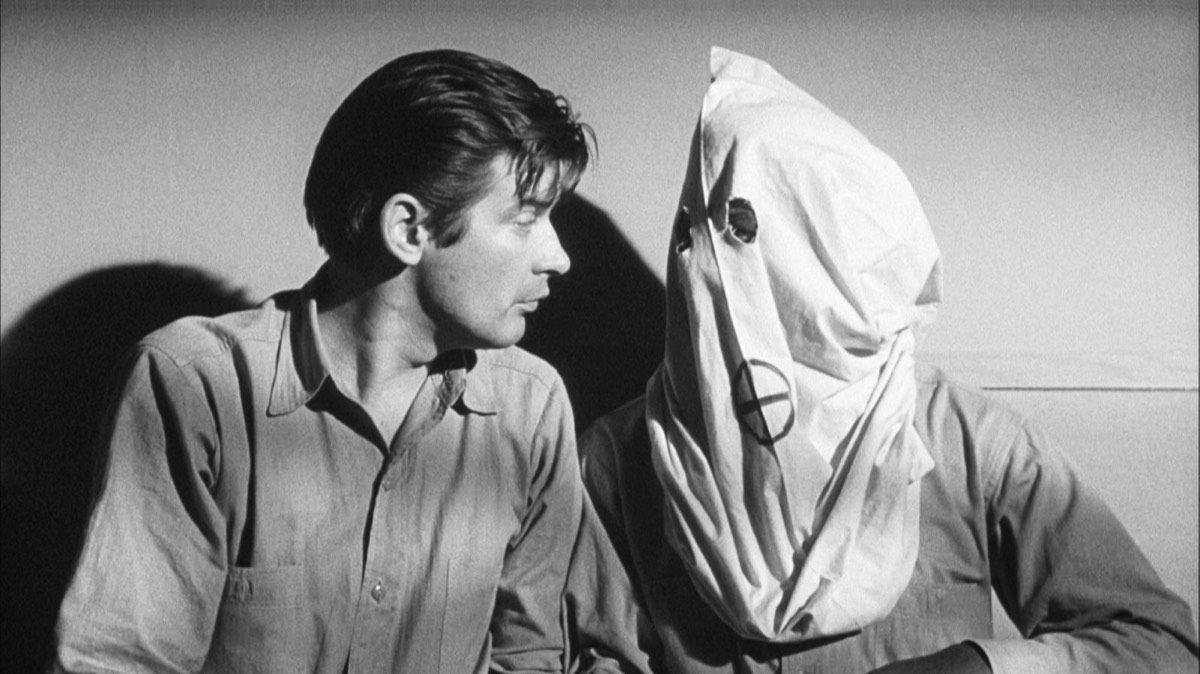
Shock Corridor (1963)
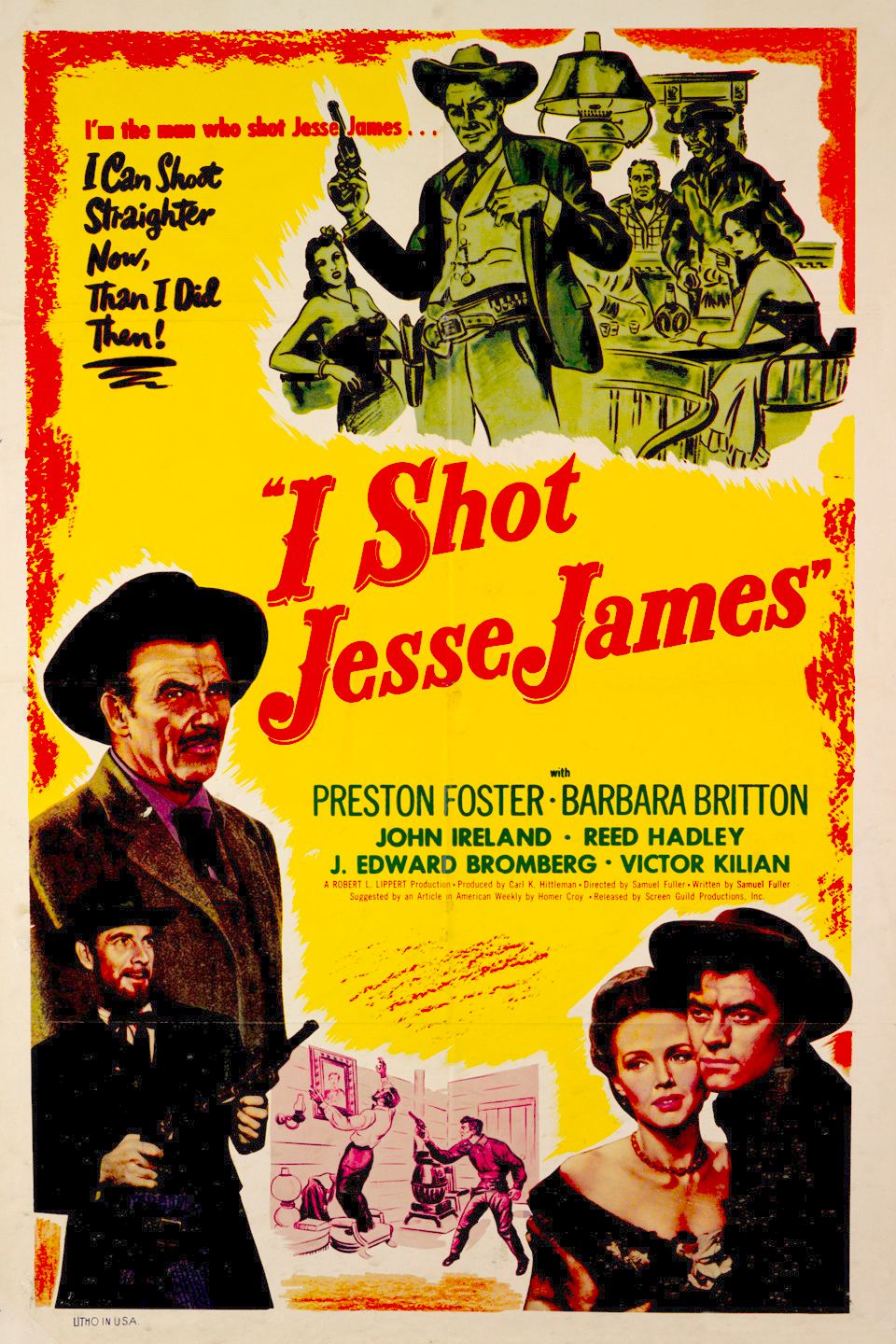
"Fuller is both a director of rapid, abrupt, shocking montage, as in the alternating close-ups of robber and victim in I Shot Jesse James, and a director who uses extremely long takes incorporating a complex mix of camera movement and character action. Fuller's style is the opposite of graceful; his style seems to suggest that in a world where grace provides little redemption, its utilization would be a kind of lie." - Dana B. Polan (The St. James Film Directors Encyclopedia, 1998)
"Shooting with both a journalistic eye and a heightened style, producing work that was simultaneously crass and subtle, he’s one of the great pulp filmmakers, and a director who proved a huge influence on everyone. Especially cinephiles and directors who would go on to become much more famous than he… Even if career problems meant that he never became the household name he should have been (he didn’t direct between 1972 and 1980, and the misreading of 1982’s White Dog saw him become a pariah in Hollywood), Fuller’s lasting stamp on cinema is still felt today." - The Playlist Staff (IndieWire, 2012)
"Often using a moving camera as a blunt instrument, Sam Fuller created direct and raw films that reflect his experience in tabloid journalism and in the U.S. army... It is Fuller's war films that are his greatest achievement. The Steel Helmet (1950) ands Fixed Bayonets (1951) were the first of his taut, tough, and truthful war films, which followed a group of multi-racial Americans fighting to survive." - Ronald Bergan (Film - Eyewitness Companions, 2006)
"By a determined policy of sticking to low-budget production, often acting as his own producer, Fuller has remained the most personal and authoritative of recent American directors. This fact explains the great critical admiration he has received - especially from the Cahiers du Cinéma schools of criticism - notwithstanding the crude though compelling melodrama of his subjects and his simplistic 'anti-Red' attitudinising." - Roger Manvell (The International Encyclopedia of Film, 1972)
"It is easy to make Fuller's plots and dialogue a target for sophisticated scorn. It is easy too to overpraise the virtues of his minor talent, but they are plain to see, and worthwhile: a fierce, rather old-fashioned moral idealism, linked to a single-minded patriotism; unencumbered sensation in the dramatic presentation of simple oppositions; and a strong, violent and idiosyncratic handwriting - he is one of Hollywood's most fluid stylists with the moving camera and especially the crane, making the patterns of warfare, whether military or criminal, graphic and exciting." - Gavin Millar (Cinema: A Critical Dictionary, 1980)
"Another great director of low-budget films, Fuller writes and lenses about "all the emotions" in a stark, raw manner which sometimes reflects his penchant for realism and patriotism." - William R. Meyer (The Film Buff's Catalog, 1978)
"It’s been said that if you don’t like the Rolling Stones, then you just don’t like rock and roll. By the same token, I think that if you don’t like the films of Sam Fuller, then you just don’t like cinema. Or at least you don’t understand it.” - Martin Scorsese
"I researched every milieu. If I were to do a movie tomorrow about a fashion designer, say, I would have to spend some time to find out what language they spoke. Because I would never be satisfied with my dialogue, I want something that gives you the color of that character right away." - Samuel Fuller
"Movement should be a counter, whether in action scenes or dialogue or whatever. It counters where your eye is going. This style thing, for me it's all fitted to the action, to the script, to the characters." - Samuel Fuller
Selected Filmography
Loading filmography...
GF Greatest Films ranking (★ Top 1000 ● Top 2500)
T TSPDT N 1,000 Noir Films
R Jonathan Rosenbaum S Martin Scorsese
T TSPDT N 1,000 Noir Films
R Jonathan Rosenbaum S Martin Scorsese
Samuel Fuller / Favourite Films
Battleship Potemkin (1925) Sergei Eisenstein, Brief Encounter (1945) David Lean, Citizen Kane (1941) Orson Welles, La Dolce vita (1960) Federico Fellini, The 400 Blows (1959) François Truffaut, The Gold Rush (1925) Charles Chaplin, The Informer (1935) John Ford, The Last Emperor (1987) Bernardo Bertolucci, Pierrot le fou (1965) Jean-Luc Godard, Rashomon (1950) Akira Kurosawa.
Source: Time Out (1995)
Battleship Potemkin (1925) Sergei Eisenstein, Brief Encounter (1945) David Lean, Citizen Kane (1941) Orson Welles, La Dolce vita (1960) Federico Fellini, The 400 Blows (1959) François Truffaut, The Gold Rush (1925) Charles Chaplin, The Informer (1935) John Ford, The Last Emperor (1987) Bernardo Bertolucci, Pierrot le fou (1965) Jean-Luc Godard, Rashomon (1950) Akira Kurosawa.
Source: Time Out (1995)
Samuel Fuller / Fan Club
Martin Scorsese, J. Hoberman, Jonathan Rosenbaum, Inácio Araújo, Fernando F. Croce, Amos Gitai, Wim Wenders, Therese Grisham, José Luis Guarner, Andrew Sarris, Ricardo Bedoya, Adrian Martin.
Martin Scorsese, J. Hoberman, Jonathan Rosenbaum, Inácio Araújo, Fernando F. Croce, Amos Gitai, Wim Wenders, Therese Grisham, José Luis Guarner, Andrew Sarris, Ricardo Bedoya, Adrian Martin.
"Fan Club"
These film critics/filmmakers have, on multiple occasions, selected this director’s work within film ballots/lists that they have submitted.
These film critics/filmmakers have, on multiple occasions, selected this director’s work within film ballots/lists that they have submitted.