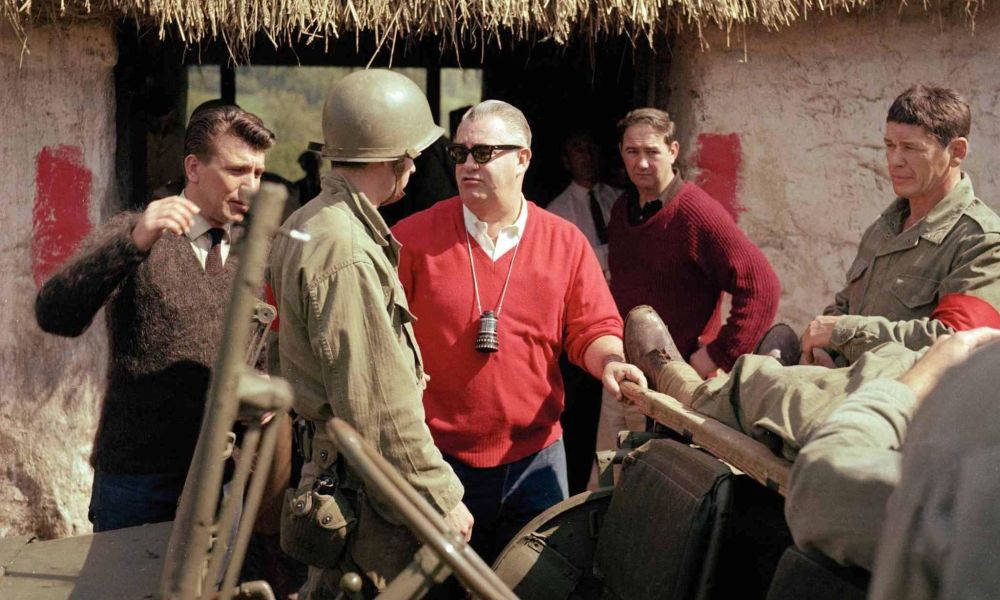
"His best work focuses on violence, brutality and corruption, notably the nihilistic noir Kiss Me Deadly (1955) and the explosive war film The Dirty Dozen (1967). Aldrich's dynamic visual style and probing camera movements effectively evoke an unstable, disorderly world." - The Movie Book, 1999
Robert Aldrich
Director / Producer
(1918-1983) Born August 9, Cranston, Rhode Island, USA
Top 250 Directors / 50 Key Noir Directors
(1918-1983) Born August 9, Cranston, Rhode Island, USA
Top 250 Directors / 50 Key Noir Directors
Key Production Countries: USA, UK
Key Genres: Drama, Action-Adventure, Crime, Thriller, Action, Adventure, Comedy, Mystery, Western, War, Mystery-Suspense, Film Noir
Key Collaborators: Michael Luciano (Editor), Frank De Vol (Composer), Joseph Biroc (Cinematographer), William Glasgow (Production Designer), Ernest Laszlo (Cinematographer), Ernest Borgnine (Leading Character Actor), Wesley Addy (Character Actor), Lukas Heller (Screenwriter), Richard Jaeckel (Character Actor), Burt Lancaster (Leading Actor), Jack Palance (Leading Actor), Lee Marvin (Leading Actor)
Key Genres: Drama, Action-Adventure, Crime, Thriller, Action, Adventure, Comedy, Mystery, Western, War, Mystery-Suspense, Film Noir
Key Collaborators: Michael Luciano (Editor), Frank De Vol (Composer), Joseph Biroc (Cinematographer), William Glasgow (Production Designer), Ernest Laszlo (Cinematographer), Ernest Borgnine (Leading Character Actor), Wesley Addy (Character Actor), Lukas Heller (Screenwriter), Richard Jaeckel (Character Actor), Burt Lancaster (Leading Actor), Jack Palance (Leading Actor), Lee Marvin (Leading Actor)
"Beyond Westerns and war films, Aldrich's films have a generic breadth matched by few other filmmakers. Aldrich's work ranges widely from the self-described "classy soap opera" Autumn Leaves (1956) to the "sex and sand epic" Sodom and Gomorrah (1963) to the "desperately important" political thriller Twilight's Last Gleaming. In between, there are a few comedies and several noir films, as well as the occasional psychological melodrama and the neo-Gothic. There are prison pictures, cop pictures, sports pictures, and pictures about people who make pictures. The interior consistency of theme and style in Aldrich's films resists classification according to genre." - Alain Silver (Senses of Cinema, 2002)
"At his best, Aldrich employed vicious irony, muscular acting and vivid, sophisticated compositions to evoke a world divided by self-interest and forever on the verge of violent anarchy. At the same time those ingredients, when applied to an ill-focused script, led to overstatement and vulgarity." - Geoff Andrew (The Film Handbook, 1989)
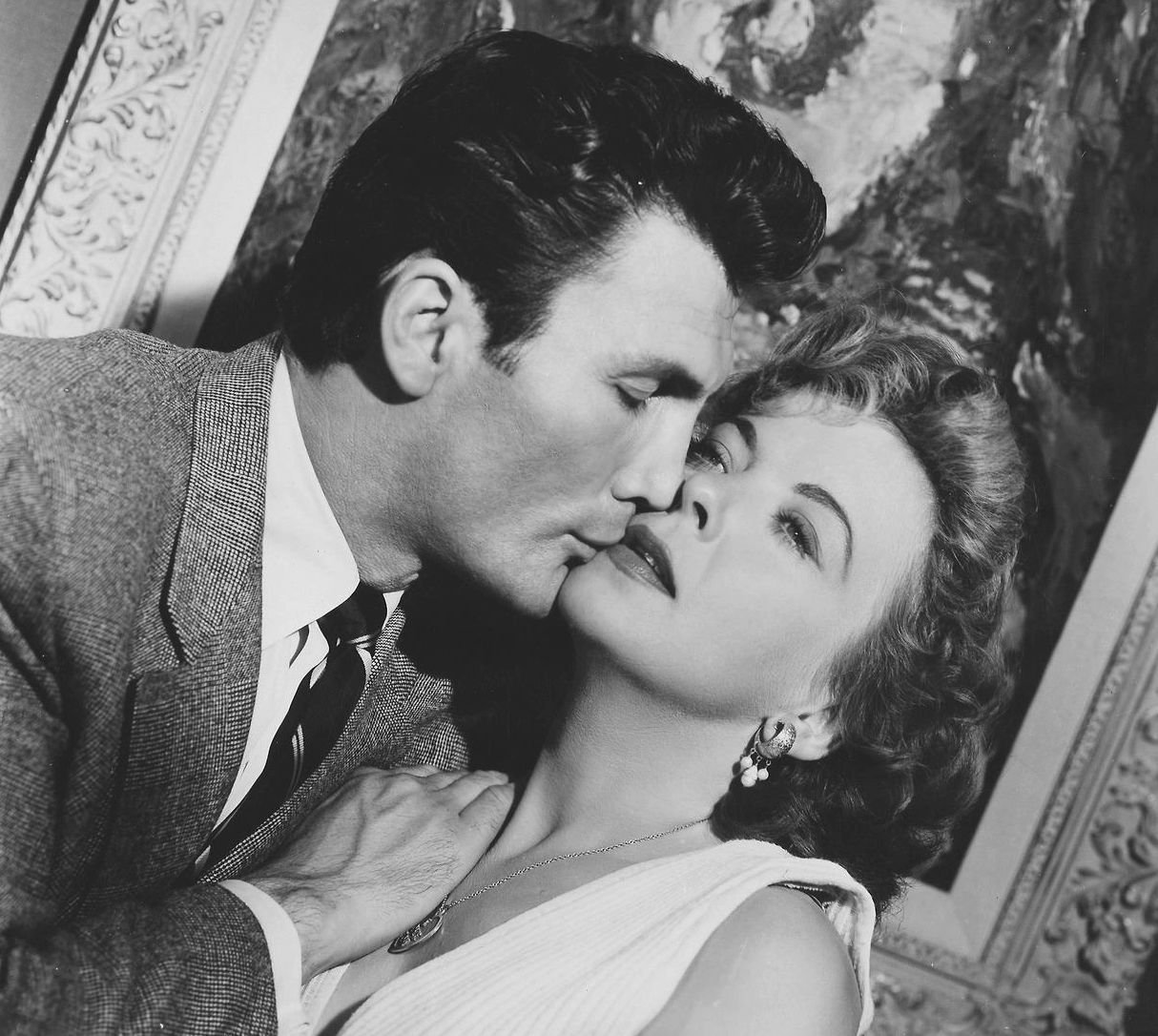
The Big Knife (1955)
"While Stanley Kubrick (whose 1950s films bear striking stylistic and thematic similarities to those of Aldrich) found it necessary to retreat to England, reducing his output to two or three films a decade, Aldrich chose to fight it out in Hollywood, where his capacity for money-making allowed him the space to vent his own personal anger at the compromises we all must make." - Ed Lowry (International Dictionary of Films and Filmmakers, 1991)
"Cousin to the Rockefellers, Robert Aldrich came from big money. That he took his disinheritance on the chin, heading out west to sweep floors at RKO, is testament to a political sensibility that would colour both his personal life and his career as one of the great Hollywood mavericks. His biggest commercial hit, The Dirty Dozen (1967), might suggest a right-winger in the John Milius mode, but you need only look at his filmography en masse to see a subversive sensibility in thrall to the complexities of human behaviour. Working across multiple genres, Aldrich’s was a cinema (with a few notable exceptions) populated by men – characters driven by their own personal codes, railing in hostile environments against a hypocritical and unjust system. Coming up through the studio ranks, as second and first assistant director to the likes of Jean Renoir, Joseph Losey, Abraham Polonsky and Charlie Chaplin, he’d later support blacklisted writers and campaign for union representation, serving as president of the Directors Guild through the second half of the 70s." - Matthew Thrift (BFI, 2018)
"The decline in Aldrich, in the sixties especially, was a sad thing to behold. Distinct talent is no sure defence against the pressures of vulgarization and commerce, to say nothing of the talent's urge towards sensationalism." - David Thomson (The New Biographical Dictionary of Film, 2002)
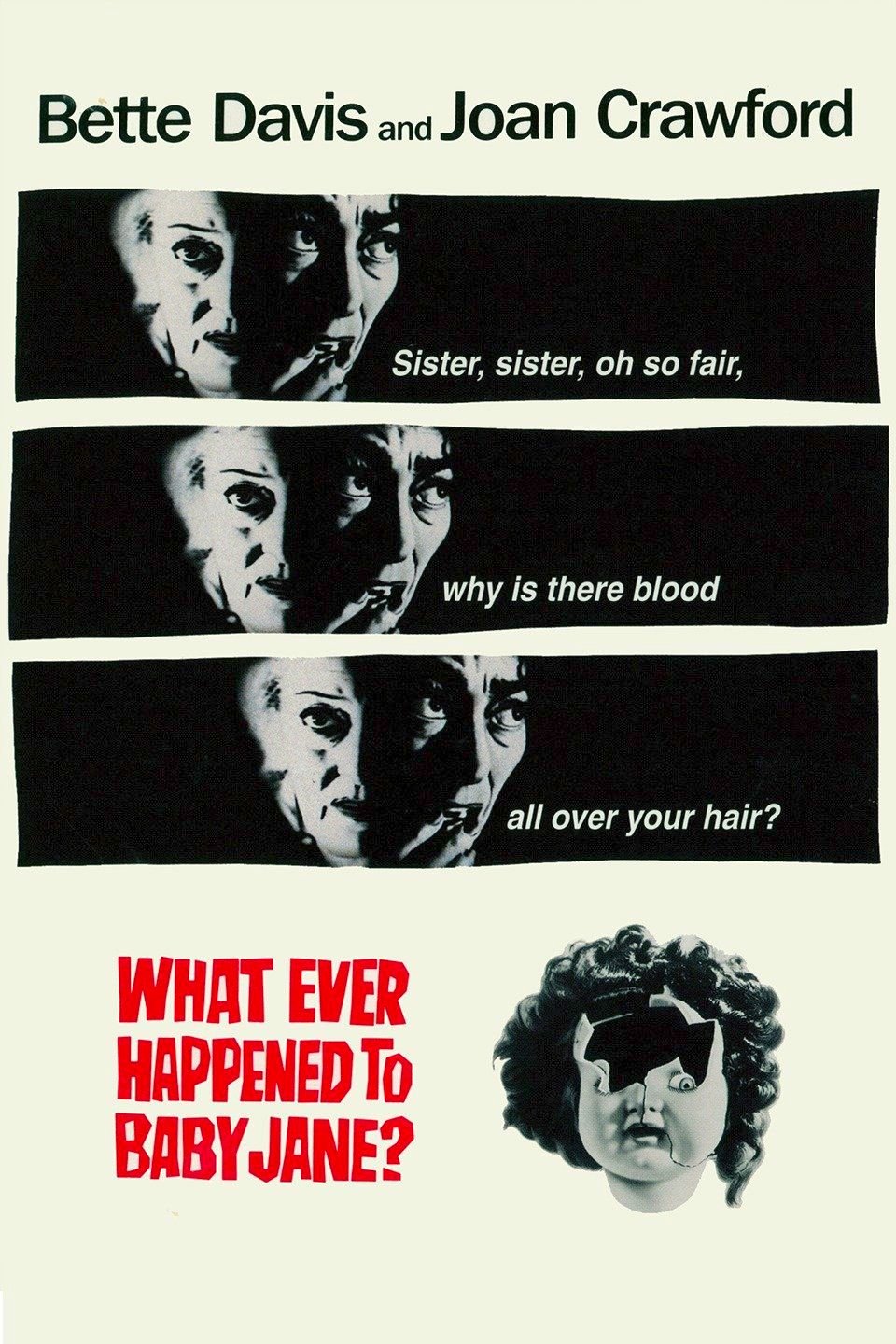
"Aldrich has frequently been his own producer, but his output has been uneven. He owned his own studio until four box-office flops in a row deprived him of it. His forceful talent has found a niche in macho action movies, sometimes verging on self-parody, though he is evidently reluctant to be confined to this genre, as witness the Hollywood Gothic of What Ever Happened to Baby Jane?, for example." - The Illustrated Who's Who of the Cinema, 1983
"Like Howard Hawks, Aldrich is interested in groups of men under special pressure (Attack!, 1956; The Dirty Dozen, 1967); unlike Hawks, he seldom chooses to ease the pressure with sentiment, although he dispenses much hearty humor. Aldrich has been criticized for his excessive violence and his misogyny (his women are usually grotesques or nonentities), but at his best, he can create scenes that bristle with tense action, as in the widely admired Mickey Spillane mystery thriller Kiss Me Deadly (1955)." - Ted Sennett (Great Movie Directors, 1986)
"Started out directing tough genre films (Vera Cruz, Kiss Me Deadly), which grew increasingly graphic and satirical with time (What Ever Happened to Baby Jane?, Ulzana's Raid)." - William R. Meyer (The Film Buff's Catalog, 1978)
"I don't think violence on film breeds violence in life. Violence in life breeds violence in films." - Robert Aldrich
Selected Filmography
Loading filmography...
Robert Aldrich / Fan Club
Martin Scorsese, Park Chan-wook, Makoto Shinozaki, Richard Combs, Mamoru Oshii, Bertrand Tavernier, Edward Buscombe, José Luis Guarner, Michael Sicinski, Mike Hodges, Mika Taanila, Ernest R. Dickerson.
Martin Scorsese, Park Chan-wook, Makoto Shinozaki, Richard Combs, Mamoru Oshii, Bertrand Tavernier, Edward Buscombe, José Luis Guarner, Michael Sicinski, Mike Hodges, Mika Taanila, Ernest R. Dickerson.
"Fan Club"
These film critics/filmmakers have, on multiple occasions, selected this director’s work within film ballots/lists that they have submitted.
These film critics/filmmakers have, on multiple occasions, selected this director’s work within film ballots/lists that they have submitted.