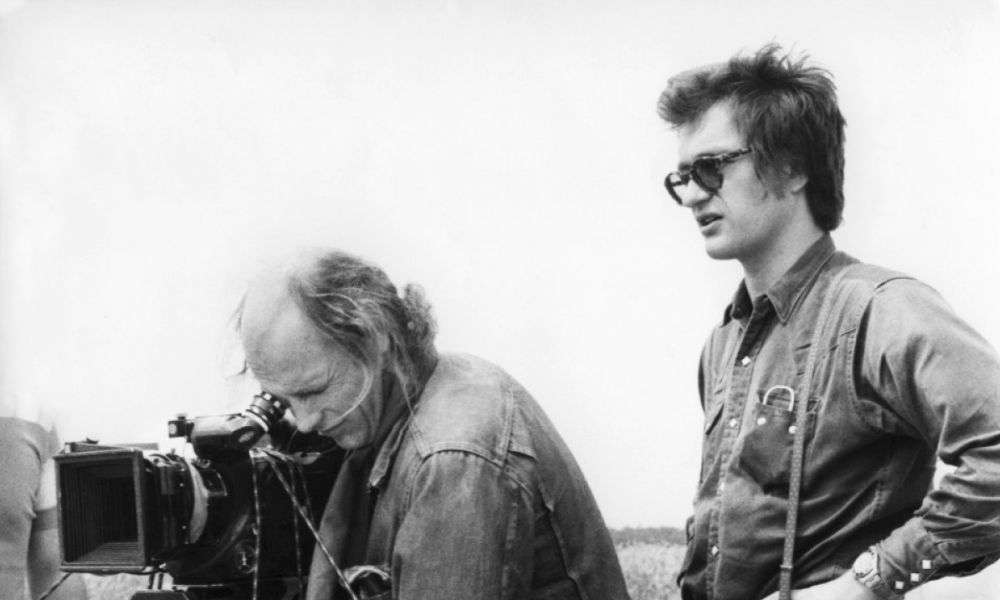
"Preoccupied with his ambivalent feelings about Germany and America, Wilhelm Wenders has managed to turn a personal obsession into an intriguing and rewarding artistic career of strong cinematic and cultural relevance." - Geoff Andrew (The Film Handbook, 1989)
Wim Wenders
Director / Screenwriter / Producer
(1945- ) Born August 14, Düsseldorf, North Rhine-Westphalia, Germany
Top 250 Directors
(1945- ) Born August 14, Düsseldorf, North Rhine-Westphalia, Germany
Top 250 Directors
Key Production Countries: Germany, West Germany, France, USA, UK, Sweden
Key Genres: Drama, Documentary, Biography, Road Movie, Psychological Drama, Music, Mystery, Fantasy, Post-Noir (Modern Noir), Social History, Culture & Society
Key Collaborators: Peter Przygodda (Editor), Robby Müller (Cinematographer), Rudiger Vogler (Leading Character Actor), Jurgen Knieper (Composer), Lisa Kreuzer (Leading Actress), Bruno Ganz (Leading Actor), Solveig Dommartin (Leading Actress), Ulrich Felsberg (Producer), Anatole Dauman (Producer), Gian-Piero Ringel (Producer), Toni Froschhammer (Editor), Edda Kochl (Leading Character Actress)
Key Genres: Drama, Documentary, Biography, Road Movie, Psychological Drama, Music, Mystery, Fantasy, Post-Noir (Modern Noir), Social History, Culture & Society
Key Collaborators: Peter Przygodda (Editor), Robby Müller (Cinematographer), Rudiger Vogler (Leading Character Actor), Jurgen Knieper (Composer), Lisa Kreuzer (Leading Actress), Bruno Ganz (Leading Actor), Solveig Dommartin (Leading Actress), Ulrich Felsberg (Producer), Anatole Dauman (Producer), Gian-Piero Ringel (Producer), Toni Froschhammer (Editor), Edda Kochl (Leading Character Actress)
"Wim Wenders always seems to be on the move. In the course of his career he has made films in Japan, Portugal, Cuba, Italy, Russia, Australia, his native Germany, and the US. Not surprisingly, he called his film company Road Movies... Collaborating from the very first with novelist Peter Handke and cinematographer Robby Müller, Wenders favoured long takes , taciturn, alienated protagonists and open-ended narratives. This was a deeply mittel-European sensibility. Yet increasingly he was drawn towards the dynamics of American genre filmmaking. That tension produced an imaginative Patricia Highsmith adapatation, The American Friend (1977)." - Tom Charity (The Rough Guide to Film, 2007)
"Of all the new German directors of the 1970s, none had Wim Wenders's rhapsodic sense of America. He was brought up on American Forces radio and the glut of Hollywood movies that occupied Germany after the war... Wenders remains romantically itinerant, in love with music, America, and the idea of the movies. But he is closing in on sixty, and nothing lately has been as big or as cogent as one would like to see." - David Thomson (The New Biographical Dictionary of Film, 2002)
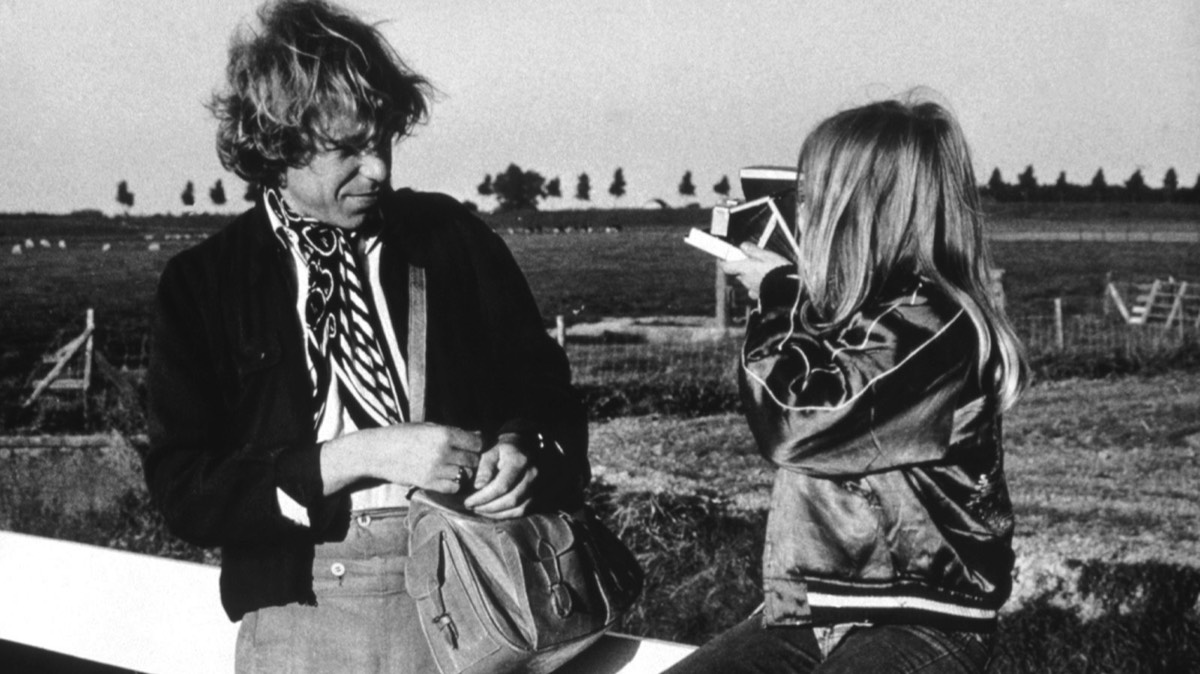
Alice in the Cities (1974)
"A fan of American films from his early childhood... He began his career as a critic before developing into one of the leading exponents of the New German Cinema. Themes of isolation and alienation characterize his films, which often feature journeys in search of enlightenment." - Chambers Film Factfinder, 2006
"Wim Wenders is cinema’s preeminent poet of the open road, soulfully tracing the journeys of wanderers and drifters searching for themselves. Over the course of his incredible five-decade career, Wenders has traversed the landscapes of his native Germany (Alice in the Cities, Kings of the Road), the highways of the American Southwest (Paris, Texas), and the dream worlds of angels (Wings of Desire), working with master cinematographers like Robby Müller and Henri Alekan to create some of the most indelible images in all of modern cinema. Moving restlessly between exquisite narrative works and innovative documentaries like Tokyo-Ga and Pina, Wenders remains a vital and prolific creative force, following his inspiration across the world wherever it may lead." - The Criterion Channel
"Although less prolific than his contemporary Rainer Werner Fassbinder, this West German director succeeded in making every one of his new films up to the mid-1980s something of an event...This is probably caused in some part by the fact that Wenders' style recalls memories of Hollywood films of 30 years earlier... His pictures are usually about attempted escapes from inextricable situations, by people who, like Frankenstein and his creature, could go to the ends of the earth and still find fate awaiting them." - David Quinlan (Quinlan's Film Directors, 1999)
"Wenders came of age as a film-maker in the early 70s as part of a generation of German auteurs, including such mavericks as Werner Herzog and the late Rainer Werner Fassbinder, who made up a movement known as New German Cinema. Wenders was born in Düsseldorf in 1945, and his route into film-making was circuitous. Raised a Catholic, he briefly considered joining the priesthood, before studying medicine and then philosophy. In 1966, having dropped out of university to pursue a career as a painter in Paris, he became obsessed with films, often watching several in a single day at his local Montparnasse cinema. In 1967, he returned to Germany and began working as a film critic for various publications, including Der Spiegel, while attending film school in Munich." - Sean O'Hagan (The Observer, 2024)
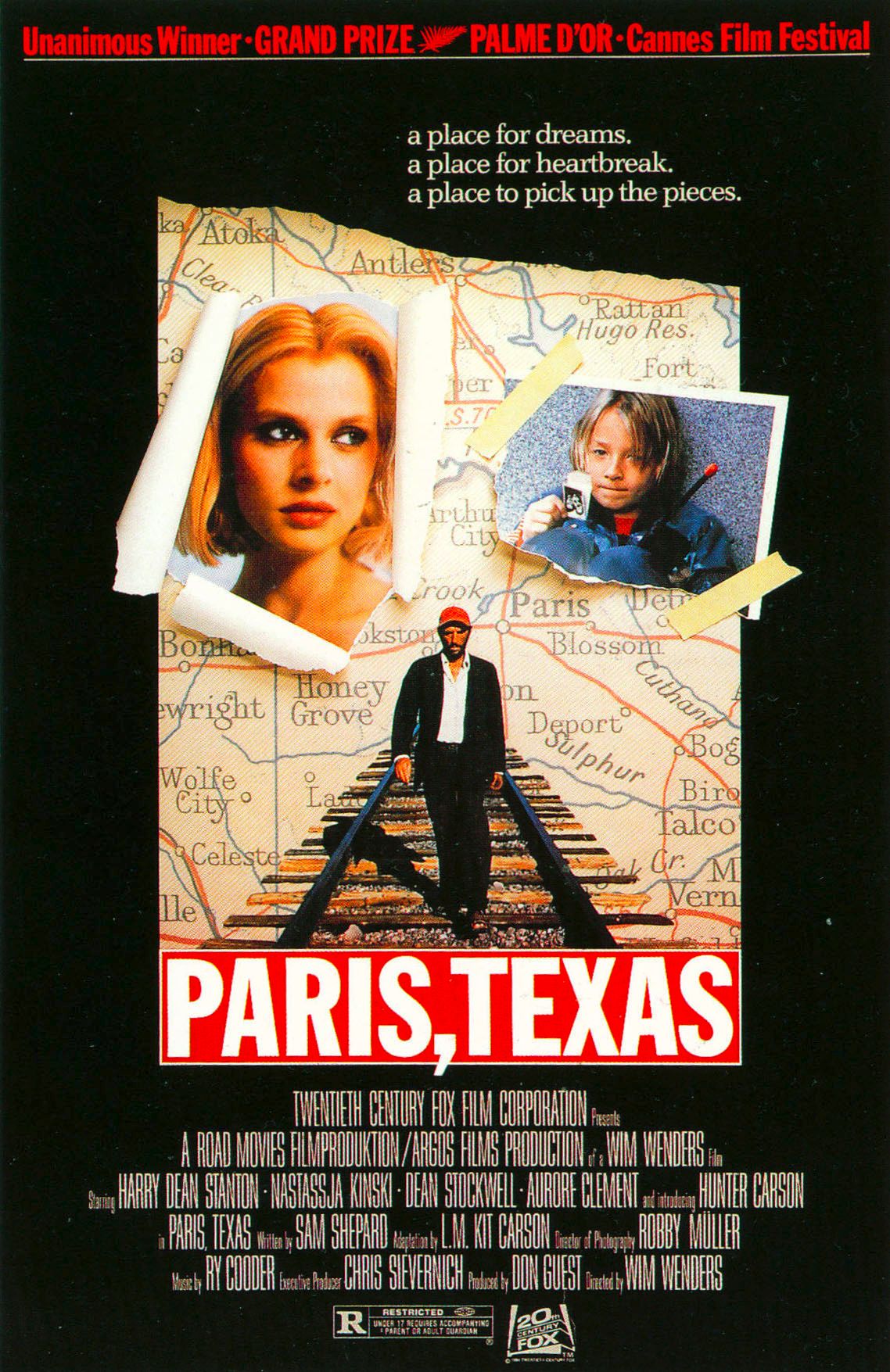
"Wim Wenders is more aware than most contemporary German directors of the American cultural influence on post-war Germany, and his films, whether made in the United States or Germany, reflect this… His characters are isolated and emotionally stunted - but when they take to the road, change becomes inevitable. The superbly photographed, leisurely odysseys reach metaphysical dimensions, as in Paris, Texas (1984), his greatest international success." - Ronald Bergan (Film - Eyewitness Companions, 2006)
"Wenders's directness and willingness to expose raw emotion onscreen earned him a loyal following among cinephiles. In a cinephilic spirit, Lightning Over Water (1980) celebrates the life and career of movie director Nicholas Ray." - Murray Pomerance (501 Movie Directors: A Comprehensive Guide to the Greatest Filmmakers, 2007)
"Of the three young German filmmakers who achieved the greatest international fame in the 1970s as the vanguard of a German New Wave, Wim Wenders had perhaps a less radical though no less distinctive film style than his compatriots R.W. Fassbinder and Werner Herzog. Though critics typically cite American influences upon Wenders’s ‘‘road trilogy’’ of the mid-1970s, there is a greater affinity with the modernist tradition of the European ‘‘art film’’ exemplified by the Antonioni of L’avventura and Red Desert—dramas of alienation in which restless, unrooted individuals wander through haunted, sterile, but bleakly beautiful landscapes within a free-floating narrative structure." - Joseph Milicia (International Dictionary of Films and Filmmakers, 1991)
"Thus far Wenders has made haunting, angst-ridden films about identity and freedom of choice." - William R. Meyer (The Film Buff's Catalog, 1978)
"Entertainment today constantly emphasizes the message that things are wonderful the way they are. But there is another kind of cinema, which says that change is possible and necessary and it's up to you." - Wim Wenders
"My films are all done on the basis that people are all equal. Equality is one primary characterization of my movies. The angels in Wings of Desire make that very clear. They make it very clear that people are people. They are no better and no worse. There are no important and unimportant ones." - Wim Wenders (The Progressive Magazine, 2024)
Selected Filmography
Loading filmography...
Wim Wenders / Favourite Films
Barfly (1987) Barbet Schroeder, Down by Law (1986) Jim Jarmusch, Enter the Void (2009) Gaspar Noé, Good Morning (1959) Yasujiro Ozu, The King of Comedy (1983) Martin Scorsese, The Last Adventure (1967) Robert Enrico, Mississippi Mermaid (1969) François Truffaut, On the Beach (1959) Stanley Kramer, One, Two, Three (1961) Billy Wilder, Only Angels Have Wings (1939) Howard Hawks.
Source: Sight & Sound (2022)
Barfly (1987) Barbet Schroeder, Down by Law (1986) Jim Jarmusch, Enter the Void (2009) Gaspar Noé, Good Morning (1959) Yasujiro Ozu, The King of Comedy (1983) Martin Scorsese, The Last Adventure (1967) Robert Enrico, Mississippi Mermaid (1969) François Truffaut, On the Beach (1959) Stanley Kramer, One, Two, Three (1961) Billy Wilder, Only Angels Have Wings (1939) Howard Hawks.
Source: Sight & Sound (2022)
Wim Wenders / Fan Club
John Davies, Allison Anders, Benny Safdie, Lodge Kerrigan, David Stratton, Dan Sallitt, Gérard Legrand, Kriv Stenders, Riri Riza, Jaume Balagueró, Toni Dimkov, Baptiste Roux.
John Davies, Allison Anders, Benny Safdie, Lodge Kerrigan, David Stratton, Dan Sallitt, Gérard Legrand, Kriv Stenders, Riri Riza, Jaume Balagueró, Toni Dimkov, Baptiste Roux.
"Fan Club"
These film critics/filmmakers have, on multiple occasions, selected this director’s work within film ballots/lists that they have submitted.
These film critics/filmmakers have, on multiple occasions, selected this director’s work within film ballots/lists that they have submitted.