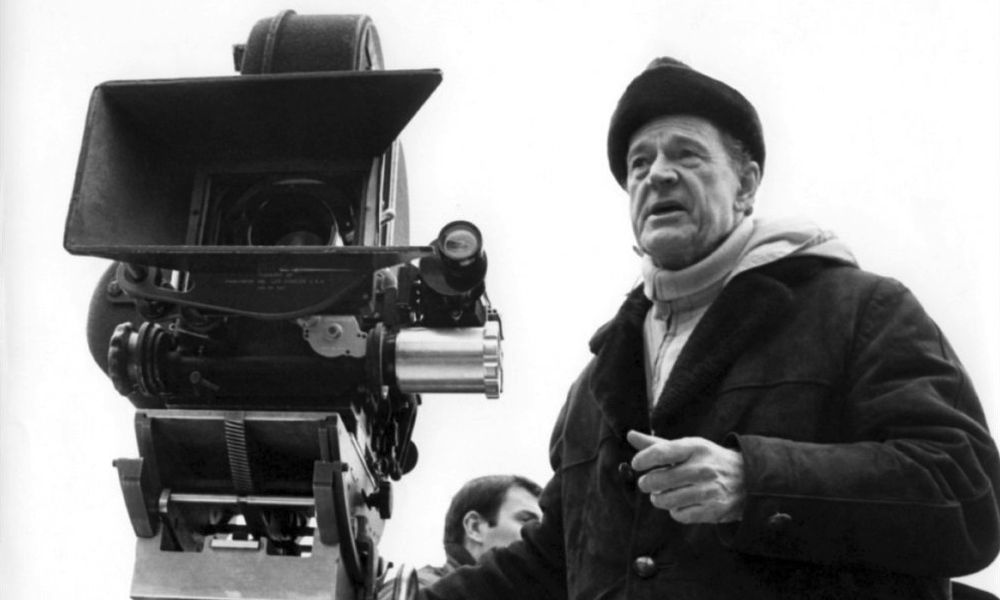
"He was less reckless than Sam Fuller, less passionate than Nicholas Ray, yet in the framework of the Western he hit on an almost perfect form with more consistency than either of his peers - and fuelled it with pain." - Tom Charity (The Rough Guide to Film, 2007)
Anthony Mann
Director
(1906-1967) Born June 30, San Diego, California, USA
Top 250 Directors / 50 Key Noir Directors
(1906-1967) Born June 30, San Diego, California, USA
Top 250 Directors / 50 Key Noir Directors
Key Production Country: USA
Key Genres: Western, Drama, Psychological Western, Film Noir, Thriller, Crime, War, Period Film, Mystery, Historical Film, Melodrama, Crime Thriller
Key Collaborators: James Stewart (Leading Actor), Philip Yordan (Screenwriter), Aaron Rosenberg (Producer), William Daniels (Cinematographer), John Alton (Cinematographer), Cedric Gibbons (Production Designer), Jay C. Flippen (Character Actor), Harry Morgan (Character Actor), John C. Higgins (Screenwriter), Russell Schoengarth (Editor), Bernard Herzbrun (Production Designer), Charles McGraw (Character Actor)
Key Genres: Western, Drama, Psychological Western, Film Noir, Thriller, Crime, War, Period Film, Mystery, Historical Film, Melodrama, Crime Thriller
Key Collaborators: James Stewart (Leading Actor), Philip Yordan (Screenwriter), Aaron Rosenberg (Producer), William Daniels (Cinematographer), John Alton (Cinematographer), Cedric Gibbons (Production Designer), Jay C. Flippen (Character Actor), Harry Morgan (Character Actor), John C. Higgins (Screenwriter), Russell Schoengarth (Editor), Bernard Herzbrun (Production Designer), Charles McGraw (Character Actor)
"Although Anthony Mann’s reputation as a director rests primarily upon his turbulent, complex 1950s westerns starring James Stewart, his style coalesced in the 1940s with a series of important films noirs. These films, with their disorienting, often baroque cinematography, malevolent environment, and violent, tortured characters, presage his later work. His Technicolor westerns of the 1950s and historical epics of the 1960s were shot with a broader palate and a resonant sense of landscape, and retreated farther into history, but they share with the noirs an entrapping environment populated by embattled, anguished men." - William Luhr (Schirmer Encyclopedia of Film, 2007)
"Anthony Mann (not to be confused with dreary Daniel and Delbert) directed action movies with a kind of tough-guy authority that never found favor among the more cultivated critics of the medium... His Westerns are distinguished by some of the most brilliant photography of exteriors in the history of the American cinema, and yet it is impossible to detect a consistent thematic pattern in his work." - Andrew Sarris (The American Cinema, 1968)
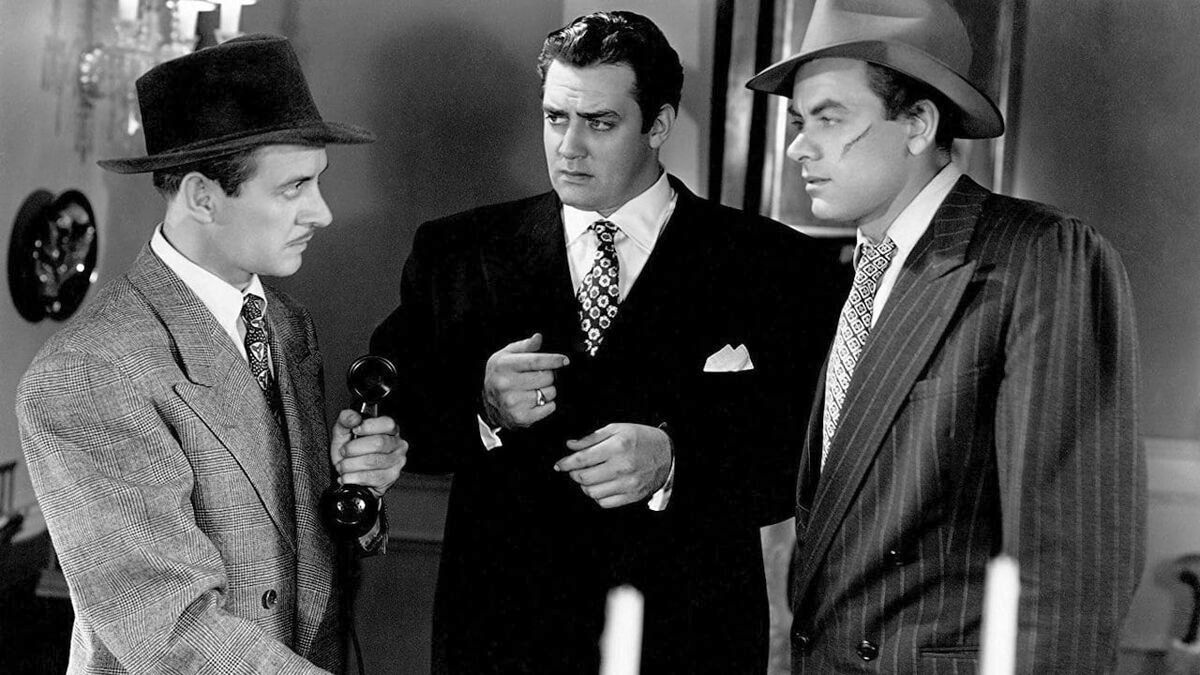
Raw Deal (1948)
"Though he incidentally directed films in various genres (the musical, the war movie, the spy drama), Anthony Mann's career falls into three clearly marked phases: the early period of low-budget, B-feature films noir; the central, most celebrated period of westerns, mostly with James Stewart; and his involvement in the epic (with Samuel Bronston as producer). All three periods produced distinguished work, but it is the body of work from the middle period in which Mann's achievement is most consistent and on which his reputation largely depends." - Robin Wood (International Dictionary of Films and Filmmakers, 1991)
"Mann’s consistently dark vision has only grown in stature as his most characteristic works strike a chord in an era when optimism seems less sustainable than pessimism. Mann’s camera eye conjured some of the most astonishingly original imagery in American film. And the best Mann films contain an abundance of thematic material appealing to critics interested in race, class, and gender politics. Moreover, Mann’s films probe the human psyche’s obsessions and latent desires in startlingly adventurous, and even disturbing, ways. It is not for nothing that Martin Scorsese has singled out Mann as a primary influence on his own cinematic worldview and stylistics." - David Boxwell (Senses of Cinema, 2003)
"After making a number of tense, claustrophobic noir thrillers in the 40s, Mann embarked on a series of Westerns notable for their symbolic, expressive use of the rugged American landscape and their psychological complexity... Built around honour, betrayal and vengeance, Mann's films (notably The Man from Laramie and Man of the West) often featured oppressive father-figures; scenes of violence might resonate with Freudian overtones of patricide, castration and humiliation." - Geoff Andrew (The Director's Vision, 1999)
"Cynicism is the flavor that sets Mann’s best western films, including those that don’t feature James Stewart (such as Man of the West), apart from many of the more picturesque, myth-bound efforts of the period. The ’50s were already a more mature moment in the development of the genre, all the more so after Mann got done with it. Mann’s way with violence is the secret—it defines even the craggy, inhospitable terrains that would earn Mann comparison to Antonioni." - K. Austin Collins (The Criterion Collection, 2023)
"Anthony Mann made Westerns, thrillers and sword-fight movies, and he was, quite simply, one of the best directors ever to come out of the Hollywood system. He understood early on that making a genre or a commercially viable film did not mean that you couldn't also probe the human condition, just as more pretentious directors might claim and signally fail to do." - Mario Reading (The Movie Companion, 2006)
"Mann was an impeccable image-smith and a pitiless choreographer of brutality. Film noir was seldom blacker and the Old West never more severe than with him at the helm, yet his three-decade career displays a steely cinematic intelligence that transcends the facile “tough-guy” label his films were originally stuck with. Though it can be broken down into stages by genre, his is a remarkably consistent worldview of betrayal, pain, and the physical-spiritual toll of men obsessed with conquering nature and each other." - Fernando F. Croce (Slant Magazine, 2010)
"Beginning with Desperate (1947), Mann directed a cycle of taut films noirs that displayed an immaculate visual style and introduced one of the director's favourite themes; the intelligent, thoughtful man driven to violence. Of these films, T-Men (1947), Raw Deal (1948) and Border Incident (1949) stand out. Mann then turned to westerns, making a number of films that are often cited as among the genre's highest achievements." - The Virgin International Encyclopedia of Film, 1992
"Primarily known for his Westerns, Mann portrayed a world of violence against some of the most striking natural vistas in cinema history. His crime films are gritty and real, and all his work reflects an exploration of the complex psychology of the human soul." - William R. Meyer (The Film Buff's Catalog, 1978)
Selected Filmography
Loading filmography...
GF Greatest Films ranking (★ Top 1000 ● Top 2500)
T TSPDT N 1,000 Noir Films
R Jonathan Rosenbaum S Martin Scorsese
T TSPDT N 1,000 Noir Films
R Jonathan Rosenbaum S Martin Scorsese
Anthony Mann / Fan Club
Martin Scorsese, Michel Mourlet, José Luis Guarner, Adolfo Aristarain, Jonathan Rosenbaum, Richard T. Jameson, Dan Sallitt, Wim Wenders, Hassan Hosseini, Christian Petzold, Edward Buscombe, Lorenzo Codelli.
Martin Scorsese, Michel Mourlet, José Luis Guarner, Adolfo Aristarain, Jonathan Rosenbaum, Richard T. Jameson, Dan Sallitt, Wim Wenders, Hassan Hosseini, Christian Petzold, Edward Buscombe, Lorenzo Codelli.
"Fan Club"
These film critics/filmmakers have, on multiple occasions, selected this director’s work within film ballots/lists that they have submitted.
These film critics/filmmakers have, on multiple occasions, selected this director’s work within film ballots/lists that they have submitted.