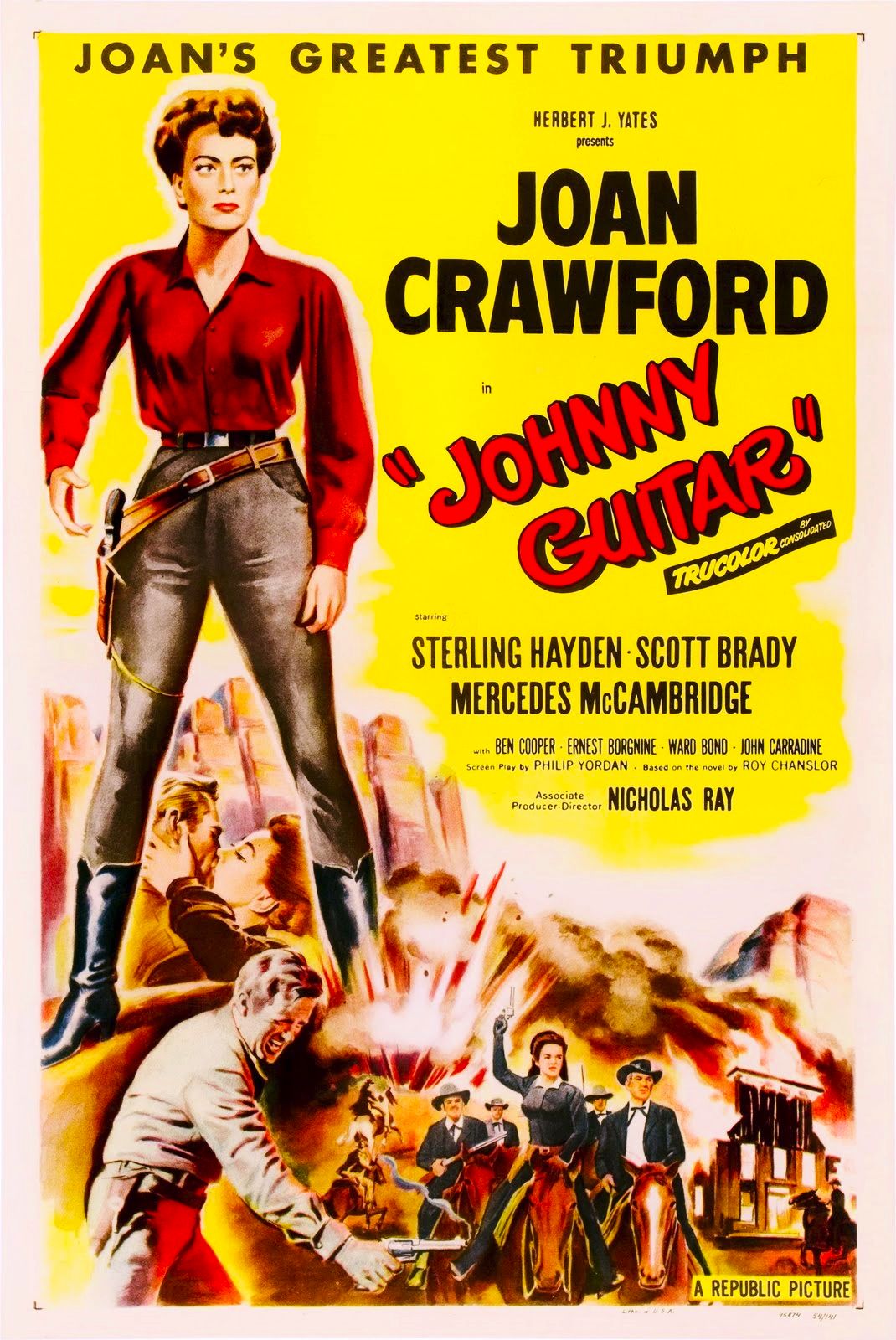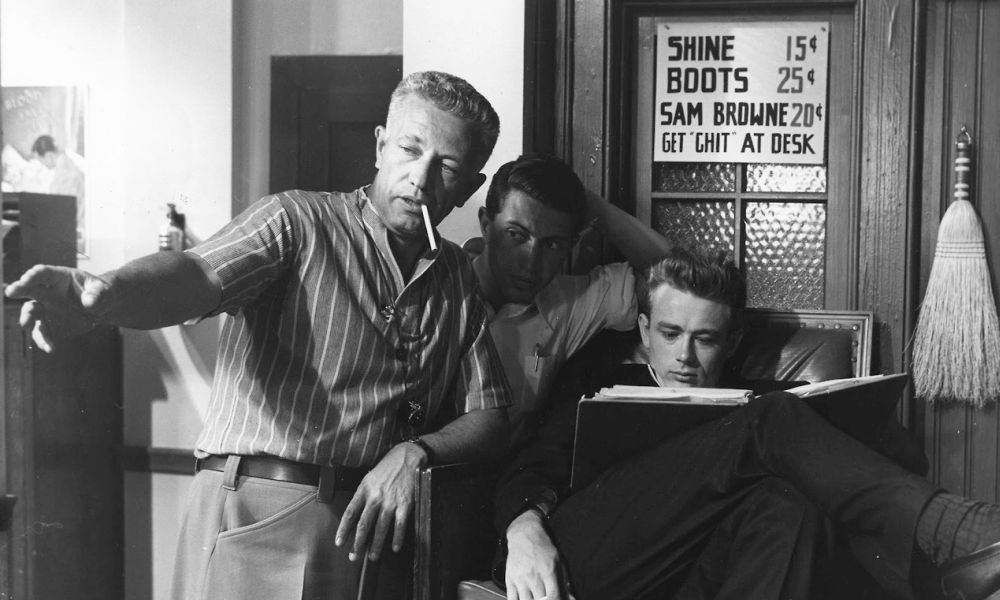
"One suspects what Ray represented for many of the younger Cahiers critics was the triumph of a very personal, autobiographical cinema forged into the studio styles of RKO, Republic, Paramount, Warners, Columbia, Fox and MGM; a restless, exploratory nature that tended to regard each project as an existential adventure and a foray of research into the background of a given topic." - Jonathan Rosenbaum (Cinema: A Critical Dictionary, 1980)
Nicholas Ray
Director / Screenwriter
(1911-1979) Born August 7, Galesville, Wisconsin, USA
Top 250 Directors / 50 Key Noir Directors
(1911-1979) Born August 7, Galesville, Wisconsin, USA
Top 250 Directors / 50 Key Noir Directors
Key Production Country: USA
Key Genres: Drama, Psychological Drama, Western, Adventure, Film Noir, Crime Drama, Action, Psychological Western, Family Drama, Epic, Melodrama, War Drama
Key Collaborators: Albert S. D'Agostino (Production Designer), Robert Ryan (Leading Actor), Philip Yordan (Screenwriter), George E. Diskant (Cinematographer), Sherman Todd (Editor), Jay C. Flippen (Leading Character Actor), Robert Peterson (Production Designer), Humphrey Bogart (Leading Actor), Jeffrey Hunter (Leading Actor), John Derek (Leading Actor), Gloria Grahame (Leading Actress), Charles Schnee (Screenwriter)
Key Genres: Drama, Psychological Drama, Western, Adventure, Film Noir, Crime Drama, Action, Psychological Western, Family Drama, Epic, Melodrama, War Drama
Key Collaborators: Albert S. D'Agostino (Production Designer), Robert Ryan (Leading Actor), Philip Yordan (Screenwriter), George E. Diskant (Cinematographer), Sherman Todd (Editor), Jay C. Flippen (Leading Character Actor), Robert Peterson (Production Designer), Humphrey Bogart (Leading Actor), Jeffrey Hunter (Leading Actor), John Derek (Leading Actor), Gloria Grahame (Leading Actress), Charles Schnee (Screenwriter)
"The cinema is Nicholas Ray." Godard’s magisterial statement has come in for a good deal of ridicule, not by any means entirely undeserved. Yet it contains a core of truth, especially if taken in reverse. Nicholas Ray is cinema in the sense that his films work entirely (and perhaps only) as movies, arrangements of space and movement charged with dramatic tension. Few directors demonstrate more clearly that a film is something beyond the sum of its parts. Consider only the more literary components—dialogue, plot, characterisation—and a film like Party Girl is patently trash. But on the screen the visual turbulence of Ray’s shooting style, the fractured intensity of his editing, fuse the elements into a valid emotional whole. The flaws are still apparent, but have become incidental." - Philip Kemp (International Dictionary of Films and Filmmakers, 2000)
"Few other directors had such a sense of the effect of locations and interiors on people's lives, or the visual or emotional relationship between indoors and outdoors, upstairs and downstairs...There is not a director who films or frames interior shots with Ray's dynamic, fraught grace and who thereby so explodes the rigid limits of "script" material. No one made CinemaScope so glorious a shape as Ray, because it seemed to set an extra challenge to his interior sensibility." - David Thomson (The New Biographical Dictionary of Film, 2002)
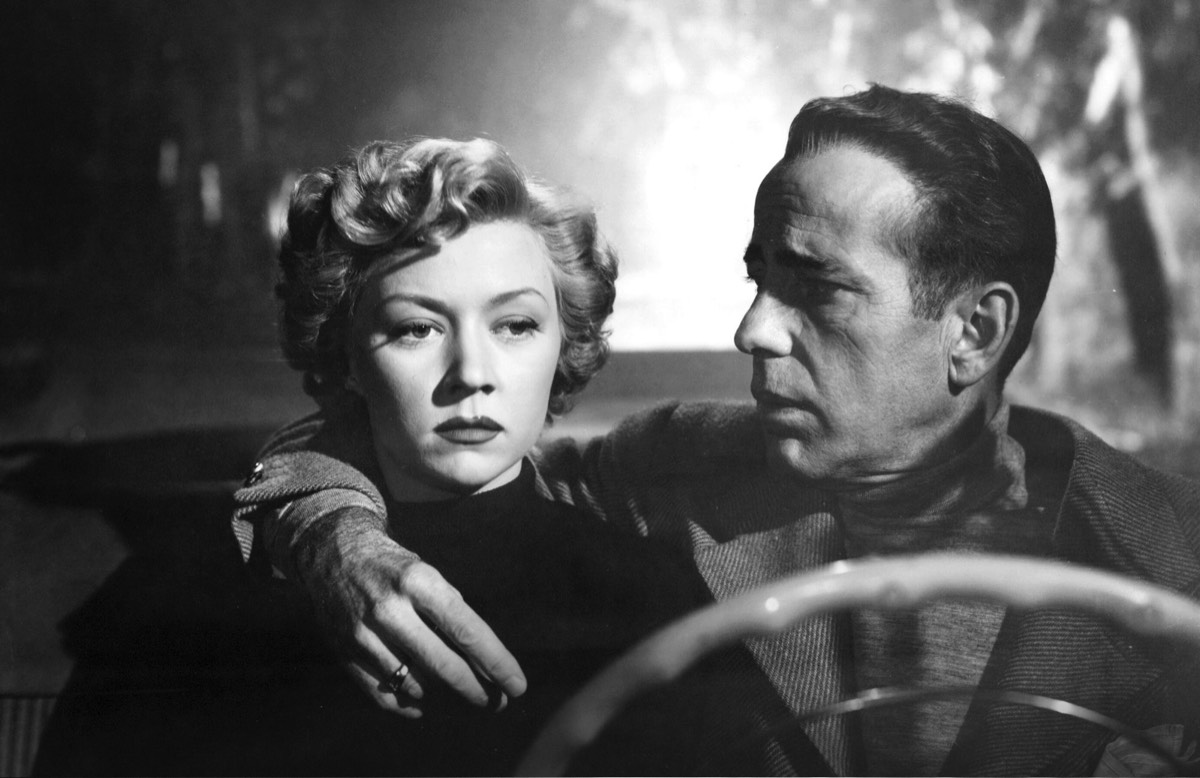
In a Lonely Place (1950)
"A huge cult has grown around this American director in recent years, bigger than almost any film-maker, and certainly one of Ray's uneven output, could warrant. His best films are clustered in his initial RKO Radio period - apart from Rebel Without a Cause, his only truly first-rate film outside that studio. Observers have professed to find various wonders in such later Ray films as Hot Blood, The True Story of Jesse James, Bitter Victory and others. I can only confess that their virtues escaped me at the time and, on a re-viewing, still do." - David Quinlan (Quinlan's Film Directors, 1999)
"Like many of the greatest Hollywood directors, Ray was incredibly versatile and able to work in a wide range of studio assignments and distinct genres – the Western, the police procedural, the juvenile delinquent film, the Biblical epic – without ever dulling the sharp edge of his innovative visual style nor loosening the intimate contract that he forged with his actors. Ray credited his brief apprenticeship with Frank Lloyd Wright for instilling in him “a love of the horizontal line” which would serve him well working in CinemaScope, a format he understood intuitively and was able to exploit to marvelous effect." - Harvard Film Archive, 2010
"One of the finest directors of the '50s, Nicholas Ray transcended the limitations of genre to create movies of a highly personal nature. Imbued with an intense, romantic pessimism and photographed with a rare feel for the emotional resonance of colour and space. Ray's films are distinguished by a passionate identification with society's outsiders, his sympathies possibly arising from his own troubled relationship with the film-making establishment." - Geoff Andrew (The Film Handbook, 1989)
"Those who form their own moral laws, whatever the consequences, people the films of Nicholas Ray. His tendency to cut his images on character movement makes his work extremely fluid." - William R. Meyer (The Film Buff's Catalog, 1978)
"In the theatre, words are eighty to eighty-five percent of the importance of what is happening to you for your comprehension. In film, words are about twenty percent. It's a different figure, but it's almost an opposite ratio. For the words are only a little bit of embroidery, a little bit of lacework." - Nicholas Ray (Directing the Film, 1976)
"My affection for CinemaScope initially was my affection for the horizontal line as I learned it from having been apprenticed to an architect who was someone named Frank Lloyd Wright." - Nicholas Ray (Directing the Film, 1976)
Selected Filmography
Loading filmography...
GF Greatest Films ranking (★ Top 1000 ● Top 2500)
T TSPDT N 1,000 Noir Films
R Jonathan Rosenbaum S Martin Scorsese
T TSPDT N 1,000 Noir Films
R Jonathan Rosenbaum S Martin Scorsese
Nicholas Ray / Fan Club
José Luis Guarner, Martin Scorsese, Peter von Bagh, Miguel Marías, Chris Fujiwara, Jesús Cortés, Miriam Bale, Geoff Andrew, Calum Marsh, Jonathan Rosenbaum, Sam Wigley, Rita Azevedo Gomes.
José Luis Guarner, Martin Scorsese, Peter von Bagh, Miguel Marías, Chris Fujiwara, Jesús Cortés, Miriam Bale, Geoff Andrew, Calum Marsh, Jonathan Rosenbaum, Sam Wigley, Rita Azevedo Gomes.
"Fan Club"
These film critics/filmmakers have, on multiple occasions, selected this director’s work within film ballots/lists that they have submitted.
These film critics/filmmakers have, on multiple occasions, selected this director’s work within film ballots/lists that they have submitted.