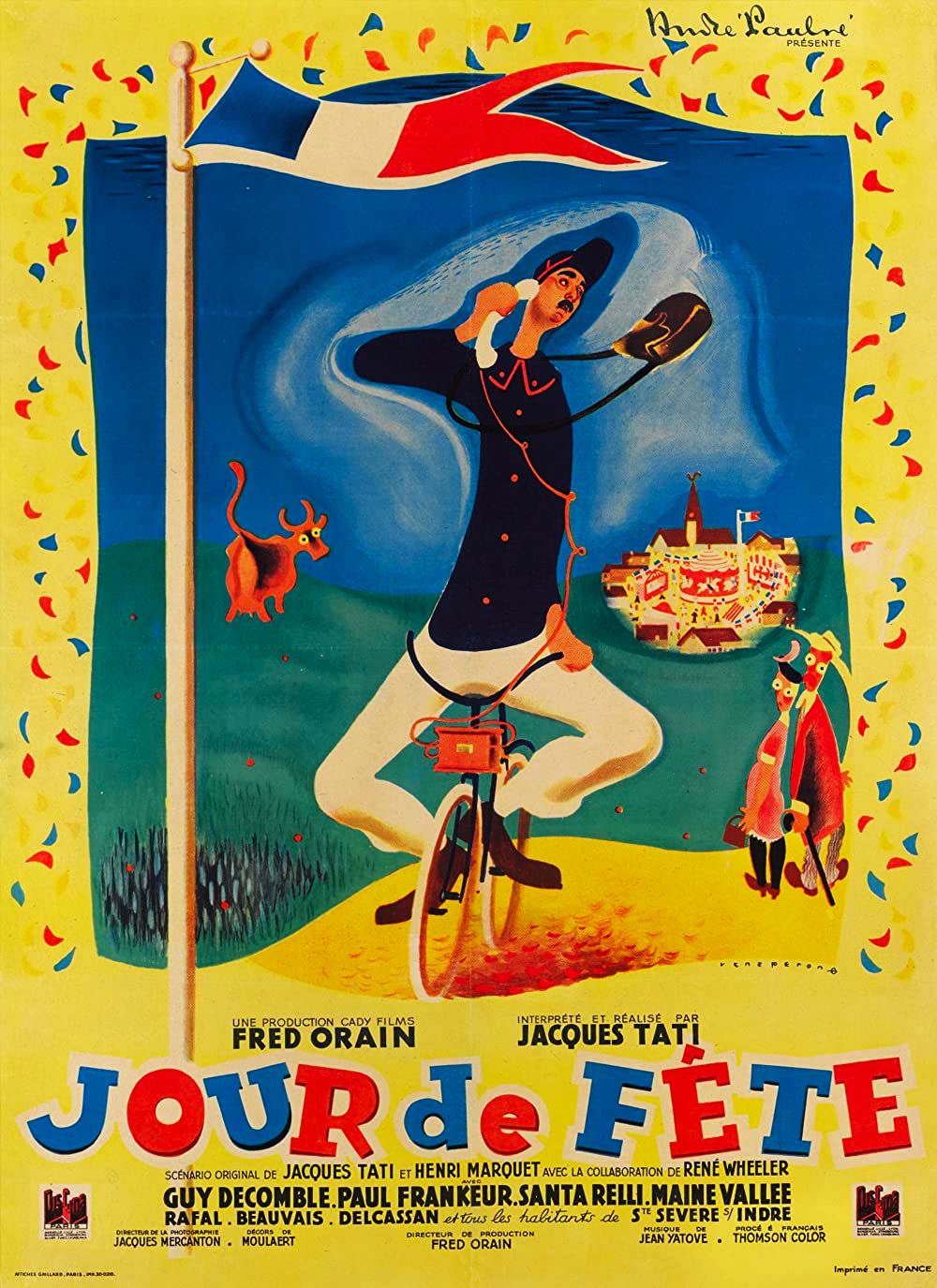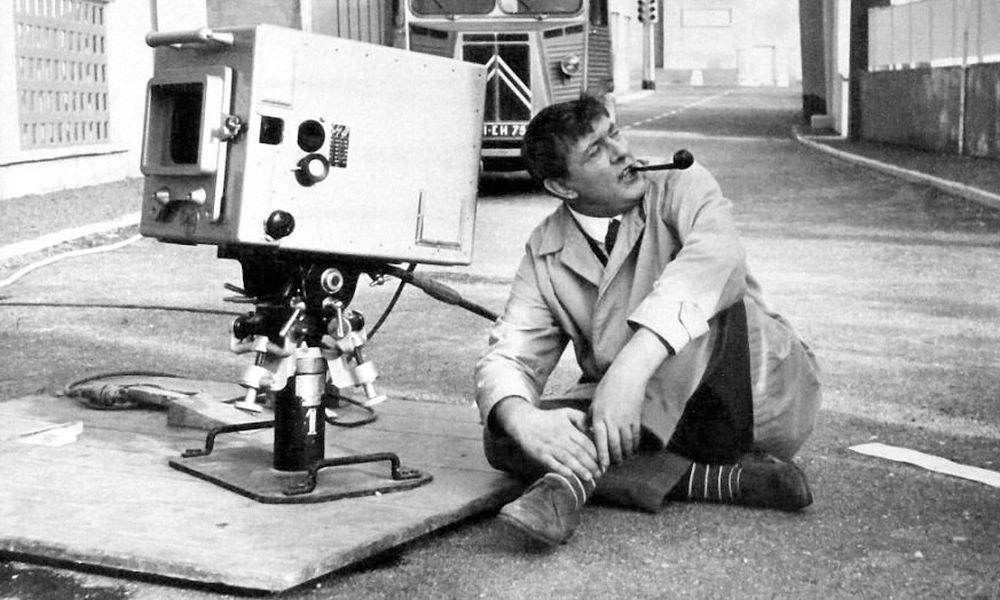
"There aren't too many filmmaking legends whose entire output can be counted on the fingers of both hands, but this towering, graceful, pipe-puffing auteur, a comedic genius often compared with Buster Keaton, achieved his reputation on the basis of six feature films." - Leonard Maltin's Movie Encyclopedia, 1995
Jacques Tati
Director / Screenwriter / Actor / Producer
(1907-1982) Born October 9, Le Pecq, Yvelines, France
Top 250 Directors
(1907-1982) Born October 9, Le Pecq, Yvelines, France
Top 250 Directors
Key Production Country: France
Key Genres: Comedy, Slapstick, Satire, Urban Comedy, Comedy of Manners, Comedy of Errors
Key Collaborators: Jacques Lagrange (Screenwriter), Fred Orain (Producer), Henri Marquet (Screenwriter), Jean Badal (Cinematographer), Jacques Mercanton (Cinematographer), Marcel Morreau (Editor), Sophie Tatischeff (Editor), Suzanne Baron (Editor), Jean-Pierre Zola (Leading Character Actor), Alain Romans (Composer), Charles Dumont (Composer), Jean Yatove (Composer)
Key Genres: Comedy, Slapstick, Satire, Urban Comedy, Comedy of Manners, Comedy of Errors
Key Collaborators: Jacques Lagrange (Screenwriter), Fred Orain (Producer), Henri Marquet (Screenwriter), Jean Badal (Cinematographer), Jacques Mercanton (Cinematographer), Marcel Morreau (Editor), Sophie Tatischeff (Editor), Suzanne Baron (Editor), Jean-Pierre Zola (Leading Character Actor), Alain Romans (Composer), Charles Dumont (Composer), Jean Yatove (Composer)
"An unlikely amalgam of Buster Keaton and Jean-Paul Sartre, Jacques Tati almost single-handedly kept the clowning tradition of silent cinema alive in the age of sound, while inventing an unlikely existential hero, Monsieur Hulot... Tati's first masterpiece, Monsieur Hulot's Holiday (1953), introduced the world to Hulot, a human cartoon cloaked in the uniform of the absent-minded... Hulot appeared in nearly all Tati's subsequent films. In Mon Oncle (1958), however, he is just one of central figures, with his relative's modernist house and its fiendishly inventive gadgets taking the starring role." - Lloyd Hughes (The Rough Guide to Film, 2007)
"He is one of the handful of film artists - the others would include Griffith, Eisenstein, Murnau, Bresson - who can be said to have transformed the medium at its most basic level, to have found a new way of seeing... Five films in 25 years is not an impressive record in a medium where stature is often measured by prolificity, but Playtime alone is a lifetime's achievement - a film that liberates and revitalizes the act of looking at the world." - Dave Kehr (International Dictionary of Films and Filmmakers, 1991)
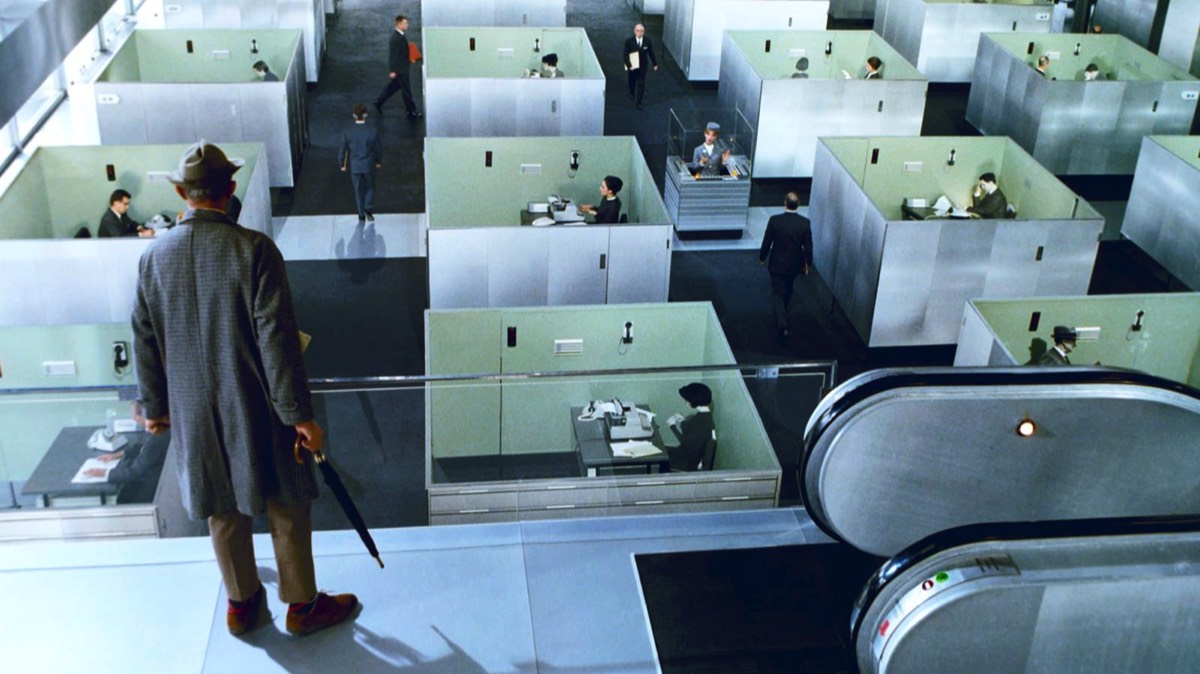
Playtime (1967)
"Though a great mime and an imaginative formal innovator, Jacques Tatischeff was prone to simplistic social satire that ultimately reduced his films' comic force. Indeed, it is fascinating to note that in his attempts to reveal the way modern technology depersonalises human existence, he should have created a style as cold, neat and aloof in its dependence on technique as the society he was castigating." - Geoff Andrew (The Film Handbook, 1989)
"His elaborate talent for refined visual comedy was expressed with the consistency and neatness of a great miniaturist. But the delicacy of line and mime was always vulgarized by humourless preoccupation with such issues as the aridity of modern urban life. Tati's theme was that personality is being warped by the unfeeling organization of our times. But his art so relied on detached, graceful views of mime that he omitted individuality." - David Thomson (The New Biographical Dictionary of Film, 2002)
"Jacques Tati is a chess master of modern film comedy, a creator of complex comic structures in which gag constructions and audience expectations become pawns on his cinematic board." - Paul Brenner (The Virgin International Encyclopedia of Film, 1992)
"Actor/writer/director Tati has made few films, but they nevertheless form a brilliant oeuvre devoted to gently poking fun at human foibles and institutions. Tati has done some memorable experimenting with sound in the movies." - William R. Meyer (The Film Buff's Catalog, 1978)
Selected Filmography
Loading filmography...
Jacques Tati / Fan Club
Jonathan Rosenbaum, Robbie Collin, José Manuel Costa, Matt Singer, Benny Safdie, Richard Brody, Jean A. Gili, Adrian Danks, Susan Vahabzadeh, Peter Tscherkassky, Olivier Assayas, Richard Lester.
Jonathan Rosenbaum, Robbie Collin, José Manuel Costa, Matt Singer, Benny Safdie, Richard Brody, Jean A. Gili, Adrian Danks, Susan Vahabzadeh, Peter Tscherkassky, Olivier Assayas, Richard Lester.
"Fan Club"
These film critics/filmmakers have, on multiple occasions, selected this director’s work within film ballots/lists that they have submitted.
These film critics/filmmakers have, on multiple occasions, selected this director’s work within film ballots/lists that they have submitted.