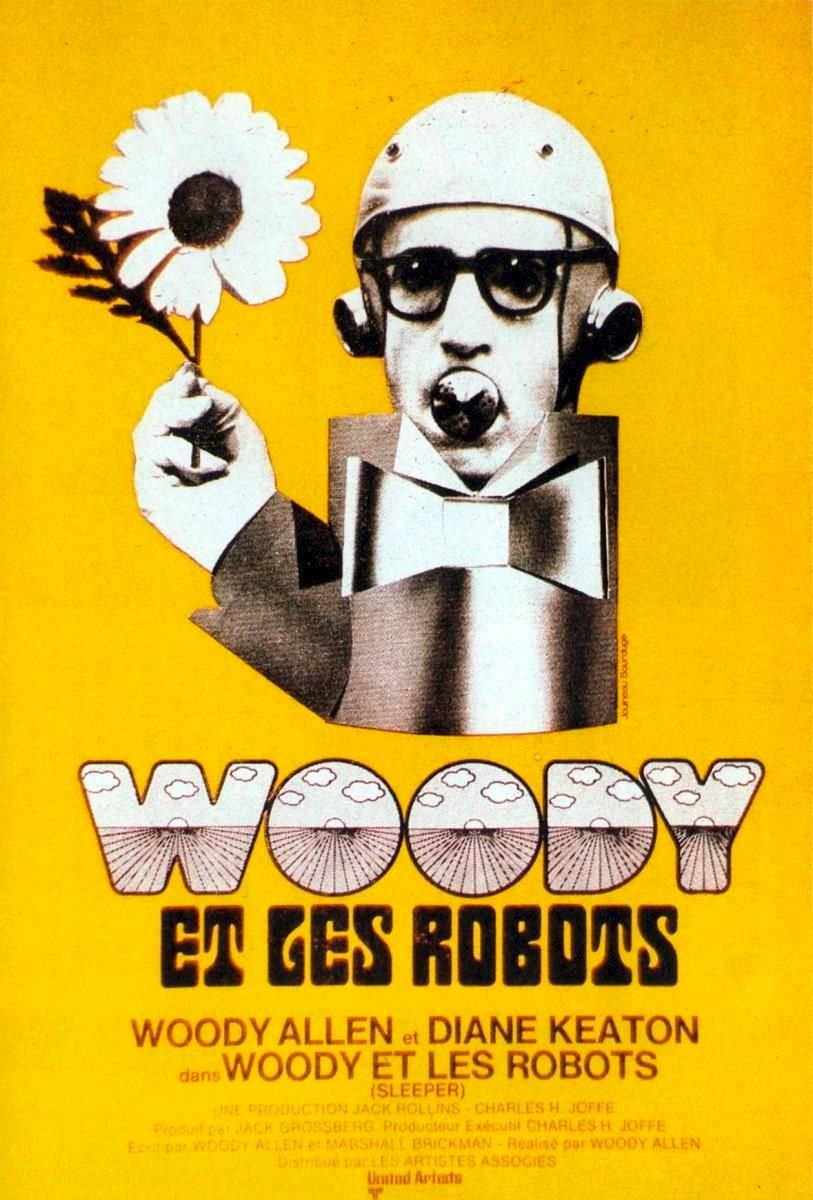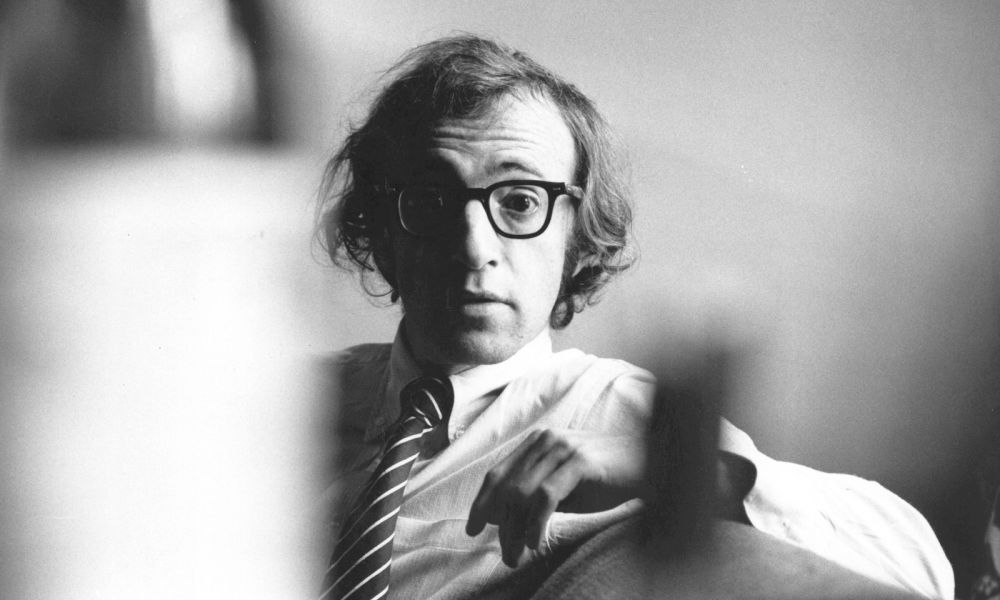
"Woody Allen has become the gold standard for comic writing and situational humor… The magic of Allen's cinema is found in the wry distinctions between tragic human relations that often tip toward horror, but are relieved by the saving grace of serendipitous timing." - Garrett Chaffin-Quiray (501 Movie Directors, 2007)
Woody Allen
Director / Screenwriter / Actor
(1935- ) Born November 30, The Bronx, New York City, New York, USA
Top 250 Directors
(1935- ) Born November 30, The Bronx, New York City, New York, USA
Top 250 Directors
Key Production Countries: USA, UK, France, Spain
Key Genres: Comedy, Drama, Romance, Romantic Comedy, Comedy Drama, Satire, Urban Comedy, Ensemble Film, Crime, Comedy of Manners, Fantasy Comedy, Quirky Comedy
Key Collaborators: Santo Loquasto (Production Designer), Susan E. Morse (Editor), Alisa Lepselter (Editor), Robert Greenhut (Producer), Letty Aronson (Producer), Mia Farrow (Leading Actress), Carlo Di Palma (Cinematographer), Stephen Tenenbaum (Producer), Gordon Willis (Cinematographer), Diane Keaton (Leading Character Actress), Mel Bourne (Production Designer), Charles H. Joffe (Producer)
Key Genres: Comedy, Drama, Romance, Romantic Comedy, Comedy Drama, Satire, Urban Comedy, Ensemble Film, Crime, Comedy of Manners, Fantasy Comedy, Quirky Comedy
Key Collaborators: Santo Loquasto (Production Designer), Susan E. Morse (Editor), Alisa Lepselter (Editor), Robert Greenhut (Producer), Letty Aronson (Producer), Mia Farrow (Leading Actress), Carlo Di Palma (Cinematographer), Stephen Tenenbaum (Producer), Gordon Willis (Cinematographer), Diane Keaton (Leading Character Actress), Mel Bourne (Production Designer), Charles H. Joffe (Producer)
"After Charlie Chaplin, Woody Allen is the most significant comedy auteur in American film history. For more than thirty years Allen, like Chaplin, has written, directed, and starred in groundbreaking comedies at the rate of nearly a film a year since his first movie, What’s New, Pussycat? (1965). Allen also has demonstrated a gift for literary humor, and his writing for The New Yorker magazine resulted in three well-received books: Getting Even (1971), Without Feathers (1975), and Side Effects (1980)." - Wes D. Gehring (Schirmer Encyclopedia of Film, 2007)
"While most other recent screen comics have aimed their lamebrain, slapdash spoofery at teenage audiences, Allen Stewart Konigsberg, as he was born, has alone been consistent in catering to more adult tastes. His is a comedy increasingly defined by character: notably, his own." - Geoff Andrew (The Film Handbook, 1989)
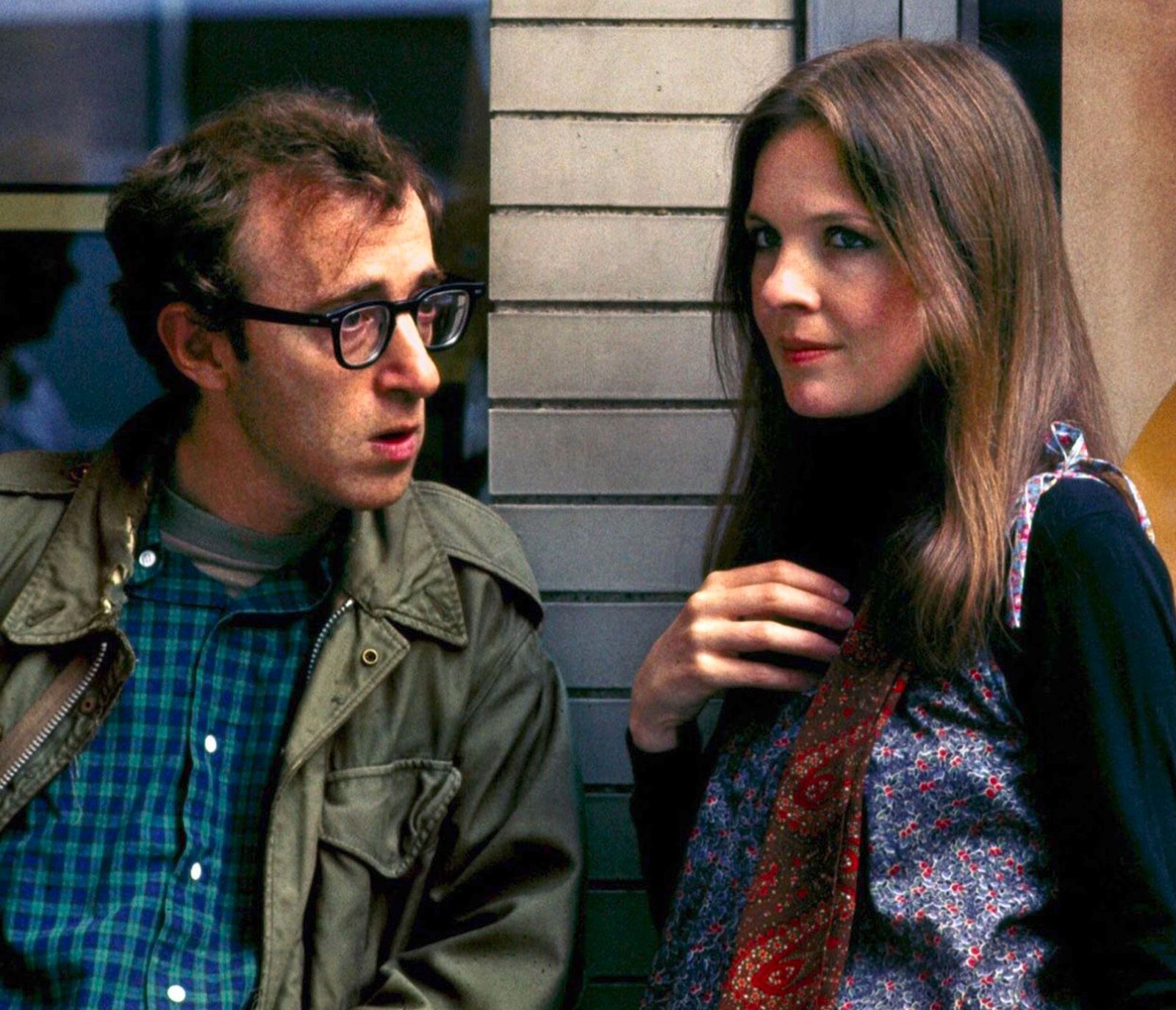
Annie Hall (1977)
"Allen's genuinely original voice in the cinema recalls writer-directors like Buster Keaton, Charlie Chaplin, and Preston Sturges, who dissect their portions of the American landscape primarily through comedy. In his creative virtuosity, Allen also resembles Orson Welles, whose visual and verbal wit, though contained in seemingly non-comic genres, in fact exposes the American character to satirical scrutiny." - Mark W. Estrin (International Dictionary of Films and Filmmakers, 1991)
"Certainly Allen has earned his place in the pantheon of film-makers. Born Allen Konigsberg to a working-class Brooklyn family, he wrote gags for Bob Hope and Sid Caesar before becoming a standup on the 1960s comedy circuit, where he would fumble with his glasses, gulp in faux-terror and deliver devastating one-liners with a boxer's timing. Shifting into movies, he pioneered a new brand of romantic comedy, installing himself as an emblematic urban everyman; the nerd who gets the girl (and then usually loses her). He pursued a flighty Diane Keaton in the Oscar-winning Annie Hall, romanced a teenage Mariel Hemingway in Manhattan, and fell foul of the Mob in 1984's Broadway Danny Rose… Throughout his 1970s and 80s heyday, Allen's patented blend of borscht-belt comedy, psychoanalysis and the tenets of the European art film was an intoxicating brew." - Xan Brooks (The Guardian, 2004)
"Great comedians almost always portray little men attempting to cope with the trappings of a civilization that is a bit too much for them, and Woody Allen is no exception. His insecurities - physical, sexual and emotional - are truly of monumental proportions." - The Movie Makers, 1974
"Films directed by the prolific Woody Allen have amused adult audiences over many years. In the best of them, however, there is pain lurking beneath the comic surface." - Ronald Bergan (Film - Eyewitness Companions, 2006)
"Woody Allen is one of the most distinctive American directors of the post-war period. Having released almost a film a year for 35 years, and articulated in literate terms the ethical misgivings of his generation. Allen has staged the vicissitudes of contemporary culture with more humour and pity than any other American director." - Richard Armstrong (The Rough Guide to Film, 2007)
"Like the perfect Freudian paradox, by seeming to reveal everything about himself he ends up revealing nothing at all. Perhaps the best way to look at his films is to remember the advice of that friendly little alien from Stardust Memories" 'You want to do mankind a real service? Tell funnier jokes.' As for searching for the 'real' Woody Allen? Don't waste your time, because there isn't one. Only Allan Stewart Konigsberg." - Andrew Syder (Contemporary North American Film Directors, 2002)
"Releasing a new film each year, he has become the quintessential New York film-maker, offering comic insights into love and death, show-business nostalgia and the intricate workings of the human heart." - Chambers Film Factfinder, 2006
"Allen's career falls into several distinct paths: the early, wilder comedies, such as Love and Death (1975); the more sophisticated comedies of relationships, such as Manhattan (1979); and the Bergmanesque dramas, such as Interiors (1978). One of the most successful and talented directors to have emerged in America since the late 1960s, his private-life troubles with wife Mia Farrow have at times threatened to overshadow his career." - The Movie Book, 1999
"Critically acclaimed director whose turbulent private life has occasionally tended to overshadow his undoubted talents as a film-maker... A rarity among American filmmakers, Allen always retains full creative control over his own material." - Mario Reading (The Movie Companion, 2006)
"In his films he seems so averse to acting yet so skittish about real confession that he risks dealing in self-glorification by neurosis. As an actor he stills momentum and betrays his films' reach for reality. Moreover, some of his films are so small and inconsequential, so much a matter of habit, that they make his productivity seem artificial... Still, there are Annie Hall, The Purple Rose of Cairo, Radio Days, Deconstructing Harry. That's four brilliant films that no one else could have dreamed of. And that's what it's about." - David Thomson (The New Biographical Dictionary of Film, 2002)
"Blends nightclub jokes, visual humor, and literary references into a wild sense of comedy. Has a good pictorial sense." - William R. Meyer (The Film Buff's Catalog, 1978)
"Actor, director, screenwriter, and playwright Woody Allen redefined film comedy during the 1970s, bringing a new measure of sophistication and personal complexity to the form. Drawing universal insight from the traditions of Yiddish humor, Allen established himself both as a comic Everyman and one of American filmmaking's true auteurs, writing and directing features which broke with established narrative conventions and infused the screen-comedy form with unprecedented substance and depth." - Jason Ankeny (Allmovie)
"If my films don't show a profit, I know I'm doing something right." - Woody Allen
"If my films make one more person miserable, I'll feel I have done my job." - Woody Allen
"Once I make it, I don’t follow it anymore. Distribution is no longer what it was. Now distribution is two weeks in a cinema… And then that’s it. I mean, Annie Hall played in movie houses in New York for a little bit over a year. It’d be in one theater for six, seven months, and then somebody would pick it up and it would hang around another few months. The whole business has changed, and not in an appealing way. All the romance of filmmaking is gone." - Woody Allen (The Hollywood Reporter, 2024)
Selected Filmography
Loading filmography...
Woody Allen / Favourite Films
Amarcord (1973) Federico Fellini, Bicycle Thieves (1948) Vittorio De Sica, Citizen Kane (1941) Orson Welles, The Discreet Charm of the Bourgeoisie (1972) Luis Buñuel, 8½ (1963) Federico Fellini, The 400 Blows (1959) François Truffaut, La Grande illusion (1937) Jean Renoir, Paths of Glory (1957) Stanley Kubrick, Rashomon (1950) Akira Kurosawa, The Seventh Seal (1957) Ingmar Bergman.
Source: Sight & Sound (2012)
Amarcord (1973) Federico Fellini, Bicycle Thieves (1948) Vittorio De Sica, Citizen Kane (1941) Orson Welles, The Discreet Charm of the Bourgeoisie (1972) Luis Buñuel, 8½ (1963) Federico Fellini, The 400 Blows (1959) François Truffaut, La Grande illusion (1937) Jean Renoir, Paths of Glory (1957) Stanley Kubrick, Rashomon (1950) Akira Kurosawa, The Seventh Seal (1957) Ingmar Bergman.
Source: Sight & Sound (2012)
Woody Allen / Fan Club
Mike D'Angelo, Milan Pavlovic, Olivier Curchod, Grégory Valens, Edgar Wright, Peter Bradshaw, David Wain, Gustavo Spolidoro, Noémie Lvovsky, Josh Bell, Gerard Krawczyk, Jordan Hoffman.
Mike D'Angelo, Milan Pavlovic, Olivier Curchod, Grégory Valens, Edgar Wright, Peter Bradshaw, David Wain, Gustavo Spolidoro, Noémie Lvovsky, Josh Bell, Gerard Krawczyk, Jordan Hoffman.
"Fan Club"
These film critics/filmmakers have, on multiple occasions, selected this director’s work within film ballots/lists that they have submitted.
These film critics/filmmakers have, on multiple occasions, selected this director’s work within film ballots/lists that they have submitted.