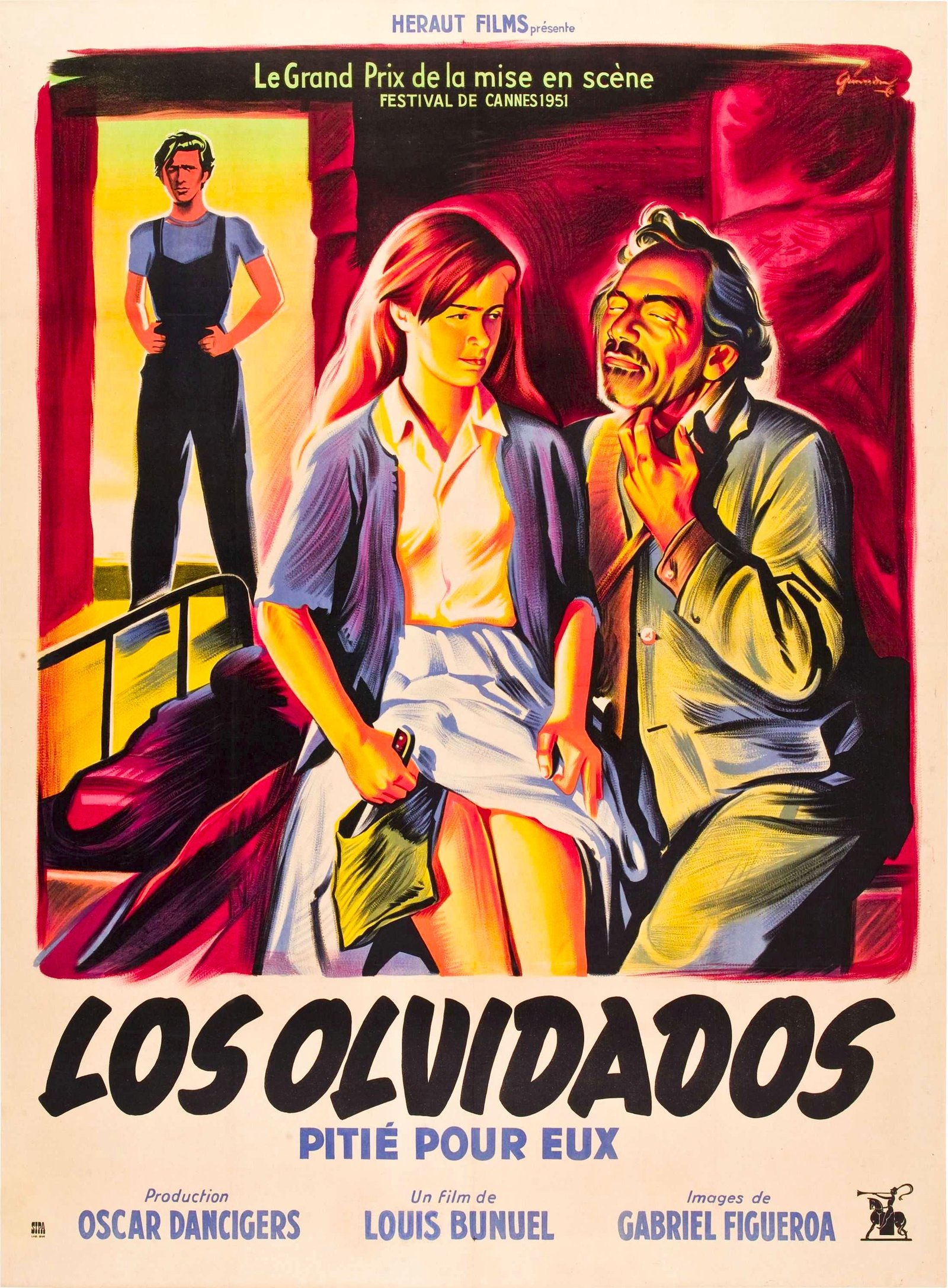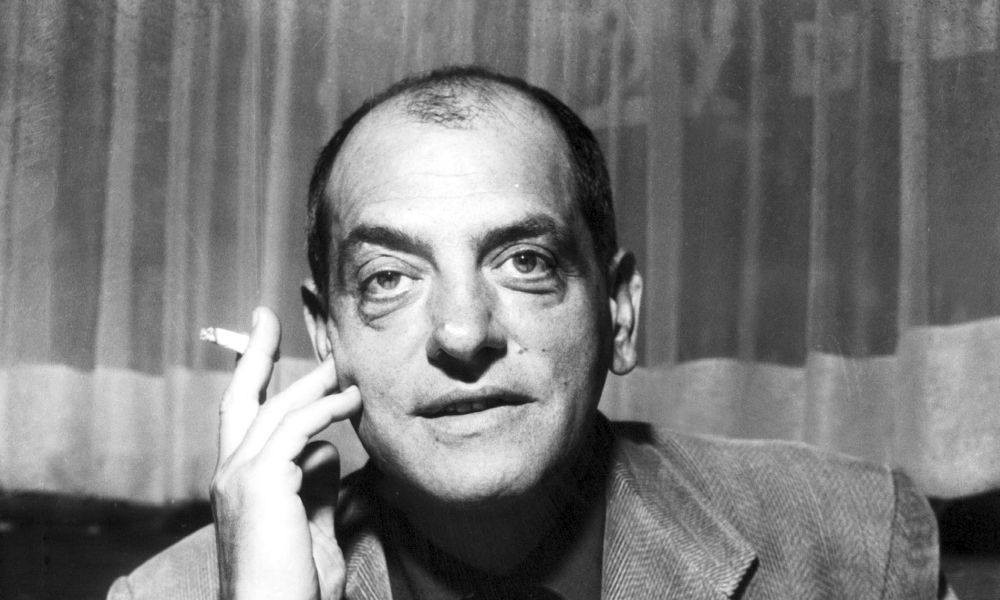
"Buñuel's work shows a continuity of interests and a consistency of achievement unmatched in the history of the cinema. Uncompromising, even when he has worked under the most constricting commercial conditions, he has remained faithful to his artistic origins in surrealism and the cultural heritage of his native Spain." - David Robinson (The International Encyclopedia of Film, 1972)
Luis Buñuel
Director / Screenwriter / Editor / Producer
(1900-1983) Born February 22, Calanda, Aragon, Spain
Top 250 Directors
(1900-1983) Born February 22, Calanda, Aragon, Spain
Top 250 Directors
Key Production Countries: Mexico, France, Italy, Spain
Key Genres: Satire, Drama, Black Comedy, Comedy, Surrealist Film, Comedy Drama, Avant-garde/Experimental, Short Film, Psychological Drama, Religious Comedy, Adventure Drama, Melodrama
Key Collaborators: Carlos Savage (Editor), Óscar Dancigers (Producer), Edward Fitzgerald (Production Designer), Luis Alcoriza (Screenwriter), Gabriel Figueroa (Cinematographer), Jean-Claude Carrière (Screenwriter), Michel Piccoli (Leading Character Actor), Luis Aceves Castaneda (Leading Character Actor), Julio Alejandro (Screenwriter), Serge Silberman (Producer), Julien Bertheau (Leading Character Actor), Claudio Brook (Character Actor)
Key Genres: Satire, Drama, Black Comedy, Comedy, Surrealist Film, Comedy Drama, Avant-garde/Experimental, Short Film, Psychological Drama, Religious Comedy, Adventure Drama, Melodrama
Key Collaborators: Carlos Savage (Editor), Óscar Dancigers (Producer), Edward Fitzgerald (Production Designer), Luis Alcoriza (Screenwriter), Gabriel Figueroa (Cinematographer), Jean-Claude Carrière (Screenwriter), Michel Piccoli (Leading Character Actor), Luis Aceves Castaneda (Leading Character Actor), Julio Alejandro (Screenwriter), Serge Silberman (Producer), Julien Bertheau (Leading Character Actor), Claudio Brook (Character Actor)
"In short, Buñuel’s work, far from merely entertaining audiences, grappled with issues that were and are to do with how to live one’s life in the face of pressures that, in his view, seek to deny life. His career as a film-maker was one of uncompromising commitment, and this undoubtedly accounts for the lasting vitality of his films." - Gwynne Edwards (A Companion to Luis Buñuel, 2005)
"Perhaps the easiest way to deal with Buñuel's career is to suggest that certain avatars of Luis Buñuel may be identified at different historical periods. The first Luis Buñuel is the Surrealist. The second Luis Buñuel is the all-but-anonymous journeyman film professional. The third is the Mexican director. The fourth is the Luis Buñuel who gradually made his way back to Europe by way of a few French films made in alternation with films in Mexico. The last Luis Buñuel, following his emergence in the mid-1960s, was the past master, at once awesome and beloved." - E. Rubinstein (International Dictionary of Films and Filmmakers, 1991)
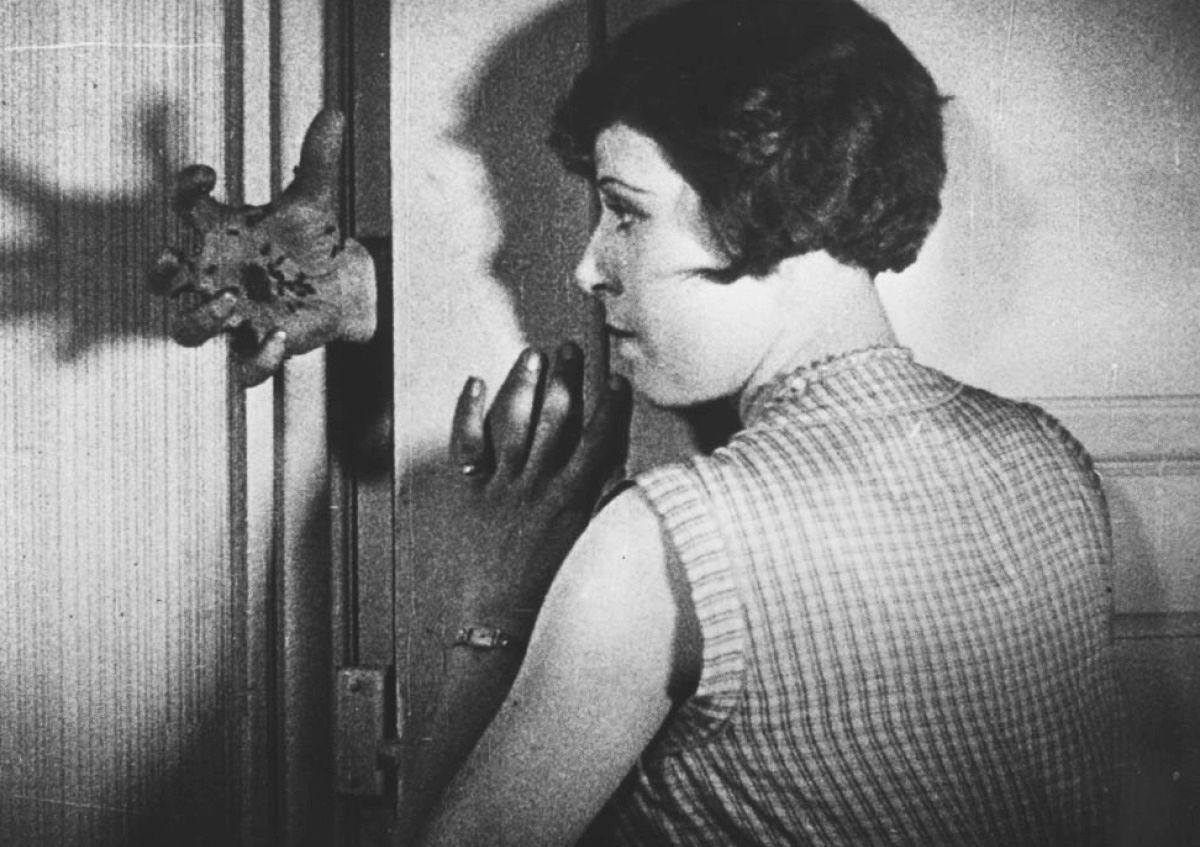
Un Chien andalou (1928)
"Though the Church and bourgeoisie were his prime targets, beggars might be thieves and rapists, blind men paedophiles, virginal cripples harridans, and housewives afternoon whores; all were calmly and coolly examined as if insects under the microscope, with the fascinated, bemused Buñuel never hammering home a moral sermon, but merely revealing, in a strange spirit of sympathy, the fundamental comedy of the human condition. He was, in short, one of cinema's greatest, most unassertive masters." - Geoff Andrew (The Director's Vision, 1999)
"Anti-establishment to the core and arguably one of the original enfante terrible filmmakers, Luis Buñuel had three preoccupations, no, obsessions that he charted for his entire career: religion, class and sexual desire… A blasphemous heretic to the church, several of Buñuel's films were flagrant censures of religion and the Catholic church, which saw him fleeing Spain more than once during his career… Buñuel was an incorrigible scourge of hypocrites, authority and the bourgeoise, even while he continued to operate within the system (he was under contract to Hollywood studios through much of the 1940s, though no work came of it, and won an Academy Award late in his career), his films often proving to be delicious and delirious screeds, even if they were often more soulful than his critics believe." - The Playlist Staff (IndieWire, 2013)
"Although Buñuel made some haunting films in the early 1950s - most notably El Bruto and El, the richest period of his work runs from 1958 to 1970, years in which Buñuel produced a series of shattering works that could almost claim to be considered masterpieces of the cinema." - David Quinlan (Quinlan's Film Directors, 1999)
"Luis Buñuel's canon is a strange and wondrous dream factory. His episodic narratives frequently break off and shift their shape, and the deranged imagery and absurdist situations follow the rigorous patterns of dream logic. Buñuel wrote "The cinema seems to have been invented to express the life of the subconscious" and his films seek to lay bare both the repressed desires buried in the human mind and the social hypocrisies lying in plain sight that we're usually content to sleepwalk past." - Jessica Winter (The Rough Guide to Film, 2007)
"For nearly half a century, Buñuel took glee in lighting the fuse under bourgeois notions of good taste and propriety, saving his most savage barbs for what he saw as the complacency of the middle classes and the hypocrisies of the Catholic church. He found himself in hot water plenty of times as a result, but his reaction was to drink it up, like one of the daily martinis he professed never to miss." - Sam Wigley (BFI, 2017)
"A comedian of anarchy, Buñuel turned any project he was given (or chose to take) into yet another facet of an all-consuming vision in which the Church, the middle classes, the worthy and the dull became fodder for his explosive visions. He despised the cinema of 'effect', and chose to tell his stories and illustrate his themes in as uncomplicated a way as possible - but the depth of thought behind each image always come through." - Mario Reading (The Movie Companion, 2006)
"His best films use black comedy, sly satire and alarming surrealistic imagery to express his hatred of the Catholic church and his disregard for conventional morality." - Chambers Film Factfinder, 2006
"Surreal comedies laced with complex psychology are representative of Bunuel's talents." - William R. Meyer (The Film Buff's Catalog, 1978)
"Fortunately, somewhere between chance and mystery lies imagination, the only thing that protects our freedom, despite the fact that people keep trying to reduce it or kill it off altogether." - Luis Buñuel
Selected Filmography
Loading filmography...
Luis Buñuel / Favourite Films
L'Âge d'or (1930) Luis Buñuel, Battleship Potemkin (1925) Sergei Eisenstein, Bicycle Thieves (1948) Vittorio De Sica, Cavalcade (1933) Frank Lloyd, Dead of Night (1945) Alberto Cavalcanti, Basil Dearden, Robert Hamer & Charles Crichton, The Gold Rush (1925) Charles Chaplin, I Am a Fugitive from a Chain Gang (1932) Mervyn LeRoy, Portrait of Jennie (1948) William Dieterle, Underworld (1927) Josef von Sternberg, White Shadows in the South Seas (1928) W.S. Van Dyke.
Source: Cinematheque Belgique (1952)
L'Âge d'or (1930) Luis Buñuel, Battleship Potemkin (1925) Sergei Eisenstein, Bicycle Thieves (1948) Vittorio De Sica, Cavalcade (1933) Frank Lloyd, Dead of Night (1945) Alberto Cavalcanti, Basil Dearden, Robert Hamer & Charles Crichton, The Gold Rush (1925) Charles Chaplin, I Am a Fugitive from a Chain Gang (1932) Mervyn LeRoy, Portrait of Jennie (1948) William Dieterle, Underworld (1927) Josef von Sternberg, White Shadows in the South Seas (1928) W.S. Van Dyke.
Source: Cinematheque Belgique (1952)
Luis Buñuel / Fan Club
Guillermo del Toro, Aki Kaurismäki, David Robinson, Jeffrey M. Anderson, Andrei Tarkovsky, Luis Ospina, Derek Malcolm, Gene Moskowitz, Gavin Lambert, Fernando Lopes, Miguel Marías, Andrew Sarris.
Guillermo del Toro, Aki Kaurismäki, David Robinson, Jeffrey M. Anderson, Andrei Tarkovsky, Luis Ospina, Derek Malcolm, Gene Moskowitz, Gavin Lambert, Fernando Lopes, Miguel Marías, Andrew Sarris.
"Fan Club"
These film critics/filmmakers have, on multiple occasions, selected this director’s work within film ballots/lists that they have submitted.
These film critics/filmmakers have, on multiple occasions, selected this director’s work within film ballots/lists that they have submitted.