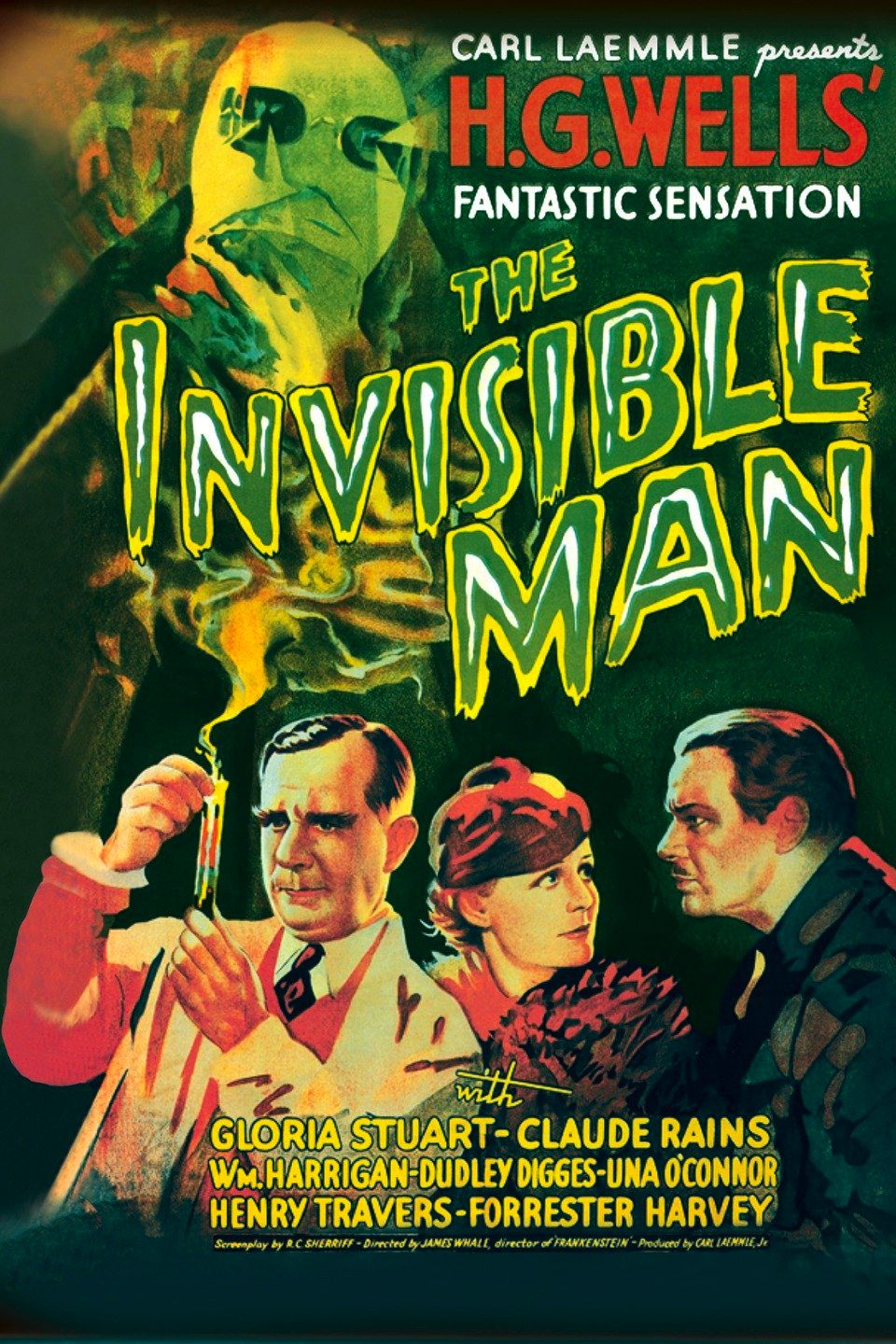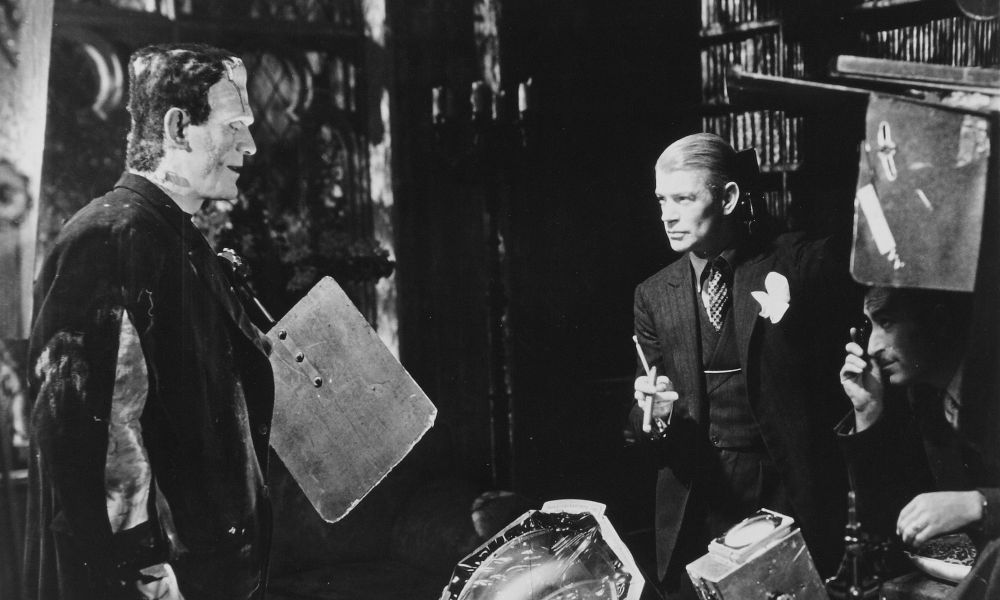
"He is best remembered for his four stylish horror films - Frankenstein, The Old Dark House, The Invisible Man, and The Bride of Frankenstein - excellent examples of the genre, noted for their semi-expressionist mood and understated black humor. But he also directed refined and intelligent films in other genres, usually adaptations from literature or the stage." - The Film Encyclopedia, 2012
James Whale
Key Production Country: USA
Key Genres: Sci-Fi Horror, Science Fiction, Horror, Comedy, Drama, Monster Film, Melodrama
Key Collaborators: Charles D. Hall (Production Designer), Carl Laemmle Jr. (Producer), Ted J. Kent (Editor), Arthur Edeson (Cinematographer), Dwight Frye (Character Actor), Boris Karloff (Leading Actor), Gloria Stuart (Leading Actress), R.C. Sherriff (Screenwriter), John J. Mescall (Cinematographer), Clarence Kolster (Editor), Mae Clarke (Leading Actress), Colin Clive (Leading Actor)
Key Genres: Sci-Fi Horror, Science Fiction, Horror, Comedy, Drama, Monster Film, Melodrama
Key Collaborators: Charles D. Hall (Production Designer), Carl Laemmle Jr. (Producer), Ted J. Kent (Editor), Arthur Edeson (Cinematographer), Dwight Frye (Character Actor), Boris Karloff (Leading Actor), Gloria Stuart (Leading Actress), R.C. Sherriff (Screenwriter), John J. Mescall (Cinematographer), Clarence Kolster (Editor), Mae Clarke (Leading Actress), Colin Clive (Leading Actor)
"Apart from Tod Browning, he was Hollywood's master of the horror film during the Thirties and responsible for four key films of the genre: Frankenstein, The Invisible Man, The Old Dark House, and The Bride of Frankenstein - films with a highly sophisticated sense of fantasy and a tone of self-mockery and black humor. Apart from these he made several elegant melodramas, including the excellent Remember Last Night (35) and Show Boat (36)." - Georges Sadoul (Dictionary of Film Makers, 1972)
"Known as the excellent director of horror thrillers (Frankenstein, 31; The Invisible Man, 33; The Bride of Frankenstein, 35), Whale also made quality drama (Journey's End, 30), comedy (The Great Garrick, 37), and a classic musical (Show Boat, 36)." - William R. Meyer (The Film Buff's Catalog, 1978)
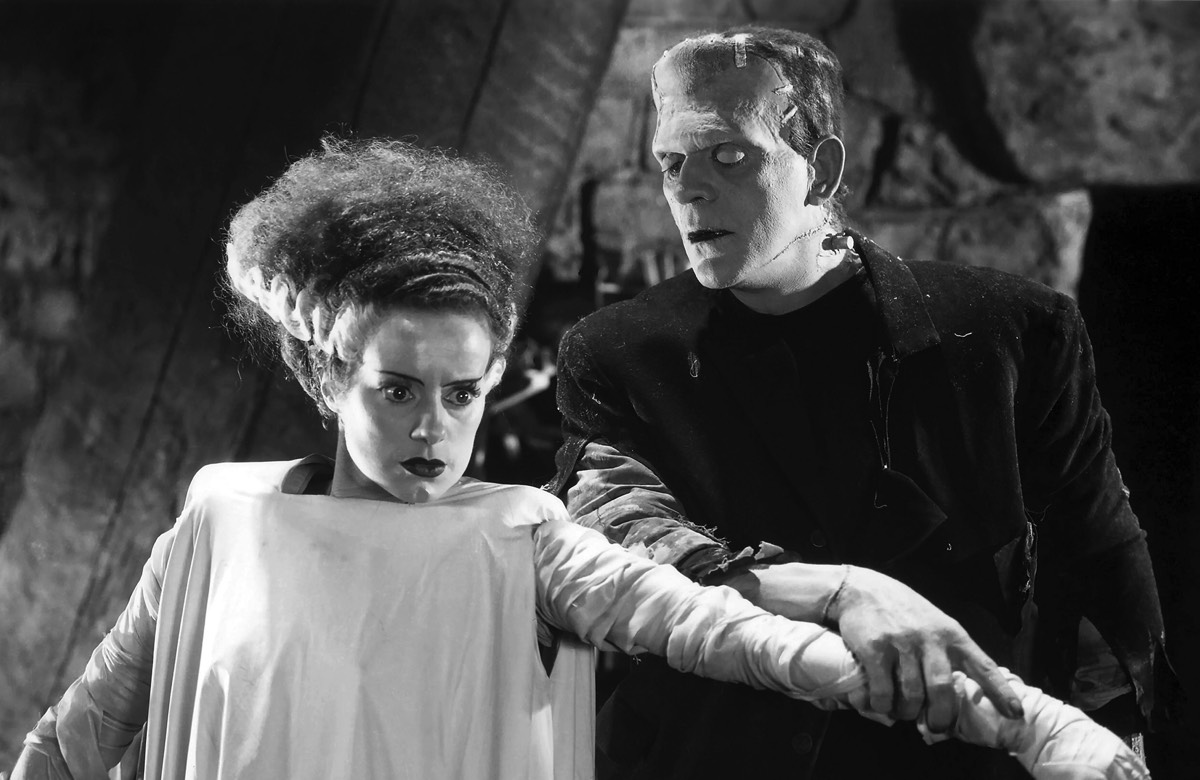
Bride of Frankenstein (1935)
“While he is best remembered for directing some of Hollywood's most enduring horror pictures, Whale was a sensitive, artistic craftsman whose ambitions went beyond motion pictures. He'd already been a newspaper cartoonist, painter, actor, and set designer, before coming to Hollywood in 1930 to helm a screen version of the celebrated antiwar play Journey's End, which he'd directed on the London stage… Whale's non-horror output isn't as well known, but encompasses many striking films, including a stark and powerful Waterloo Bridge (1931, much grittier than the later MGM remake).” - Leonard Maltin's Movie Encyclopedia, 1995
"The name of James Whale is almost always linked with Frankenstein's monster, which he brought to life in two horror film classics… It is perhaps his 'Englishness' that frees his horror films, which are full of self-mocking humour, from the Germanic expressionism usually associated with early examples of the genre. He moved smoothly from Frankenstein to Hammerstein with the best of three screen versions of Show Boat (1936)." - Ronald Bergan (Film - Eyewitness Companions, 2006)
"Whale created a style inspired by German Expressionism, depicting a personal world of oppression and insecurity. His fluid camera painted a convincing three-dimensional space, while his penchant for close-ups, together with a talent for inspired casting, brought out the best from his performers. With Frankenstein he provided the shape and look to a mode that became a fully-fledged genre at Universal Studios." - Dejan Ognjanovic (501 Movie Directors: A Comprehensive Guide to the Greatest Filmmakers, 2007)
"Most famous for the four horror films he made at Universal in the early '30s, James Whale is best regarded as an eccentric, erratic but highly original talent. Due to the current rarity of his non-horror work, however, his versatility is now often overlooked… If Whale's decline is hard to fathom (certain writers suggest that his homosexuality may have been a factor), his films of the early '30s were among the most consistently witty, inventive and stylish of the period. Very few directors managed to combine wit, self-parody, suspense and technical excellence so attractively." - Geoff Andrew (The Film Handbook, 1989)
Selected Filmography
Loading filmography...
James Whale / Fan Club
Guillermo del Toro, Joe Dante, Jeffrey M. Anderson, David Rooney, John Russell Taylor, Kim Newman, Leslie Halliwell, David Edelstein, Edgar Wright, John Carpenter, Filipe Furtado, Kim Morgan.
Guillermo del Toro, Joe Dante, Jeffrey M. Anderson, David Rooney, John Russell Taylor, Kim Newman, Leslie Halliwell, David Edelstein, Edgar Wright, John Carpenter, Filipe Furtado, Kim Morgan.
"Fan Club"
These film critics/filmmakers have, on multiple occasions, selected this director’s work within film ballots/lists that they have submitted.
These film critics/filmmakers have, on multiple occasions, selected this director’s work within film ballots/lists that they have submitted.