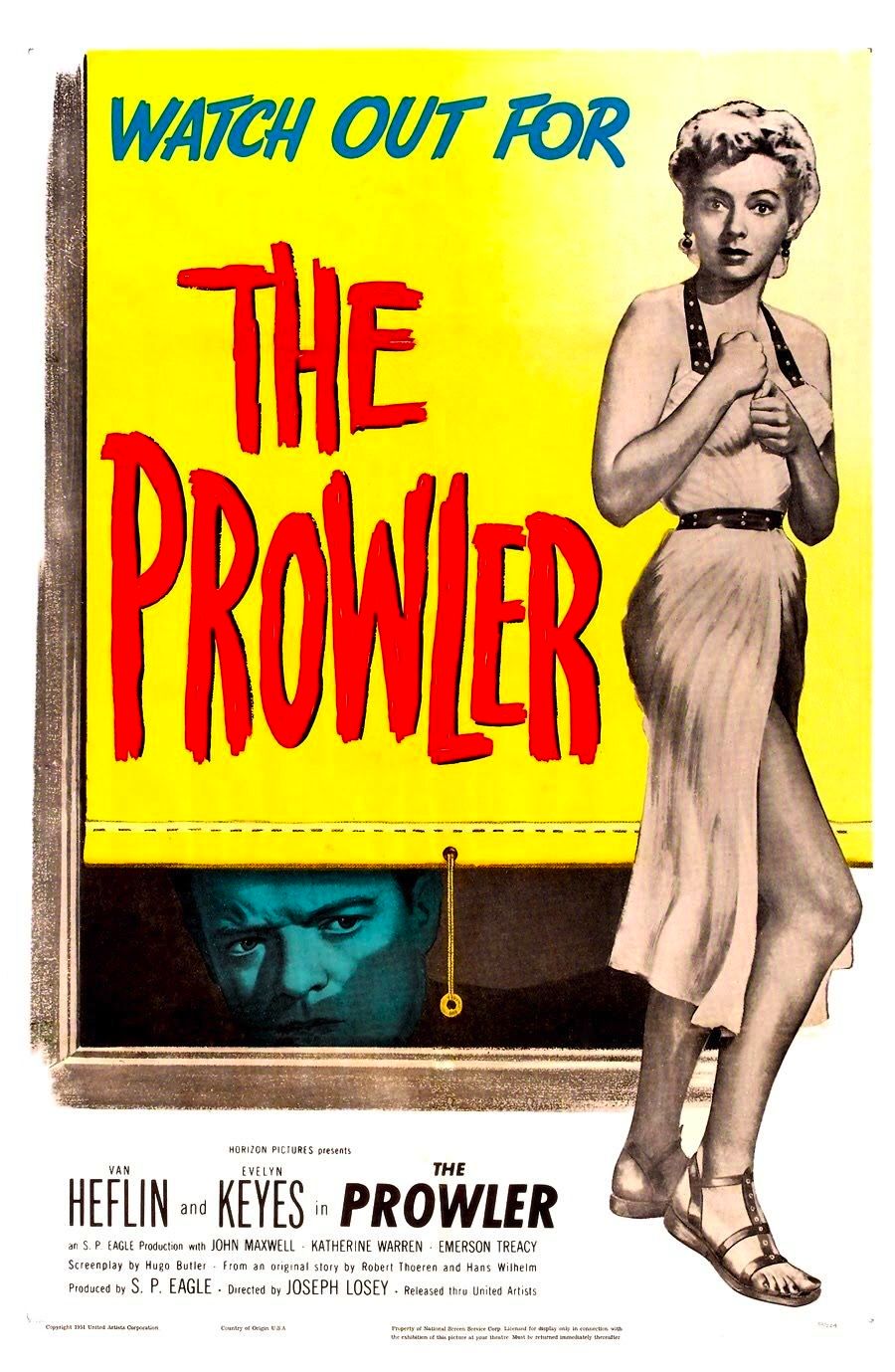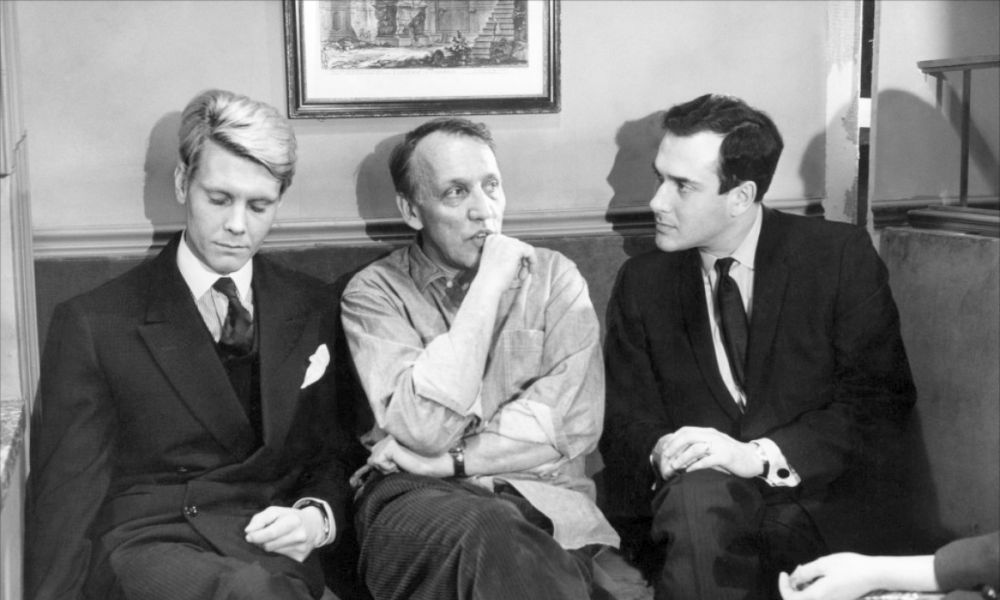
"Film-makers as far apart as Alain Resnais and Bernardo Bertolucci recognize him as a master of the art. To them, it matters little that he has often been obliged to work with unsuitable or unworthy material. His direction of actors, his handling of camera - his mise-en-scène, in short - have triumphed over many a weak script." - Richard Roud (Cinema: A Critical Dictionary, 1980)
Joseph Losey
Director / Producer / Screenwriter
(1909-1984) Born January 14, La Crosse, Wisconsin, USA
Top 250 Directors / 50 Key Noir Directors
(1909-1984) Born January 14, La Crosse, Wisconsin, USA
Top 250 Directors / 50 Key Noir Directors
Key Production Countries: UK, USA, France, Italy
Key Genres: Drama, Psychological Drama, Thriller, Romantic Drama, Film Noir, Crime Drama, Family Drama, Psychological Thriller, Short Film
Key Collaborators: Reginald Beck (Editor), Richard Macdonald (Production Designer), Norman Priggen (Producer), Reginald Mills (Editor), Dirk Bogarde (Leading Actor), Gerry Fisher (Cinematographer), Stanley Baker (Leading Actor), Evan Jones (Screenwriter), Ben Barzman (Screenwriter), Alexander Knox (Leading Character Actor), Jeanne Moreau (Leading Actress), Harold Pinter (Screenwriter/Character Actor)
Key Genres: Drama, Psychological Drama, Thriller, Romantic Drama, Film Noir, Crime Drama, Family Drama, Psychological Thriller, Short Film
Key Collaborators: Reginald Beck (Editor), Richard Macdonald (Production Designer), Norman Priggen (Producer), Reginald Mills (Editor), Dirk Bogarde (Leading Actor), Gerry Fisher (Cinematographer), Stanley Baker (Leading Actor), Evan Jones (Screenwriter), Ben Barzman (Screenwriter), Alexander Knox (Leading Character Actor), Jeanne Moreau (Leading Actress), Harold Pinter (Screenwriter/Character Actor)
"Joseph Losey's Hollywood career ended in 1951 after five films. He was named as a communist in 1951, and moved to England, where he worked for the rest of his life. Not until 1956, with his film Time Without Pity (1957), was he able to use his real name; the arm of the blacklist was long. With the exception of The Boy with the Green Hair (1948), Losey's U.S. films were all examples of film noir, the domain where the Hollywood left-wing excelled in its critique of an alienated and alienating society, where fate was economic and not mere bad luck... Sadly, from 1962 on, Losey's work became self-conscious and self-indulgent but delighted those who had understood nothing of his earlier movies. Only the exemplary King & Country (1964) and The Go-Between (1970) reach the level of his finest film noirs." - Reynold Humphries (501 Movie Directors, 2007)
"Like many directors, Losey seems more effective when he transcends conventions than when he avoids them altogether. Genre movies give him the distancing he needs to writhe expressively on the screen. By contrast, movies about Life and Time and The World seem to make him relatively subdued, functional, and impersonal." - Andrew Sarris (The American Cinema, 1968)
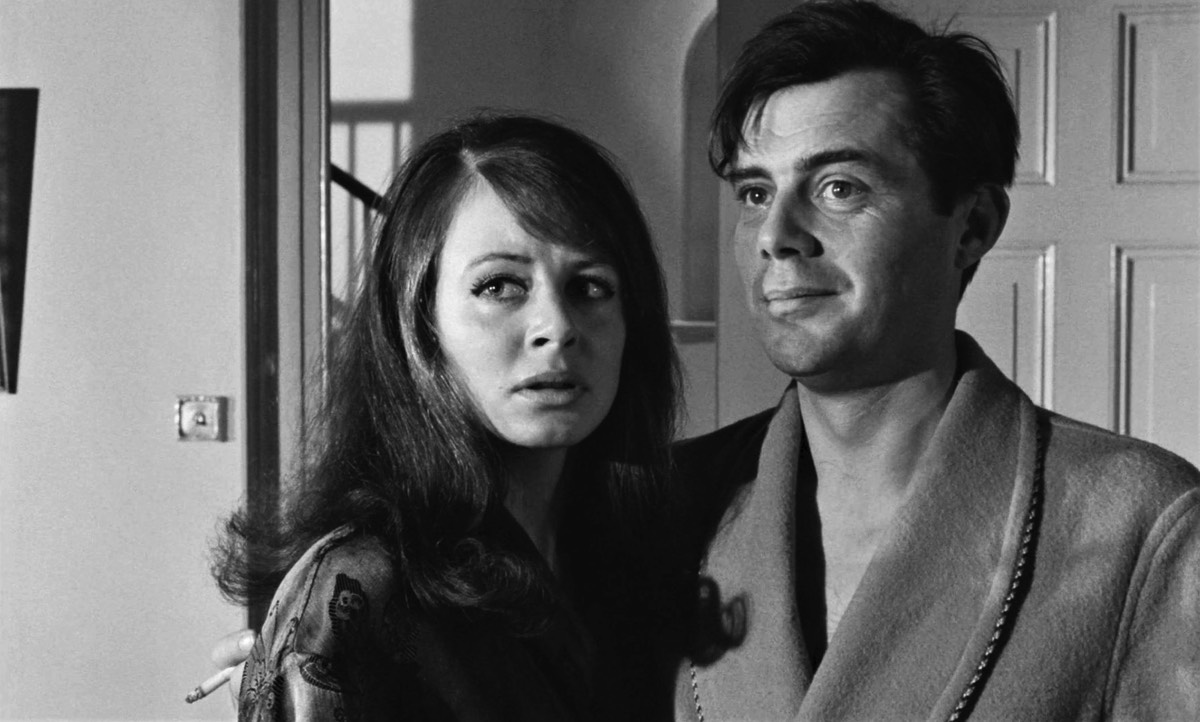
The Servant (1963)
"A victim of the McCarthy witch-hunts, Joseph Losey, who made several taut movies in Hollywood, was forced into exile in England, where he became a sharp observer of the social mores of his new home... He became part of the "new realism" movement of British cinema, although he developed a more baroque visual style using elaborate camera movements, shock angles, and dramatic set designs." - Ronald Bergan (Film - Eyewitness Companions, 2006)
"Beyond the bold, uncompromising political convictions that unite Losey's work lies a rich and underappreciated experimental vein that alternately embraces the high camp of Boom! and Modesty Blaise, the sheer, wonderful weirdness of Secret Ceremony and the sophisticated comedy of The Romantic Englishwoman. The seeming contradictions of Losey's oeuvre remain among its most fascinating aspects – its marriage of mid-Western chastity with European decadence, of fierce political allegory with an obscure, operatic aesthetic and a restless searching for redemption and spirituality within the worn and degraded. Losey's status as one of postwar America and Europe's most accomplished filmmakers rests in the rare and often uneasy balance found within all of his work between complexity and lucidity, between profundity and shimmering, treacherously entrancing reflective surfaces." - Harvard Film Archive, 2008
"Joseph Losey's career spanned five decades and included work in both theater and film. The early years of his life as a director were spent in the very different milieus of New Deal political theater projects and the paranoia of the Hollywood studio system during the McCarthy era. He was blacklisted in 1951 and left America for England where he continued making films, at first under a variety of pseudonyms. His work is both controversial and critically acclaimed, and Losey has long been recognized as a director with a distinctive and highly personal cinematic style." - Janet E. Lorenz (The St. James Film Directors Encyclopedia, 1998)
"Losey's greatest works were those he created out of a desperate need to make his vision whole on the screen; his exile from America sharpened that vision, forcing him to identify ever more closely with the outsiders he depicted in his most successful films. If his later career is a footnote to the earlier, more compelling works, Joseph Losey is still a major figure in the history of cinema." - Wheeler Winston Dixon (BFI Screen Online)
"Shadowy figures moving through an indistinct landscape describe the best films of Losey. He creates atmospheres of paranoia, fear, alienation, and disillusionment like nobody else in cinema today." - William R. Meyer (The Film Buff's Catalog, 1978)
“Joseph Losey was a director of unusual intellectual ambitions and abilities. It is perhaps salutary that his best work emerged from the confiners of traditional genres, whereas his films from the ‘60s and early ’70s, when his artistic freedom was greater, often seems pretentious, over-emphatic, studied and stale.” - Geoff Andrew (The Film Handbook, 1989)
"Films can illustrate our existence... they can distress, disturb and provoke people into thinking about themselves and certain problems. But NOT give the answers." - Joseph Losey
Selected Filmography
Loading filmography...
Joseph Losey / Fan Club
Michel Mourlet, Pierre Rissient, Dan Sallitt, Gérard Legrand, Michel Ciment, Bertrand Tavernier, John Waters, Jean-Philippe Domecq, Anna Biller, Martin Scorsese, José Luis Guarner, Mike Hodges.
Michel Mourlet, Pierre Rissient, Dan Sallitt, Gérard Legrand, Michel Ciment, Bertrand Tavernier, John Waters, Jean-Philippe Domecq, Anna Biller, Martin Scorsese, José Luis Guarner, Mike Hodges.
"Fan Club"
These film critics/filmmakers have, on multiple occasions, selected this director’s work within film ballots/lists that they have submitted.
These film critics/filmmakers have, on multiple occasions, selected this director’s work within film ballots/lists that they have submitted.