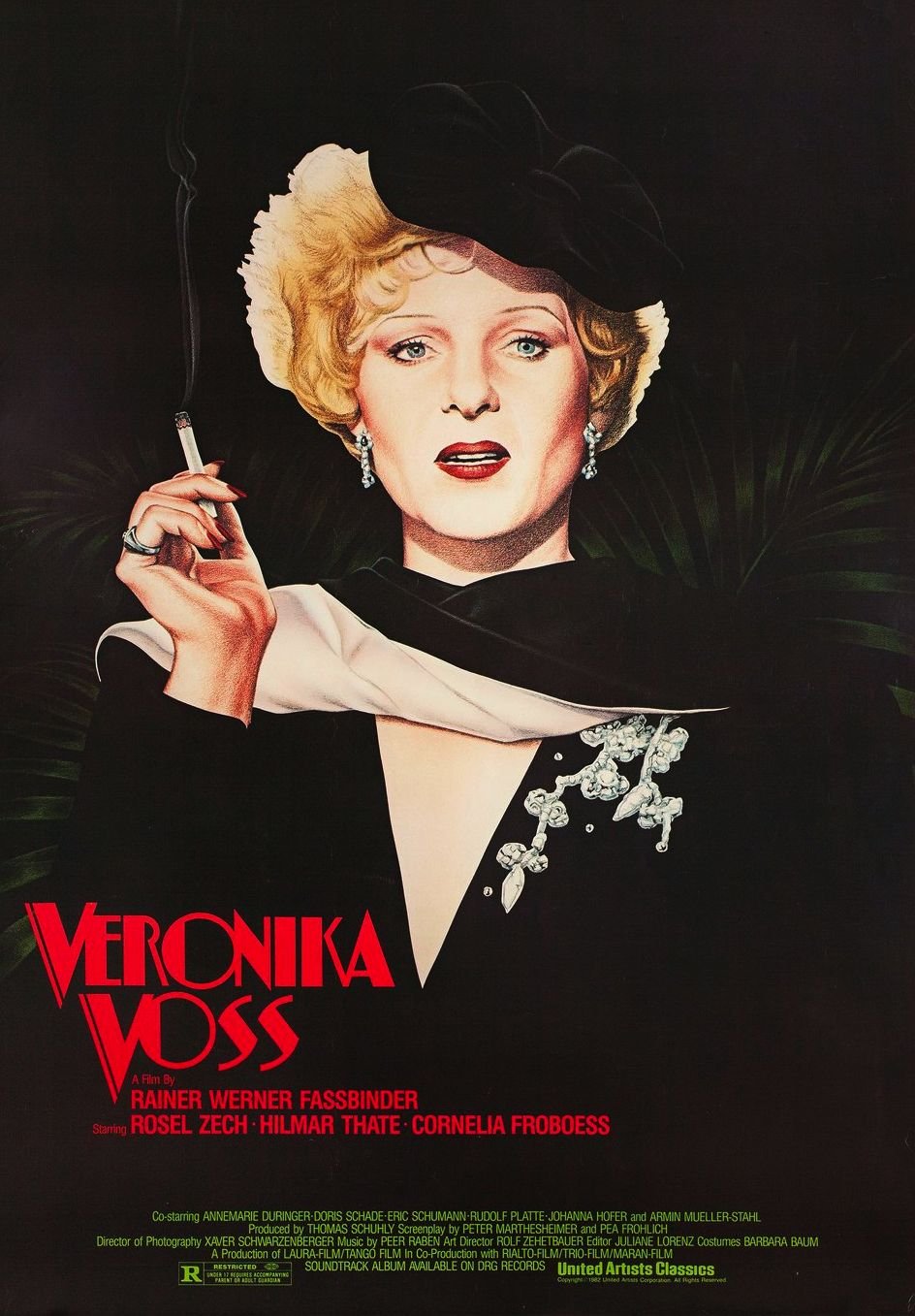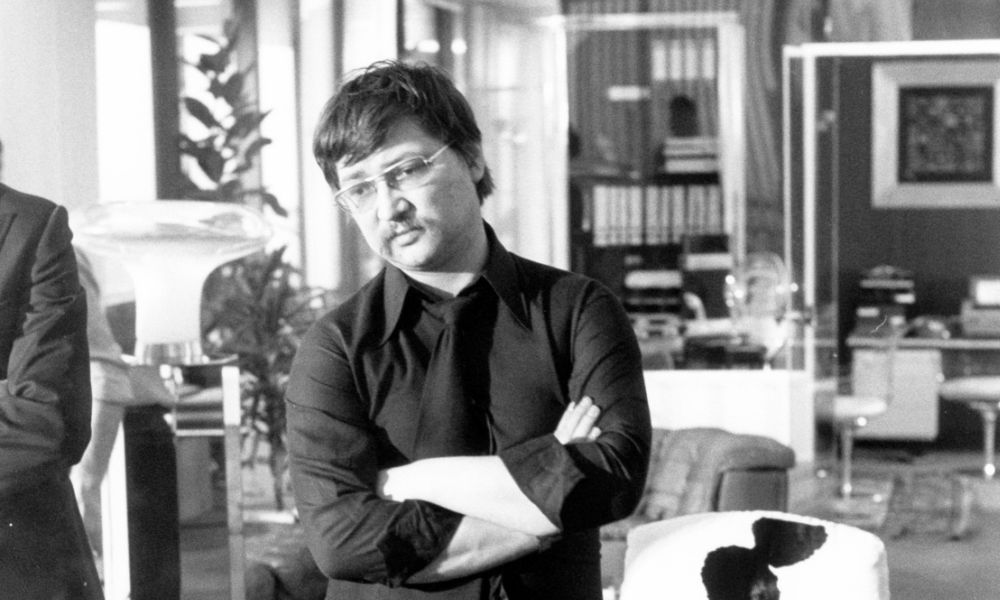
"Using his regular group of collaborators - technicians, cameramen, actors and actresses - he created several films a year. His work showed a wide range of influences - American gangster films, Jean-Luc Godard and Douglas Sirk, the theatre of Bertolt Brecht - but always offered a critical view of West Germany. Fassbinder was, indeed, the central figure in New German Cinema." - The Movie Book, 1999
Rainer Werner Fassbinder
Director / Screenwriter / Actor / Editor / Producer / Production Designer / Cinematographer
(1945-1982) Born May 31, Bad Wörishofen, Bavaria, Germany
Top 250 Directors
(1945-1982) Born May 31, Bad Wörishofen, Bavaria, Germany
Top 250 Directors
Key Production Countries: West Germany
Key Genres: Drama, Psychological Drama, Melodrama, Gay & Lesbian Films, Period Film, Crime Drama, Comedy Drama, Satire, War Drama, Family Drama, Black Comedy, Marriage Drama
Key Collaborators: Peer Raben (Composer), Kurt Raab (Production Designer/Character Actor), Irm Hermann (Character Actress), Ingrid Caven (Character Actress), Michael Ballhaus (Cinematographer), Hanna Schygulla (Leading Character Actress), Thea Eymèsz (Editor), Margit Carstensen (Leading Character Actress), Ulli Lommel (Character Actor), Juliane Lorenz (Editor), Volker Spengler (Character Actor), Brigitte Mira (Character Actress)
Key Genres: Drama, Psychological Drama, Melodrama, Gay & Lesbian Films, Period Film, Crime Drama, Comedy Drama, Satire, War Drama, Family Drama, Black Comedy, Marriage Drama
Key Collaborators: Peer Raben (Composer), Kurt Raab (Production Designer/Character Actor), Irm Hermann (Character Actress), Ingrid Caven (Character Actress), Michael Ballhaus (Cinematographer), Hanna Schygulla (Leading Character Actress), Thea Eymèsz (Editor), Margit Carstensen (Leading Character Actress), Ulli Lommel (Character Actor), Juliane Lorenz (Editor), Volker Spengler (Character Actor), Brigitte Mira (Character Actress)
"Rainer Werner Fassbinder was perhaps the best-known director of the New German Cinema, partly because of his aggressive personality and self-destructive lifestyle. Fassbinder was influenced by the French New Wave and the political modernism that intensified in the late 1960s. Beginning as an actor, playwright, and theater director, Fassbinder revealed a taste for grotesque comedy, splashy violence, and strong realism of characters' regional dialects. Yet he rejected the Brechtian theory that was important for Kluge, Straub, and others. He insisted that politically critical art had to engage the spectator's feelings, "With Brecht you see the emotions and you reflect upon them as you witness them but you never feel them… I let the audience feel and think." - Kristin Thompson & David Bordwell (Film History: An Introduction, 2002)
"Fassbinder's most distinguishing trait within the tradition of "counter-cinema," aside from his reputation for rendering fragments of the new left ideology of the 1960s on film, was his modification of the conventions of political cinema initiated in the 1920s and subsequent tailoring of these conventions to modern conditions of Hollywood cinema. He did this to a greater degree than Godard, who is credited with using these principles as content for filmic essays on narrative." - John O'Kane (International Dictionary of Films and Filmmakers, 1991)
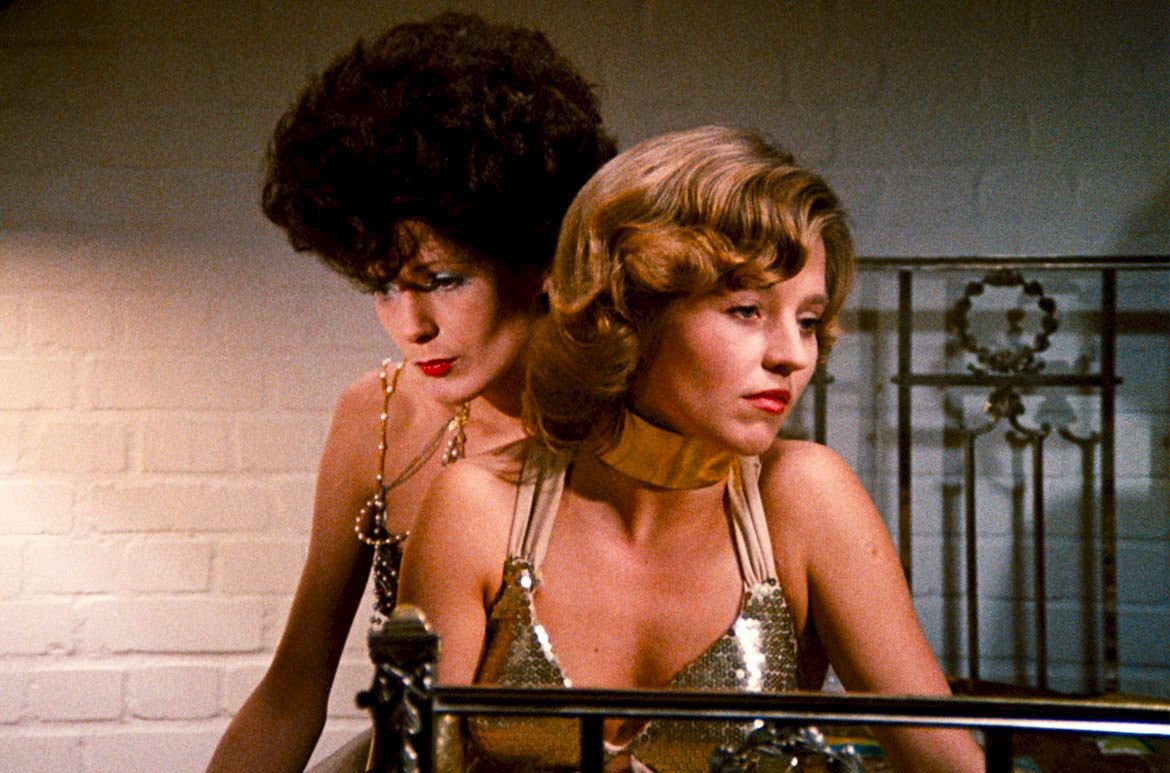
The Bitter Tears of Petra von Kant (1972)
"The bare fact is enough: Fassbinder died well short of forty, the maker of at least half a dozen extraordinary pictures: The Bitter Tears of Petra von Kant still has no equal in its simultaneous delight in "style" while pouring acid over the image; Beware of a Holy Whore, Fear Eats the Soul, The Marriage of Maria Braun, and Lola (at least) are outstanding examples of how contemporary history can be focused on the screen in short, tough tales." - David Thomson (The New Biographical Dictionary of Film, 2002)
"Rainer Werner Fassbinder is one of the most ruthless observers of human nature the cinema has ever known. One of the best known of the directors who flourished during the New German Cinema movement, his extraordinarily prolific output – 41 films in a 14-year period – almost certainly helped contribute to his early death aged just 37. He often returned to the subject of the outsider shunned by society, and his own feelings of rejection and alienation infuse much of his work. Although his flawed characters occasionally behave appallingly, it would be wrong to describe Fassbinder as pitiless – the overly melodramatic Petra von Kant is a sympathetic character despite her theatrics, while the wife-beating protagonist of The Merchant of Four Seasons (1971) is such a wretched victim that he never loses the audience’s empathy." - Alex Davidson (BFI, 2015)
"One of the finest directors working in the '70s, Rainer Werner Fassbinder ranged widely through genre and style, but consistent through his prolific career (he made over 40 films in 13 years) was an ironic approach towards often melodramatic subjects, and an abiding interest in the despair underlying the material affluence and bourgeois moral conformism of postwar German society." - Geoff Andrew (The Film Handbook, 1989)
"The youngest, most precocious, and controversial of the directors whose dynamism resurrected the moribund German cinema in the 1960s, Rainer Werner Fassbinder was also the most prolific… Just as Fassbinder often worked with a stock company of players and technicians, so he also returned to certain themes and concerns, especially the various forms that sexual passion and frustration can take, of which Satan's Brew (1976) and The Stationmaster's Wife (1977) are striking examples." - Reynold Humphries (501 Movie Directors, 2007)
"There is something hypnotically fascinating in the way some of Fassbinder's characters destroy themselves; the films' action progresses swiftly and decisively as the characters move deeper into pits of their own making." - David Quinlan (Quinlan's Film Directors, 1999)
"Perhaps the most remarkable phenomenon of New German Cinema was the brief but prolific career of Rainer Werner Fassbinder (1946-1982), who died, apparently from a drug overdose, at age thirty-six. Few other directors in cinema history have matched his productivity: in a thirteen-year career, from 1969 to 1981, Fassbinder directed nearly forty films for theatres and television... An admirer of Hollywood's family melodramas, particularly the work of the German émigré Douglas Sirk, Fassbinder revived the genre and infused it with new political and historical resonance." - Robert Sklar (Film: An International History of the Medium, 1993)
"Violence, psychosis, repression, and anxiety fill the work of Fassbinder. He is one of the premier European directors to emerge in the last decade." - William R. Meyer (The Film Buff's Catalog, 1978)
"The best thing I can think of would be to create a union between something as beautiful and powerful and wonderful as Hollywood films and a criticism of the status quo. That's my dream, to make such a German film." - Rainer Werner Fassbinder
Selected Filmography
Loading filmography...
Rainer Werner Fassbinder / Favourite Films
The Damned (1969) Luchino Visconti, Dishonored (1931) Josef von Sternberg, Flamingo Road (1949) Michael Curtiz, Gentlemen Prefer Blondes (1953) Howard Hawks, Johnny Guitar (1954) Nicholas Ray, Lola Montès (1955) Max Ophüls, The Naked and the Dead (1958) Raoul Walsh, The Night of the Hunter (1955) Charles Laughton, The Red Snowball Tree (1973) Vasiliy Shukshin, Salo, or the 120 Days of Sodom (1975) Pier Paolo Pasolini.
Source: Unconfirmed (1981)
The Damned (1969) Luchino Visconti, Dishonored (1931) Josef von Sternberg, Flamingo Road (1949) Michael Curtiz, Gentlemen Prefer Blondes (1953) Howard Hawks, Johnny Guitar (1954) Nicholas Ray, Lola Montès (1955) Max Ophüls, The Naked and the Dead (1958) Raoul Walsh, The Night of the Hunter (1955) Charles Laughton, The Red Snowball Tree (1973) Vasiliy Shukshin, Salo, or the 120 Days of Sodom (1975) Pier Paolo Pasolini.
Source: Unconfirmed (1981)
Rainer Werner Fassbinder / Fan Club
B. Kite, Ira Sachs, Michael Sicinski, Lodge Kerrigan, Therese Grisham, David Jenkins, Dan Sallitt, Godfrey Cheshire, Todd Haynes, Martin Scorsese, Drake Stutesman, Karim Aïnouz, Ed Gonzalez.
B. Kite, Ira Sachs, Michael Sicinski, Lodge Kerrigan, Therese Grisham, David Jenkins, Dan Sallitt, Godfrey Cheshire, Todd Haynes, Martin Scorsese, Drake Stutesman, Karim Aïnouz, Ed Gonzalez.
"Fan Club"
These film critics/filmmakers have, on multiple occasions, selected this director’s work within film ballots/lists that they have submitted.
These film critics/filmmakers have, on multiple occasions, selected this director’s work within film ballots/lists that they have submitted.