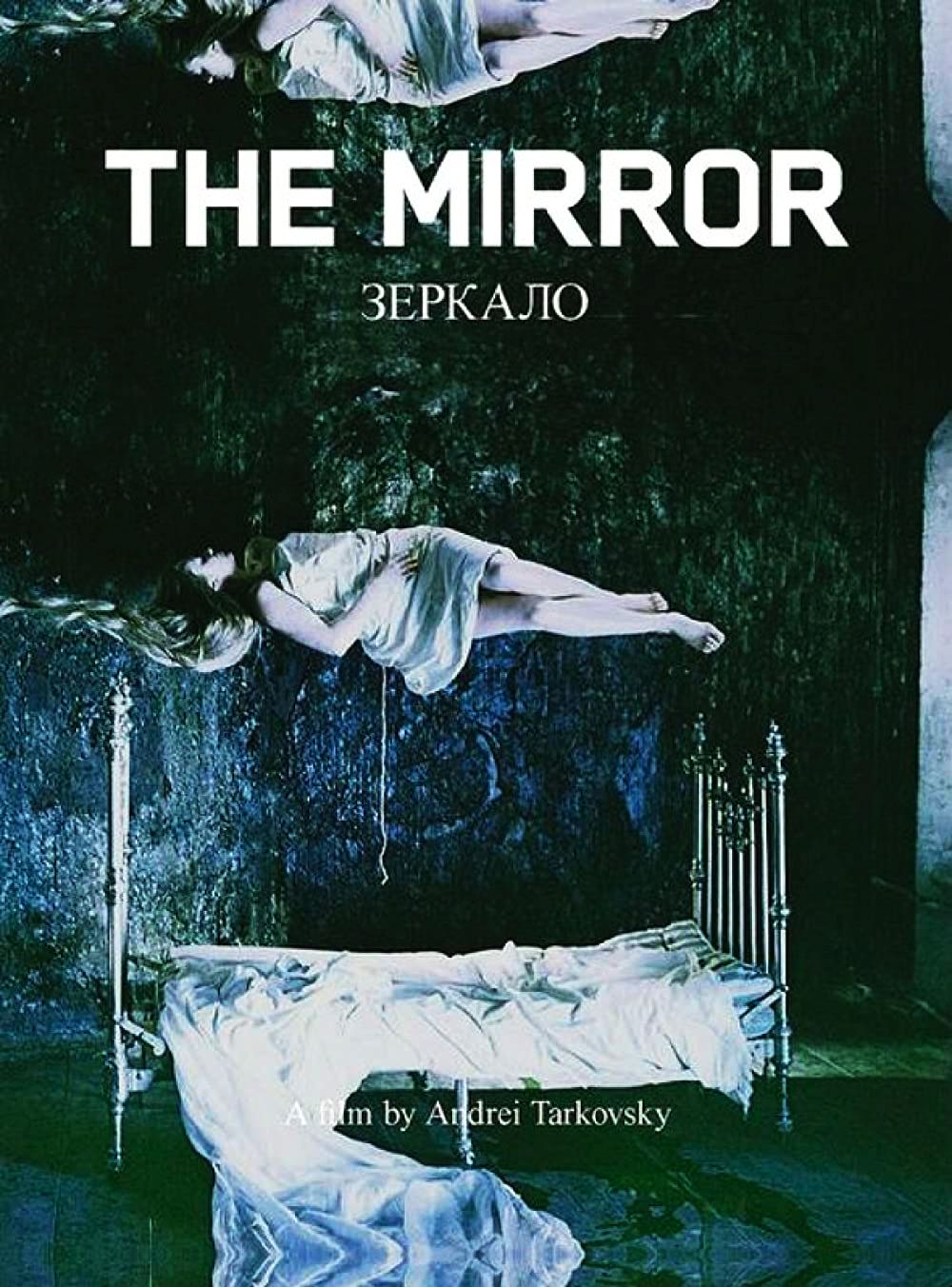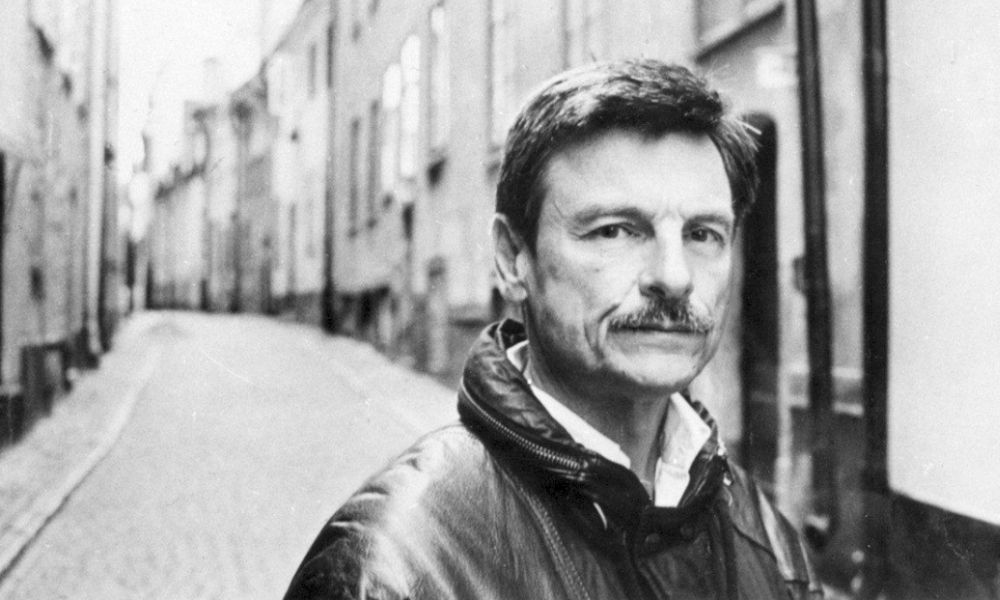
"There is no doubt when watching a Tarkovsky film, you are in the presence of a visionary (and according to some observers, the self-aggrandizing director knew it all too well himself). This vision was expressed in key elements which were often repeated from film to film in a highly personal symbolism." - Lloyd Hughes (The Rough Guide to Film, 2007)
Andrei Tarkovsky
Director / Screenwriter
(1932-1986) Born April 4, Zavrazhe, Yurevetskiy rayon, Ivanovskaya Promyshlennaya oblast, RSFSR, USSR
Top 250 Directors
(1932-1986) Born April 4, Zavrazhe, Yurevetskiy rayon, Ivanovskaya Promyshlennaya oblast, RSFSR, USSR
Top 250 Directors
Key Production Country: USSR
Key Genres: Drama, Science Fiction, Psychological Drama, Psychological Sci-Fi, War, Biography
Key Collaborators: Nikolai Grinko (Leading Character Actor), Anatoli Solonitsyn (Leading Actor), Vadim Yusov (Cinematographer), Lyudmila Feiginova (Editor), Eduard Artemev (Composer), Vyacheslav Ovchinnikov (Composer), Erland Josephson (Leading Actor), Andrei Konchalovsky (Screenwriter), Oleg Yankovsky (Leading Character Actor), Yevgeni Chernyayev (Production Designer)
Key Genres: Drama, Science Fiction, Psychological Drama, Psychological Sci-Fi, War, Biography
Key Collaborators: Nikolai Grinko (Leading Character Actor), Anatoli Solonitsyn (Leading Actor), Vadim Yusov (Cinematographer), Lyudmila Feiginova (Editor), Eduard Artemev (Composer), Vyacheslav Ovchinnikov (Composer), Erland Josephson (Leading Actor), Andrei Konchalovsky (Screenwriter), Oleg Yankovsky (Leading Character Actor), Yevgeni Chernyayev (Production Designer)
"Andrei Tarkovsky remains the most esteemed Soviet filmmaker of the post-World War II era despite having a relatively small body of work. An uncompromising artist and visionary who refused to bend either to Soviet governmental authorities or to commercial considerations, he completed only seven features and one short. His films were years in the making and often faced distribution delays or limited release. Each answered to his personal vision and gave form to the central concern of his own life, the difficulty of sustaining a sensitive, artistic temperament in a harsh world." - Vance Kepley Jr. (Schirmer Encyclopedia of Film, 2006)
"From Solaris on, Tarkovsky's pessimism and aloof mysticism led to increasingly portentous, turgid, even obscure narratives with woolly philosophising couched in laboured dialogue, meticulous compositions featuring a hackneyed use of conventional symbolism, and long, often wordless scenes shot with an almost imperceptibly slow-moving camera; the sparse, glum, painstakingly composed 'beauty' often seemed hollow, hinting at deeper metaphysical meanings than story, characters or dialogue could convey." - Geoff Andrew (The Director's Vision, 1999)
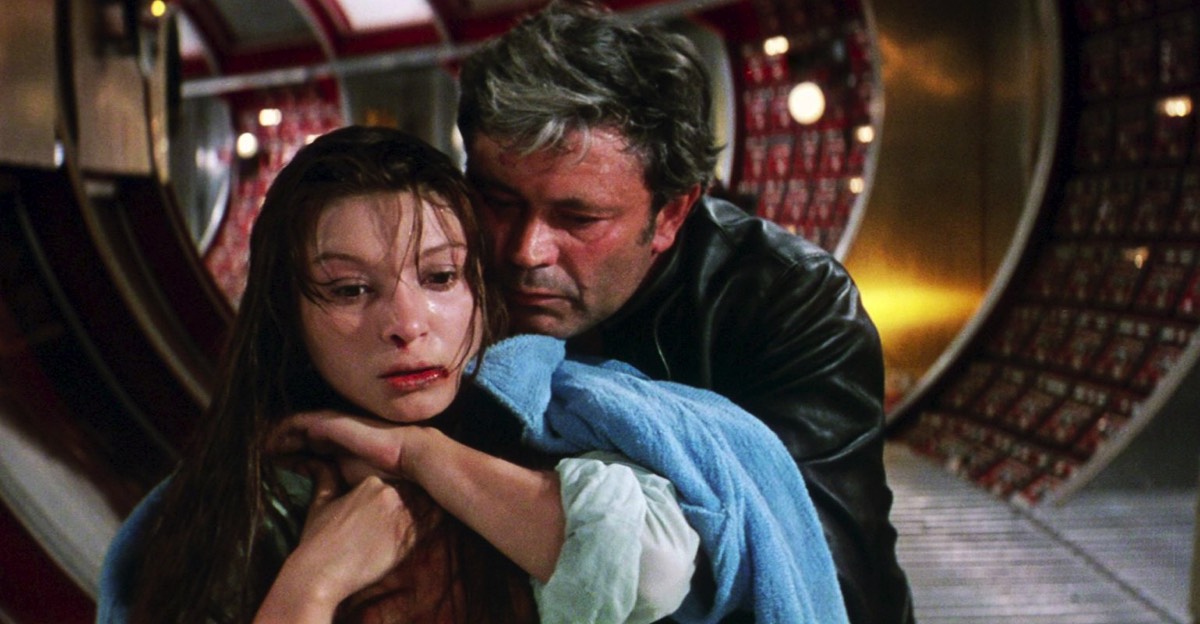
Solaris (1972)
"Some of the most intensely personal and visually powerful statements to have come out of Eastern Europe for many decades are made in Andrei Tarkovsky's seven films." - Ronald Bergan (Film - Eyewitness Companions, 2006)
"Andrei Tarkovsky is almost certainly the most famous Russian filmmaker since Eisenstein. His visionary approach to cinematic time and space, as well as his commitment to cinema as poetry, mark his oeuvre as one of the defining moments in the development of the modern art film. Although he never tackled politics directly, the metaphysical preoccupations of films such as Andrei Rublev (1966), Mirror (1974) and Stalker (1979) provoked ongoing hostility from the Soviet authorities. Like many other artists in the Soviet Union, his career was marked by constant struggles with the authorities to realise his vision. Although this meant he completed only seven features in his 27 years as a director, each one is strikingly uncompromising in its thematic ambition and formal boldness." - Maximilian Le Cain (Senses of Cinema, 2002)
"Tarkovsky is the greatest of them all. He moves with such naturalness in the room of dreams. He doesn't explain. What should he explain anyhow?" - Ingmar Bergman (The Magic Lantern, 1988)
"Although all his films are self-reflexive, he does not draw attention to the camera for radical Brechtian reasons. He is not trying to subvert bourgeois narrative codes. He is not even assaulting the tenets of Socialist Realism, a doctrine he found every bit as unappealing as Western mass culture aimed at the consumer. What his constant use of tracking shots, slow motion, and never-ending pans - indeed his entire visual rhetoric - seems to emphasize is that he is moulding the images. He is a virtuoso, and he wants us to be aware of the fact." - G.C. MacNab (The St. James Film Directors Encyclopedia, 1998)
"Tarkovsky's 'poetic cinema', which included Andrei Rublev (1966) and Solaris (1972), was a reaction to Socialist Realism, an assertion of artistic and individual freedom. He argued - against the montage tradition - that film should have no 'message'. The son of a poet, he was, however, trained as a Soviet artist, and always believed in the ethical importance of film." - The Movie Book, 1999
"An auteur's auteur - and strongly opposed to the notion of film as being mere entertainment - Tarkovsky's vision and his thoughtful, beautiful, and philosophical slowing-down of cinema are pretty much unrivaled in the Russian movie world and beyond." - Matt Hills (501 Movie Directors, 2007)
"Juxtaposing a person with an environment that is boundless, collating him with a countless number of people passing by close to him and far away, relating a person to the whole world, that is the meaning of cinema." - Andrei Tarkovsky
Selected Filmography
{{row.titlelong}}
Andrei Tarkovsky / Favourite Films
City Lights (1931) Charles Chaplin, Diary of a Country Priest (1950) Robert Bresson, Mouchette (1966) Robert Bresson, Nazarín (1958) Luis Buñuel, Persona (1966) Ingmar Bergman,Seven Samurai (1954) Akira Kurosawa, Ugetsu monogatari (1953) Kenji Mizoguchi, Wild Strawberries (1957) Ingmar Bergman, Winter Light (1962) Ingmar Bergman, Woman in the Dunes (1964) Hiroshi Teshigahara.
Source: Leonid Kozlov Interview (1972)
City Lights (1931) Charles Chaplin, Diary of a Country Priest (1950) Robert Bresson, Mouchette (1966) Robert Bresson, Nazarín (1958) Luis Buñuel, Persona (1966) Ingmar Bergman,Seven Samurai (1954) Akira Kurosawa, Ugetsu monogatari (1953) Kenji Mizoguchi, Wild Strawberries (1957) Ingmar Bergman, Winter Light (1962) Ingmar Bergman, Woman in the Dunes (1964) Hiroshi Teshigahara.
Source: Leonid Kozlov Interview (1972)
Andrei Tarkovsky / Fan Club
Michael Haneke, Agnieszka Holland, John Davies, Cao Guimarães, Lynne Ramsay, Andrei Plakhov, Olivier Assayas, Joachim Trier, Andrey Zvyagintsev, Gillies MacKinnon, Nick James, David Sterritt.
Michael Haneke, Agnieszka Holland, John Davies, Cao Guimarães, Lynne Ramsay, Andrei Plakhov, Olivier Assayas, Joachim Trier, Andrey Zvyagintsev, Gillies MacKinnon, Nick James, David Sterritt.
"Fan Club"
These film critics/filmmakers have, on multiple occasions, selected this director’s work within film ballots/lists that they have submitted.
These film critics/filmmakers have, on multiple occasions, selected this director’s work within film ballots/lists that they have submitted.