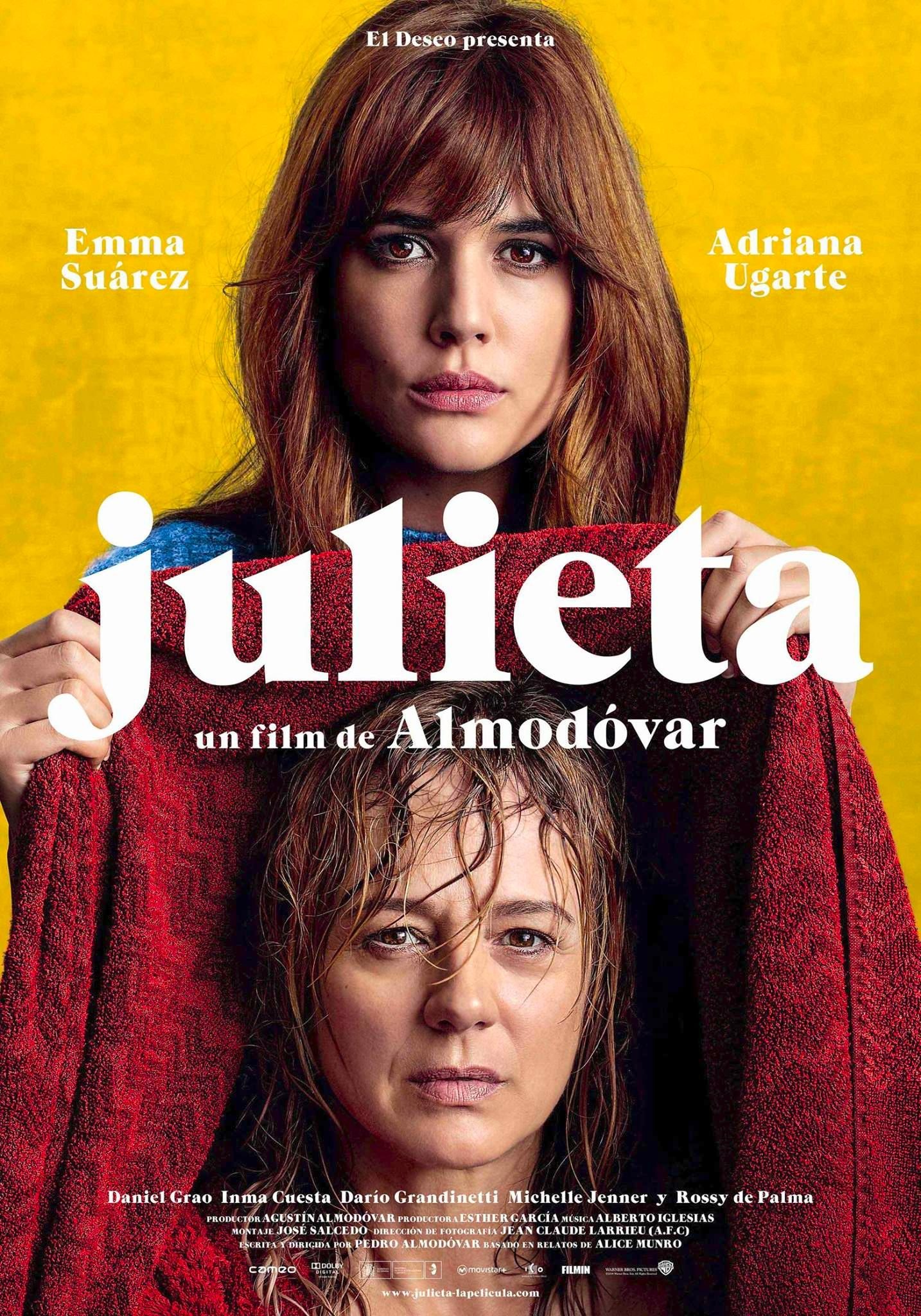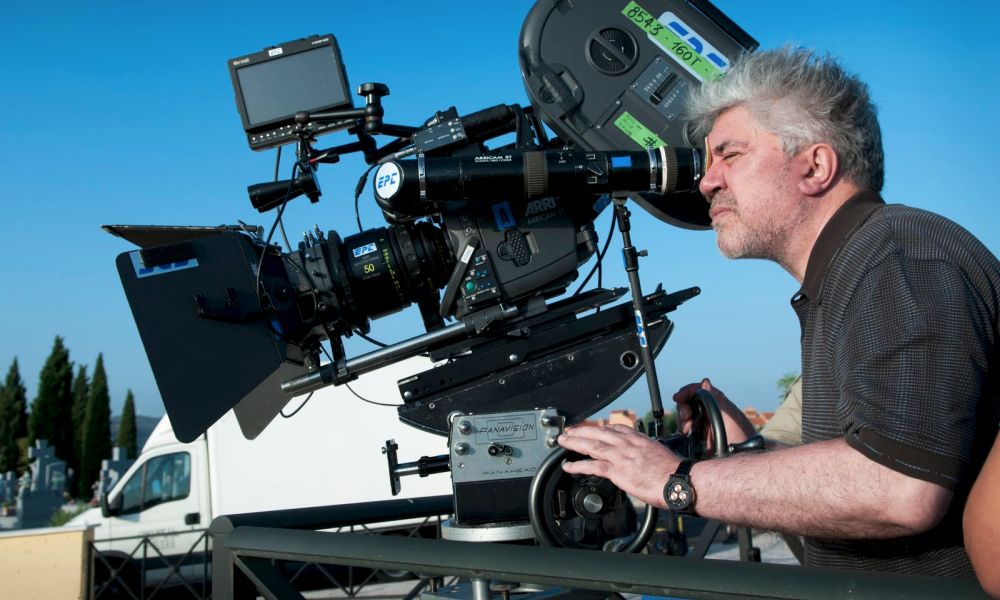
"What Almodóvar has achieved through his ravishing work is a kind of liberation for us all. He stuck a frock on his native Spain when it needed it most, transforming a country and then the movies with a spritz of glamour for which Hollywood misplaced the recipe ages ago." - Andrew Bailey (Cinema Now, 2007)
Pedro Almodóvar
Director / Screenwriter / Producer
(1949- ) Born September 24, Calzada de Calatrava, Ciudad Real, Castilla-La Mancha, Spain
Top 250 Directors / 21st Century's Top 100 Directors
(1949- ) Born September 24, Calzada de Calatrava, Ciudad Real, Castilla-La Mancha, Spain
Top 250 Directors / 21st Century's Top 100 Directors
Key Production Countries: Spain, France, USA, UK
Key Genres: Drama, Comedy, Dark Comedy, Melodrama, Psychological Drama, Romance, Comedy Drama, Thriller, LGBT-Related Film, Mystery, Erotic Thriller, Sex Comedy
Key Collaborators: José Salcedo (Editor), Alberto Iglesias (Composer), Antxón Gómez (Production Designer), Augustin Almodóvar (Producer), Rossy de Palma (Character Actress), Chus Lampreave (Character Actress), Carmen Maura (Leading Actress), José Luis Alcaine (Cinematographer), Julieta Serrano (Leading Character Actress), Antonio Banderas (Leading Actor), Penelope Cruz (Leading Actress), Esther García (Producer/Production Designer)
Key Genres: Drama, Comedy, Dark Comedy, Melodrama, Psychological Drama, Romance, Comedy Drama, Thriller, LGBT-Related Film, Mystery, Erotic Thriller, Sex Comedy
Key Collaborators: José Salcedo (Editor), Alberto Iglesias (Composer), Antxón Gómez (Production Designer), Augustin Almodóvar (Producer), Rossy de Palma (Character Actress), Chus Lampreave (Character Actress), Carmen Maura (Leading Actress), José Luis Alcaine (Cinematographer), Julieta Serrano (Leading Character Actress), Antonio Banderas (Leading Actor), Penelope Cruz (Leading Actress), Esther García (Producer/Production Designer)
"Exploring his gay sensibility, Almodóvar appeals to straight audiences, who share his appetite for the resurrection and re-invigoration of old movie clichés. In overlooked works like Kika, characters literally die for love, and this slick director understands that classic escapism has undying appeal for a reason. The genius of Almodóvar lies in succumbing to the absurdity of Hollywood romanticism, while recognizing it as an impossible ideal. After enduring bloodless Oscar winners and critically correct masterpieces, the audience rushes to Almodóvar’s movies because they act like a tonic." - José Arroyo (International Dictionary of Films and Filmmakers, 1991)
"A maverick talent, he worked in the theatre before beginning to make short films on Super 8, and graduated to features in 1978. He took full advantage of the post-Franco cultural freedom to develop a distinctive directorial style, and has matured from the 'bad boy' of Spanish cinema into a sophisticated European auteur. He is noted for creating sublime melodramas and writing superb roles for women." - Chambers Film Factfinder, 2006
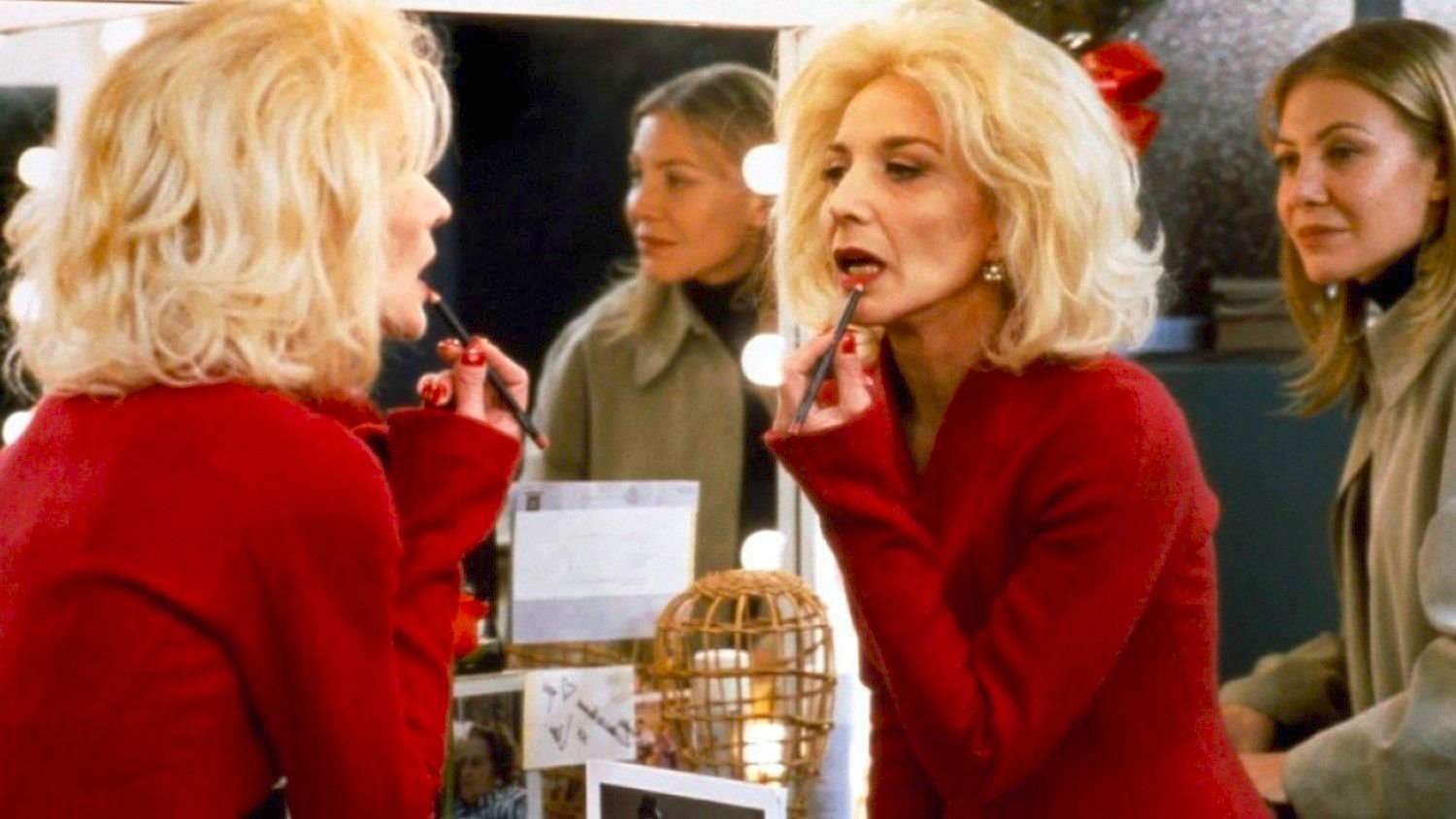
All About My Mother (1999)
"Luridly improbable plotting may evoke Buñuel's surrealist legacy, but Almodóvar's vision of Spain is determinedly post-Franco: more concerned with the heady pursuit of pleasure than politics, and gleefully amoral - rather than genuinely shocking - in its celebration of all forms of sexual preference (his early films were mostly bawdy sex comedies)." - Geoff Andrew (The Director's Vision, 1999)
"Whether reconstituting melodrama for explosive effect (Law of Desire, 1987), adapting the screwball comedy to the impulsive rhythms of contemporary neuroses (Women on the Verge of a Nervous Breakdown, 1988), or valorously peeling back the layers of his own past to confront lingering traumas (Pain and Glory, 2019), Almodóvar has always pushed against the boundaries of taste or comfort. His work has become as identifiable and widely beloved as that of any international auteur alive without sacrificing its core of subversion. What have we done to deserve such an astonishing oeuvre of films?" - Michael Koresky (Film Comment, 2025)
"Pedro Almodóvar's outrageous and provocative films have made him the most internationally acclaimed Spanish filmmaker since the death of Franco in 1975... Almodóvar's forté is in incorporating elements of underground and gay culture into mainstream forms with wide crossover appeal, thus redefining perceptions of Spanish cinema and Spain." - Ronald Bergan (Film - Eyewitness Companions, 2006)
"Almodóvar honed his filmmaking skills during a cultural renaissance in Spain, following the death of dictator Francisco Franco. His unmistakable visual style — which includes the employment of striking production design, innovative camera angles, and bright, primary colors — has remained intact since his earliest works. With a diverse filmography that spans melodramas, dark comedies, and thrillers, the auteur's work is perhaps best known for his portrayals of complex women. (He has directed Penélope Cruz to multiple Oscar nominations.) He also consistently explores the themes of identity and desire, while showing an uncanny ability to find quirky humor in his collection of oddball characters." - Academy of Motion Picture Arts and Sciences
"Pedro Almodóvar is often compared to Luis Buñuel, but Almodóvar is both more of a populist and a humanist filmmaker. Almodóvar himself has remarked, "The characters in my films are assassins, rapists, and so on, but I don't treat them as criminals, I talk about their humanity." And that is true, but he does so in the most playfully outrageous ways imaginable. Almodóvar's films are very much movies that are filled with colour and spectacular moments, and that revel in the sheer joy of filmmaking. Many of his early films are set in Madrid but things that happen in his films are invariably glamorized into the fabulous à la Hollywood form." - Ken Hanke (501 Movie Directors, 2007)
"There have always been significant directors who have made the transition from rank outsider to treasured institution, but perhaps no one has travelled so far along this axis as Pedro Almodóvar. A self-taught, openly gay man from the sticks, Almodóvar started out making kitsch, slapdash Super 8 shockers in the early 1970s. Since then, he has matured and refined his craft over a busy three decades to become arguably Spain's most influential, internationally respected and exportable living filmmaker." - Leslie Felperin (The Rough Guide to Film, 2007)
"Yes, women are stronger than us. They face more directly the problems that confront them, and for that reason they are much more spectacular to talk about. I don't know why I am more interested in women, because I don't go to any psychiatrists, and I don't want to know why." - Pedro Almodóvar
"I also wanted to express the strength of cinema to hide reality, while being entertaining. Cinema can fill in the empty spaces of your life and your loneliness." - Pedro Almodóvar
Selected Filmography
Loading filmography...
Pedro Almodóvar / Favourite Films
All About Eve (1950) Joseph L. Mankiewicz, Citizen Kane (1941) Orson Welles, 8½ (1963) Federico Fellini, The Godfather & The Godfather Part II (1972-74) Francis Ford Coppola, North by Northwest (1959) Alfred Hitchcock, The Red Circle (1970) Jean-Pierre Melville, Some Like it Hot (1959) Billy Wilder, Taxi Driver (1976) Martin Scorsese, El Verdugo (1963) Luis García Berlanga, Viridiana (1961) Luis Buñuel.
Source: El Pais (2010)
All About Eve (1950) Joseph L. Mankiewicz, Citizen Kane (1941) Orson Welles, 8½ (1963) Federico Fellini, The Godfather & The Godfather Part II (1972-74) Francis Ford Coppola, North by Northwest (1959) Alfred Hitchcock, The Red Circle (1970) Jean-Pierre Melville, Some Like it Hot (1959) Billy Wilder, Taxi Driver (1976) Martin Scorsese, El Verdugo (1963) Luis García Berlanga, Viridiana (1961) Luis Buñuel.
Source: El Pais (2010)
Pedro Almodóvar / Fan Club
Maria Delgado, Mar Diestro-Dópido, Paul Julian Smith, Cristina Nord, Nick James, Andrei Plakhov, Jeon Chanil, Charles Barr, Juan Antonio Bayona, Ann Hui, Dave Calhoun, Monika Treut.
Maria Delgado, Mar Diestro-Dópido, Paul Julian Smith, Cristina Nord, Nick James, Andrei Plakhov, Jeon Chanil, Charles Barr, Juan Antonio Bayona, Ann Hui, Dave Calhoun, Monika Treut.
"Fan Club"
These film critics/filmmakers have, on multiple occasions, selected this director’s work within film ballots/lists that they have submitted.
These film critics/filmmakers have, on multiple occasions, selected this director’s work within film ballots/lists that they have submitted.