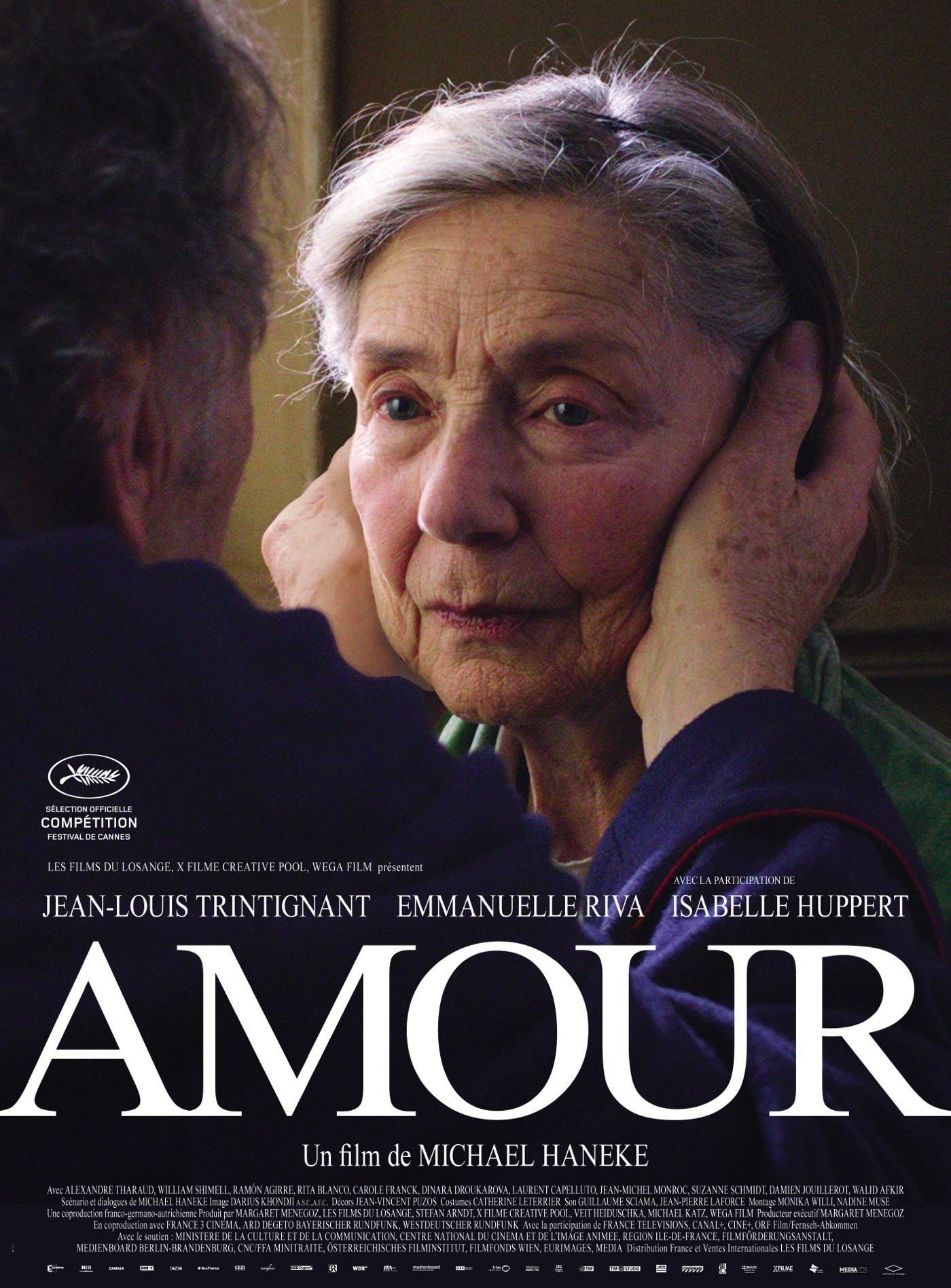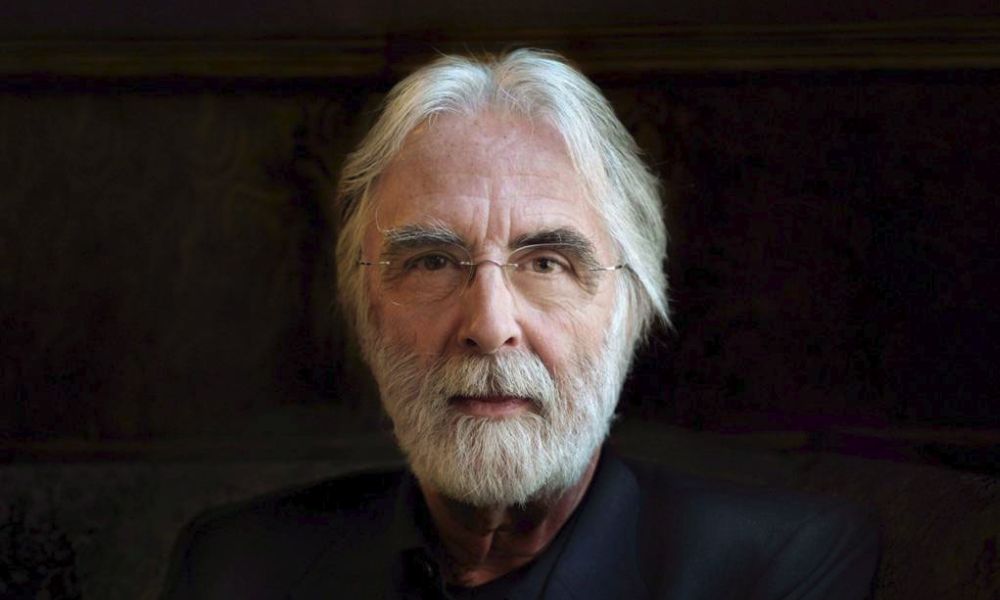
"A stern, imposing figure, Austrian Michael Haneke was the dominant filmmaker to emerge to prominence in Europe in the 1990s, probably more influential even than the universally acclaimed Krzysztof Kieslowski. His films are rigorous and cerebral modernist texts, but they're also often provocative and controversial in their unsparing depiction of the modern condition." - Tom Charity (The Rough Guide to Film, 2007)
Michael Haneke
Director / Screenwriter
(1942- ) Born March 23, Munich, Bavaria, Germany
Top 250 Directors / 21st Century's Top 100 Directors
(1942- ) Born March 23, Munich, Bavaria, Germany
Top 250 Directors / 21st Century's Top 100 Directors
Key Production Countries: Austria, Germany, France, Italy
Key Genres: Drama, Psychological Thriller, Thriller, Psychological Drama, Family Drama, Crime Thriller
Key Collaborators: Veit Heiduschka (Producer), Monika Willi (Editor), Christopher Kanter (Production Designer), Christian Berger (Cinematographer), Margaret Ménégoz (Producer), Nadine Muse (Editor), Isabelle Huppert (Leading Actress), Jurgen Jurges (Cinematographer), Marie Homolkova (Editor), Udo Samel (Leading Character Actor), Susanne Lothar (Leading Character Actress), Maurice Benichou (Leading Character Actor)
Key Genres: Drama, Psychological Thriller, Thriller, Psychological Drama, Family Drama, Crime Thriller
Key Collaborators: Veit Heiduschka (Producer), Monika Willi (Editor), Christopher Kanter (Production Designer), Christian Berger (Cinematographer), Margaret Ménégoz (Producer), Nadine Muse (Editor), Isabelle Huppert (Leading Actress), Jurgen Jurges (Cinematographer), Marie Homolkova (Editor), Udo Samel (Leading Character Actor), Susanne Lothar (Leading Character Actress), Maurice Benichou (Leading Character Actor)
"Benny's Video (1992) and Funny Games (1997) earned Michael Haneke an erroneous reputation as a provocateur aiming primarily to shock. But his desire that audiences engage on an intellectual level has come, in time, to be better understood... Even the more linear stories of The Piano Teacher (2001) and Caché (2005) refuse the comforts of conventional narrative closure or psychological motivation. The audience is left asking questions that illuminate moral issues and social, political, and historical contexts. This could be dry or uninvolving, but Haneke is skilled at constructing suspenseful narratives and working with actors. He is one of modern Europe's most important filmmakers." - Geoff Andrew (501 Movie Directors: A Comprehensive Guide to the Greatest Filmmakers, 2007)
"Most of Michael Haneke's films shock, not so much with their violence, but with the cold and ambivalent depiction of that violence. Haneke, one of Austria's most celebrated directors (although he works in France), intends his films to be critiques of European society and of American cinema." - Ronald Bergan (Film - Eyewitness Companions, 2006)
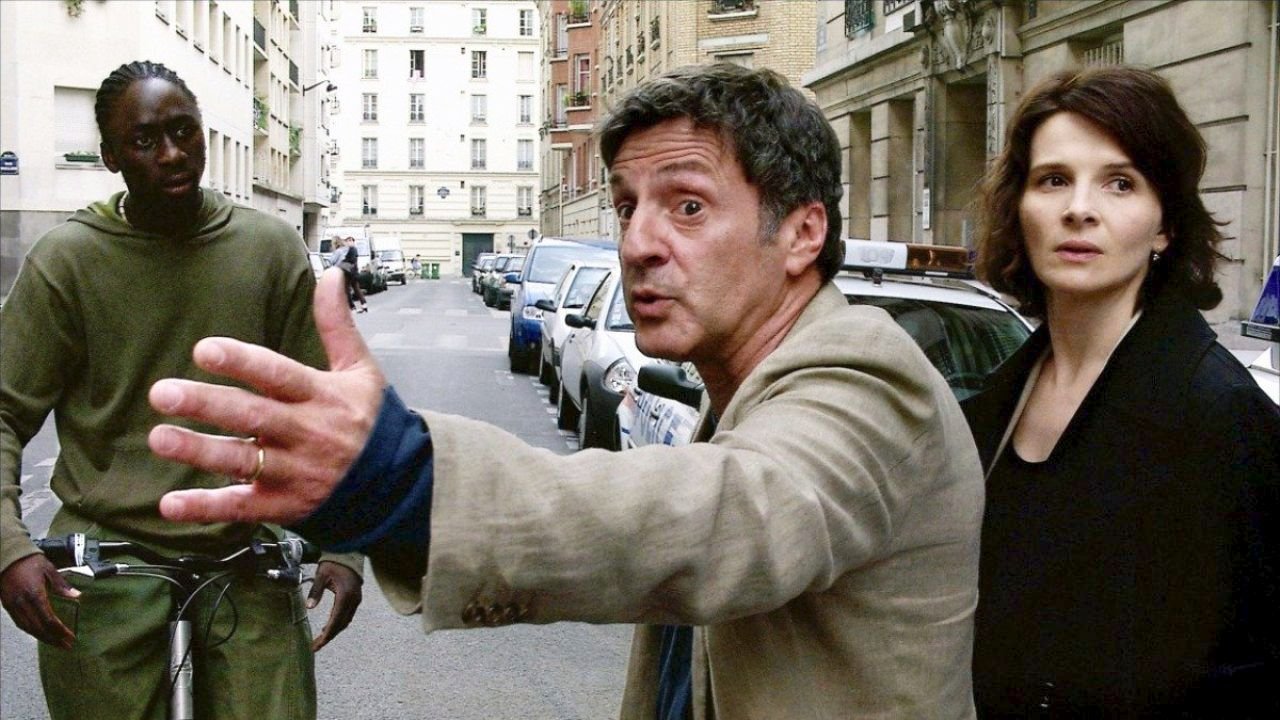
Caché (2005)
"Haneke has put European cinema back into the premier league (I won't say singlehandedly, because frankly the Eurozone seems to be teeming with gifted directors in a way that it hasn't been since the 1970s), but while others are promising, he is unquestionably in the same class as Antonioni, Fassbinder, or Godard. His films are classics: they are perfect and they are profound... Haneke's films think, whereas the arty end of US cinema today seems to have disappeared up its own self-satisfaction. But at the same time, the visual beauty of his cinema is beguiling: he achieves a photographic and theatrical clarity that is somehow quintessentially of our time, of the digital age, and yet as rich as anything in cinematic history." - Jonathon Jones (The Guardian, 2010)
"Cheerfully wishing his audience a "disturbing evening" at a London retrospective of his films, director Michael Haneke insists that he is an optimist at heart, despite all of the relentlessly bleak carnage and deeply disturbing imagery so vividly painted and seared into the mind of anyone who has had the uncomfortable experience of viewing his work." - Jason Buchanan (Allmovie)
"On the whole, Michael Haneke’s films are provocative challenges to the viewer which rely heavily on his continuing interests in spectatorship, semiotics and the media. He sees himself as “the last modernist”, adhering to a rigorous, intellectual purity and distance uncommon among auteurs today." - Madman
"The German-born, Austrian director Michael Haneke studied psychology, philosophy and theatrical sciences at the University of Vienna before embarking on a career as a playwright. He found his voice as a filmmaker of intellectual, rigidly composed psychological suspense thrillers." - Andrew Bailey (Cinema Now, 2007)
"Michael Haneke is one of contemporary cinema’s most provocative and incisive filmmakers… In a style at once musical and mathematical, Haneke’s films treat themes of alienation and social collapse; the exploitation and consumption of violence; the bourgeois family as the incubator of fascistic impulse; individual responsibility and collective guilt; and the ethics of the photographic image." - The Museum of Modern Art, 2007
"My films are intended as polemical statements against the American 'barrel down' cinema and its dis-empowerment of the spectator. They are an appeal for a cinema of insistent questions instead of false (because too quick) answers, for clarifying distance in place of violating closeness, for provocation and dialogue instead of consumption and consensus." - Michael Haneke
"Films that are entertainments give simple answers but I think that's ultimately more cynical, as it denies the viewer room to think. If there are more answers at the end, then surely it is a richer experience." - Michael Haneke
Selected Filmography
Loading filmography...
Michael Haneke / Favourite Films
Au hasard Balthazar (1966) Robert Bresson, The Chronicle of Anna Magdalena Bach (1968) Jean-Marie Straub, The Exterminating Angel (1962) Luis Buñuel, Germany, Year Zero (1947) Roberto Rossellini, The Gold Rush (1925) Charles Chaplin, Lancelot du Lac (1974) Robert Bresson, Mirror (1974) Andrei Tarkovsky, Salo, or the 120 Days of Sodom (1975) Pier Paolo Pasolini, Stalker (1979) Andrei Tarkovsky, A Woman Under the Influence (1974) John Cassavetes.
Source: Profil (2004)
A more extensive list of Michael Haneke's favourite films can be found at LaCinetek (2024).
Au hasard Balthazar (1966) Robert Bresson, The Chronicle of Anna Magdalena Bach (1968) Jean-Marie Straub, The Exterminating Angel (1962) Luis Buñuel, Germany, Year Zero (1947) Roberto Rossellini, The Gold Rush (1925) Charles Chaplin, Lancelot du Lac (1974) Robert Bresson, Mirror (1974) Andrei Tarkovsky, Salo, or the 120 Days of Sodom (1975) Pier Paolo Pasolini, Stalker (1979) Andrei Tarkovsky, A Woman Under the Influence (1974) John Cassavetes.
Source: Profil (2004)
A more extensive list of Michael Haneke's favourite films can be found at LaCinetek (2024).
Michael Haneke / Fan Club
Kseniya Zueva, Michael Atkinson, Dave Calhoun, Isaac León Frías, Lone Scherfig, Xavier Dolan, Jason Solomons, Scott Foundas, Geoff Andrew, Ari Aster, Paul Whitington, Andrey Zvyagintsev.
Kseniya Zueva, Michael Atkinson, Dave Calhoun, Isaac León Frías, Lone Scherfig, Xavier Dolan, Jason Solomons, Scott Foundas, Geoff Andrew, Ari Aster, Paul Whitington, Andrey Zvyagintsev.
"Fan Club"
These film critics/filmmakers have, on multiple occasions, selected this director’s work within film ballots/lists that they have submitted.
These film critics/filmmakers have, on multiple occasions, selected this director’s work within film ballots/lists that they have submitted.