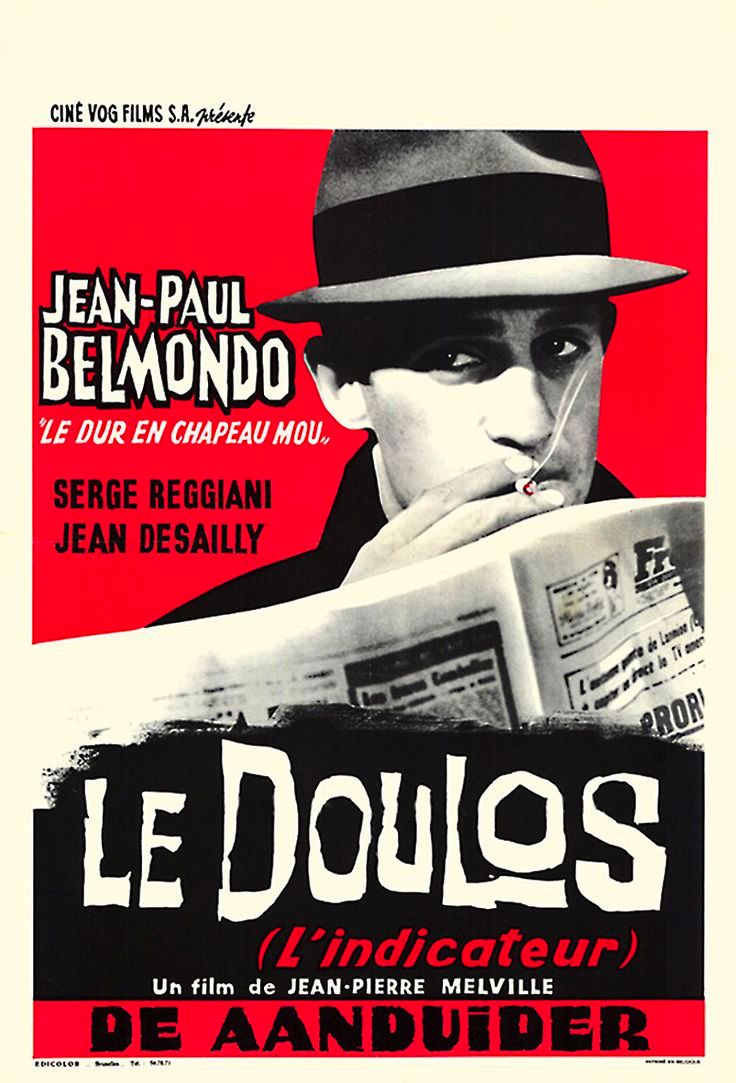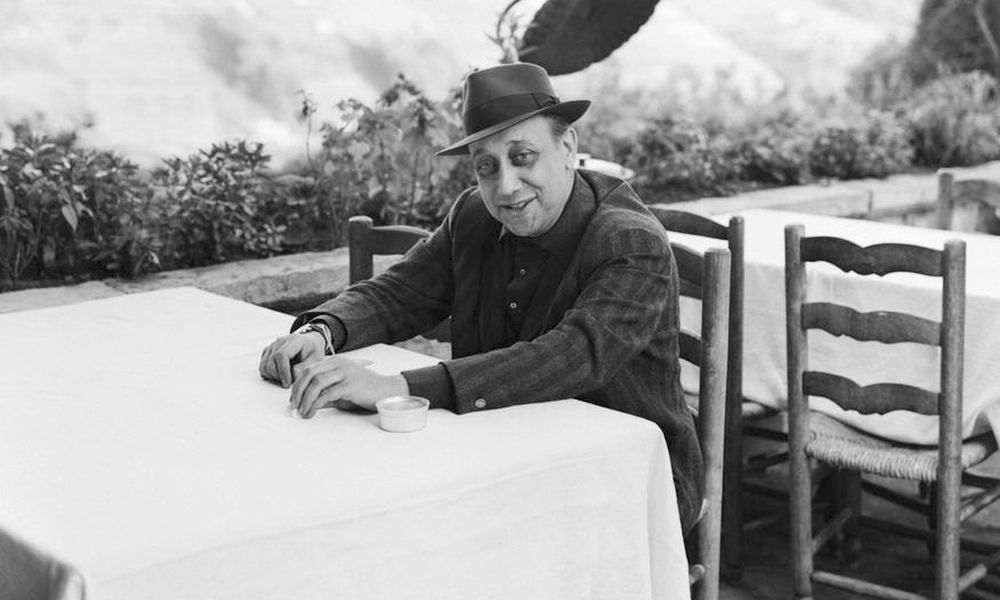
"Critic Raymond Durgnat has said of Melvillian heroes that they are "cool cats that walk by themselves". Martin Scorsese, Quentin Tarantino and Michael Mann all acknowledge a debt to Melvillian codes and dynamics, and it is difficult to imagine revisionist noir without Melville." - Richard Armstrong (The Rough Guide to Film, 2007)
Jean-Pierre Melville
Director / Screenwriter / Actor / Producer / Editor
(1917-1973) Born October 20, Paris, France
Top 250 Directors / 50 Key Noir Directors
(1917-1973) Born October 20, Paris, France
Top 250 Directors / 50 Key Noir Directors
Key Production Countries: France, Italy
Key Genres: Post-Noir (Modern Noir), Crime, Crime Thriller, Drama, Caper, Gangster Film, Thriller, War Drama, Police Detective Film, Psychological Drama, Romantic Drama
Key Collaborators: Henri Decae (Cinematographer), Monique Bonnot (Editor), Daniel Guéret (Production Designer), Jean-Marie Robain (Character Actor), Alain Delon (Leading Actor), Jean-Paul Belmondo (Leading Actor), Théobald Meurisse (Production Designer), Howard Vernon (Character Actor), Paul Crauchet (Character Actor), Monique Hennessy (Character Actress), Jean-Pierre Posier (Character Actor), Lino Ventura (Leading Actor)
Key Genres: Post-Noir (Modern Noir), Crime, Crime Thriller, Drama, Caper, Gangster Film, Thriller, War Drama, Police Detective Film, Psychological Drama, Romantic Drama
Key Collaborators: Henri Decae (Cinematographer), Monique Bonnot (Editor), Daniel Guéret (Production Designer), Jean-Marie Robain (Character Actor), Alain Delon (Leading Actor), Jean-Paul Belmondo (Leading Actor), Théobald Meurisse (Production Designer), Howard Vernon (Character Actor), Paul Crauchet (Character Actor), Monique Hennessy (Character Actress), Jean-Pierre Posier (Character Actor), Lino Ventura (Leading Actor)
"Melville gained most fame for such dry, laconic gangster films as Bob le flambeur (1955), Le Doulos (1962), Second Breath (1966), and Le Samourai (1967). Expressionless men in trenchcoats and snap-brim hats stalk through gray streets to meet in piano bars. Almost completely impassive, they behave as if they have watched too many Hollywood films noirs -driving American sedans, pledging loyalty to their pals, dividing duties for a caper they intend to pull. Melville dwells on long silences as gunmen size each other up, stare at their reflections, or stoically realize that a deal has failed. The films teem with bravura techniques - hand-held camerawork, long takes, and available-light shooting… Melville loved to watch movies. ("Being a spectator is the finest profession in the world.") Many of his films are tributes to American cinema, and he brought to French film some of the audacious energy of Hollywood B pictures. If Renoir fathered the New Wave, Melville was its godfather." - Kristin Thompson & David Bordwell (Film History: An Introduction, 2003)
"Melville was a precise, methodical director with a predilection for themes of war and crime. The former preoccupation was attributable to his own experiences, and the latter was the probable result of his nostalgic admiration for the Hollywood cinema of the 30s... Beginning in the early 60s, Melville worked with larger budgets and with name stars like Jean-Paul Belmondo and Alain Delon and showed an increasingly technical mastery of the medium." - The MacMillan International Film Encyclopedia, 1994
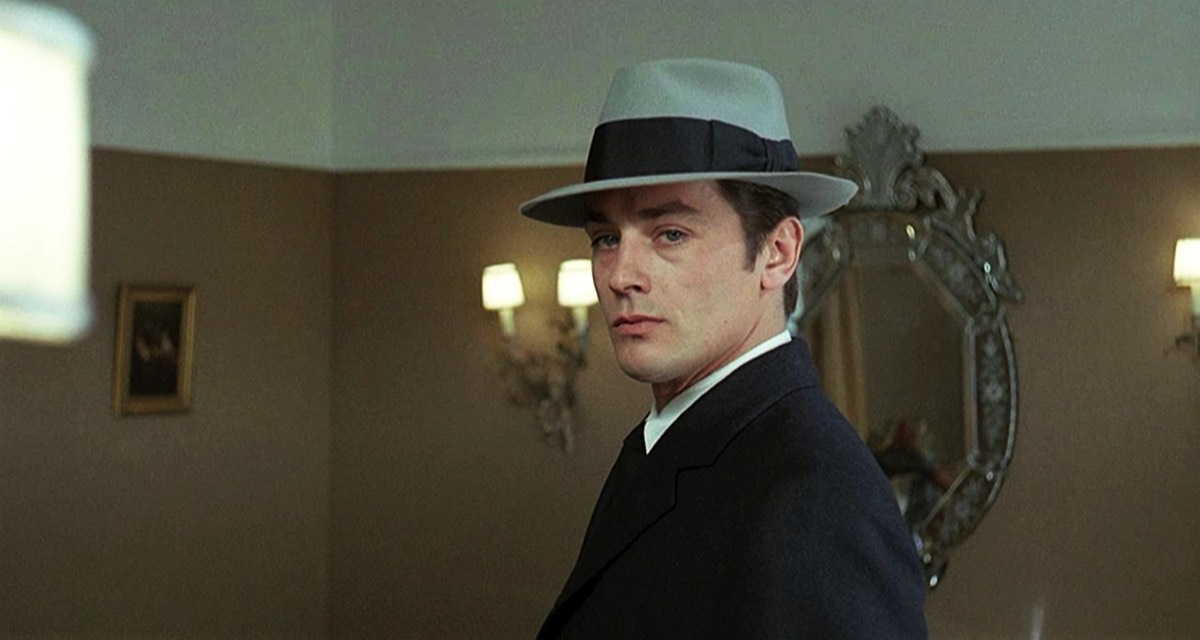
Le Samouraï (1967)
"He had a built-in breathlessness, in fact, an adopted resignation to transience and mutability that is partly an eccentric individualism and partly what Melville inherited from American mobility and obsolescence. It gives his gangster films a true supercharge - "en quatrième vitesse" - and he transformed Belmondo and Delon into beautiful destructive angels of the dark street." - David Thomson (The New Biographical Dictionary of Film, 2002)
"Watching the movies of Jean-Pierre Melville, whose centenary is this year, is about watching the faces of men: impassive, immovable, inscrutable. They exist in a macho world where codes of dress and behaviour are hardly different on either side of the law. There are men in trench coats and hats and loosened ties, men bunched into cars on the way to or from a job gazing blankly straight ahead, men in nightclubs, their professionally bored expressions unaffected or even petrified more intensely by the drink, the cigarettes and the sexy dancers up on stage grinding through some quaintly choreographed routine (a classic Melville scene this, used in almost every one of his films)." - Peter Bradshaw (The Guardian, 2017)
"Powerful endings and memorable set-pieces have a place in all Melville's work, even the earlier films, some of which are far removed from his later world of 'flics' and gangs', where the night-time photography glitters as cold and metallic as a gun barrel." - David Quinlan (Quinlan's Film Directors, 1999)
"Betrayal, revenge, and the criminal mind are significant elements in the work of Melville. His films are not so much reflections of the Hollywood crime genre as indications of a unique sensibility creating from the same source material - crime and criminals." - William R. Meyer (The Film Buff's Catalog, 1978)
"The most important quality needed by a film director – or as I prefer to say, a film creator [un createur de cinema] – is the ability not to work through his intellect, otherwise he ceases to create a spectacle. He must also have a feeling for observation, memory, psychology, and a fantastically acute sense of sight and sound. He must have the instinct of a showman." - Jean-Pierre Melville (Sight & Sound, 1968)
Selected Filmography
Loading filmography...
Jean-Pierre Melville / Fan Club
Adrian Danks, John Woo, Peter Debruge, Roger Deakins, Jaouad Toosi, Roger Ebert, Ginette Vincendeau, Agustín Díaz Yanes, Mark Lager, Pedro Almodóvar, Nick Schager, Martin Scorsese.
Adrian Danks, John Woo, Peter Debruge, Roger Deakins, Jaouad Toosi, Roger Ebert, Ginette Vincendeau, Agustín Díaz Yanes, Mark Lager, Pedro Almodóvar, Nick Schager, Martin Scorsese.
"Fan Club"
These film critics/filmmakers have, on multiple occasions, selected this director’s work within film ballots/lists that they have submitted.
These film critics/filmmakers have, on multiple occasions, selected this director’s work within film ballots/lists that they have submitted.