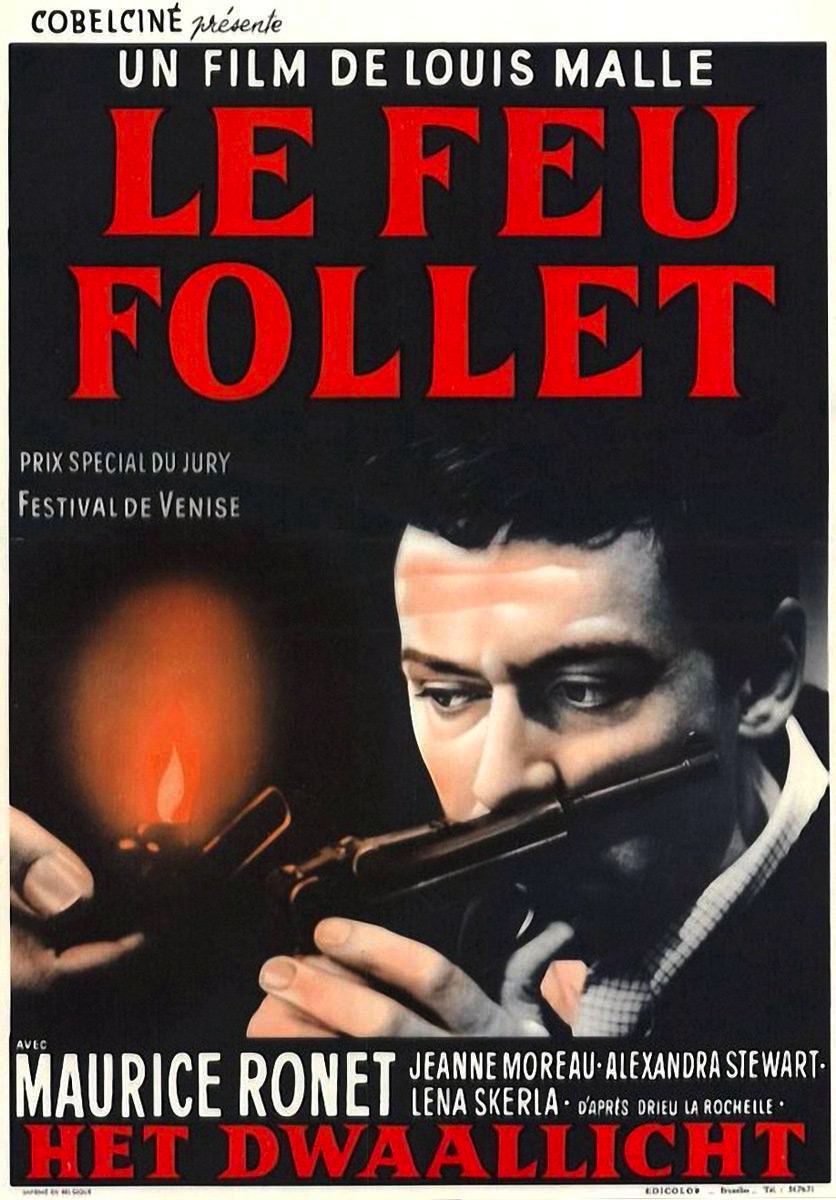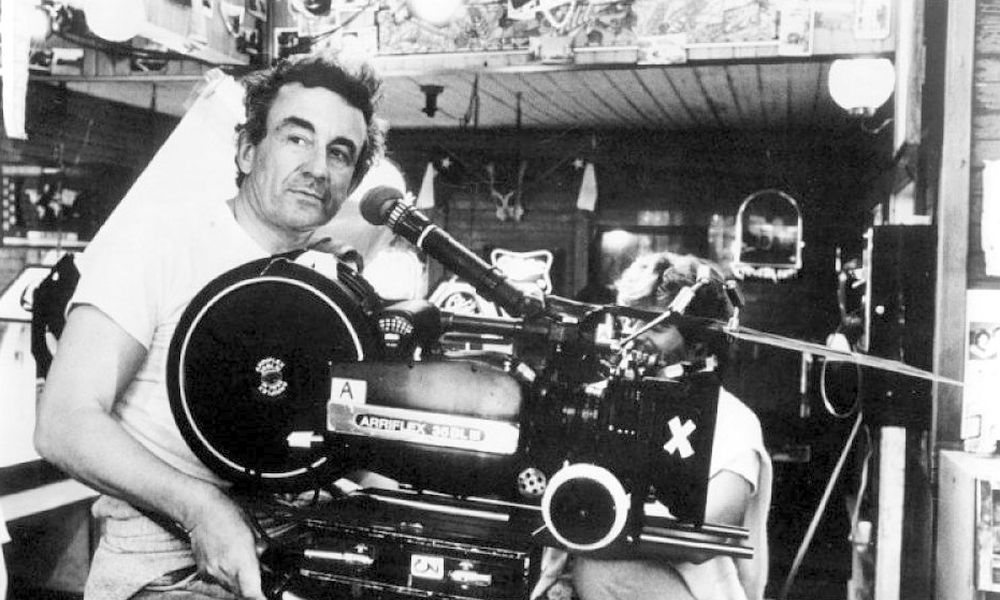
"Malle's unsentimental sympathies for his characters and his feel for the apparently banal but quietly meaningful details of everyday life have established him as an imaginative, if erratic, talent." - Geoff Andrew (Film Handbook, 1989)
Louis Malle
Director / Screenwriter / Producer / Cinematographer
(1932-1995) Born October 30, Thumeries, Nord, France
Top 250 Directors
(1932-1995) Born October 30, Thumeries, Nord, France
Top 250 Directors
Key Production Countries: France, USA, Italy
Key Genres: Drama, Documentary, Period Film, Culture & Society, Comedy, Romantic Drama, Psychological Drama, Crime, Social Issues, Coming-of-Age, Avant-garde/Experimental, Sociology
Key Collaborators: Suzanne Baron (Editor), Henri Decaë (Cinematographer), Bernard Evein (Production Designer), Jeanne Moreau (Leading Actress), Kenout Peltier (Editor), Jean-Claude Carrière (Screenwriter), Claude Nedjar (Producer), Vincent Malle (Producer), Wallace Shawn (Leading Character Actor), Hubert Deschamps (Character Actor), Maurice Ronet (Leading Actor), Brigitte Bardot (Leading Actress)
Key Genres: Drama, Documentary, Period Film, Culture & Society, Comedy, Romantic Drama, Psychological Drama, Crime, Social Issues, Coming-of-Age, Avant-garde/Experimental, Sociology
Key Collaborators: Suzanne Baron (Editor), Henri Decaë (Cinematographer), Bernard Evein (Production Designer), Jeanne Moreau (Leading Actress), Kenout Peltier (Editor), Jean-Claude Carrière (Screenwriter), Claude Nedjar (Producer), Vincent Malle (Producer), Wallace Shawn (Leading Character Actor), Hubert Deschamps (Character Actor), Maurice Ronet (Leading Actor), Brigitte Bardot (Leading Actress)
"Of the French New Wave directors who achieved lasting success, Louis Malle and Eric Rohmer perhaps stand furthest apart. Rohmer discovered early what he could do and has carried on doing it. Malle, however, seemed determined never to repeat himself and explored different genres, styles, and countries. It was a risky strategy and Malle had his fair share of fiascos... Some of Malle's most accomplished and deeply felt films concern adolescence: the semi-autobiographical Murmur of the Heart (1971); Lacombe, Lucien (1974), in which a loutish peasant lad joins the fascists in occupied France; and the moving Au revoir, les enfants (1987)." - Philip Kemp (501 Movie Directors, 2007)
"A critic remarked of one of Malle's last films that it was lovely to look at, but lacked narrative drive. That was not always true of the rich variety of work turned out by this French director, but it became increasingly so since the early 1970s... Malle made a gloriously wide variety of films, underlining his own attempts to escape categorization and his denial of the 'auteur' theory." - David Quinlan (Quinlan's Film Directors, 1999)
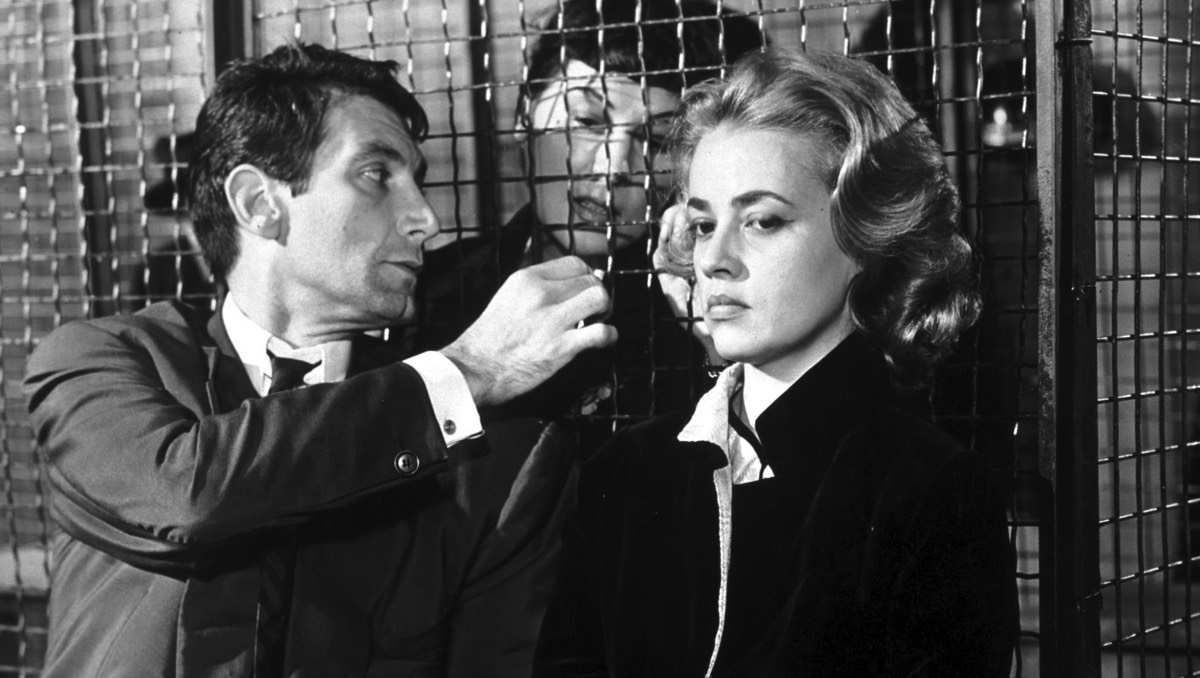
Elevator to the Gallows (1958)
"As the cresting New Wave battered at the restrictions of conventional narrative technique, Malle created a personal style, sexual and emotional which was to sustain him while flashier colleagues failed. Of the new wave survivors, he is the most old-fashioned, the most erotic, and arguably, the most widely successful... If Truffaut turned into the René Clair of the new French cinema, Malle may yet become its Max Ophüls." - John Baxter (International Dictionary of Films and Filmmakers, 1991)
"Although French director Louis Malle began working around the same time as Jean-Luc Godard and François Truffaut, he doesn’t properly belong with the French New Wave. Firstly, unlike most of the filmmakers of the movement, Malle did attend film school – in fact, that’s where he got his first big break, when he was chosen among the students of the prestigious school now known as La Fémis to be co-director on Jacques Cousteau’s The Silent World (1955)… Born into a wealthy bourgeois family, Malle was given opportunities to explore his artistic ambitions from an early age, though he would struggle with this image of having been born with a silver spoon in his mouth all his life. But even autobiographical details aside, a quick glance at Malle’s filmography reveals a filmmaker difficult to pin down: his rich output was eclectic, ranging from French arthouse films to American pictures, documentaries and even the erotic thriller." - Elena Lazic (BFI, 2021)
"Although he began to work at the same time as the New Wave directors, he was a speculative, conventional talent: sophisticated and polished, but moving rather aimlessly from one subject to another, only rarely discovering more than entertainment in his films. Too often, his choice of material was overambitious or fashionable, and his working out of human situations melodramatic. At worst, he had a taste for glossy, commercial packages that masquerade as artiness, and it seemed reasonable to regard him as the successor to such proficient but shallow directors as Autant-Lara and Duvivier." - David Thomson (The New Biographical Dictionary of Film, 2002)
"The French director Louis Malle was an auteur theorist's bête noire. If his films had one thing in common, it was the director's resolve to make each film different from the last. He began as cinematographer for Jacques Cousteau and assistant to Robert Bresson, and throughout his career, alternated between narrative features and documentaries; sometimes he made films that were both, and so recognizably neither. This is not to say that we can't find threads in his work leading from the features to the documentaries: he was a sensualist, a romantic, he loved jazz and was fascinated by cultures." - BAMPFA, 2005
"A workmanlike director who is always competent and sometimes brilliant. His Lacombe, Lucien (73) is a humanistic masterpiece of the 1970s, another Open City." - William R. Meyer (The Film Buff's Catalog, 1978)
"His work displays a sensitive understanding of adolescence, and a willingness to explore the dark corners of his country's past." - Chambers Film Factfinder, 2006
"Filmmakers don't work for posterity. We create with celluloid and chemical pigments that don't last very long. They fade away. In 200 years there will be nothing left of our work but dust." - Louis Malle
Selected Filmography
Loading filmography...
Louis Malle / Fan Club
Roger Ebert, Philip French, Michał Oleszczyk, Andrey Zvyagintsev, Jan Nemec, David Hare, Jan Lumholdt, Steve Gravestock, Shane Danielsen, Alfredo Sternheim, Ana Luiza Azevedo, Gustavo Spolidoro.
Roger Ebert, Philip French, Michał Oleszczyk, Andrey Zvyagintsev, Jan Nemec, David Hare, Jan Lumholdt, Steve Gravestock, Shane Danielsen, Alfredo Sternheim, Ana Luiza Azevedo, Gustavo Spolidoro.
"Fan Club"
These film critics/filmmakers have, on multiple occasions, selected this director’s work within film ballots/lists that they have submitted.
These film critics/filmmakers have, on multiple occasions, selected this director’s work within film ballots/lists that they have submitted.