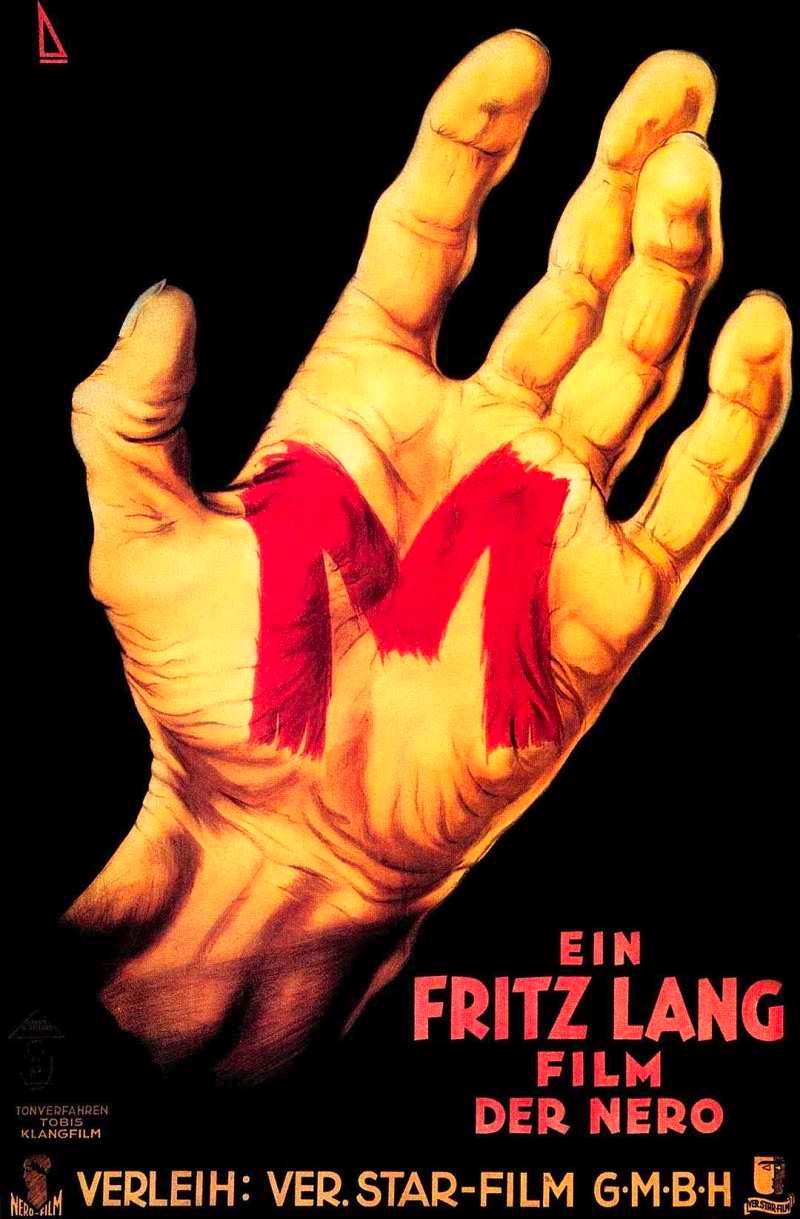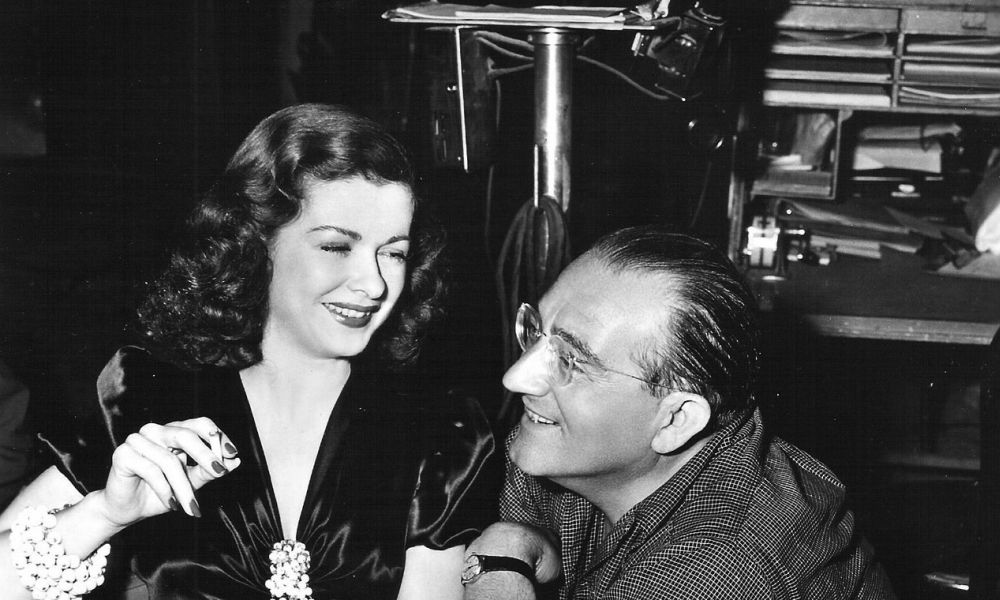
"Of all the continental refugees, Lang adapted most naturally to America. The films he made there match his greatest because he found a studio system better organised and more adept at narrative genres. Between Fury and Beyond a Reasonable Doubt there is an achievement still not appreciated in English-speaking circles." - David Thomson (The New Biographical Dictionary of Film, 2002)
Fritz Lang
Director / Screenwriter / Producer
(1890-1976) Born December 5, Vienna, Austria-Hungary (now Austria)
Top 250 Directors / 50 Key Noir Directors
(1890-1976) Born December 5, Vienna, Austria-Hungary (now Austria)
Top 250 Directors / 50 Key Noir Directors
Key Production Countries: USA, Germany, France, West Germany, Italy
Key Genres: Drama, Film Noir, Crime Drama, Thriller, Crime, Police Detective Film, Psychological Thriller, Adventure, Fantasy, Psychological Thriller, Melodrama, Spy Film
Key Collaborators: Thea von Harbou (Screenwriter), Georg John (Character Actor), Rudolf Klein-Rogge (Leading Character Actor), Otto Hunte (Production Designer), Dan Seymour (Character Actor), Erich Pommer (Producer), Theodor Loos (Leading Character Actor), Karl Vollbrecht (Production Designer), Joan Bennett (Leading Actress), Fritz Arno Wagner (Cinematographer), Sylvia Sidney (Leading Actress), Günther Rittau (Cinematographer)
Key Genres: Drama, Film Noir, Crime Drama, Thriller, Crime, Police Detective Film, Psychological Thriller, Adventure, Fantasy, Psychological Thriller, Melodrama, Spy Film
Key Collaborators: Thea von Harbou (Screenwriter), Georg John (Character Actor), Rudolf Klein-Rogge (Leading Character Actor), Otto Hunte (Production Designer), Dan Seymour (Character Actor), Erich Pommer (Producer), Theodor Loos (Leading Character Actor), Karl Vollbrecht (Production Designer), Joan Bennett (Leading Actress), Fritz Arno Wagner (Cinematographer), Sylvia Sidney (Leading Actress), Günther Rittau (Cinematographer)
"While many associate him, because of Metropolis, with German expressionism, Lang’s visual style became more pared down in his American films, but he remained a strong believer in the power of visual material (especially mise-en-scène). Among his recurrent themes were notions of people being entrapped and of the unforeseen consequences of chance encounters. These can be detected in such films as The Woman in the Window (1944), Scarlet Street (1945), and Beyond a Reasonable Doubt (1956). He also explored the subtleties and ramifications of revenge in his fine police thriller The Big Heat (1953), among other movies." - Brian McDonnell (Encyclopedia of Film Noir, 2007)
"Fritz Lang's cinema is the cinema of the nightmare, the fable, and the philosophical dissertation. Lang's apparent weaknesses are the consequences of his virtues... His characters never develop with any psychological precision, and his world lacks the details of verisimilitude that are so important to realistic critics. However, Lang's vision of the world is profoundly expressed by his visual forms." - Andrew Sarris (The American Cinema, 1968)
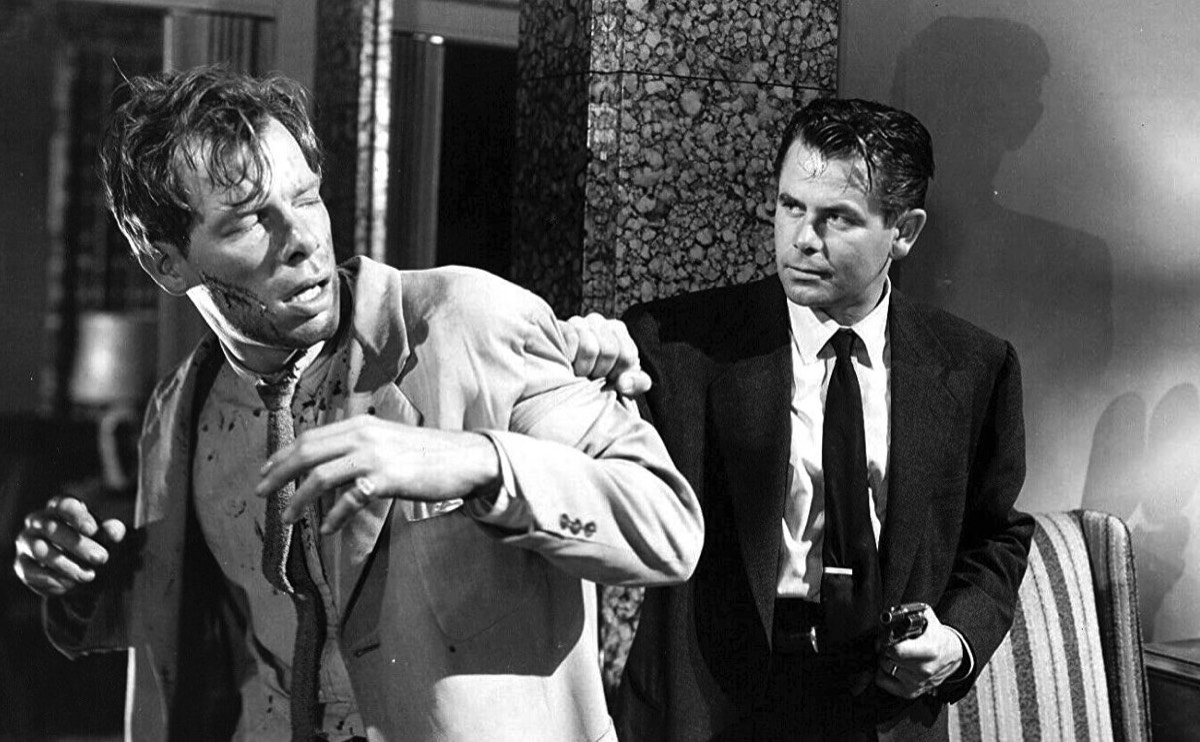
The Big Heat (1953)
"Few directors can have created so many images of entrapment as did Lang during his long, distinguished career. Repeatedly, his protagonists are imprisoned not only by an uncaring society or by their own flawed nature, but by Destiny itself: Lang's stories, which regularly return to the theme of crime and punishment, have the rigorous logic of a philosophical theorem." - Geoff Andrew (The Director's Vision, 1999)
"Fritz Lang is a towering figure in film history. His work stretches over five decades, from the Expressionist silent films of his initial German period, through his brief Paris sojourn and his work as a Hollywood director, to his final three films made in Germany. A contemporary of F.W. Murnau, G.W. Pabst, and Ernst Lubitsch, Lang received early recognition for his brilliance with suspense, visionary insight into the zeitgeist of the German people, and flair for visual stylization… Lang’s work is thematically consistent, exploring struggles against destiny, entrapment, and paranoiac delusions. In mise en scène, he was a master of designing closed, labyrinthine worlds in which nightmarish adventures unfold." - Susan Oxtoby (BAMPFA, 2019)
"Lang's continuing obsession with the psychology of human weakness made him the ideal thriller and film noir director, with masterpieces such as The Big Heat (1953), Clash by Night (1953), and While the City Sleeps (1956) to his credit." - Mario Reading (The Movie Companion, 2006)
"A deep thinker (a rare commodity in Hollywood), his work exhibited a surprising disconnect with human emotion, a charge often leveled at another of cinema’s deep thinkers, Stanley Kubrick. Yet it was Lang’s social consciousness that was truly inspiring, and which makes his Hollywood career of greater value that his more artsy stint in Germany, (though none of his Hollywood creations are as visually impressive as Metropolis or M). His genuine feeling for the workings of the criminal mind, antipathy for the death penalty, mob violence and sensationalistic journalism, and enthusiasm for other cultures and time periods marked him as fundamentally liberal, despite the monocle and aristocratic bearing. His approach to filmmaking in the Hollywood years was too staid to sustain his popular reputation into the 21st century, but his critical stature remains untarnished to this day." - Dan Shaw (Senses of Cinema, 2002)
"Looking upon the world with grim detachment and a strong moral sense, Fritz Lang worked through two careers: in Germany (1919 to 1932) and Hollywood (1936 to 1956)." - Ronald Bergan (Film - Eyewitness Companions, 2006)
"Fascinated by violence, cruelty and the criminal mind, he produced memorable silent epics; after fleeing Nazi germany, he settled in California to direct westerns, thrillers and social dramas with equal distinction." - Chambers Film Factfinder, 2006
"A world of paranoia, fear and evil fills the work of Fritz Lang. His early German films (Dr. Mabuse, 22; Metropolis, 26; M, 31) are subtle, yet striking illustrations of those preoccupations, while later American works (Man Hunt, 41; The Big Heat, 53) are more explosive." - William R. Meyer (The Film Buff's Catalog, 1978)
“Fritz Lang brought to the screen a vision of a world largely populated by criminals, psychopaths, prostitutes, and maladjusted personalities, ruled by the inevitability of fate. It was the fascinating visual means with which he chose to express that made him one of the creative giants in the history of both the German and American cinema.” - The Virgin International Encyclopedia of Film, 1992
"There's something which you should get out from an actor, something which is under his skin, something which he himself maybe doesn't know exactly. I hate - and I never did - to show an actor how to play a role. I don't want to have twenty-five little Fritz Lang's running around. I have too much respect for an actor." - Fritz Lang (Directing the Film, 1976)
Selected Filmography
Loading filmography...
Fritz Lang / Fan Club
Jonathan Rosenbaum, Miguel Marías, José Luis Guarner, Freddy Buache, Michel Mourlet, Pierre Rissient, Jean-Loup Bourget, Inácio Araújo, Jesús Cortés, Mariano Llinás, Jean Douchet, Enno Patalas.
Jonathan Rosenbaum, Miguel Marías, José Luis Guarner, Freddy Buache, Michel Mourlet, Pierre Rissient, Jean-Loup Bourget, Inácio Araújo, Jesús Cortés, Mariano Llinás, Jean Douchet, Enno Patalas.
"Fan Club"
These film critics/filmmakers have, on multiple occasions, selected this director’s work within film ballots/lists that they have submitted.
These film critics/filmmakers have, on multiple occasions, selected this director’s work within film ballots/lists that they have submitted.