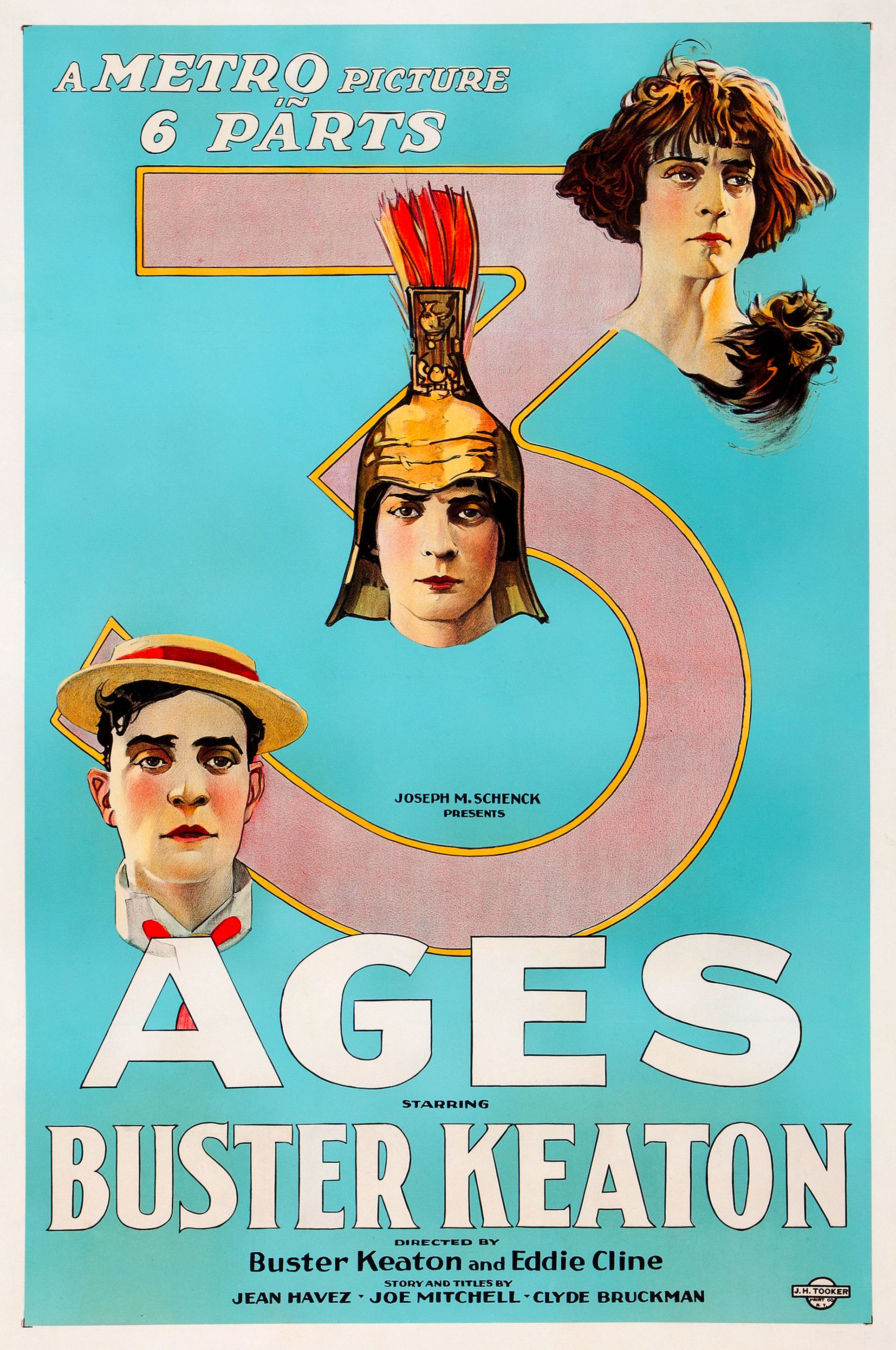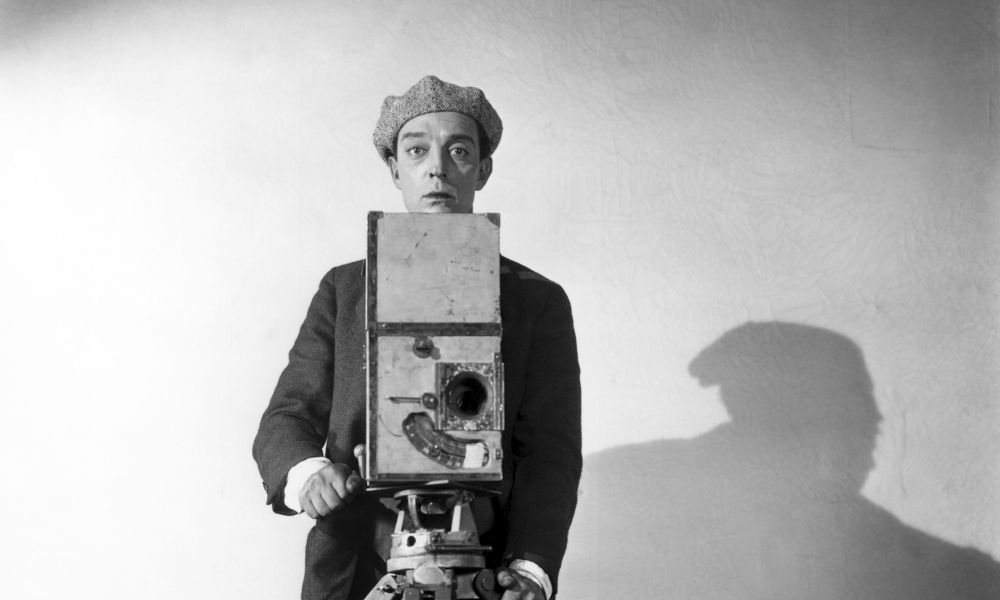
"Keaton was ahead of his time. During the 20s he was overshadowed by Chaplin and Harold Lloyd, yet it is Keaton's work that has best stood the test of time, and today he is widely regarded as the greatest comic film-maker of them all." - Joel W. Finler (The Movie Directors Story, 1985)
Buster Keaton
Director / Actor / Screenwriter / Editor / Producer
(1895-1966) Born October 4, Piqua, Kansas, USA
Top 250 Directors
(1895-1966) Born October 4, Piqua, Kansas, USA
Top 250 Directors
Key Production Country: USA
Key Genres: Comedy, Short Film, Slapstick, Romantic Comedy, Romance, Adventure Comedy, Sea Adventure, Sports Comedy, Comedy Western
Key Collaborators: Eddie Cline (Director/Screenwriter/Leading Character Actor), Elgin Lessley (Cinematographer), Joseph M. Schenck (Producer), Joe Roberts (Leading Character Actor), Virginia Fox (Leading Actress), Joe Keaton (Leading Character Actor), Sybil Seely (Leading Actress), Fred Gabourie (Production Designer), Clyde Bruckman (Director/Screenwriter), Wallace Beery (Leading Actor), Snitz Edwards (Leading Actor), Monte Collins (Leading Actor)
Key Genres: Comedy, Short Film, Slapstick, Romantic Comedy, Romance, Adventure Comedy, Sea Adventure, Sports Comedy, Comedy Western
Key Collaborators: Eddie Cline (Director/Screenwriter/Leading Character Actor), Elgin Lessley (Cinematographer), Joseph M. Schenck (Producer), Joe Roberts (Leading Character Actor), Virginia Fox (Leading Actress), Joe Keaton (Leading Character Actor), Sybil Seely (Leading Actress), Fred Gabourie (Production Designer), Clyde Bruckman (Director/Screenwriter), Wallace Beery (Leading Actor), Snitz Edwards (Leading Actor), Monte Collins (Leading Actor)
"Of all the great silent comedians, Buster Keaton is the one who suffered the worst eclipse with the coming of sound but whose reputation has recovered the best… Keaton's mastery of timing -- the natural comedian's stock-in trade -- was extraordinary. From very early on, however, he extended it from the field of acting performance into that of extended mise-en-scene. He developed running gags and constructed comic scenes which lasted for several minutes and deployed extensive resources, often centered around moving objects such as trains or motor-bikes. Control of the architecture of these scenes was as important as the comic business carried by his performance." - Geoffrey Nowell-Smith (The Oxford History of World Cinema, 1999)
"Buster Keaton is the only creator-star of American silent comedies who equals Chaplin as one of the artistic giants of the cinema. He is perhaps the only silent clown whose reputation is far higher today than it was in the 1920s, when he made his greatest films. In comparison to Chaplin, Keaton's films were more blithely athletic and optimistic, more committed to audacious physical stunts and cinema tricks, far less interested in exploring moral paradoxes and emotional resonances." - Gerald Mast (The St. James Film Directors Encyclopedia, 1998)
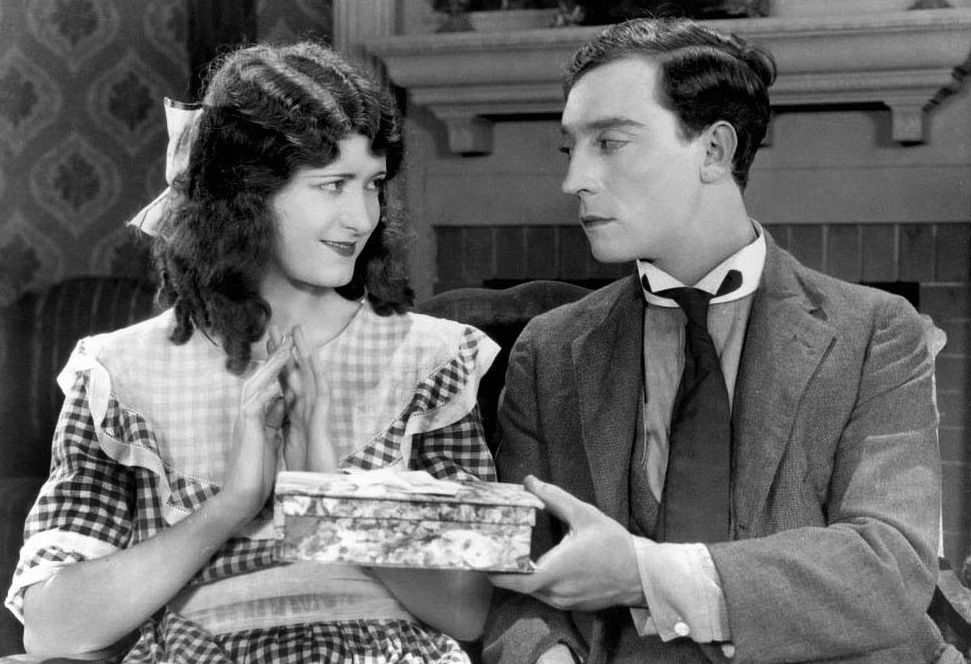
Sherlock Jr. (1924)
"Joseph Francis Keaton is arguably the greatest film comedian the world has ever known. What is perhaps less commonly recognised is that he was also one of cinema's greatest directors: unlike most comics, he displayed a masterly, apparently intuitive grasp of the possibilities of film, both before and behind the camera." - Geoff Andrew (The Film Handbook, 1989)
"Like so many film artists, he needed the freedom to create spontaneously if he was to function at his highest level. During the 1920s, he put out a phenomenal array of rarified, perfectly judged features and shorts, a cinematic jewel-box featuring authentic period detail, is-he-really-doing-that? stunts and an enduring persona that qualifies as one of the most poetic reactions to life imaginable. Restrained, unpretentious, pure films, they belie his seemingly disorganized working methods, a series of disparate and largely unnecessary co-directors and the apparent self-destructiveness of his own personality." - Dan Callahan (Senses of Cinema, 2002)
"Keaton strikes a chord with the world of post-1960 that was not heard when his greatest films were made. It has been argued, with justice, that his films are "beautiful," which means that their comedy is expressed in photography that is creative, witty, and excited by the appearance of things. That sounds obvious, but most comedy films of the silent era did little more than film the comedian's "act." - David Thomson (The New Biographical Dictionary of Film, 2002)
"Keaton was not possessed with Chaplin's need to express poetry on screen; rather, his comedy is rooted in the traditions of the American medicine show and vaudeville and its strength lies in its ability to sustain a gag, not through belly laughs, but by exploiting the inspiring resourcefulness of its indomitable hero. Keaton exercised complete artistic control over his films, and although he was usually billed as co-director of his productions, he was actually in charge of all directorial decisions on the set." - The MacMillan International Film Encyclopedia, 1994
"Although his directorial career was cut short by sound and Louis B. Mayer, Keaton helmed, wrote, and starred in some of the most brilliant comedies in cinema history. He had a fine sense of story values, the past, character development, and comic logic. In addition to having talent for slapstick, Keaton, most of all, was a master of humor which could only be done on the movie screen." - William R. Meyer (The Film Buff's Catalog, 1978)
“From 1920 Keaton was virtually his own director but, as he was hardly off the screen, he needed a co-director. It is fairly certain that most of the conception of the films was his. They are supreme examples of visual comedy allied to cinematic technique. The multitude of gags, impossible to describe in print, depend on cutting, camera set-ups and spacio-temporal tensions.” - Ronald Bergan (A-Z of Movie Directors, 1983)
"I don't act, anyway. The stuff is all injected as we go along. My pictures are made without script or written directions of any kind." - Buster Keaton
Selected Filmography
Loading filmography...
Buster Keaton / Fan Club
David Stratton, Jeffrey M. Anderson, José Luis Guarner, Dilys Powell, Dana Stevens, Kenneth Turan, Geoff Andrew, Tony Macklin, Mariano Llinás, Carrie Rickey, Michel Ciment, Miguel Marías.
David Stratton, Jeffrey M. Anderson, José Luis Guarner, Dilys Powell, Dana Stevens, Kenneth Turan, Geoff Andrew, Tony Macklin, Mariano Llinás, Carrie Rickey, Michel Ciment, Miguel Marías.
"Fan Club"
These film critics/filmmakers have, on multiple occasions, selected this director’s work within film ballots/lists that they have submitted.
These film critics/filmmakers have, on multiple occasions, selected this director’s work within film ballots/lists that they have submitted.