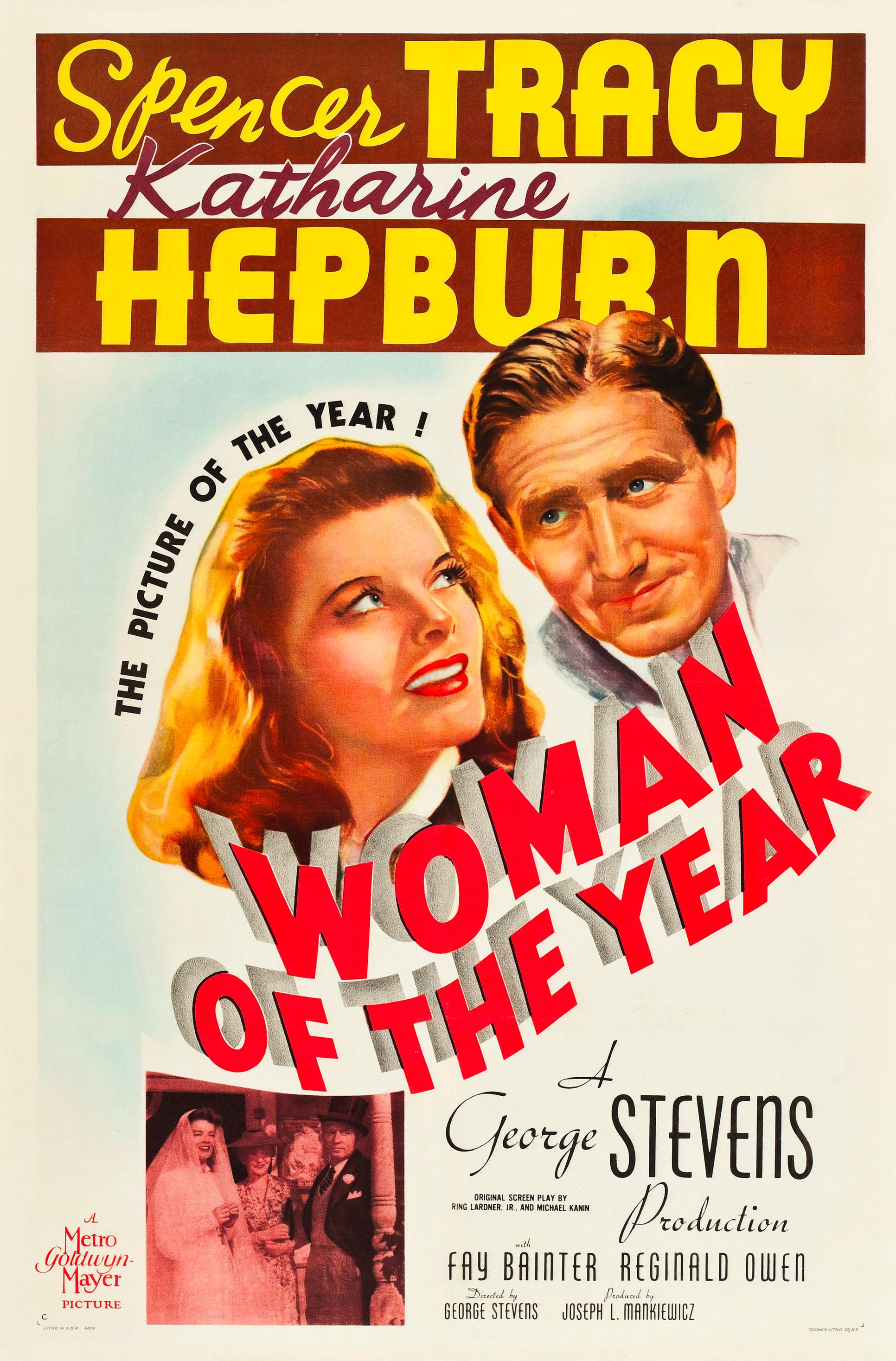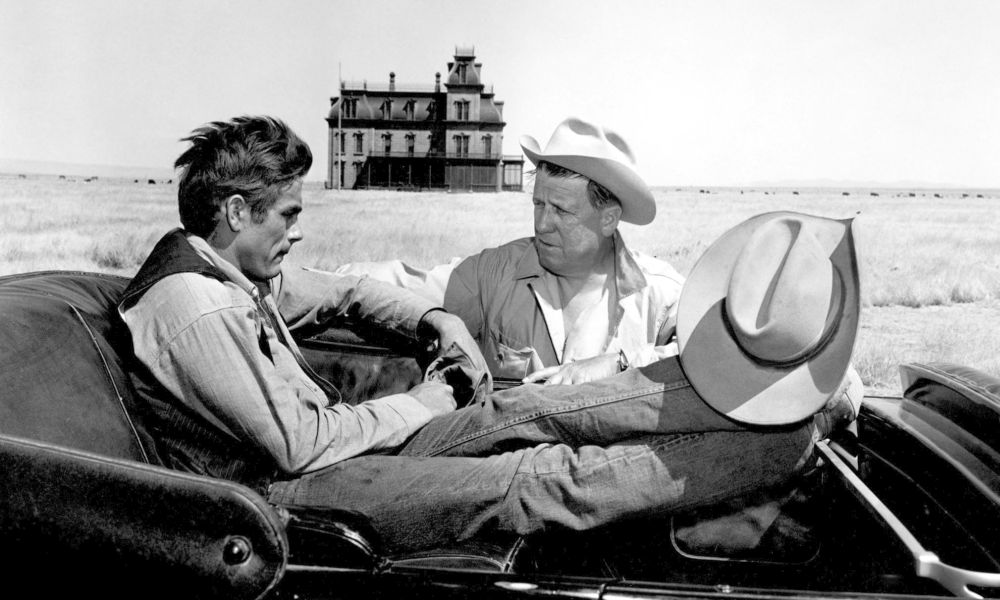
"Although this American director's reputation has plunged in recent decades, a look at the films he made in the 1930s and 1940s reveals him as one of the most versatile, talented and successful of Hollywood's younger directors of the time." - David Quinlan (Quinlan's Film Directors, 1999)
George Stevens
Director / Producer / Cinematographer
(1904-1975) Born December 18, Oakland, California, USA
Top 250 Directors
(1904-1975) Born December 18, Oakland, California, USA
Top 250 Directors
Key Production Country: USA
Key Genres: Drama, Romance, Romantic Comedy, Comedy, Modern Western, Romantic Drama, Musical Romance, Musical
Key Collaborators: Van Nest Polglase (Production Designer), Henry Berman (Editor), Pandro S. Berman (Producer), William Mellor (Cinematographer), Cary Grant (Leading Actor), Katharine Hepburn (Leading Actress), Elizabeth Taylor (Leading Actress), Jean Arthur (Leading Actress), Robert De Grasse (Cinematographer), William Hornbeck (Editor), Edgar Buchanan (Leading Character Actor), Joan Fontaine (Leading Character Actress)
Key Genres: Drama, Romance, Romantic Comedy, Comedy, Modern Western, Romantic Drama, Musical Romance, Musical
Key Collaborators: Van Nest Polglase (Production Designer), Henry Berman (Editor), Pandro S. Berman (Producer), William Mellor (Cinematographer), Cary Grant (Leading Actor), Katharine Hepburn (Leading Actress), Elizabeth Taylor (Leading Actress), Jean Arthur (Leading Actress), Robert De Grasse (Cinematographer), William Hornbeck (Editor), Edgar Buchanan (Leading Character Actor), Joan Fontaine (Leading Character Actress)
"George Stevens is notable as a creator of classic U.S. cinema. He was nominated five times for an Academy Award as Best Director, winning twice... Each of Stevens's films has his unique stamp. He was a craftsman with an eye for detail and the ability to create a credible world onscreen for his characters to inhabit... Another of Stevens's talents was his ability to get the best from his cast, eliciting compelling performances from some of Hollywood's greatest actors." - Edward Buscombe (501 Movie Directors, 2007)
"People always count in a George Stevens film, and it is notable that even in his early comedies (and very good they are too), and in his later melodramas, he never quite allows sentiment to take over from sense, and so retains his capacity to move, rather than merely tug, at the heartstrings." - Mario Reading (The Movie Companion, 2006)
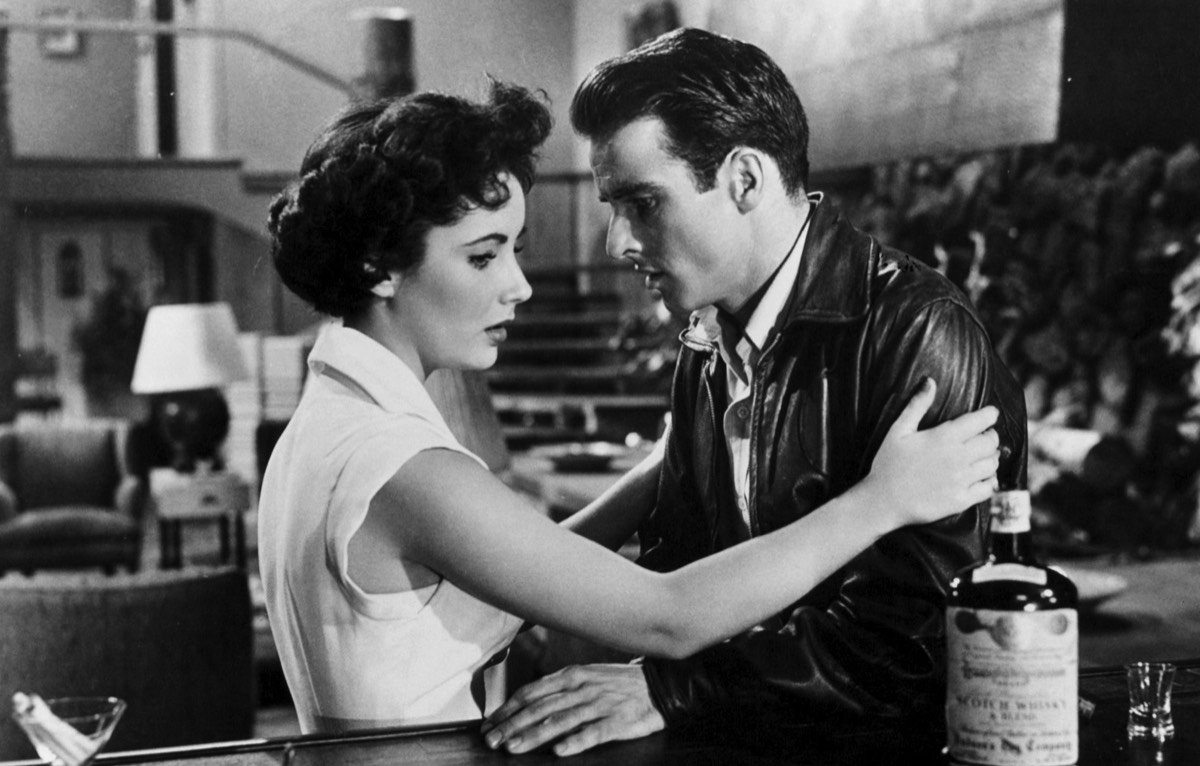
A Place in the Sun (1951)
"It is often said that the war changed Stevens, and made it less easy for him to believe in entertainment... There is no biography as yet, so the question is hard to answer. But something seems to have afflicted Stevens. He was never a great director. But in the thirties he had a feeling for fun, grace, and story. Thereafter, he was always somber - and sometimes heavier than that." - David Thomson (The New Biographical Dictionary of Film, 2002)
"A two-time Oscar winner (for the iconic Elizabeth Taylor vehicles Giant and A Place in the Sun), Stevens spent much of his career on the Hollywood A-list, but was roundly dismissed as an empty craftsman by the young Turks of Cahiers du cinéma and by Andrew Sarris in The American Cinema. Today, his intelligent crowd-pleasers and ambitious melodramas beg reevaluation for their acute insights into the American character." - Film at Lincoln Center
"Mainly because of multiple takes and shooting from every possible angle, George Stevens took 22 years to make his last eight films. In the late 1920s, Stevens directed Laurel and Hardy two-reelers, and in the 1930s and early 1940s, a wide range of polished films including three comedies with Katharine Hepburn, a couple of Fred Astaire musicals, and a colonial adventure film, Gunga Din (1939). His later films were more personal, his working methods slower, and his style more deliberate." - Ronald Bergan (Film - Eyewitness Companions, 2006)
"His earlier work shows a flair for comedy (The More the Merrier, 43), musicals (Swing Time, 36), adventure (Gunga Din, 39), and Americana (Alice Adams, 35). Stevens later lensed big blockbusters containing characters searching for truth and peace, as well as the director's often brilliant use of slowly blossoming narratives, limpid dissolves, and anticlimactic violence." - William R. Meyer (The Film Buff's Catalog, 1978)
"Stevens' classical humanism - exemplified by The Diary of Anne Frank (1959) - and his mainstream success did not commend him among auteurists, although a recurring preoccupation with the outsider has been discerned in Alice Adams, Shane, A Place in The Sun (Montgomery Clift as George Eastman) and Giant (James Dean as Jett Rink)." - Tom Charity (The Rough Guide to Film, 2007)
"Only an audience can give validity to a film, and as a filmmaker you are constantly searching for this community of acceptance. There's nothing quite as unresponsive as a white sheet at the far end of an auditorium in front of an arrangement of chairs. The audience gives a film credence, they draw from their knowledge to determine whether what they're watching is valid." - George Stevens
Selected Filmography
{{row.titlelong}}
George Stevens / Fan Club
Martin Scorsese, José Luis Guarner, Sofia Coppola, Charles Burnett, David Siegel, John Ewing, Laurent Jullier, Patrick Russell, Dennis Hopper, Tony Macklin, Ana Maria Magalhães, Manuel Hidalgo.
Martin Scorsese, José Luis Guarner, Sofia Coppola, Charles Burnett, David Siegel, John Ewing, Laurent Jullier, Patrick Russell, Dennis Hopper, Tony Macklin, Ana Maria Magalhães, Manuel Hidalgo.
"Fan Club"
These film critics/filmmakers have, on multiple occasions, selected this director’s work within film ballots/lists that they have submitted.
These film critics/filmmakers have, on multiple occasions, selected this director’s work within film ballots/lists that they have submitted.