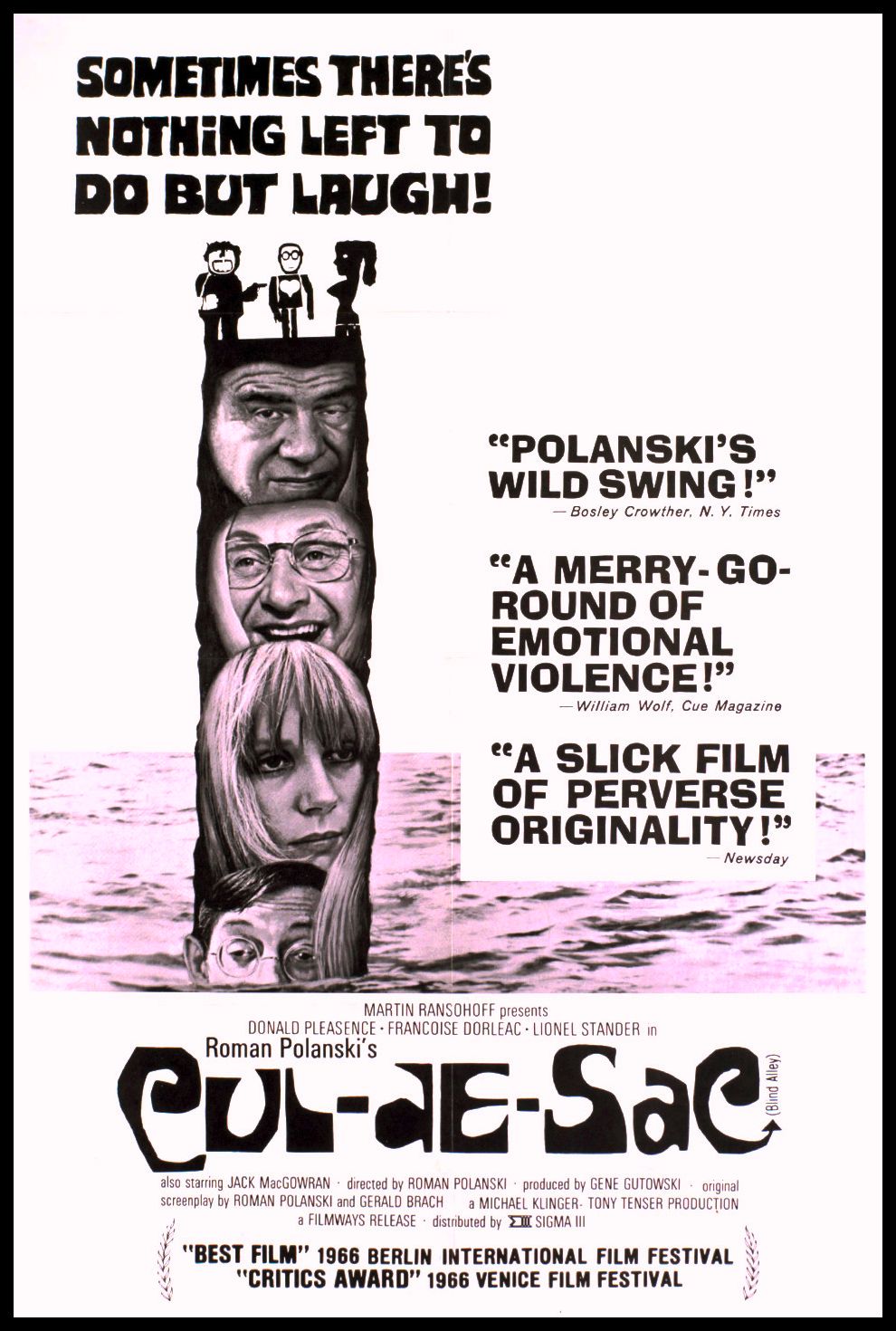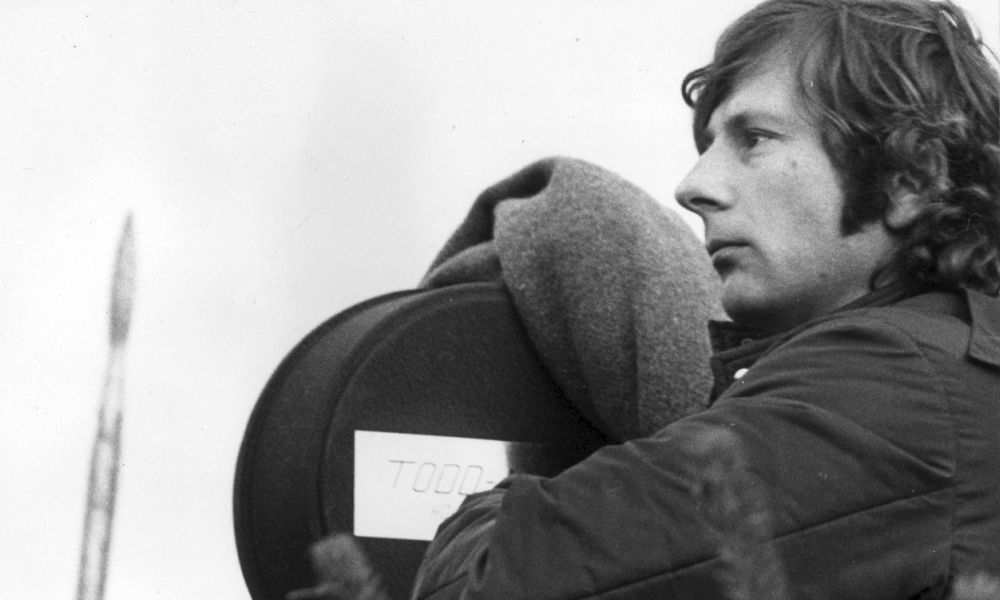
"Uneasy with outright comedy, Polanski excels at exploring the dark recesses of the human mind and the fraught, potentially hostile spaces between people desperate but finally unable to make proper, lasting contact." - Geoff Andrew (The Director's Vision, 1999)
Roman Polanski
Key Production Countries: France, UK, USA, Poland, Germany
Key Genres: Drama, Thriller, Psychological Thriller, Black Comedy, Period Film, Psychological Drama, Comedy Drama, Comedy, Horror, Mystery, Erotic Drama, Supernatural Thriller
Key Collaborators: Gérard Brach (Screenwriter), Herve de Luze (Editor), Pawel Edelman (Cinematographer), Alastair McIntyre (Editor), Krzysztof Komeda (Composer), Emmanuelle Seigner (Leading Actress), Alain Sarde (Producer), Robert Benmussa (Producer), Alexandre Desplat (Composer), Pierre Guffroy (Production Designer), John Brownjohn (Screenwriter), Gene Gutowski (Producer)
Key Genres: Drama, Thriller, Psychological Thriller, Black Comedy, Period Film, Psychological Drama, Comedy Drama, Comedy, Horror, Mystery, Erotic Drama, Supernatural Thriller
Key Collaborators: Gérard Brach (Screenwriter), Herve de Luze (Editor), Pawel Edelman (Cinematographer), Alastair McIntyre (Editor), Krzysztof Komeda (Composer), Emmanuelle Seigner (Leading Actress), Alain Sarde (Producer), Robert Benmussa (Producer), Alexandre Desplat (Composer), Pierre Guffroy (Production Designer), John Brownjohn (Screenwriter), Gene Gutowski (Producer)
"Polanski, like Billy Wilder and Ernst Lubitsch before him, is a genre filmmaker of the classic sort. Although his contemporaries, such as Volker Schlöndorff and Krzysztof Kieslowski, have opted for genres of voice, the moral fable, and the satire, Polanski has been far more classical, preferring to use film noir, horror films, or war films and their traditions of mixing plot and character layers in accord with the particular genre convention." - Ken Dancyger (The Director's Idea: The Path to Great Directing, 2006)
"In addition to the mental scars of his tortured childhood, Polanski acknowledges the influences on his work of Beckett, Ionesco, Pinter, Kafka, and Buñuel. Atmosphere is the most important element of his films and the core around which he builds his plots and develops his characters. Like Hitchcock, he considers actors as simple pawns in the game of filmmaking and reportedly subjects them to much abuse on the set, especially the actresses." - The MacMillan International Film Encyclopedia, 1994
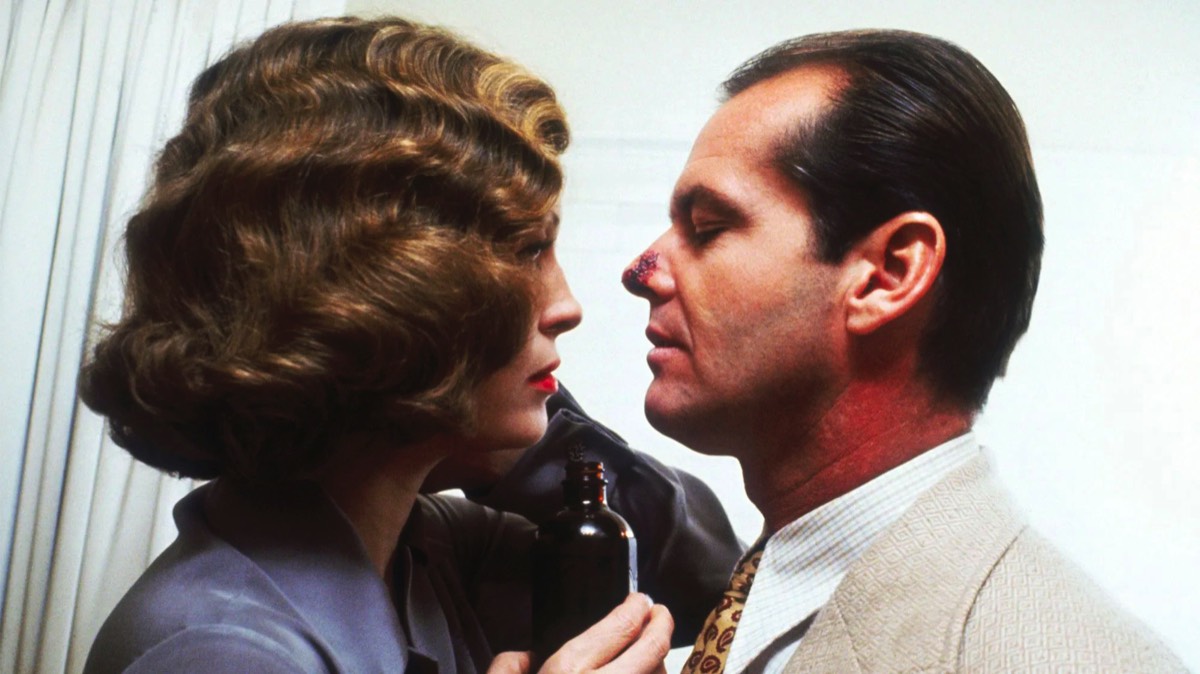
Chinatown (1974)
"People living on the ragged edge - or forced to live on it: this Polish (French-born) director's films are concerned with pressures, alienation and a succumbing to the evil nightmares lurking within us. One senses a bitterness in Polanski that the beauty of the images he often creates on screen can't gloss over." - David Quinlan (Quinlan's Film Directors, 1999)
"Roman Polanski's life has had more drama than a Shakespearean tragedy. But in his remarkable, nearly 50-year career as a director, he has created some of the most unsettling images and haunting films ever made." - James Greenberg (DGA, 2009)
"The quintessential Roman Polanski film is a penned-in chamber drama where the air is thick with foreboding, sexual pathology and senseless violence. Within Polanski's shock corridors, the strong prey upon the weak (with an evil glee that borders on the grimly comic in the 2005 Dickens adaptation Oliver Twist) or, less often, the weak perceive a threat that exists only in the passageways of a disordered mind." - Jessica Winter (The Rough Guide to Film, 2007)
"Polanski came to international prominence in the 1960s, the era of the various, global, New Wave movements in cinema. Yet he steadfastly resisted the prevailing cult of freewheeling roughness, spontaneity and rule-breaking associated with such contemporaneous figures as Jean-Luc Godard, Jerzy Skolimowski and Nagisa Oshima. For Polanski, even the most modern, disconcerting or radical experiment must be anchored in a solid sense of filmic and storytelling craft." - Adrian Martin (ACMI, 2016)
"Polanski's work might be seen as an attempt to map out the precise relationship between the contemporary world's instability and tendency to violence and the individual's increasing inability to overcome the isolation and locate some realm of meaning or value beyond himself... From his own isolated position - as a man effectively without a country - Polanski tries to confront the probems of isolation, violence, and evil, and to speak of them for an audience prone to their sway." - J.P. Telotte (International Dictionary of Films and Filmmakers, 1991)
"Roman Polanski has enjoyed a successful if controversial career in the cinema over almost forty years, directing in various countries including Poland, Britain, America, France and Italy. While highly diverse, his films are usually set in restricted spaces and involve small groups of characters, often alienated from modern society. The world he evokes is unstable, marked by sudden and shocking tendencies towards violence." - Jamie Sexton (BFI Screen Online)
"The violence in Polanski's films is not especially prominent; it has seldom erupted with the force achieved by Peckinpah, Arthur Penn, Fuller, or Losey. Much more characteristic is the underlying alienation and hostility: the feeling that people are cut off, unsupported by any shared view of life and society. From this solitariness, the move toward acts of violence is stealthy, remorseless, and even comic." - David Thomson (The New Biographical Dictionary of Film, 2002)
"Compelling tales which are chilling and bizarre are his trademark." - William R. Meyer (The Film Buff's Catalog, 1978)
"You have to show violence the way it is. If you don't show it realistically, then that's immoral and harmful. If you don't upset people, then that's obscenity." - Roman Polanski
Selected Filmography
{{row.titlelong}}
GF Greatest Films ranking (★ Top 1000 ● Top 2500)
21C 21st Century ranking (☆ Top 1000)
T TSPDT N 1,000 Noir Films
R Jonathan Rosenbaum S Martin Scorsese
21C 21st Century ranking (☆ Top 1000)
T TSPDT N 1,000 Noir Films
R Jonathan Rosenbaum S Martin Scorsese
Roman Polanski / Favourite Films
The Circus (1928) Charles Chaplin, Citizen Kane (1941) Orson Welles, 8½ (1963) Federico Fellini, The Gold Rush (1925) Charles Chaplin, Hamlet (1948) Laurence Olivier, Odd Man Out (1947) Carol Reed.
Source: Time Out (1995)
The Circus (1928) Charles Chaplin, Citizen Kane (1941) Orson Welles, 8½ (1963) Federico Fellini, The Gold Rush (1925) Charles Chaplin, Hamlet (1948) Laurence Olivier, Odd Man Out (1947) Carol Reed.
Source: Time Out (1995)
Roman Polanski / Fan Club
Jim Emerson, David Pirie, David Fincher, Agnieszka Holland, Lorenzo Codelli, Wes Craven, Rich Cline, Kim Morgan, Joe Dante, Edgar Wright, Juan Antonio Bayona, Wes Anderson.
Jim Emerson, David Pirie, David Fincher, Agnieszka Holland, Lorenzo Codelli, Wes Craven, Rich Cline, Kim Morgan, Joe Dante, Edgar Wright, Juan Antonio Bayona, Wes Anderson.
"Fan Club"
These film critics/filmmakers have, on multiple occasions, selected this director’s work within film ballots/lists that they have submitted.
These film critics/filmmakers have, on multiple occasions, selected this director’s work within film ballots/lists that they have submitted.