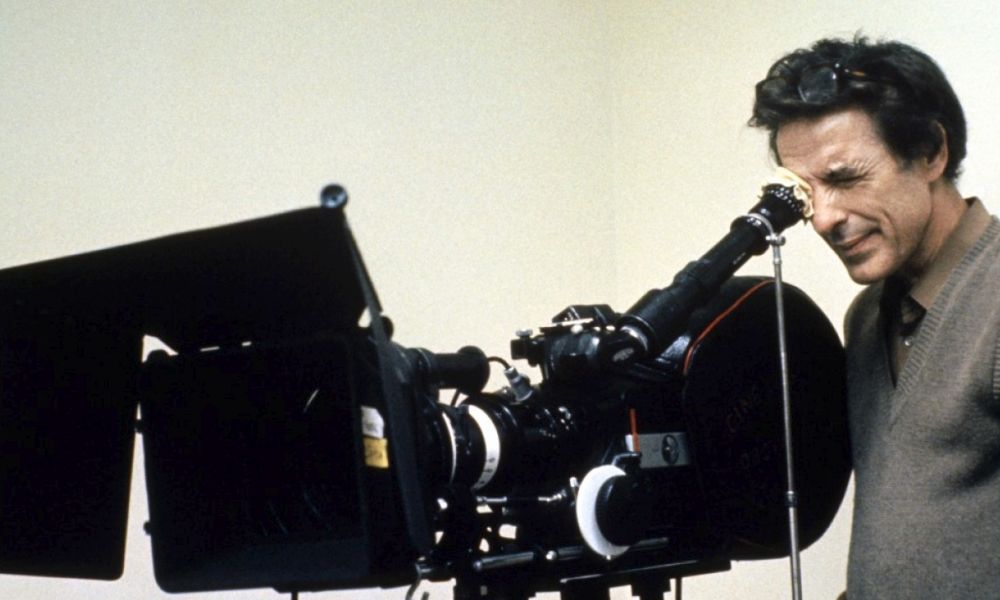
"A marginal figure in commercial terms, since his untimely death Cassavetes has emerged as one of the most influential American filmmakers, a model and an inspiration to innumerable independent directors." - Tom Charity (The Rough Guide to Film, 2007)
John Cassavetes
Director / Actor / Screenwriter
(1929-1989) Born December 9, New York City, New York, USA
Top 250 Directors
(1929-1989) Born December 9, New York City, New York, USA
Top 250 Directors
Key Production Country: USA
Key Genres: Drama, Psychological Drama, Ensemble Film, Marriage Drama, Crime, Crime Drama, Showbiz Drama
Key Collaborators: Gena Rowlands (Leading Actress), Seymour Cassel (Character Actor), Bo Harwood (Composer), Val Avery (Character Actor), Fred Draper (Character Actor), Al Ruban (Producer/Cinematographer), Peter Falk (Leading Character Actor), Phedon Papamichael (Production Designer), Ben Gazzara (Leading Actor), Tom Cornwall (Editor), Katharine Cassavetes (Character Actress), Lady Rowlands (Character Actress)
Key Genres: Drama, Psychological Drama, Ensemble Film, Marriage Drama, Crime, Crime Drama, Showbiz Drama
Key Collaborators: Gena Rowlands (Leading Actress), Seymour Cassel (Character Actor), Bo Harwood (Composer), Val Avery (Character Actor), Fred Draper (Character Actor), Al Ruban (Producer/Cinematographer), Peter Falk (Leading Character Actor), Phedon Papamichael (Production Designer), Ben Gazzara (Leading Actor), Tom Cornwall (Editor), Katharine Cassavetes (Character Actress), Lady Rowlands (Character Actress)
"John Cassavetes’s independent films challenge distinctions between documentary and fiction films. Described sometimes as home movies, they seem to capture authentic moments of individuals’ experiences. The films’ intimate quality reflects Cassavetes’s career-long collaboration with cinematographer Al Ruban and actors such as Gena Rowlands, Peter Falk, Ben Gazzara, and Seymour Cassel… As with the work of Jean-Luc Godard, Cassavetes’s films have been seen as a type of direct cinema, one that acknowledges the filmmaker’s impact on the material presented and that attempts to reflect or reveal the material itself. For both filmmakers, actors function as graphic or narrative components effectively controlled by the director and as documentary evidence of social and emotional realities that simply cannot be represented in a fictional film narrative." - Cynthia Baron (Schirmer Encyclopedia of Film, 2007)
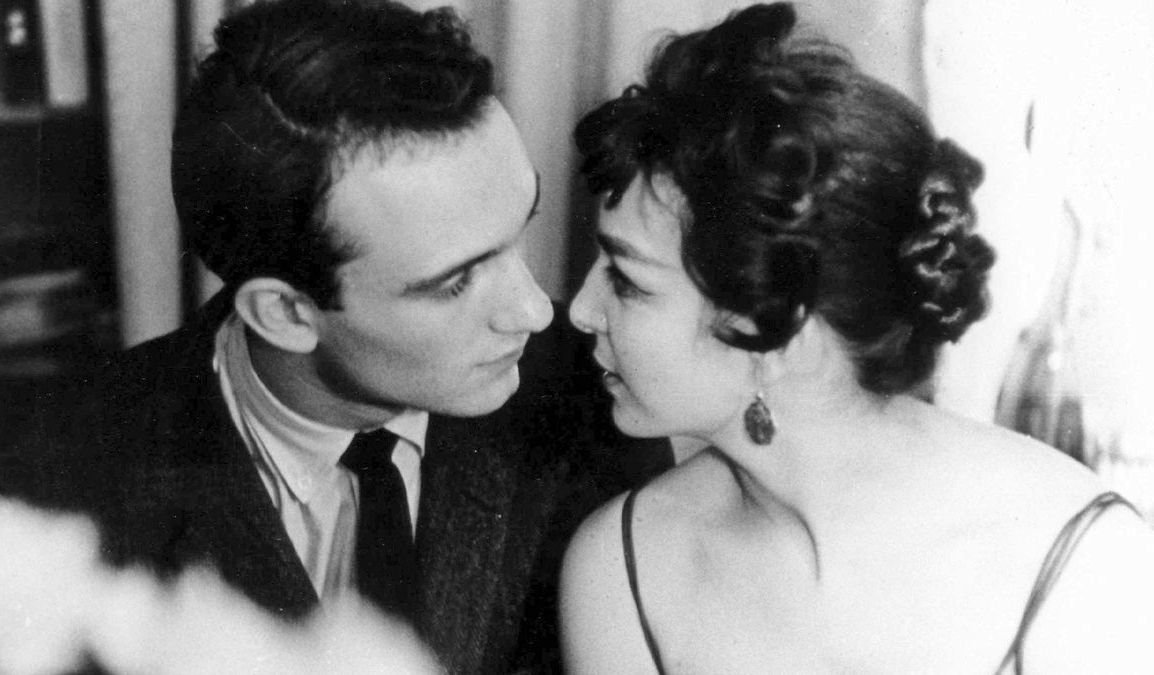
Shadows (1959)
"The director himself provided the essential key to his approach when he said, "I am more interested in the people who work with me than in the film itself, or in cinema." That's perhaps why his films are further than most from the conventions of art or entertainment, but at their very best moments are closer than most to truth, or at least to the subjective reality of its participants. Critics and audiences either love or hate Cassavetes' free-wheeling work. His films are as disturbing as they are erratic, leaving no one indifferent." - The MacMillan International Film Encyclopedia, 1994
"Actor-director John Cassavetes is remembered as the godfather of American independent film-makers. Although Shadows (1959), his breakthrough film, was not the first American movie outside the system, it became a rallying point for future generations... Cassavetes was often labelled an improvisational film-maker, but his films were almost entirely scripted. Yet he had a preference for documentary-style camerawork and was obsessed with human interaction." - Ronald Bergan (Film - Eyewitness Companions, 2006)
"The amalgam of improvisational acting, hand-held camera work, grainy stock, loose editing, and threadbare plot give his films a texture of recreated rather than heightened reality, often imbuing them with a feeling of astonishing psychodramatic intensity as characters confront each other and lay bare their souls." - Bill Wine (The St. James Film Directors Encyclopedia, 1998)
"His films are preoccupied with a heavily realistic, often elliptical, tone which works best in Faces (68)." - William R. Meyer (The Film Buff's Catalog, 1978)
"During my university years, I was deeply impacted by his films and learned through him that making films is worth putting your life on the line. From reading his interviews, his words also gave me a deep sense of courage, not just in filmmaking, but in life itself, so he’s someone who I think of as a huge influence on my life." - Ryusuke Hamaguchi (Talkhouse, 2023)
"There's a difference between ad-libbing and improvising. And there's a difference between not knowing what to do and just saying something. Or making choices as an actor. As a writer also, as a person who's making a film, as a cameraman, everything is a choice. And it seems to me I don't really have to direct anyone or write down that somebody's getting drunk; all I have to do is say that there's a bottle there and put a bottle there and then they're going to get drunk." - John Cassavetes (Directing the Film, 1976)
"People who are making films today are too concerned with mechanics - technical things instead of feeling." - John Cassavetes (1980)
Selected Filmography
Loading filmography...
John Cassavetes / Fan Club
Adrian Martin, David Sterritt, Kent Jones, Ryusuke Hamaguchi, Makoto Shinozaki, Ray Carney, Martin Scorsese, Jonathan Rosenbaum, Richard Brody, Bruce LaBruce, Lodge Kerrigan, Calum Marsh.
Adrian Martin, David Sterritt, Kent Jones, Ryusuke Hamaguchi, Makoto Shinozaki, Ray Carney, Martin Scorsese, Jonathan Rosenbaum, Richard Brody, Bruce LaBruce, Lodge Kerrigan, Calum Marsh.
"Fan Club"
These film critics/filmmakers have, on multiple occasions, selected this director’s work within film ballots/lists that they have submitted.
These film critics/filmmakers have, on multiple occasions, selected this director’s work within film ballots/lists that they have submitted.