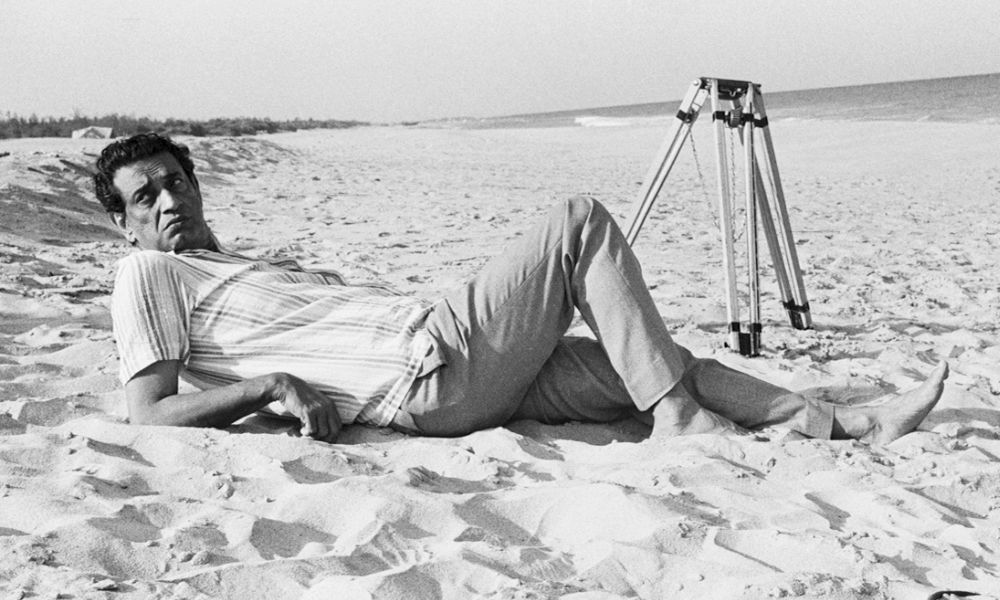
"In the restrained style he has adopted, Ray has become a master of technique. He takes his timing from the nature of the people and their environment; his camera is the intent, unobtrusive observer of reactions; his editing the discreet, economical transition from one value to the next." - Roger Manvell (The International Encyclopedia of Film, 1972)
Satyajit Ray
Director / Screenwriter / Composer / Producer
(1921-1992) Born May 2, Calcutta, West Bengal, British India (now India)
Top 250 Directors
(1921-1992) Born May 2, Calcutta, West Bengal, British India (now India)
Top 250 Directors
Key Production Country: India
Key Genres: Drama, Family Drama, Psychological Drama, Rural Drama, Urban Drama, Social Problem Film, Comedy Drama, Satire,
Romantic Drama, Reunion Films, Political Drama, Period Film
Key Collaborators: Dulal Dutta (Editor), Bansi Chandragupta (Production Designer), Soumendu Roy (Cinematographer), Soumitra Chatterjee (Leading Actor), Subrata Mitra (Cinematographer), Ashoke Bose (Production Designer), Sharmila Tagore (Leading Actress), Haradhan Bannerjee (Leading Character Actor), Chhabi Biswas (Leading Actor), Anil Chatterjee (Leading Character Actor), Robi Ghosh (Leading Character Actor), Ravi Shankar (Composer)
Key Genres: Drama, Family Drama, Psychological Drama, Rural Drama, Urban Drama, Social Problem Film, Comedy Drama, Satire,
Romantic Drama, Reunion Films, Political Drama, Period Film
Key Collaborators: Dulal Dutta (Editor), Bansi Chandragupta (Production Designer), Soumendu Roy (Cinematographer), Soumitra Chatterjee (Leading Actor), Subrata Mitra (Cinematographer), Ashoke Bose (Production Designer), Sharmila Tagore (Leading Actress), Haradhan Bannerjee (Leading Character Actor), Chhabi Biswas (Leading Actor), Anil Chatterjee (Leading Character Actor), Robi Ghosh (Leading Character Actor), Ravi Shankar (Composer)
"No other film-maker, apart maybe from Kurosawa (though his depiction of women is notably inferior to Ray’s), has encompassed a whole culture; and no other film-maker, full stop, has covered such a range, from pure farce to high tragedy and from musical fantasies to detective stories. Satyajit Ray, whatever some superficial or ignorant critics may say, is not primarily the maker of the Apu Trilogy. I fear that his range may never be fully understood, given that the films describe Bengal, which (unlike Japan) is of little political, economic or cultural importance to the world – and in a language unknown even to most Indians. But I hope his extraordinary diversity may gradually sink in, as his work at last becomes widely available on video and DVD." - Andrew Robinson (Satyajit Ray: The Inner Eye , 1990)
"From the beginning of his career as a filmmaker, Satyajit Ray was interested in finding ways to reveal the mind and thoughts of his characters. Because the range of his sympathy was wide, he has been accused of softening the presence of evil in his cinematic world. But a director who aims to represent the currents and cross-currents of feeling within people is likely to disclose to viewers the humanness even in reprehensible figures." - Satti Khanna (The St. James Film Directors Encyclopedia, 1998)
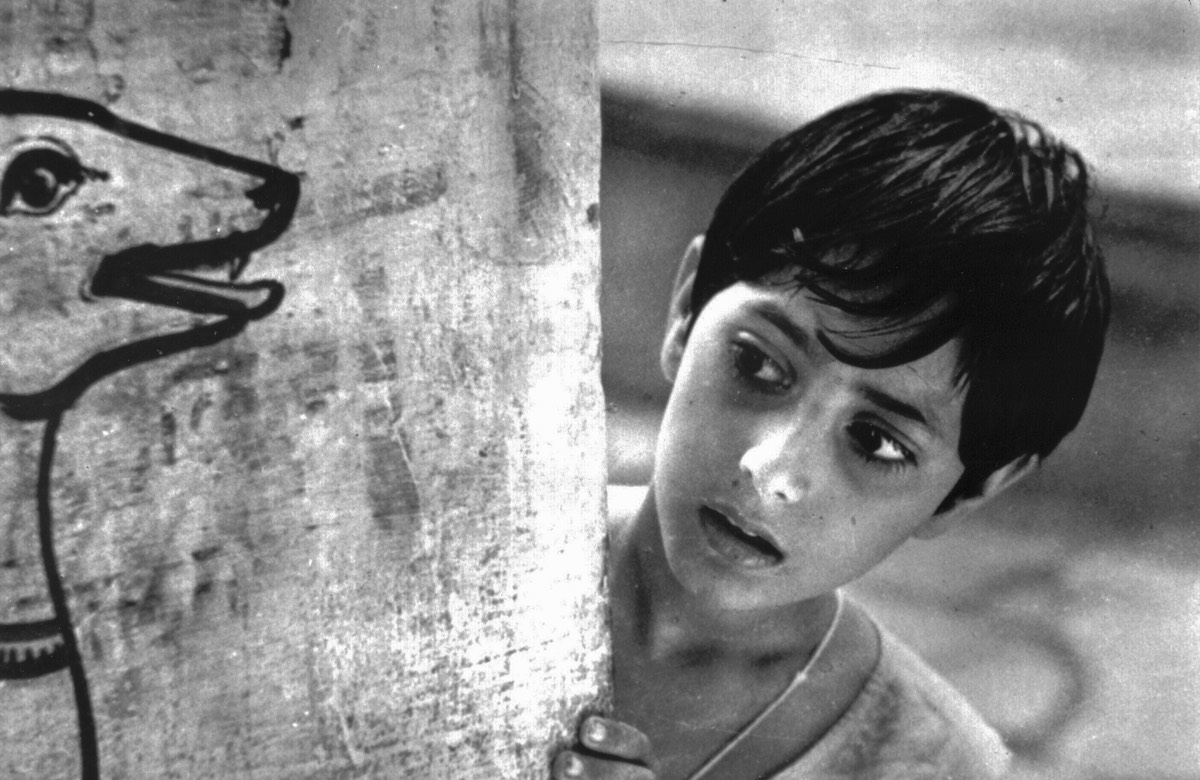
Aparajito (1956)
"His reputation rests firmly on his detached, unsentimental humanism, and on an ability to derive subtle emotional nuances and ironies from a simple but effective marshalling of performance, dialogue, decor and composition. He has been his own scriptwriter, designer, composer and cameraman on many of his films; he is a consummate artist whose faith in the cinema as a medium to rank alongside the other art forms remains undimmed." - Geoff Andrew (The Film Handbook, 1989)
"Inspired by the lyricism of his one-time mentor Jean Renoir and the street-level truthfulness of Italian neorealism, Ray specialised in a kind of cinematic naturalism in which the on-screen action unfolds in a manner that feels at once poetic and realistic. Ray’s films may at first feel quiet, gradual and undramatic, but it’s a testament to his skill as a storyteller that he gently folds us into their pace. His films have an irresistible knack for turning the ordinary into the exciting. Ray handles complicated experiences – like coming of age, taking a new direction in life, and when to defy social expectations – with simplicity and beauty." - Sarah Jilani (BFI, 2017)
"Ray maintained a high artistic level in most of his subsequent films but found it impossible to match the authenticity, sincerity, beauty, and magic of the Apu trilogy. At the same time, Ray's later output boasts a bolder, more complex style and a sharper, more pointed voice. Above all, he sustained throughout his career the humanist values that have made his films universally appealing." - The MacMillan International Film Encyclopedia, 1994
"His compassionate work arises from a philosophical tradition that brings detachment and freedom from fear, celebrates joy in birth and life and accepts death with grace. This perspective attempts to create the whole out of a fineness of detail. Ray succeeded in making Indian cinema, for the first time in its history, something to be taken seriously, and in so doing, created a body of work of distinct range and richness." - Helen Goritsas (Senses of Cinema, 2002)
"Has compassionately documented his people and culture for the world to see. This director essentially examines the social, political, and religious strata in Indian society." - William R. Meyer (The Film Buff's Catalog, 1978)
"Not to have seen the cinema of Ray means existing in the world without seeing the sun or the moon." - Akira Kurosawa
"When I'm shooting on location, you get ideas on the spot - new angles. You make not major changes but important modifications, that you can't do on a set. I do that because you have to be economical." - Satyajit Ray
Selected Filmography
Loading filmography...
Satyajit Ray / Fan Club
Penelope Gilliatt, Sanjeev Verma, Howard Schumann, Adoor Gopalakrishnan, Derek Malcolm, Stephanie Zacharek, J. Hoberman, David Robinson, Arthur Knight, Surbhi Goel, Philip French, Peter Rist.
Penelope Gilliatt, Sanjeev Verma, Howard Schumann, Adoor Gopalakrishnan, Derek Malcolm, Stephanie Zacharek, J. Hoberman, David Robinson, Arthur Knight, Surbhi Goel, Philip French, Peter Rist.
"Fan Club"
These film critics/filmmakers have, on multiple occasions, selected this director’s work within film ballots/lists that they have submitted.
These film critics/filmmakers have, on multiple occasions, selected this director’s work within film ballots/lists that they have submitted.