"His work stands alongside that of Howard Hawks, Sam Peckinpah, Paul Schrader, and Martin Scorsese for its study of masculinity and particular focus on the professional male's uneasy negotiations with society. Formally daring, his films are rarely sentimental or overtly emotional; attempting to mine the consciousness of his characters, he offers complex, but emotionally disengaged, personality studies." - Ian Haydn Smith (Contemporary North American Film Directors, 2002)
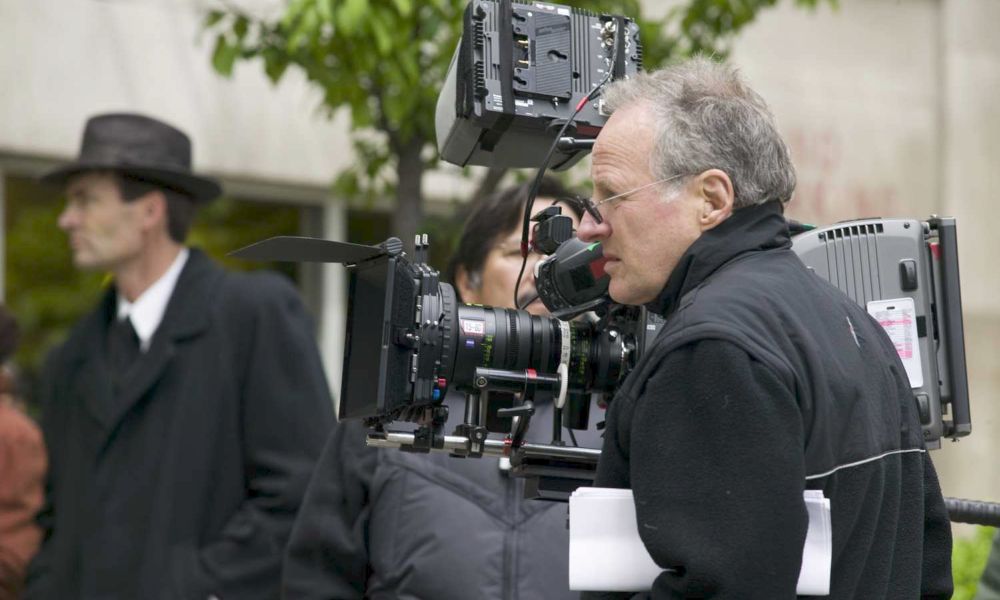
Michael Mann
Key Production Country: USA
Key Genres: Crime, Crime Thriller, Thriller, Drama, Post-Noir (Modern Noir), Police Detective Film, Action, Sports Drama
Key Collaborators: Dante Spinotti (Cinematographer), Dov Hoenig (Editor), William Goldenberg (Editor), Paul Rubell (Editor), Jamie Foxx (Leading Actor), Bruce McGill (Character Actor), Al Pacino (Leading Actor), Jon Voight (Leading Actor), Eric Roth (Screenwriter), Pieter Jan Brugge (Producer), Dion Beebe (Cinematographer), Arthur Schmidt (Editor)
Key Genres: Crime, Crime Thriller, Thriller, Drama, Post-Noir (Modern Noir), Police Detective Film, Action, Sports Drama
Key Collaborators: Dante Spinotti (Cinematographer), Dov Hoenig (Editor), William Goldenberg (Editor), Paul Rubell (Editor), Jamie Foxx (Leading Actor), Bruce McGill (Character Actor), Al Pacino (Leading Actor), Jon Voight (Leading Actor), Eric Roth (Screenwriter), Pieter Jan Brugge (Producer), Dion Beebe (Cinematographer), Arthur Schmidt (Editor)
"No one has done more to uphold, extend, and enrich the film noir genre in recent years than Michael Mann. He is a director and producer, an organizer of TV series, a visionary of modern style who somehow integrates the fluency of Max Ophüls with the iconic poise of the most hip TV commercials. His theatrical movies come years apart, but his work for television has filled the time and been just as vital an creative a part of what he does... By the late nineties, Mann had clearly moved further ahead. Heat, it seems to me, was one of the best-made films of the decade, by which I mean that the need to look and listen closely was constantly rewarded." - David Thomson (The New Biographical Dictionary of Film, 2002)
"Although Michael Mann's film output is small in comparison to his work for television (as writer, director and producer), so strong has been his influence on recent styles in both media that, provided his film career escapes the marketing problems that have blighted it so far, future recognition of his importance seems assured." - Geoff Andrew (The Film Handbook, 1989)
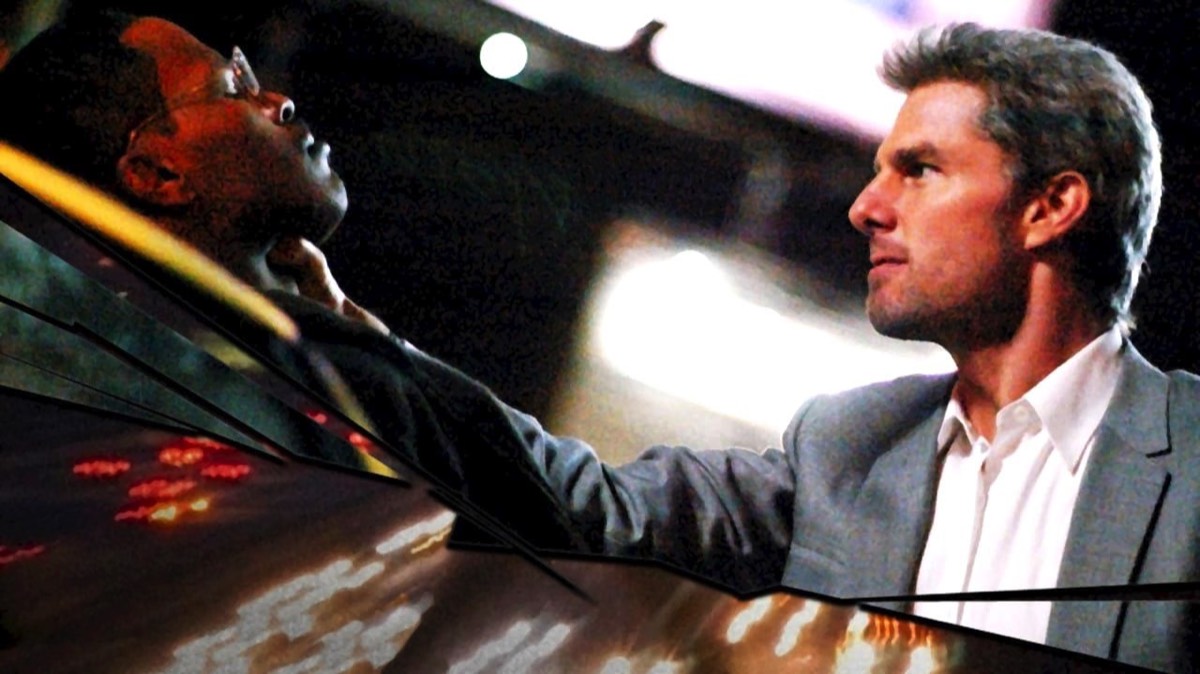
Collateral (2004)
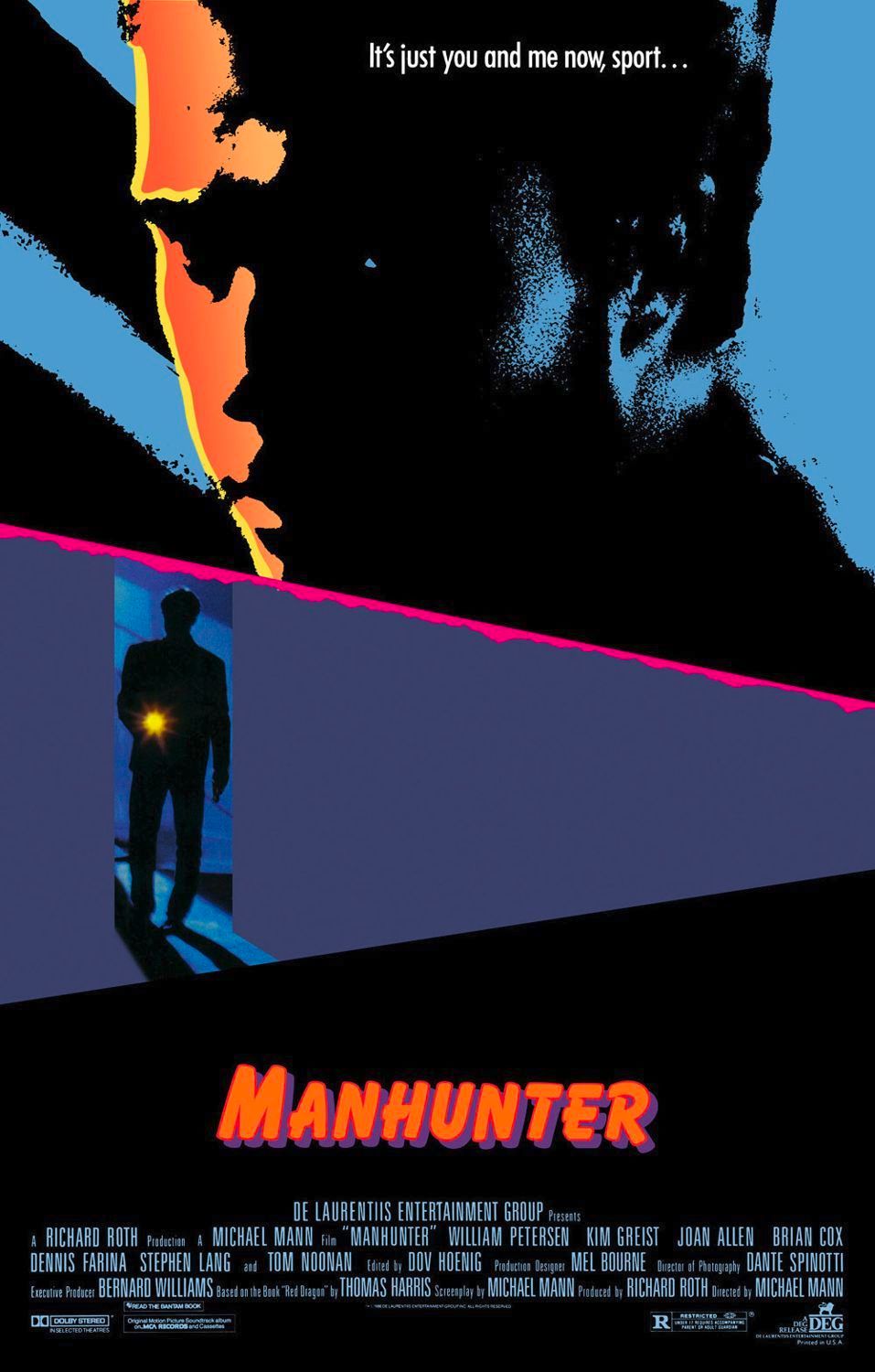
"Like contemporaries Tony Scott and Adrian Lyne, Michael Mann is a visual stylist with a penchant for modernist design. But while Scott and Lyne seem content to admire their reflections on the gleaming surface they create, Mann reveals himself as an old-fashioned existentialist, expressing an obsessive male social alienation in neo-noir thrillers like Thief (1981), Manhunter (1986), and his masterpiece, Heat (1995)." - Ronald Bergan (Film - Eyewitness Companions, 2006)
"Thieves, assassins, mad men, whistle-blowers, and gamblers have all populated the extreme adventures of Michael Mann's films. For more than 30 years, with style and precision, he has examined the richness of human experience." - F.X. Feeney (DGA, 2012)
"He wrote scripts for television series including Starsky and Hutch and Vega$ before making his debut as a feature film director with Thief (1981). He has brought a strong visual flair to a number of stylish, moody thrillers, as well as to the acclaimed literary adaptation Last of the Mohicans (1992) and the biopic Ali (2001)." - Chambers Film Factfinder, 2006
"To see a recent Michael Mann film is to witness big-time American cinema at its glossiest and most engrossing. While audiences flock to these starry movies, critics have praised them for their visual and narrative integrity." - Richard Armstrong (The Rough Guide to Film, 2007)
"A moviemaker with a clear eye about the importance of look and feel, Michael Mann first made his mark as a director on TV with Police Woman (1977), and as a writer on Starsky and Hutch (1975-1977)." - Garrett Chaffin-Quiray (501 Movie Directors, 2007)
"In many respects Michael Mann is the quintessential postmodern director, although in ways unflattering both to him and the whole notion of the postmodern. Traduced for being too entranced with style, Mann is an artist whose sense of the world is manifest precisely in the realization of style. He is perhaps the figure most closely associated with the introduction of 'rock video stylistics' to cinema, especially after his hit 1980s' television crime show Miami Vice (he was executive producer) began to have an impact." - Christopher Sharrett (Fifty Contemporary Filmmakers, 2002)
"Michael Mann’s cinematic landscape is the mean streets of urban neo-noir. His stylistic signature is a hip, almost neon look, the images sharply edited and backed by adrenalin-pumping music. Given the razzle-dazzle MTV approach he brings to his craft, it is ironic that he started out wanting to be a writer. However, while attending the University of Wisconsin and majoring in English literature, he took a film course for a fast A and got hooked on moviemaking instead." - John McCarty (International Dictionary of Films and Filmmakers, 2000)
"Could I have worked under a system where there were Draconian controls on my creativity, meaning budget, time, script choices, etc.? Definitely not. I would have fared poorly under the old studio system that guys like Howard Hawks did so well in. I cannot just make a film and walk away from it. I need that creative intimacy, and quite frankly, the control to execute my visions, on all my projects." - Michael Mann
Selected Filmography
Loading filmography...
Michael Mann / Favourite Films
Apocalypse Now (1979) Francis Ford Coppola, The Asphalt Jungle (1950) John Huston, L'Atalante (1934) Jean Vigo, Battleship Potemkin (1925) Sergei Eisenstein, Biutiful (2010) Alejandro González Iñárritu, Dr. Strangelove or: How I Learned to Stop Worrying and Love the Bomb (1964) Stanley Kubrick, The Hurt Locker (2008) Kathryn Bigelow, Incendies (2010) Denis Villeneuve, Out of the Past (1947) Jacques Tourneur, Pale Flower (1964) Masahiro Shinoda, Pan's Labyrinth (2006) Guillermo del Toro, Poor Things (2023) Yorgos Lanthimos, Raging Bull (1980) Martin Scorsese, Sweet Smell of Success (1957) Alexander Mackendrick.
Source: Letterboxd (2024)
Apocalypse Now (1979) Francis Ford Coppola, The Asphalt Jungle (1950) John Huston, L'Atalante (1934) Jean Vigo, Battleship Potemkin (1925) Sergei Eisenstein, Biutiful (2010) Alejandro González Iñárritu, Dr. Strangelove or: How I Learned to Stop Worrying and Love the Bomb (1964) Stanley Kubrick, The Hurt Locker (2008) Kathryn Bigelow, Incendies (2010) Denis Villeneuve, Out of the Past (1947) Jacques Tourneur, Pale Flower (1964) Masahiro Shinoda, Pan's Labyrinth (2006) Guillermo del Toro, Poor Things (2023) Yorgos Lanthimos, Raging Bull (1980) Martin Scorsese, Sweet Smell of Success (1957) Alexander Mackendrick.
Source: Letterboxd (2024)
Michael Mann / Fan Club
Kevin Prin, Peter Körte, Filipe Furtado, Keith Uhlich, Ryan Swen, Babak Anvari, John Wrathall, Eddie Averill, Ralph Ziman, Sarah Lutton, Richard Wolstencroft, Milan Pavlovic.
Kevin Prin, Peter Körte, Filipe Furtado, Keith Uhlich, Ryan Swen, Babak Anvari, John Wrathall, Eddie Averill, Ralph Ziman, Sarah Lutton, Richard Wolstencroft, Milan Pavlovic.
"Fan Club"
These film critics/filmmakers have, on multiple occasions, selected this director’s work within film ballots/lists that they have submitted.
These film critics/filmmakers have, on multiple occasions, selected this director’s work within film ballots/lists that they have submitted.